How to Plan PharmD Rotations Around State Licensure Goals

Co-Founder and Chief Data Scientist

by Test Author, test
author
A rotation can be an excellent career opportunity yet leave a PharmD student short of a target state's internship requirements. That risk matters when placements cross state lines or when graduation and licensure applications are close together.
This guide is for prospective and current U.S. pharmacy students deciding where to complete clinical training. It explains which board rules to check, how to rank rotation requests, and what records to keep so that educational, licensing, and career goals work together.
Key Things You Should Know
- Start with the board of pharmacy in the state where you expect to apply for your first license; an approved rotation does not automatically produce creditable internship hours there.
- ACPE standards set minimums of 300 introductory pharmacy practice experience hours and 1,440 advanced pharmacy practice experience hours, but a state may impose separate intern-registration and hour-reporting rules.
- Rank rotations only after confirming school approval, site and preceptor eligibility, any required intern registration, and how the target board will verify your hours.
How do PharmD rotations affect state pharmacist licensure requirements?
PharmD rotations are supervised training within the professional degree, not a pharmacist license. Introductory pharmacy practice experiences (IPPEs) build early practice skills; advanced pharmacy practice experiences (APPEs) provide more sustained patient-care and practice experience. State boards separately decide what education, supervised experience, examinations, and application materials qualify someone for licensure.
Some boards accept qualifying hours embedded in an accredited PharmD curriculum, while others require particular registration, reporting, or additional experience. The location of a rotation and the state where you seek licensure may therefore both matter. Ask the target board whether it recognizes hours completed under your school's supervision in another state before you rely on them.
Shorter educational pathways do not erase these distinctions. Listings of short online pharmacy degree timelines may describe credentials other than a professional PharmD; those credentials should not be treated as substitutes for pharmacist education or licensure.
Which state licensure requirements should PharmD students research first?
Research the board requirements for your likely first-license state before requesting sites. If you may move, check the second state too rather than assuming its rules match. The categories below identify the rules most likely to change a rotation plan; the board's current application instructions and regulations control.
| Requirement | Why it matters for rotations |
| Intern registration or permit | A state may require registration before a student performs specified activities or earns creditable hours. |
| Experience-hour rules | Boards can differ on accepted school hours, additional hours, approved settings, and reporting. |
| Site and preceptor rules | Supervision and practice-location requirements can affect an out-of-state placement. |
| Application and examination rules | Deadlines, documentation, and jurisprudence requirements affect the post-graduation timeline. |
Pharmacy school eligibility is a different question from board eligibility. If you are still choosing a program, compare its pharmacy school admission requirements separately from the licensing rules you will face after enrollment.
How do you choose PharmD rotations for your target state?
Choose the school-approved rotation plan that satisfies degree requirements first, then use elective choices to address licensing logistics and career interests. A prestigious site is a poor fit if its dates, supervision, or location prevent required hours from being recognized. Use this sequence before submitting preferences:
- Identify your likely first-license state and one realistic alternative; save each board's current intern and pharmacist application instructions.
- Ask the experiential education office which required and elective placements it can approve in those states, who secures sites, and whether travel is likely.
- Confirm required intern registrations and whether the target board will accept hours from each proposed location and type of experience.
- Rank approved options by degree coverage, hour eligibility, career relevance, schedule, and travel cost; keep an alternative if a site withdraws.
- Get the school's and, where needed, the board's answer in writing before committing to an unusual or out-of-state placement.
If changing schools is part of the plan, address pharmacy transfer planning early. The receiving program decides which professional coursework or experiential work applies; an appealing rotation at another school does not establish transfer credit.
ACPE-accredited professional PharmD programs must provide at least 300 IPPE hours and 1,440 APPE hours under ACPE experiential education standards. IPPEs introduce students to practice, including community and health-system settings. APPEs occur later and include required experiences across community pharmacy, hospital or health-system pharmacy, ambulatory care, and inpatient general medicine, plus other experiences specified by the program.
Those are accreditation minimums, not a promise that every school uses the same calendar, sites, or elective mix. Check the current experiential handbook for block lengths, required settings, evaluations, and who assigns preceptors. An interest in fast-track Doctor of Pharmacy programs makes that calendar especially important: a compressed academic schedule does not remove supervised experiential requirements.
Rotation hours count only to the extent the relevant state board recognizes them under its rules. School credit, paid work, and board-creditable internship time are not interchangeable labels. Registration timing is particularly important: a board may not credit activity performed before a required intern permit becomes effective.
For each proposed placement, ask the board whether PharmD IPPE or APPE hours satisfy its experience rule, whether hours earned outside the state qualify, and who must submit verification. Ask the school whether its hour records identify the dates, site, preceptor, and experience type the board needs. If additional hours are required, schedule them early enough that they do not delay your application.
Students reviewing pharmacy school application readiness should keep admission conditions separate from intern-registration conditions. Permission to begin a program does not necessarily mean permission to start every placement or accrue licensing hours.
An online or hybrid delivery format does not make clinical rotations remote. Professional PharmD programs still require supervised experiential education, and a program may also require scheduled live classes, campus visits, hands-on labs, or in-person assessments. Local placement may be possible, but it should never be assumed or treated as permission to substitute an existing job.
When you compare pharmacy doctorate options, verify four separate points: ACPE professional-program accreditation, the school's authorization to enroll you where you live, approval to place you at a proposed clinical site, and the target board's licensure rules. Institutional accreditation and distance-education authorization do not replace ACPE accreditation or a board's eligibility determination.
Ask who locates and contracts with sites, whether you can propose a preceptor, and how far you may need to travel. Background checks, immunizations, site onboarding, intern registration, and daytime rotation schedules may limit the flexibility that online coursework appears to offer.
Keep a record that lets your school and target board verify what you did, when, where, and under whose supervision. Use the school's official tracking system; a personal log is a backup, not a replacement for required board or school forms. Build the record as you go rather than asking a former preceptor to reconstruct it after graduation.
Check that each experience has accurate dates and hours, site address, experience category, preceptor identity and credentials, evaluations, and any required signatures. Retain confirmation of intern registration and copies of submitted verifications. If a placement changes, ask the experiential office and board whether the replacement needs fresh approval or a different reporting form.
Record-keeping also helps expose practical costs before a placement begins. An online Pharm.D. cost comparison should account for possible rotation travel, temporary housing, and onboarding expenses - not tuition alone.
After covering required experiences and licensing constraints, use electives to test a career direction. Ambulatory care can expose you to longitudinal medication management; inpatient and health-system sites can develop team-based clinical skills; community sites can build dispensing, counseling, and operations experience. Industry, managed care, specialty pharmacy, or informatics opportunities may be useful when a school offers and approves them, but their availability varies.
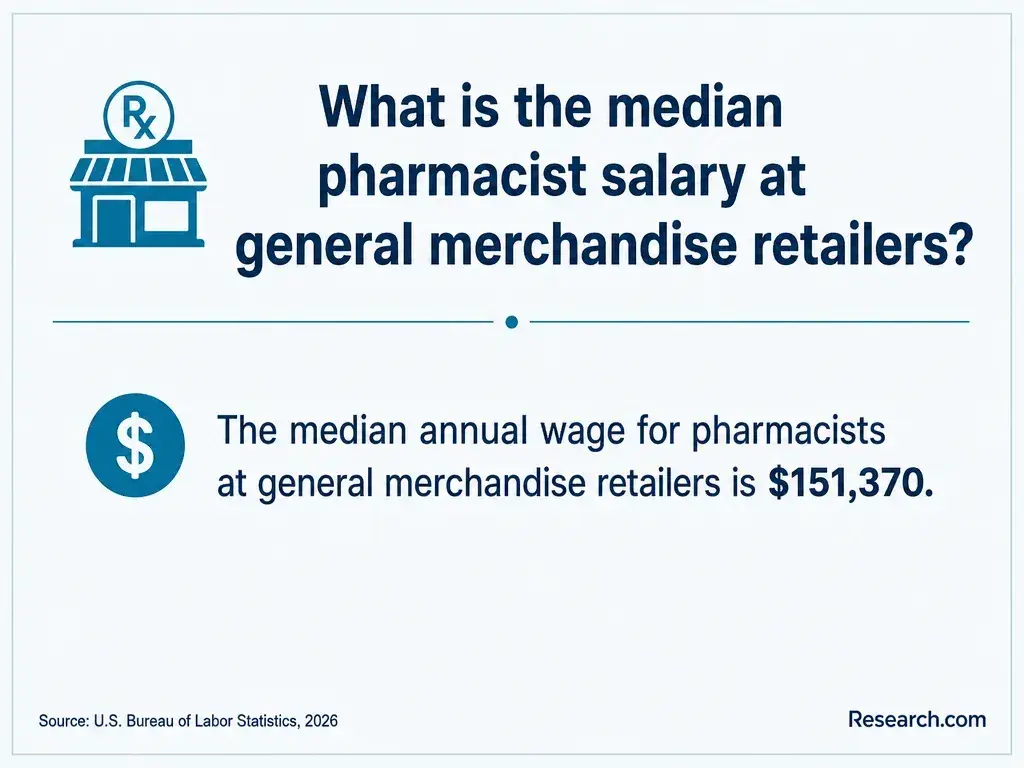
A rotation is evidence of exposure and performance, not a job offer or specialty credential. For context, the Bureau of Labor Statistics reports median annual pay of $140,910 in May 2025 for pharmacists. That occupation-wide figure cannot predict pay for a particular specialty or location, so weigh a site's learning and networking benefits against travel costs and the possibility of time away from paid work.
When assessing pharmacy programs that may offer strong value, favor evidence of suitable placement support and manageable total costs over an assumed salary return. A residency, fellowship, or later board certification may serve some career goals, but none replaces state pharmacist licensure.
Finishing rotations and earning the professional PharmD degree are major steps, but the state board must still issue a license. For U.S.-educated applicants, the pathway generally includes meeting the board's education and experience rules, applying for eligibility, and passing the North American Pharmacist Licensure Examination (NAPLEX). Check the target jurisdiction's current jurisprudence rule: it may use the Multistate Pharmacy Jurisprudence Examination (MPJE), the Uniform Multistate Pharmacy Jurisprudence Examination (UMPJE), another assessment, or a different process. Do not register for a jurisprudence exam solely because another state requires it.
NAPLEX score transfer and a later license transfer are distinct processes with separate rules and timing. If another state is likely, review both before testing rather than assuming a completed rotation or passed exam will automatically carry over. General doctoral degree timeline options are not shortcuts through the professional PharmD and state licensing process.
How can students verify a PharmD program supports multistate licensure?
Seek a documented process, not a blanket promise that graduates qualify everywhere. Confirm the program's current ACPE professional-program accreditation, then ask its experiential office which states it currently places students in and how it handles site contracts, preceptor approval, and intern-registration requirements. Ask the licensing contact for examples of the records it supplies to graduates applying outside the school's home state.
Next, compare those answers with each target board's current requirements. State authorization to enroll an online student, permission for an in-state clinical placement, and eligibility for a pharmacist license are three different determinations. A school can help coordinate them, but the relevant authorities make the final decisions.
If you are entering from biology, chemistry, or pre-pharmacy study, online Pharm.D. options for science graduates can help frame a program search. Verify prerequisite admission and the professional curriculum separately from the program's multistate rotation support before enrolling.
Other Things You Should Know About PharmD
Do not assume so. Schools and sites may restrict close personal relationships because they can compromise impartial evaluation. Disclose the relationship to the experiential office before requesting the site.
Follow the school's and site's absence-reporting rules promptly. Required time or activities may need to be made up, and the school - not the student alone - determines whether the experience is complete.
Generally, no. Technician employment and supervised professional-degree experiences serve different purposes. Ask your school about any published prior-experience policy rather than assuming work hours waive a required rotation.
Only if your school approves it within its experiential curriculum. Approval for degree credit does not mean a U.S. state board will count those hours toward an internship requirement; confirm that separately before making travel arrangements.
- Limited (Intern) Permit | Office of the Professions - Nysed https://www.op.nysed.gov/professions/pharmacist/license-requirements/limited-intern-permit
- State Licensure Requirements for Students Seeking... - PMC https://pmc.ncbi.nlm.nih.gov/articles/PMC5135425/
- Colorado Pharmacy Intern FAQ's https://dpo.colorado.gov/Pharmacy/InternFAQ
- GAC - Chapter 480-2 LICENSURE AS A PHARMACIST https://rules.sos.ga.gov/gac/480-2
- 49 Pa. Code § 27.26. Pharmacy internship. | pacodeandbulletin.gov https://www.pacodeandbulletin.gov/secure/pacode/data/049/chapter27/s27.26.html
- .04 Internship Program or Training Required. | Library of Maryland Regulations https://regs.maryland.gov/us/md/exec/comar/10.34.02.04
- Experiential Education | Washington State University https://pharmacy.wsu.edu/pharmd/experiential-services/
- KU Pharmacy Student Handbook https://pharmacy.ku.edu/student-handbook