PharmD versus physician assistant: education comparison

Co-Founder and Chief Data Scientist
A Doctor of Pharmacy (Pharm.D.) and a physician assistant (PA) program can both lead to patient-facing healthcare careers, but they prepare you for different work. Choosing between them affects which prerequisites you take, how you spend your clinical training, and what license you can pursue. This guide compares the two routes for prospective students and career changers, including admissions, program length, costs, and job prospects. Use it to identify the role you want first, then evaluate programs against the requirements of that role.
Key Things You Should Know
- Choose a Pharm.D. if you want medication-focused practice; choose PA education if you want to evaluate, diagnose, and manage patients across medical conditions under state PA practice rules.
- A Pharm.D. typically follows undergraduate prerequisite coursework and takes four professional years; PA programs generally require a bachelor's degree and take about two to three years after it.
- The Bureau of Labor Statistics reports pharmacists' median annual pay was $140,910 in May 2025 and projects 5% employment growth, 2025-2035; neither figure predicts an individual graduate's outcome.
What is the difference between a PharmD and physician assistant career?
Pharmacists specialize in medication use: assessing drug therapy, counseling patients, preventing medication-related problems, and working with other clinicians. PAs practice medicine within their state's laws and employment setting, commonly taking histories, examining patients, making diagnoses, ordering tests, and developing treatment plans. Both roles can involve prescribing or managing medications, but their authority and responsibilities are not interchangeable.
This comparison focuses on the work each education route prepares you to do - not which profession is more prestigious.
| Decision factor | Pharm.D. route | PA route |
| Core expertise | Medication therapy and its safe, effective use | Broad medical evaluation and treatment |
| Typical patient interaction | Medication counseling, monitoring, and care-team consultation | Visits involving assessment, diagnosis, and treatment |
| Best fit | You want medicines to be the center of your clinical work | You want broader responsibility for medical visits |
A lower advertised price does not settle a career choice. Even lower-cost online pharmacy degree programs are worth considering only if the credential and required in-person training lead toward the job you actually want.
What education is required to become a pharmacist or physician assistant?
For the usual U.S.-educated pharmacist route, students complete a professional Pharm.D. program accredited by the Accreditation Council for Pharmacy Education (ACPE). Before entering, they complete the school's required undergraduate pre-pharmacy courses; those courses are not the professional Pharm.D. curriculum. Some schools admit eligible students without a completed bachelor's degree, while others have different entry pathways.
A prospective PA generally completes a bachelor's degree and then a master's-level PA program accredited by the Accreditation Review Commission on Education for the Physician Assistant (ARC-PA). PA programs also commonly require specified science coursework and patient-care experience, though the amount and type vary. A prior health degree does not normally replace either professional program. If you have already studied biology or chemistry, compare Pharm.D. admission after pre-pharmacy coursework against the additional bachelor's-level and experience requirements of PA schools.
How do PharmD and physician assistant licensing requirements compare?
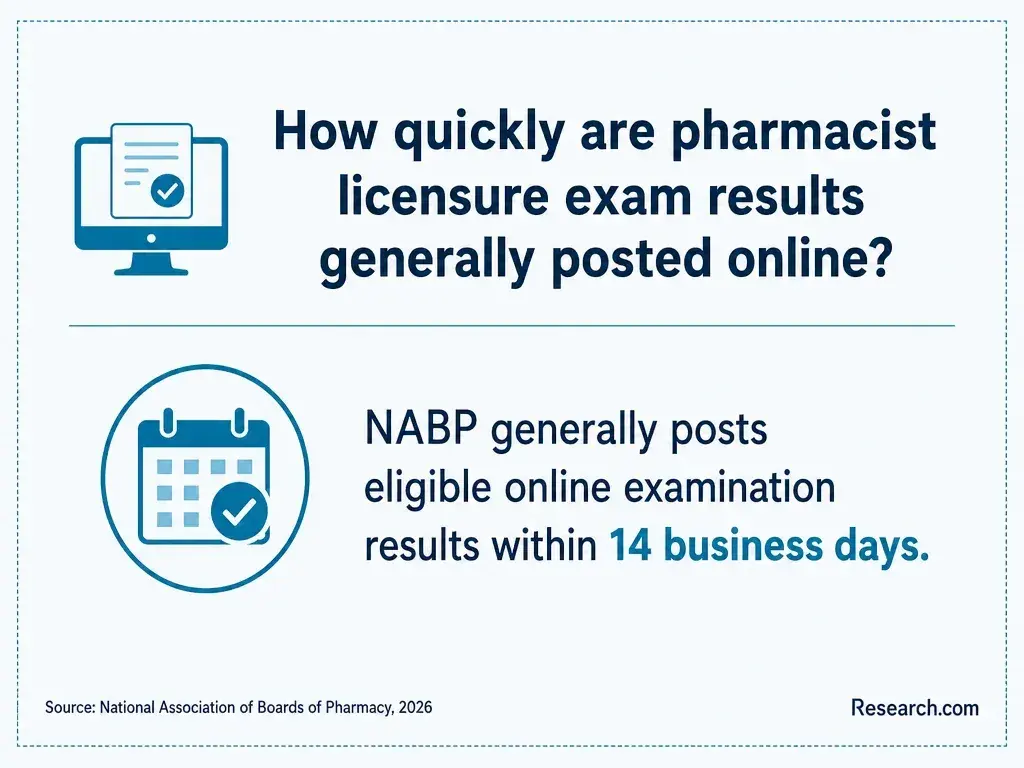
Graduating from an ACPE-accredited Pharm.D. program does not itself make someone a licensed pharmacist. U.S.-educated applicants must meet their state board of pharmacy's requirements, generally including the North American Pharmacist Licensure Examination (NAPLEX), applicable law testing, and any required supervised experience, applications, or background checks. Jurisprudence requirements differ: a jurisdiction may use the MPJE, the newer UMPJE, another assessment, or a different process. Passing an exam alone does not issue a license.
PA graduates generally must pass the Physician Assistant National Certifying Examination (PANCE) administered by the National Commission on Certification of Physician Assistants (NCCPA) and obtain a state PA license. Certification, state licensure, and permission to perform particular tasks are separate matters. Before comparing pharmacy degree eligibility requirements, distinguish eligibility to enter school from eligibility to practice after graduation; confirm the latter with the board in the state where you plan to work.
Pharm.D. students study subjects such as pharmacology, medicinal chemistry, pharmacotherapy, calculations, patient assessment, and medication safety. Introductory pharmacy practice experiences (IPPEs) introduce supervised practice; advanced pharmacy practice experiences (APPEs) provide more extensive rotations in settings that can include community and health-system pharmacy.
PA education emphasizes anatomy, clinical medicine, physical examination, diagnostic reasoning, and treatment across medical fields. Supervised clinical rotations expose students to different patient populations and specialties. Both programs teach communication and evidence-based care, but a PA rotation is not a substitute for pharmacy experiential training, or vice versa. Previous undergraduate credits may satisfy prerequisites without shortening the professional curriculum: for pharmacy degree programs for transfer students, the receiving school decides whether any professional-level credits apply.
A traditional Pharm.D. professional curriculum commonly takes four years after the required pre-pharmacy coursework. Some schools offer accelerated or combined pathways, but their calendars, entry points, and prerequisite loads differ. PA master's programs commonly take about two to three years after a bachelor's degree and any required patient-care experience. Comparing only the professional-program years can therefore hide a substantial difference in time to eligibility.
Count remaining prerequisites, application cycles, clinical schedules, and time away from paid work - not just the degree's advertised length. General guides to how long online doctoral programs take cannot establish a Pharm.D. timeline, because professional coursework and supervised rotations follow program-specific sequences.
Pharm.D. applicants should check each school's prerequisite subjects and labs, minimum grades, GPA rules, references, interview process, and application deadlines. Some use PharmCAS; others have their own application process. A bachelor's degree is not a universal Pharm.D. admission requirement. The Pharmacy College Admission Test (PCAT) was retired in January 2024 and should not be treated as a current routine hurdle.
PA applicants should check bachelor's-degree requirements, science prerequisites, accepted types and amounts of patient-care experience, references, and whether a program uses the Centralized Application Service for Physician Assistants (CASPA). Minimum eligibility is not an admission guarantee for either route. For pharmacy applicants still finishing prerequisites, pharmacy school application readiness depends on whether the specific school permits courses in progress and when they must be completed.
Some Pharm.D. programs deliver portions of their instruction online, but required skills activities, assessments, IPPEs, and APPEs may demand campus visits and in-person placements. "Online" does not mean self-paced or fully remote. PA programs may likewise offer hybrid instruction, while hands-on training and supervised clinical work remain essential.
When evaluating Doctor of Pharmacy programs with online coursework, ask for the actual live-class schedule, campus attendance dates, rotation-placement policy, and travel expectations. Confirm ACPE program accreditation separately from the institution's accreditation and from its authorization to enroll you where you live. Also ask whether the program can support required clinical placements in your state; authorization to deliver online classes is not the same as approval for a placement or eligibility for licensure there.
The Bureau of Labor Statistics reports pharmacists' median annual pay was $140,910 in May 2025. It projects 5% pharmacist employment growth, 2025-2035, with about 12,500 openings per year. These occupation-wide figures include pharmacists with different employers, locations, and experience levels; they are not starting-pay estimates for Pharm.D. graduates.
PA pay also varies by specialty, setting, location, and experience. Rather than treating either occupation's median as a promised return, compare current, like-for-like PA and pharmacist wage data for the places you might work. Then compare each school's full cost - not just tuition - including required fees, supplies, rotations, travel, and foregone earnings. Pharmacy program tuition options are a starting point, not a total-cost estimate. Ask financial aid offices how current federal borrowing rules apply to your enrollment date and circumstances; rules affecting many new graduate and professional borrowers changed beginning July 1, 2026.
Licensed pharmacists work in community pharmacies, hospitals, clinics, health systems, and other medication-focused settings. Depending on the position, a pharmacist may enter practice directly or pursue a postgraduate year one (PGY1) residency followed by a more specialized PGY2. Fellowships, often associated with industry-oriented work, are different from residencies. Optional specialty board certification is also distinct from state licensure; none of these postgraduate options is required for every pharmacist job.
Licensed PAs can work in primary care or medical specialties, subject to employer requirements and state practice rules. A PA may change specialties during a career, but doing so can require substantial on-the-job learning or additional structured training. If you want a pharmacy-adjacent job rather than pharmacist practice, examine the credential actually required: short online pharmacy degree timelines do not turn a pharmacy technician or pharmaceutical-sciences qualification into a Pharm.D. or pharmacist license.
Which accredited PharmD or physician assistant program should you choose?
Choose the profession before ranking schools. Favor a Pharm.D. if sustained interest in medicines, drug interactions, and medication-use systems outweighs your interest in conducting broad medical visits. Favor PA education if diagnosis and treatment across conditions are the work you want, and you can meet its undergraduate and patient-care entry requirements.
Once you know your target role, use these checks to avoid committing to a program whose apparent convenience disappears during training:
- Verify the specific Pharm.D. program's current ACPE status or the PA program's current ARC-PA status with its accreditor; institutional accreditation is a separate check.
- Have each school review your prerequisites, grades, experience, and any proposed transfer credit against its current admissions rules.
- Request a total-cost estimate and a calendar showing in-person attendance, clinical placement support, travel, and likely time away from work.
- Check the licensing board where you intend to practice, and ask the school for its current exam outcomes and how those outcomes are calculated.
Evaluate accelerated online pharmacy programs with the same checks as traditional programs. A shorter calendar is valuable only if its prerequisites, pace, required travel, and cost work for you.
Other Things You Should Know About PharmD
Generally, no. Pharmacy education and licensure do not replace completion of an accredited PA program, PANCE, and applicable state PA licensing requirements. A pharmacist should ask prospective PA schools how prior coursework and clinical experience will be assessed.
A PA credential does not qualify someone for the standard U.S.-educated pharmacist licensure route. A PA interested in changing professions should ask Pharm.D. schools which prior courses satisfy entry prerequisites.
Some pharmacists have prescribing or other expanded authorities under particular state laws and practice arrangements. The permitted services and conditions vary, so check the relevant state board rather than assuming every pharmacist - or every PA - has the same authority.
Not necessarily. Internationally educated pharmacists may face foreign-graduate certification and additional state requirements before becoming eligible for licensing examinations. The applicable pathway depends on the applicant's education and intended jurisdiction.
- Pharmacy Residencies and Dual Degrees as Complementary or Competitive Advanced Training Opportunities - PMC https://pmc.ncbi.nlm.nih.gov/articles/PMC3475774/
- FAQ | OSU College of Pharmacy - Oregon State University https://pharmacy.oregonstate.edu/programs-admissions/pharm-d/faq
- Pharm.D. Tuition & Fees | University of Health Sciences and Pharmacy in St. Louis https://www.uhsp.edu/admissions/pharmd-tuition-fees/
- Advanced Training | ucsf.edu https://pharmd.ucsf.edu/about/advanced-training
- PharmD Program at the College of Pharmacy | UNT Health Fort Worth https://www.unthealth.edu/college-of-pharmacy/faqs/pharmd-program.html
- Doctor of Pharmacy - UMKC Catalog https://catalog.umkc.edu/colleges-schools/pharmacy-home-page/doctor-of-pharmacy/
- Pharmacy Practice | Midwestern University https://catalog.il.midwestern.edu/pharmacy-practice
- PharmD FAQs - UNC Eshelman School of Pharmacy https://pharmacy.unc.edu/education/pharmd/pharmd-admissions-faqs/
- Exploring the Diverse Career Paths in Pharmacy | Roseman University https://www.roseman.edu/student-experience/news/spectrum-exploring-the-diverse-career-paths-in-pharmacy/
- How Much Does a Physician Assistant Master's Program Cost | Bouvé College of Health Sciences https://bouve.northeastern.edu/news/pa-school-cost/