
How online PharmD students interact with faculty

Co-Founder and Chief Data Scientist
Faculty access can make or break an online Doctor of Pharmacy (Pharm.D.) experience. Recorded lessons may fit your schedule, but learning to counsel patients, evaluate medications, and prepare for clinical rotations requires timely feedback from instructors and preceptors. If you are comparing online or hybrid programs, this guide explains where those interactions happen, which activities still require your physical presence, and what to ask before enrolling. You can use those answers to judge whether a program's teaching model fits your learning needs and your available time.
Key Things You Should Know
- Online Pharm.D. students may interact with faculty through live classes, office hours, case discussions, written feedback, and supervised in-person activities; "online" does not mean self-paced or fully remote.
- Ask each program for its required live-session times, faculty response expectations, campus visits, and clinical placement process—not just its percentage of online coursework.
- Verify Accreditation Council for Pharmacy Education (ACPE) professional-program status separately from institutional accreditation and state authorization; a Pharm.D. alone does not grant a pharmacist license.
How Do Online PharmD Students Interact With Faculty?
Interaction usually combines scheduled video classes, small-group patient cases, discussion boards, email, individual appointments, and feedback on assignments or simulated encounters. Faculty may teach therapeutic decision-making online, then assess practical skills during required in-person sessions. During clinical rotations, students also work with pharmacist preceptors—licensed practitioners who supervise and evaluate their training—while program faculty oversee academic progress.
The useful distinction is between access and meaningful feedback. A posted lecture offers access to instruction; a faculty member's explanation of why a proposed medication plan is unsafe helps a student improve clinical judgment. When exploring Doctor of Pharmacy study online, ask to see a sample weekly schedule and a sample rubric showing how instructors assess case work, counseling, and clinical skills.
Before applying, ask who answers course questions, how quickly students can expect a response, whether appointments are available outside scheduled office hours, and how students obtain help if they fall behind. Policies—not a general promise of "personal attention"—are the best basis for comparing programs.
How Do Online PharmD Programs Provide Live Classes and Office Hours?
Programs can use synchronous instruction, which requires attendance at a set time, and asynchronous instruction, which students complete within deadlines. Office hours may be scheduled drop-in video meetings or appointments. A program can use all three, so request its current attendance policy rather than assuming that online courses can be completed whenever you are free.
The table separates common interaction formats so you can identify the schedule commitments that matter most:
| Format | Typical faculty interaction | Scheduling implication |
| Live class or case conference | Questions, discussion, and real-time feedback | Attendance may be required at a fixed time |
| Recorded lesson or discussion board | Questions and feedback occur later | Work may be flexible, but deadlines still apply |
| Office hours or individual meeting | Focused help with coursework or performance | Availability and appointment rules vary |
Ask whether live meetings are recorded, whether recordings satisfy attendance requirements, and what happens when a work shift conflicts with an assessment. Those answers matter more to your actual online doctorate time to completion than the flexibility suggested by an "online" label.
How Do Online PharmD Programs Meet Accreditation Requirements?
ACPE accredits professional pharmacy degree programs, not individual pharmacists. An online or hybrid Pharm.D. program must meet applicable ACPE standards across its curriculum, student assessment, resources, and supervised practice experiences; delivering lectures by video does not eliminate hands-on training. Check the specific professional program's current status in ACPE's official directory. Do not substitute a university's institutional accreditation for Pharm.D. program accreditation.
Also confirm that the institution is authorized to enroll students in your state. State authorization, ACPE accreditation, and eligibility for pharmacist licensure are separate questions. Authorization to take distance courses does not necessarily approve a clinical placement in your state or satisfy your state pharmacy board's requirements.
Use accreditation and state eligibility as filters before you compare pharmacy degree costs and duration. A lower price is not useful if the program cannot support the education and licensing pathway you intend to pursue.
The professional Pharm.D. curriculum builds on pre-pharmacy undergraduate prerequisites; it is not simply a set of prerequisite science courses delivered online. Students typically study how medications work, how to evaluate evidence, how to identify and prevent medication-related problems, and how to communicate recommendations to patients and health professionals. Programs assess these abilities through exams, patient cases, skills activities, and supervised practice.
Faculty contact should change as the work becomes more applied. An instructor might explain a drug mechanism in a recorded lesson, lead a live discussion of competing treatment options, and then critique a student's patient-care plan. Applicants moving from another science field can review Pharm.D. programs for biology majors, but should still compare each school's prerequisite rules with its professional curriculum.
Ask which patient-care and communication skills are assessed live, which are practiced in person, and what remediation is available when a student does not meet a competency. A list of course titles alone will not answer how effectively faculty teach and evaluate those skills.
Requirements vary by school and may include specified undergraduate prerequisites, laboratory coursework, minimum grades or GPA, recommendations, an interview, and evidence that the applicant can participate in required activities. Some schools use the Pharmacy College Application Service (PharmCAS); others have additional or different application steps. A completed bachelor's degree is not a universal prerequisite. The Pharmacy College Admission Test (PCAT) was retired in January 2024 and should not be treated as a current routine entrance exam.
If you are still finishing courses, ask whether they may be in progress when you apply and when final grades must arrive. Also confirm whether online labs, older coursework, or transfer credits satisfy that school's rules. Resources on pharmacy application requirement flexibility can help frame these questions, but only the receiving program can decide whether your record qualifies.
Because faculty interaction is the focus of your choice, use the interview or an admitted-student event to ask how instructors support students who need extra help in a demanding science or patient-care course.
Completion time depends on the school's course sequence, the prerequisites you still need, and whether the professional curriculum offers different pacing options. Online delivery does not remove scheduled labs, campus visits, or full-time clinical rotation blocks. Obtain a term-by-term calendar before assuming you can maintain your current work hours throughout the degree.
Published tuition is only one part of the decision. This table identifies costs to request from each program so that you can compare the same expense categories:
| Cost category | What to confirm with the program |
| Tuition and required fees | Current per-term or per-credit charges and fees across the planned sequence |
| Learning and assessment | Required technology, references, supplies, and testing charges |
| In-person training | Campus travel, lodging, and possible rotation-related travel or housing |
| Path to licensure | Expected application, examination, and state board charges |
Request a personalized cost-of-attendance estimate and compare it with your realistic earnings during rotation periods. Federal borrowing rules changed for many new graduate and professional students beginning July 1, 2026; do not assume a previous student's loan package or Grad PLUS access will apply to you. Use current Federal Student Aid information and the school's financial aid office alongside pharmacy doctorate financial planning resources.
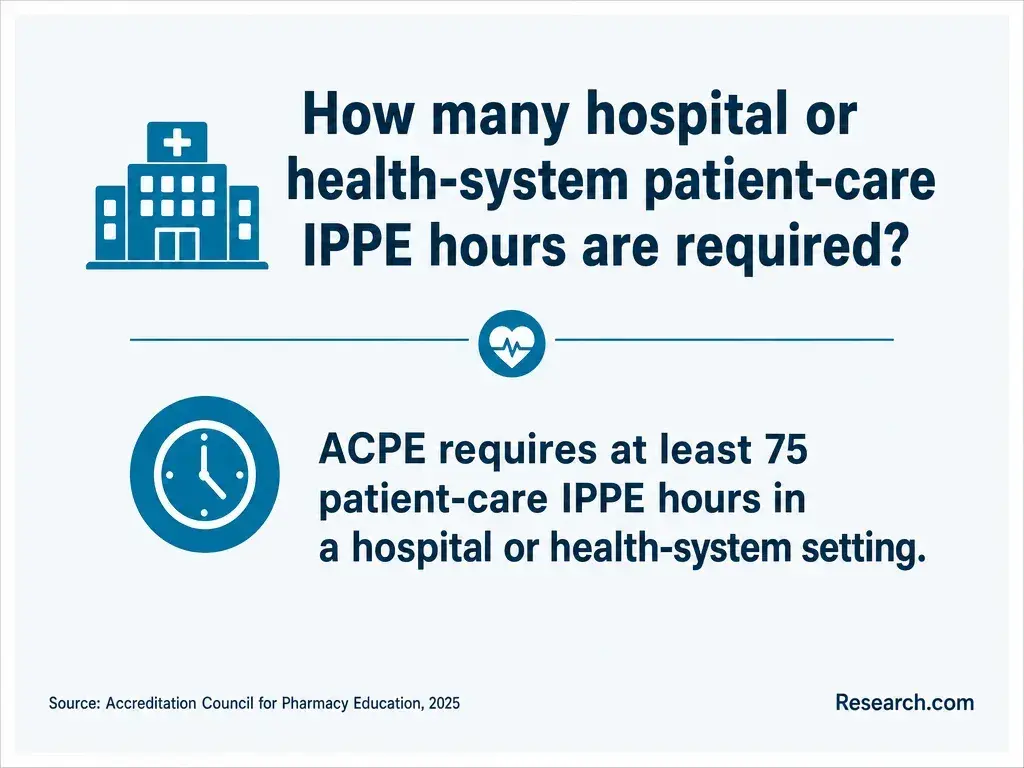
Hands-on skills may require scheduled campus immersions or other approved in-person activities. Clinical education includes introductory pharmacy practice experiences (IPPEs) and advanced pharmacy practice experiences (APPEs), completed under appropriate supervision at approved practice sites. Online classes do not make these experiences remote.
Ask the experiential education office who finds and approves sites, how preceptors are selected, whether placements near your home are possible, and when locations are confirmed. A nearby rotation or a substitution based on your current pharmacy job should never be assumed. State rules and site policies may also require intern registration, background checks, immunizations, or other clearances.
If you have studied elsewhere, ask separately whether previous coursework or experiential work can count toward the professional degree. The receiving school determines pharmacy program credit acceptance; prior employment or an approved course does not automatically replace a required rotation. The practical test is whether you can be available where and when the program requires you to train.
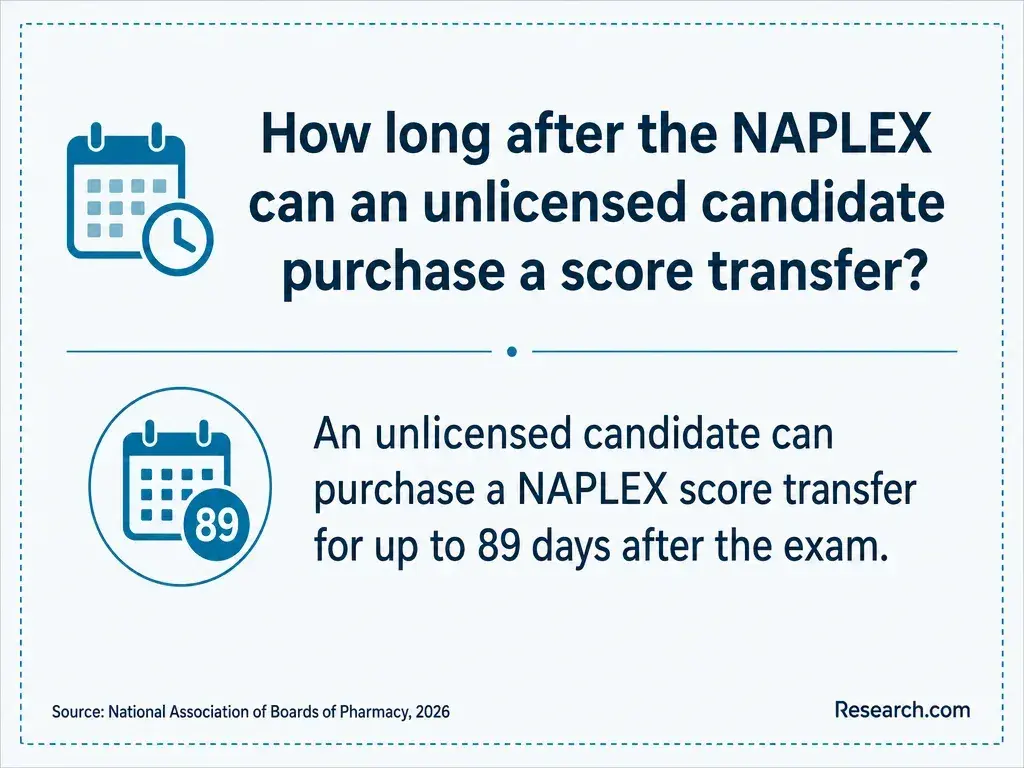
Yes, graduates of an appropriately accredited online or hybrid Pharm.D. program may pursue pharmacist licensure, but graduation does not issue a license. State boards set eligibility and application requirements. These generally involve an accepted pharmacy education, required practical experience, the North American Pharmacist Licensure Examination (NAPLEX), and any applicable state law examination or other state-specific requirements.
Do not assume every jurisdiction uses the Multistate Pharmacy Jurisprudence Examination (MPJE): requirements differ, and some jurisdictions began transitioning to the Uniform Multistate Pharmacy Jurisprudence Examination (UMPJE) in 2026. Check the board in the state where you intend to practice, including its treatment of intern hours and out-of-state rotations. Passing an examination by itself does not confer a license.
When comparing online Pharm.D. program timelines, distinguish the date you finish coursework from the later steps needed to obtain a license. Ask the school for its published NAPLEX outcomes and how it supports students who need additional preparation, without treating past results as a guarantee.
A licensed pharmacist may work in community, hospital, ambulatory care, or other practice settings, depending on employer needs and state law. The U.S. Bureau of Labor Statistics reports median annual pay for pharmacists of $140,910 in May 2025 and projects 5% growth from 2025 to 2035. These occupation-wide figures are context for evaluating the investment—not a predicted salary or job offer for an online Pharm.D. graduate.
Some clinical positions may favor postgraduate residency training. A residency or fellowship is training after the degree; specialty board certification is a separate credential, and neither replaces state licensure. Ask faculty how they support career exploration, references, and preparation for competitive postgraduate applications if those routes interest you.
If your goal is a pharmacy technician or another pharmacy-adjacent role rather than pharmacist licensure, investigate pharmacy degree options with shorter study periods before committing to a Pharm.D. Pharmacy technician is a separate occupation that does not ordinarily require the professional doctorate.
How Can Students Choose a Reputable Online PharmD Program?
Start with your intended state of practice, then compare programs on verifiable requirements rather than the convenience of their advertising. A strong fit gives you workable access to instructors and a feasible plan for in-person training.
Use these questions with each admissions or program office, and request written policies or a current student handbook where possible:
- What is the professional Pharm.D. program's current ACPE status, and may students in my state enroll and complete required placements?
- Which classes, assessments, office hours, labs, and campus visits have fixed attendance times?
- How do faculty provide feedback on patient cases and practical skills, and what support follows an unsuccessful assessment?
- Who secures and approves clinical sites, and what travel, registration, or work-schedule changes might I need?
- What is my estimated total cost and expected completion sequence, including remaining prerequisites and in-person requirements?
Compare the answers side by side. If a school cannot clarify faculty access or rotation logistics before you enroll, treat that uncertainty as a material drawback. Pharmacy programs with varied admission routes may broaden your options, but an easier application does not resolve concerns about accreditation, instruction, placements, or licensure eligibility.
Other Things You Should Know About PharmD
Yes. Build a relationship through case discussions, appointments, and substantive feedback so the professor can speak to your work. Ask early about the school's process and the recommender's timeline.
Eligible students can request accommodations through the institution's established process. Ask its accessibility office how arrangements apply to live sessions, assessments, campus activities, and clinical placements.
Request the rubric and feedback first. If the issue remains unresolved, follow the program's published grade-appeal or grievance procedure and its deadlines.
Opportunities depend on the institution and project. Ask whether remote participation is possible, what supervision is provided, and whether any research activity requires campus access.
- Perspectives on Student-Faculty Relationships - PMC - NIH https://pmc.ncbi.nlm.nih.gov/articles/PMC7525228/
- Disability Discrimination: Technology Accessibility | ed.gov http://www.ed.gov/laws-and-policy/civil-rights-laws/disability-discrimination/disability-discrimination-key-issues/disability-discrimination-technology-accessibility
- Experiential Education | Washington State University https://pharmacy.wsu.edu/pharmd/experiential-services/
- PharmD Remote Pathway | CU School of Pharmacy https://pharmacy.cuanschutz.edu/degreesandprograms/pharmd/remote-pharmd
- Can You Really Earn a Pharm.D. Online? Here's What to Expect - Lake Erie College of Osteopathic Medicine https://lecom.edu/can-you-really-earn-a-pharm-d-online-heres-what-to-expect/
- Office of Experiential Pharmacy Education | University of New England in Maine https://www.une.edu/pharmacy/departments/experiential-pharmacy-education
- Chapter 6: Faculty Responsibilities with Respect to Students | duke.edu https://policies.provost.duke.edu/docs/faculty-handbook-faculty-responsibilities-with-respect-to-students
- Communicating with Students - Online Teaching https://onlineteaching.umich.edu/guides/communicating-with-students/
- Distance Doctor of Pharmacy | University of Findlay https://pharmdonline.findlay.edu/programs/online-pharm-d
- PharmD Advisement and Mentorship Program | buffalo.edu https://pharmacy.buffalo.edu/departments-offices/our-offices/osse/advisement/pharmd-advising.p2.html


