Indian Health Service Pharmacist Career Path

Co-Founder and Chief Data Scientist
Working as an Indian Health Service (IHS) pharmacist means choosing both a licensed health profession and a mission: improving medication-related care for American Indian and Alaska Native patients.
The path involves more than earning a pharmacy degree, and the right first step depends on your education, licensing status, and willingness to work in a particular community. This guide explains the training and hiring routes, their costs and trade-offs, and how to judge whether IHS practice fits your career goals.
Key Things You Should Know
- The usual entry route is an accredited Doctor of Pharmacy (Pharm.D.) program followed by pharmacist licensure; a residency is valuable for some roles but is not required for every IHS pharmacist job.
- IHS positions may be at federal facilities, while tribal and urban Indian health organizations hire separately. Check each vacancy's employer, location, duties, and eligibility rules.
- The Bureau of Labor Statistics reports $140,910 in median annual pay for U.S. pharmacists in May 2025 and projects 5% employment growth for 2025-2035; neither figure is an IHS-specific salary or hiring forecast.
What does an Indian Health Service pharmacist do?
An IHS pharmacist helps patients use medications safely and effectively. Depending on the facility and authorized scope of practice, the job may combine dispensing and prescription review with patient counseling, immunizations, chronic-disease care, medication therapy management, and collaboration with physicians, nurses, and other clinicians. Duties differ between a small rural clinic and a larger hospital.
The work calls for clinical judgment, clear communication, and respect for patients' preferences and community context. A pharmacist may also coordinate with other care sites when distance, transportation, or medication availability complicates follow-up. If you want to enter health care sooner but do not want responsibility for pharmacist-level clinical decisions, fast-track online pharmacy education may help you investigate other roles. A pharmacy technician pathway, however, does not qualify someone to practice as a pharmacist.
What education is required to become an Indian Health Service pharmacist?
For the standard U.S.-educated route, complete a professional Pharm.D. program accredited by the Accreditation Council for Pharmacy Education (ACPE), then meet licensing requirements. Undergraduate pre-pharmacy courses prepare you to apply; they are not the professional degree. An applicant may qualify with required prerequisite coursework rather than a completed bachelor's degree, depending on the school.
A biology or chemistry background can help with foundational science, but it does not replace the Pharm.D. Students comparing Pharm.D. programs for chemistry majors should check which prior courses satisfy each school's prerequisites and which remain to be completed. Internationally educated pharmacists may face a different credential-evaluation and licensing route; they should confirm eligibility with the relevant licensing board and employer before applying.
What licenses are needed for Indian Health Service pharmacist jobs?
A pharmacist position requires an active pharmacist license that meets the vacancy's terms. For many federal IHS positions, an unrestricted license from a U.S. state or other accepted jurisdiction can satisfy the federal hiring requirement even when the facility is elsewhere. Do not assume that rule covers every job: tribal and urban Indian health employers may set different requirements, and duties governed by state law can require additional authority.
Licensure typically involves a qualifying pharmacy education, the North American Pharmacist Licensure Examination (NAPLEX), and any jurisdiction-specific law examination or other board requirements. Some jurisdictions use the Multistate Pharmacy Jurisprudence Examination (MPJE), some have transitioned to the Uniform MPJE (UMPJE), and requirements vary. Passing an exam does not itself issue a license. While pharmacy school requirements and exceptions can affect when you start a degree, they do not waive pharmacist licensing rules. Check both the licensing board and the exact job announcement.
There is no single required "IHS Pharm.D." Choose an ACPE-accredited professional program that builds strong clinical and patient-communication skills and offers experiential education relevant to underserved, rural, ambulatory, or public health practice. A school's location near an IHS facility may help you seek exposure, but it does not guarantee an IHS rotation or job.
Compare programs on the same criteria: current ACPE status, total attendance cost, introductory and advanced pharmacy practice experiences, placement support, published licensure-exam outcomes, and whether your desired rotations are available. Ask the experiential education office whether it has approved IHS, tribal, or urban Indian health sites, how students are selected, and who pays for travel or housing. For distance options, online Pharm.D. program selection also requires checking state authorization and in-person obligations separately from ACPE accreditation.
Some Pharm.D. programs deliver academic instruction online or in a hybrid format. That does not make the professional degree fully remote: hands-on labs, assessments, campus visits, and supervised clinical experiences may still require travel and fixed schedules. Introductory pharmacy practice experiences (IPPEs) and advanced pharmacy practice experiences (APPEs) take place at approved practice sites under supervision.
Before enrolling, ask where required in-person activities occur, whether classes meet live, who secures clinical placements, and whether placements near home are possible rather than guaranteed. An accelerated schedule can increase the time you must reserve for school and rotations; compare Pharm.D. programs with an accelerated format on actual calendar demands, not just the advertised completion time. No delivery format substitutes for licensure.
The professional curriculum typically connects pharmacology and therapeutics - how medicines work and how they are selected - with patient assessment, dosing, medication safety, law, ethics, and communication. Skills labs and supervised experiences let students apply that learning. IPPEs introduce practice settings; later APPEs involve more sustained, advanced work across required and elective settings.
If you have previous college coursework, distinguish prerequisite credit from credit toward the professional curriculum. A receiving school decides whether and how prior courses apply; pharmacy programs that accept transfer credits may still require review of syllabi, lab work, grades, and course recency. For a potential IHS rotation, ask who approves the site and what intern registration, background checks, immunizations, travel, and preceptor arrangements are required.
Requirements vary by program. Schools specify their own prerequisite subjects and labs, minimum grades or academic standards, application materials, interview procedures, and deadlines. Some use the Pharmacy College Application Service (PharmCAS), while others have different or additional application steps. The Pharmacy College Admission Test (PCAT) was retired in January 2024; it is not a current exam applicants can plan to take.
Start with each school's current admissions page and prerequisite list, then request a course review if your record includes transfer, online, older, or in-progress coursework. A stated minimum is an eligibility threshold, not an admission promise. Resources on pharmacy degree entry options can help you build a shortlist, but confirm every requirement and deadline with the school before spending money on an application.
The path includes any unfinished prerequisites, the professional Pharm.D. curriculum, and time to complete licensing requirements. Program calendars vary, so an accelerated degree is not automatically the quickest affordable route if it requires additional prerequisites, relocation, or time away from work. Add required fees, books and technology, clinical-placement travel, and licensing costs to advertised tuition.
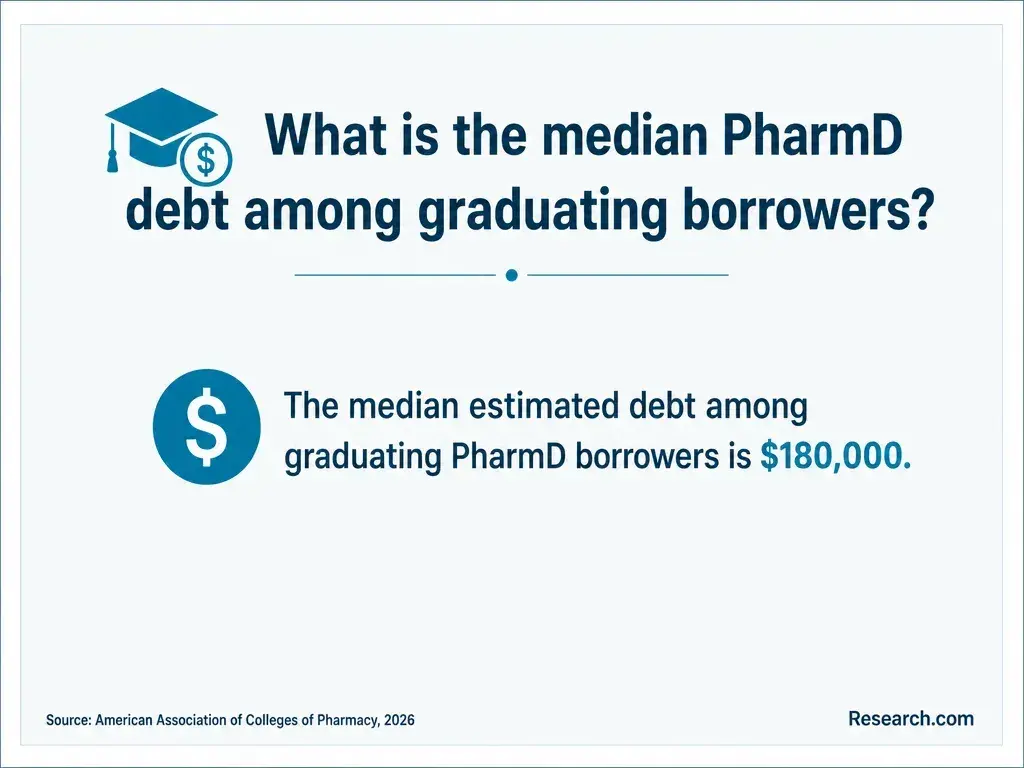
To compare offers, request each school's current cost-of-attendance estimate and a schedule showing when expenses and rotations occur. Explore school aid and eligible service-based repayment programs, but check award conditions rather than assuming an IHS job will erase debt. Federal graduate and professional borrowing rules changed for many new borrowers beginning July 1, 2026; confirm your own eligibility with the financial aid office. Guidance on how to reduce the cost of pharmacy school is most useful when applied to your full budget, not tuition alone.
Federal IHS facilities hire pharmacists for positions that can emphasize outpatient care, hospital services, clinical care, medication safety, or leadership. Tribal and urban Indian health organizations offer related work but are distinct employers with their own hiring terms. Civilian federal employment and service through the U.S. Public Health Service Commissioned Corps are also different routes; review the applicable vacancy and eligibility requirements.
A new licensee may qualify for some positions directly. A postgraduate year one (PGY1) residency develops broad practice skills; a postgraduate year two (PGY2) residency adds focused training. Neither is universally mandatory. Fellowships generally have a different, often research-oriented purpose, while specialty board certification is a separate credential, not a license. If earlier entry into practice matters, compare pharmacy degree programs with shorter timelines against the clinical experience and location opportunities you would give up.
For a practical job search, use the vacancy - not the job title alone - as your checklist:
- Identify the employer, duty station, patient-care responsibilities, license requirements, and any stated hiring preference.
- Ask whether postgraduate training is required, preferred, or unnecessary for that particular role.
- Compare relocation costs, supervision, advancement opportunities, and any loan-repayment eligibility before accepting an offer.
How much do Indian Health Service pharmacists earn and what is the job outlook?
The Bureau of Labor Statistics reports median annual pay of $140,910 for U.S. pharmacists in May 2025 and projects 5% growth from 2025-2035, with about 12,500 openings per year. Those national figures cover pharmacists across employers and settings; they do not predict pay, vacancies, or promotion prospects at a particular IHS site.
For an actual offer, compare the posted pay range and benefits with local living costs, housing availability, relocation expenses, and your expected loan payments. Federal civilian, commissioned, tribal, and urban Indian health roles may use different compensation arrangements. If your goal is pharmaceutical research rather than licensed patient care, doctoral study with a shorter time commitment may be worth comparing - but a shorter non-Pharm.D. doctorate is not an alternative license route to an IHS pharmacist job.
Other Things You Should Know About PharmD
Opportunities depend on the facility and its affiliation agreements, screening rules, and capacity to supervise students. Ask your school's experiential education office and the facility before making plans; volunteering is not a substitute for an approved rotation.
Not necessarily. Federal IHS hiring can apply Indian preference under its rules, but eligibility and selection depend on the vacancy. Read the announcement's "who may apply" and required-document sections rather than assuming you are eligible or ineligible.
No universal certification is required simply to practice with American Indian and Alaska Native patients. Relevant preparation involves listening, learning about the community served, avoiding assumptions, and working with local care teams.
Yes, if they meet a position's licensing and hiring requirements. Retail experience in counseling and medication safety can transfer, but the pharmacist may need to develop additional clinical or population-health skills for the particular job.
- The Indian Health Service (IHS): An Overview | congress.gov https://www.congress.gov/crs-product/R43330
- About Us | Pharmacy Program https://www.ihs.gov/pharmacy/aboutus/
- NHSC Loan Repayment Program | hrsa.gov https://nhsc.hrsa.gov/loan-repayment/nhsc-loan-repayment-program
- American Indian Health Policy: Historical Trends and... - PMC https://pmc.ncbi.nlm.nih.gov/articles/PMC4035886/
- Special Rates Tables | U.S. Office of Personnel Management https://www.opm.gov/special-rates/AllSRTables.aspx
- Application Process | UTHealth Houston https://careers.uth.tmc.edu/us/en/application-process
- How Pharmacists are Transforming Healthcare | University of Findlay https://pharmdonline.findlay.edu/blog/pharmacist-transforming-healthcare