PharmD Rotation Checklist for Students and Preceptors

Co-Founder and Chief Data Scientist
A pharmacy rotation can be derailed before patient care begins: a missing site clearance, unclear schedule, or unspoken expectation may cost valuable learning time. This checklist helps Doctor of Pharmacy (Pharm.D.) students and preceptors decide what to confirm before an introductory or advanced rotation, what to cover on day one, and how to track progress.
Use it alongside your school's experiential handbook and the site's policies; those documents, not a general checklist, determine the requirements for your placement.
Key Things You Should Know
- Confirm school and site approval, required clearances, and any applicable intern registration before reporting; a placement offer alone does not mean a student is cleared to begin.
- Use separate checkpoints for introductory pharmacy practice experiences (IPPEs) and advanced pharmacy practice experiences (APPEs): agree on supervised duties, measurable goals, feedback dates, and required records.
- At orientation, resolve access, patient privacy, escalation, attendance, and evaluation procedures before independent work is expected; students must stay within their authorized, supervised role.
What is a PharmD rotation checklist for students and preceptors?
A PharmD rotation checklist is a shared record of placement requirements, learning goals, daily expectations, and evaluation deadlines. IPPEs introduce students to pharmacy practice during the professional curriculum; APPEs provide more advanced, supervised practice. Neither is the same as undergraduate pre-pharmacy coursework or a pharmacist license.
The checklist should make ownership clear without replacing the school's forms. This table separates the main decisions each party needs to document.
| Decision | Student records | Preceptor confirms |
| Readiness | Clearance status and school instructions | Site approval, access, and permitted duties |
| Learning plan | Goals and evidence of progress | Appropriate activities and observation |
| Completion | Hours, assignments, and evaluations submitted | Feedback and required assessments completed |
If you are still selecting a school, compare pharmacy doctorate options by their published experiential requirements and placement support, not just their classroom format.
What requirements must PharmD students complete before clinical rotations?
Requirements differ by school, site, and state. The experiential office coordinates or approves placements under school policy, but students are generally responsible for submitting their own documents and meeting deadlines. Use this pre-start check with the school's placement portal and the site's instructions.
- Confirm the assigned site, dates, hours, preceptor, reporting location, and whether the school has approved the placement.
- Check whether intern registration or another state-required authorization applies at the rotation site; verify its effective dates and permitted activities.
- Complete required background screening, drug screening if applicable, immunization or health documentation, training, and site onboarding by their stated deadlines.
- Verify liability coverage, identification, transportation, and any required access to the school's rotation and evaluation systems.
- Contact the experiential office promptly if a requirement is pending; do not assume the preceptor can waive a school, site, or legal rule.
Applicants should make this inquiry before enrollment, especially if placements may require travel. Pharmacy school application readiness and clearance for clinical placements are separate questions.
How do students prepare for IPPE and APPE pharmacy rotations?
Preparation should match the rotation's setting and level. An IPPE student may be learning a workflow for the first time; an APPE student may be expected to develop and defend patient-care recommendations under supervision. Ask the preceptor what to review rather than guessing which tasks the site permits.
- Read the school's rotation objectives, grading rubric, attendance rules, and site description; note any required deliverables.
- Review the setting's common conditions, medication-use processes, and approved clinical references without retaining patient information outside authorized systems.
- Draft a brief introduction covering prior experience, skills to develop, and any known scheduling conflicts.
- Plan travel and time away from other work, including a backup for delays; online coursework does not make an in-person rotation remote.
- Send the preceptor only the questions the school or site has not answered, ideally before the first day.
Students entering from science coursework can explore online Pharm.D. options for science graduates, but prior science study does not replace the professional program's required experiential work.
Bring what the site requests, and avoid carrying unnecessary patient or personal information. A small first-day kit reduces preventable access problems.
- Bring required identification, proof of authorization if requested, and the preceptor's contact and arrival instructions.
- Have access to the school's objectives, evaluation platform, and a way to record nonidentifying learning notes.
- Bring site-approved attire and equipment, such as a white coat or device, only if instructed.
- Have a plan for meals, parking, and travel; ask where personal devices may be used before using them in patient-care areas.
If a required in-person schedule is unworkable, investigate shorter online pharmacy education options for different career goals rather than assuming a shorter credential can replace Pharm.D. rotations or qualify you for pharmacist licensure.
The school's agreement, rotation objectives, and site policy define a preceptor's specific duties. In practice, the preceptor should establish safe supervision, provide learning opportunities appropriate to the student's level, observe performance, and submit honest assessments. Delegating a task is not the same as authorizing unsupervised pharmacist practice.
- Confirm the student is approved to start and knows which tasks require direct review or escalation.
- Assign activities that support the rotation objectives while protecting patients, staff, and confidential information.
- Give timely, specific feedback based on observed work and alert the school early if safety, attendance, or performance is a concern.
- Complete required midpoint and final evaluations, or other assessments, by the school's deadlines.
Even students from Pharm.D. programs for a faster path need orientation and supervision based on demonstrated competence, not an assumed level of experience.
Orientation should end with an agreed schedule, a safe scope of student activity, and a way to resolve problems. Record answers in the school's required format or in a shared, nonconfidential planning note.
- Confirm start and end times, attendance reporting, absence procedures, breaks, and any travel between sites.
- Identify the supervising pharmacist, backup contact, permitted student activities, and when a recommendation must be checked before it reaches a patient or care team.
- Review access to records, privacy and documentation rules, emergency procedures, and how to report an error or safety concern.
- Set expectations for presentations, patient cases, reading, feedback meetings, and evaluation submission.
A student hoping to finish an online pharmacy degree sooner should still confirm the rotation's actual onsite schedule; online study does not waive required supervised experiences.
Use the school's rubric as the source of truth. A workable plan connects each goal to observable work, an evidence source, and a review date. It should be revised if patient mix or site operations limit an assignment.
- At the start, write each goal as an observable skill, such as presenting a medication assessment with supporting evidence, rather than "learn more about pharmacy."
- Agree on assignments, due dates, permitted references, and how the preceptor will review work before it is used in care.
- Keep a school-approved record of activities and hours without putting identifiable patient details in personal notes.
- At midpoint, compare progress with the rubric, document a specific improvement plan, and clarify any risk of not meeting requirements.
- Before departure, confirm that final evaluations, assignments, and hour records were submitted to the correct system.
Schools decide whether pharmacy school prior learning credits apply to admission or coursework. Students and preceptors should not treat prior credit as proof that a current rotation competency has been met.
Professionalism is observable: arrive prepared, communicate changes promptly, protect patient information, and acknowledge uncertainty before it becomes a safety problem. Expectations may differ across settings, so ask rather than relying on habits from another site.
- Be on time and report an absence or delay through the site and school channels.
- Introduce your student role accurately; do not imply that you are a licensed pharmacist.
- Seek supervision before acting outside assigned duties, and report mistakes or near misses promptly under site policy.
- Accept feedback without defensiveness, then show the change in subsequent work.
- Use approved systems for patient information; do not place identifiable cases in personal notes, public presentations, or unapproved AI tools.
Admission through pharmacy programs with flexible entry requirements does not alter patient-safety rules or the professional standards used on rotation.
Before committing, confirm the professional Pharm.D. program's current status in the Accreditation Council for Pharmacy Education (ACPE) directory. ACPE accredits programs, not individual pharmacists. Institutional accreditation and authorization to deliver distance education are separate matters.
Ask the experiential office where IPPEs and APPEs may occur, who secures and approves sites and preceptors, whether travel or temporary housing may be necessary, and what happens if a placement falls through. Compare required rotation hours and settings using each school's current handbook. Add placement travel, onboarding, and possible time away from paid work to your cost comparison; advertised tuition alone will not show those costs. If studying online, separately confirm campus visits, hands-on requirements, and whether the school can place you in your intended state.
A low-cost online pharmacy doctorate is a useful starting point for comparison, but a lower advertised price does not resolve placement logistics or licensure eligibility. Ask the school and the relevant state board about your intended path before paying a deposit.
How do PharmD rotations support pharmacist licensure and career pathways?
Rotations build supervised practice experience and help students test whether settings such as community, hospital, or ambulatory care fit their goals. Keep records as your school directs, but do not assume every rotation hour automatically counts toward a particular state's intern-hour requirement; the state board controls that determination.
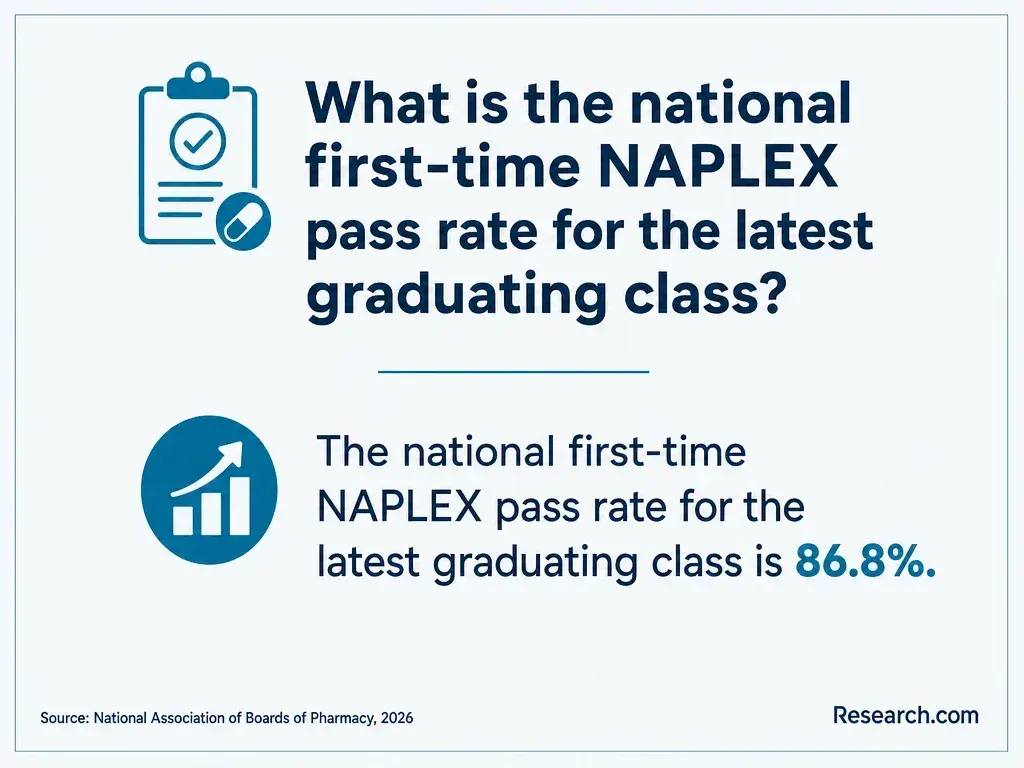
Completing an ACPE-accredited Pharm.D. is an educational milestone, not a license. Graduates must meet the applicable board's requirements, which generally include the North American Pharmacist Licensure Examination (NAPLEX) and may include a jurisdiction-specific law assessment or other conditions. Do not assume every jurisdiction uses the same jurisprudence exam. Residency or fellowship is additional postgraduate training, while board certification is a separate credential; neither automatically grants a state license.
The U.S. Bureau of Labor Statistics reports median annual pay of $140,910 in May 2025 for pharmacists and projects 5% job growth, 2025-2035. Those occupation-wide figures are context for career planning, not a predicted outcome for a graduate or a reason to choose a rotation solely for pay.
If your aim is pharmacist licensure, distinguish the Pharm.D. from online doctorate programs with shorter timelines in other fields. A shorter doctorate does not substitute for the required professional pharmacy education and licensing process.
Other Things You Should Know About PharmD
Possibly, but follow the school's experiential office process before contacting a replacement site or making travel commitments. Approval depends on school policy, site capacity, preceptor eligibility, and timing.
Do not assume so. A school must approve the experience under its policies, and employment at a pharmacy does not automatically satisfy rotation objectives or supervision requirements.
Notify the experiential office promptly. It can determine whether completed work counts and arrange an approved continuation or replacement; keep your records and avoid negotiating academic credit directly with a site.
Discuss your reasoning and contribution without identifiable details, following school and site confidentiality rules. When in doubt, use a de-identified example approved for educational discussion.
- Design Training: Learning Objectives | Training Development https://www.cdc.gov/training-development/php/about/design-training-learning-objectives.html
- FERPA | Protecting Student Privacy - Department of Education https://studentprivacy.ed.gov/ferpa
- Preceptor Development: Providing Effective Feedback - PMC https://pmc.ncbi.nlm.nih.gov/articles/PMC3839441/
- Preceptor Responsibilities | Austin College PA Program https://paprogram.austincollege.edu/become-a-preceptor/preceptor-responsibilities/
- Performance Evaluation - WSU College of Nursing https://nursing.wsu.edu/student-policies-procedures/performance-evaluation/
- Program Lookup | Accreditation Council for Pharmacy Education https://www.acpe-accredit.org/program-lookup/
- What Preceptors Expect From NP Students | PreceptorLink https://www.preceptorlink.com/blog-posts/what-preceptors-expect-from-np-students
- 12 Tips for Clinical Rotations: Advice from Preceptors | Fitzgerald Health Education Associates https://www.fhea.com/resource-center/12-tips-for-succeeding-in-clinical-rotations-practical-advice-from-preceptors/
- How to Develop a Managed Care Pharmacy IPPE/APPE https://www.amcp.org/resource/how-develop-managed-care-pharmacy-ippeappe