Pharmacist Job Outlook by Healthcare Setting

Co-Founder and Chief Data Scientist
A pharmacist's career prospects depend on more than the national job-growth rate. A community pharmacy may offer a more direct entry route than a hospital specialty team, while an ambulatory care position may call for additional clinical training.
For prospective Pharm.D. students and pharmacists considering a move, this guide compares where the jobs are, what employers tend to require, and how setting affects pay and working conditions. Use it to identify a realistic target setting before choosing a program, taking on debt, or pursuing postgraduate training.
Key Things You Should Know
- The Bureau of Labor Statistics projects 5% growth for pharmacists from 2025-2035, with about 12,500 openings per year; those are occupation-wide estimates, not forecasts for individual settings.
- Retail and hospital employers account for the largest shares of pharmacist jobs, but their schedules, patient-care work, and hiring expectations differ substantially.
- The pharmacist median annual pay was $140,910 in May 2025. Compare actual offers alongside debt, location, hours, and any training needed to reach your preferred setting.
What Is the Pharmacist Job Outlook by Healthcare Setting?
The outlook is positive overall but uneven in practice. The Bureau of Labor Statistics (BLS) projects 5% pharmacist employment growth from 2025-2035. That figure combines positions across settings; it does not mean retail, hospitals, clinics, and specialty pharmacies will each grow at that rate.
Community pharmacies need pharmacists to dispense medications, counsel patients, and provide services permitted under state law, but openings depend on local store networks, staffing decisions, and patient demand. Hospitals and clinics also employ pharmacists in medication management and direct care, often with more specialized hiring criteria. Specialty pharmacy and health-system roles may appeal to graduates interested in complex therapies, though the number and requirements of openings vary by employer.
Decision point: Search actual postings in the region where you intend to work. Compare required licenses, schedules, experience, and residency preferences - not just job titles. Be wary of a shortcut marketed as pharmacy education with shorter completion time: a shorter pharmacy-related credential does not replace the professional Pharm.D. and state licensure required for pharmacist positions.
Which Healthcare Settings Employ the Most Pharmacists?
Retail pharmacies, including those in drugstores and other stores, employ the largest share of pharmacists; hospitals are another major employer. Smaller settings can be attractive career targets, but a narrower local market may mean fewer entry-level openings.
The comparison below shows what pharmacists commonly do in each setting and which hiring distinction matters most. These are broad categories, not a ranking of current vacancies in your area.
| Setting | Typical work | Hiring consideration |
| Retail or community pharmacy | Dispensing, counseling, immunization and other authorized services | Patient-facing pace, staffing model, and evening or weekend coverage |
| Hospital or health system | Medication verification, inpatient care, safety, and clinical-team support | Residency or relevant experience may be preferred for clinical roles |
| Ambulatory care clinic | Longitudinal medication management with outpatient teams | Clinical experience and the employer's practice model matter |
| Long-term care or specialty pharmacy | Medication review, complex therapies, or care coordination | Workflow and patient contact differ substantially by employer |
| Managed care and other nontraditional roles | Formulary, utilization, safety, or population-health work | Openings may call for experience beyond dispensing |
A pharmacy technician role is a different occupation with different entry requirements; its availability should not be counted as pharmacist demand. Likewise, fast online doctoral study in another discipline is not a substitute for pharmacist education and licensure.
What Is the Salary Outlook for Pharmacists by Practice Setting?
The BLS reports median annual pay of $140,910 for pharmacists in May 2025. That occupation-wide median is a useful benchmark, not an expected offer in a particular setting. Pay can vary with location, employer, shifts, experience, responsibilities, and whether a position includes supervisory or specialized work.
Compare compensation on the same basis. A hospital offer with nights or weekends, a retail offer with performance expectations, and an ambulatory care offer with a different benefits package may have very different practical value even when base salaries look similar. Residency can help candidates pursue some roles, but it also postpones full pharmacist earnings and is not required for every pharmacist job.
For prospective students, connect salary research to pharmacy doctorate financial planning. Compare the full cost of each educational route with plausible entry-level offers in your target location; do not assume a specialty title will repay additional tuition or training costs.
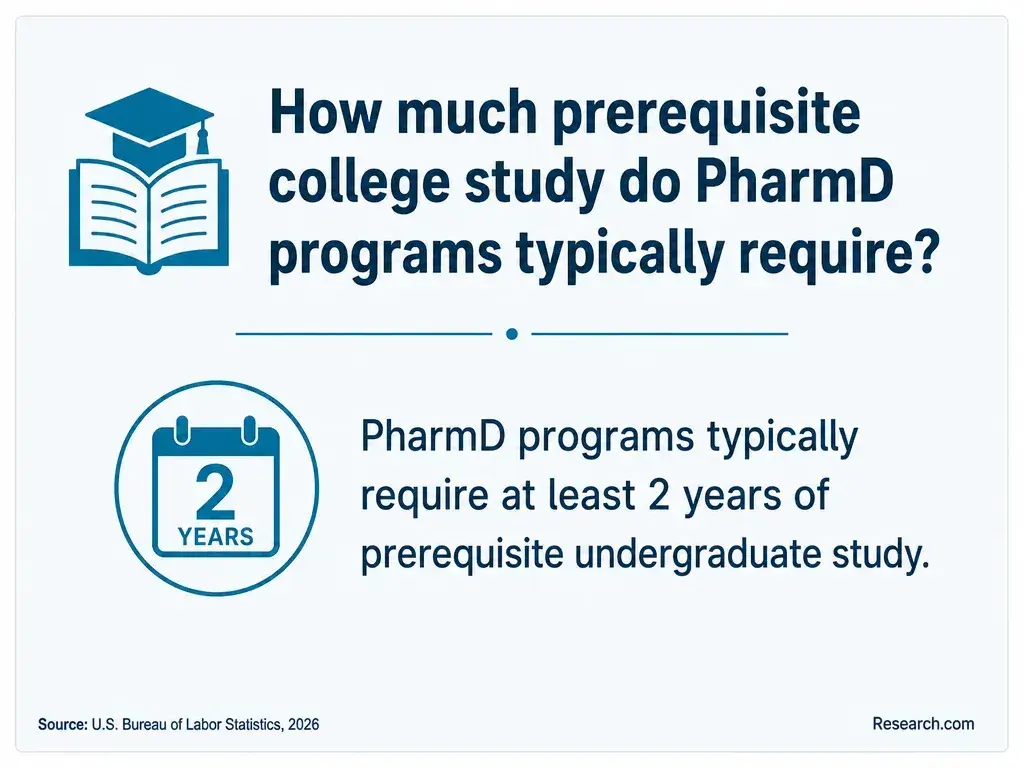
U.S.-educated applicants generally complete a professional Doctor of Pharmacy (Pharm.D.) program before seeking pharmacist licensure. Undergraduate pre-pharmacy courses establish the science and general-education foundation for admission; they are not the professional Pharm.D. curriculum. A bachelor's degree is not a universal admission requirement - schools set their own prerequisite coursework and other criteria.
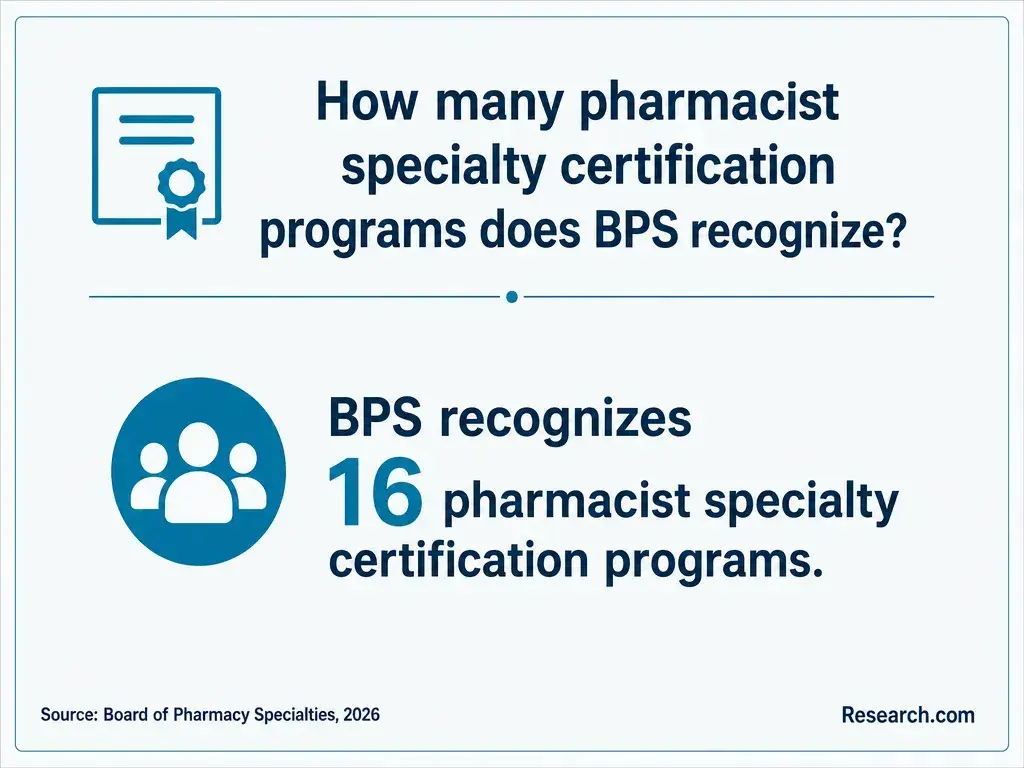
After the Pharm.D., graduates can seek pharmacist positions once they meet their state's licensing requirements. A postgraduate year one residency (PGY1) provides structured general practice training; a postgraduate year two residency (PGY2) develops more focused expertise. Some employers prefer either for particular clinical jobs, while others hire licensed pharmacists directly. Industry fellowships serve different career goals, and optional specialty board certification is not a state pharmacist license.
If you are still planning prerequisites, compare schools' published pharmacy degree entry requirements against your transcripts. Do not assume that eligibility to apply means every missing course may be completed after enrollment.
Accreditation Council for Pharmacy Education (ACPE) professional-program accreditation is a critical check for a U.S. Pharm.D. pathway: state boards generally require graduation from an ACPE-accredited professional program for the standard U.S.-educated licensure route. Confirm a program's current status in ACPE's official directory and check the board rules in the state where you intend to practice. Internationally educated pharmacists generally follow a separate pathway with additional requirements.
ACPE accreditation concerns the professional pharmacy program. It is distinct from a university's institutional accreditation and from state authorization to enroll an online student or place that student at a clinical site. None of these statuses, by itself, issues an individual pharmacist license.
Accreditation also does not decide whether previous classes satisfy admission prerequisites. If you hope to use transfer coursework toward pharmacy prerequisites, request a course-by-course review from the receiving school before committing; prerequisite acceptance is not the same as transfer into its professional curriculum.
A Pharm.D. graduate must meet the requirements of the state or other jurisdiction where they seek to practice. These commonly include an application to the board of pharmacy, required supervised experience, the North American Pharmacist Licensure Examination (NAPLEX), and a jurisdiction-specific law assessment where required. A jurisdiction may use the Multistate Pharmacy Jurisprudence Examination (MPJE), the Uniform MPJE (UMPJE), another assessment, or a different process; do not assume the MPJE applies everywhere.
Students may also need intern registration before certain supervised practice experiences. Check the relevant board's current rules for eligibility, examinations, background checks, and experience credit - especially if school, rotations, and intended employment are in different states. Passing an exam does not itself issue a license.
Programs with varied pharmacy admission routes may broaden your school choices, but admission standards and licensing standards answer different questions. Verify both before treating an offer of admission as a viable route to practice.
The professional curriculum connects drug science to patient care. Students study how medications work, how to assess and manage drug therapy, how to counsel patients, and how to identify safety concerns. They also develop communication, calculations, evidence-evaluation, and interprofessional skills. A program's exact courses and sequence vary.
Supervised introductory pharmacy practice experiences (IPPEs) introduce students to practice settings. Advanced pharmacy practice experiences (APPEs) provide more extensive clinical rotations, which can help students test whether community, hospital, ambulatory, or another setting suits them. Rotations are educational placements, not promises of employment, and students must practice within applicable supervision and state rules.
Applicants coming from biology or chemistry can explore online pharmacy programs for science-background students, but scientific preparation alone does not replace the professional patient-care curriculum. Ask schools which settings students can experience and who coordinates placements.
Many Pharm.D. programs have a four-year professional curriculum after required pre-pharmacy coursework; some use an accelerated academic calendar. The total time from your starting point depends on which prerequisites you have completed and whether a school accepts them. Compare published calendars and rotation schedules, rather than assuming an accelerated option reduces every student's total time.
Tuition alone understates the investment. Before comparing offers, build a school-specific budget covering the costs that could change your decision:
- Professional tuition and mandatory fees, plus any remaining prerequisite coursework.
- Books, clinical resources, equipment, and required technology.
- Background checks, immunizations, and costs associated with clinical placements.
- Travel or temporary housing for campus requirements and rotations.
- Licensure applications and examinations after graduation.
Pharm.D. programs with an accelerated format may reduce time away from full-time earnings but can compress study and limit work flexibility. Also ask the financial aid office how rules effective July 1, 2026, affect your borrowing eligibility; do not rely on older assumptions about federal professional-student limits or Grad PLUS access.
Some Pharm.D. programs deliver academic instruction online or in a hybrid format. "Online" does not necessarily mean asynchronous, self-paced, or fully remote: hands-on activities, assessments, campus visits, IPPEs, and APPEs may require in-person attendance. Clinical schedules can make it difficult to maintain unrestricted full-time employment.
When comparing online Doctor of Pharmacy degree options, confirm the current delivery requirements with each school. Ask who finds and approves rotation sites, whether a placement near home is possible, what travel may be required, and whether the school can enroll and place you in your state. Check ACPE program accreditation, distance-education authorization, and intended-state licensure eligibility separately.
If predictable local rotations are essential, a campus program with established nearby sites may be preferable to a remote pathway that requires travel. Neither format eliminates the supervised practice or licensing requirements for pharmacists.
How Can Students Choose a Reputable Pharmacy Program?
Start with your intended job setting, then compare schools on evidence that could affect your path to that job: accreditation, prerequisites, total cost, rotation access, licensure preparation, and graduate outcomes. Published NAPLEX results can provide context, but a pass rate does not predict an individual student's result or establish that a school places graduates in a particular setting.
Use these checks before paying a deposit:
- Confirm the professional program's current ACPE status and ask your intended state board about licensure eligibility.
- Have each school review your prerequisites, including labs and any transfer coursework.
- Request a full cost estimate and ask the aid office which borrowing rules apply to you.
- Get written details on campus attendance, rotation coordination, likely travel, and schedule constraints.
- Review recent job postings in your target setting to see whether employers require or prefer residency, experience, or particular clinical skills.
Be especially cautious of claims that online pharmacy course completion timelines for shorter credentials describe the time needed to qualify as a pharmacist. Choose the route whose documented requirements and costs support your intended practice setting - not the one with the most appealing headline duration.
Other Things You Should Know About PharmD
Yes, but eligibility for a particular role depends on the employer. Relevant experience, training, or a residency may strengthen an application; a current pharmacist license alone may not meet every clinical job's hiring criteria.
It can. The mix of employers and available positions differs by location. Check local postings and ask prospective employers about staffing, on-call coverage, and the range of services the role provides.
Yes. Some positions emphasize medication safety, formulary work, utilization review, informatics, or operations. Their experience requirements and degree of patient contact vary by employer.
Authority varies by state, medication, and practice arrangement. A job description or Pharm.D. curriculum does not establish what an individual pharmacist may prescribe; consult the applicable state law and board guidance.
- Update on Pharmacist Workforce Data and Thoughts... - PMC https://pmc.ncbi.nlm.nih.gov/articles/PMC7596609/
- Pharmacy Contributions to Improved Population Health | cdc.gov https://www.cdc.gov/pcd/issues/2020/20_0350.htm
- Pharmacist - Explore Healthcare Careers | Mayo Clinic College of Medicine and Science https://college.mayo.edu/academics/explore-health-care-careers/careers-a-z/pharmacist/
- What Do Pharmacists Do? A Day in the Life of a Pharmacist | Roseman University https://www.roseman.edu/student-experience/news/a-day-in-the-life-of-a-pharmacist/
- ASHP Survey of Health-System Specialty Pharmacy Practice | oup.com https://academic.oup.com/ajhp/article/80/24/1796/7281733
- Rural health care infrastructure: Trends and considerations for the future | Brookings https://www.brookings.edu/articles/rural-health-care-infrastructure-trends-and-considerations/
- What Are the Different Types of Pharmacist Careers? | University of Findlay https://pharmdonline.findlay.edu/blog/what-are-different-types-pharmacist-careers
- 20 Types of Pharmacists [+ Required Skills & Salary] | Marshall University https://www.marshall.edu/blog/types-of-pharmacists/
- Demystifying the Work of Clinical Pharmacists | Touro University California https://tu.edu/news--events/stories/all-stories/demystifying-the-work-of-clinical-pharmacists.php
- The Differences Working in a Hospital vs. Community Pharmacy | TRC Healthcare https://trchealthcare.com/the-differences-working-in-a-hospital-vs-community-pharmacy/