
Pharmacist licensure checklist for New York graduates

Co-Founder and Chief Data Scientist
Finishing a Doctor of Pharmacy (Pharm.D.) degree is a major milestone, but it does not authorize you to practice as a pharmacist in New York. Graduates still need to document their education and supervised experience, complete the examinations New York requires, and receive a license from the New York State Education Department (NYSED). This checklist is for students planning their final year and graduates preparing to apply. It shows what to confirm, what to submit, and which delays to avoid before accepting a pharmacist position.
Key Things You Should Know
- A Pharm.D. alone is not a New York pharmacist license; NYSED must accept your education and experience, receive required exam results, and issue the license.
- New York's experience requirement is generally 1,500 hours; graduates should confirm how their school will document qualifying experiential education rather than assume every work hour counts.
- Check New York's current examination instructions before registering: the North American Pharmacist Licensure Examination (NAPLEX) assesses pharmacy practice, while the applicable jurisprudence exam assesses pharmacy law.
What are the New York pharmacist licensure requirements for graduates?
For the usual U.S.-educated graduate route, New York requires qualifying pharmacy education, acceptable supervised experience, satisfactory examination results, and an approved license application. Graduation, exam passage, and authorization to practice are separate milestones.
Use this sequence as your working checklist. It identifies the decisions that can hold up an application even after commencement:
- Confirm that your professional pharmacy program qualifies for New York licensure and that the school can send the required education verification.
- Ask whether your completed experiential education satisfies New York's experience requirement or whether you must document additional supervised hours.
- Check NYSED's current examination requirements and obtain authorization before scheduling each required exam.
- Submit the license application, fee, and any applicant-supplied forms; arrange for schools, supervisors, and exam administrators to send their records as directed.
- Wait for NYSED to issue your license and verify its status before beginning work that requires a licensed pharmacist.
If you are still choosing a school, distinguish pharmacy school requirements and exceptions from licensure requirements. An admissions exception does not waive a New York licensing condition.
Which pharmacy degree and accreditation qualify for New York licensure?
The standard educational route is a qualifying professional Pharm.D. program. Undergraduate pre-pharmacy courses prepare students to enter that program; a degree in pharmaceutical sciences, pharmacology, or pharmacy technology does not by itself meet the pharmacist-degree requirement.
For a U.S. program, check its Accreditation Council for Pharmacy Education (ACPE) professional-program accreditation and whether its graduates meet NYSED's education rules. ACPE accredits programs, not individual pharmacists. A university's institutional accreditation and permission to offer online instruction are separate matters; neither substitutes for a qualifying professional pharmacy program.
Previous college coursework may reduce the prerequisites you need before admission, but it does not automatically shorten the professional degree. If that affects your plans, ask the receiving school how you can apply prior college credits to pharmacy programs and obtain its decision in writing. Internationally educated pharmacists should use NYSED's applicable foreign-education pathway rather than assume the U.S.-graduate documentation process applies to them.
What exams must New York pharmacy graduates pass to become licensed?
The NAPLEX, administered through the National Association of Boards of Pharmacy (NABP), tests knowledge and skills used in pharmacy practice. Applicants must also meet New York's current pharmacy-law examination requirement. Confirm the designated New York jurisprudence exam with NYSED and NABP before paying or booking: states do not all use the same exam, and some jurisdictions have changed their exam arrangements.
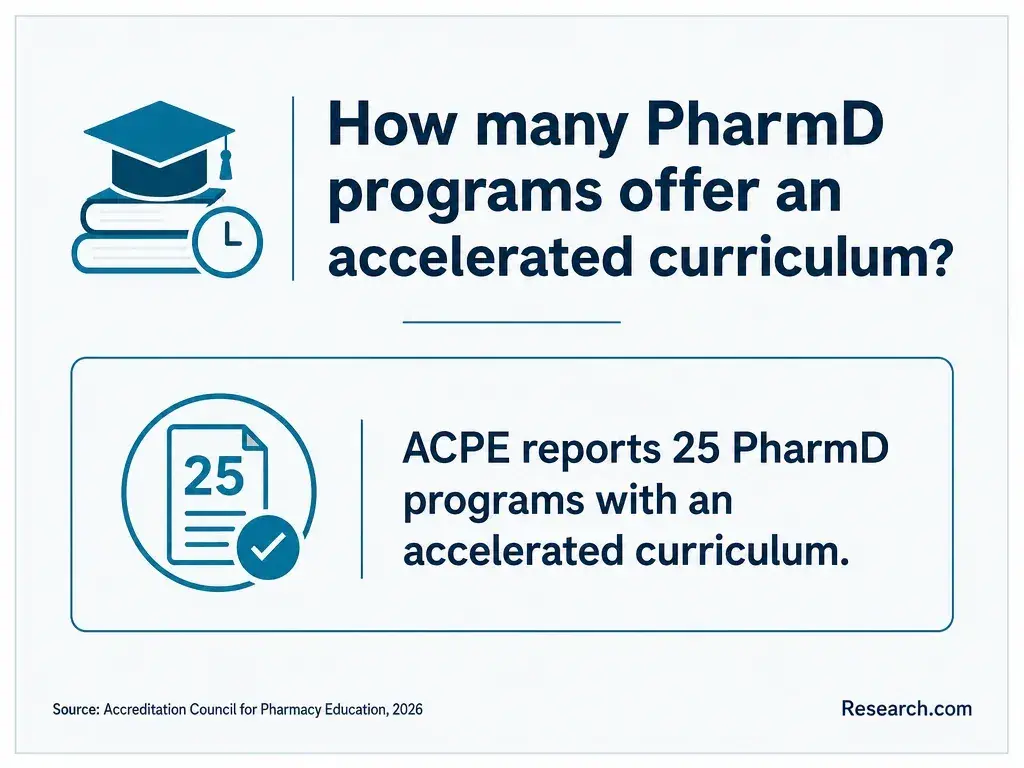
Follow the current authorization, scheduling, identification, retake, and score-reporting instructions for each exam. A passing score is one requirement in the application - not permission to practice while the license is pending. Accelerated pharmacy education options may change how soon a student reaches graduation, but they do not waive New York's licensing exams.
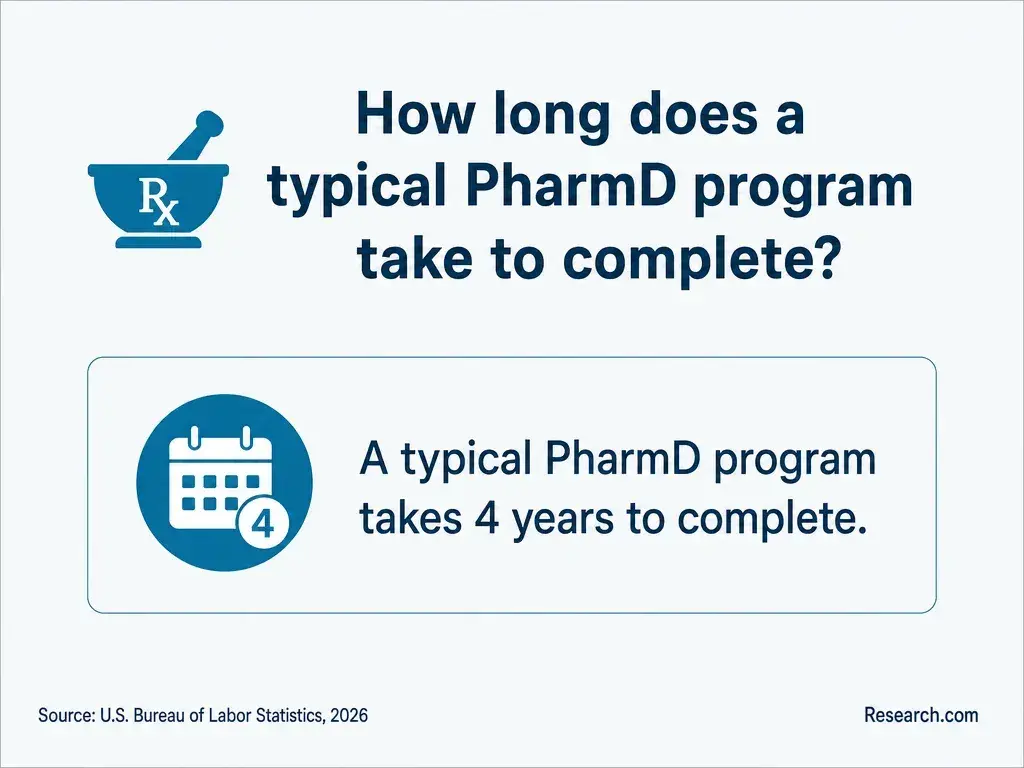
New York generally requires 1,500 hours of acceptable supervised pharmacy experience. For graduates of qualifying pharmacy programs, required experiential education may satisfy this requirement; the important question is how NYSED will verify your experience. Introductory and advanced pharmacy practice experiences are supervised components of the professional curriculum, not the same as undergraduate prerequisites or unsupervised pharmacy employment.
Before graduation, ask your school which rotations or other experiences it will certify, who sends verification, and whether any hours need separate supervisor documentation. Keep records of dates, sites, supervisors, and completed hours. Do not assume a job in a pharmacy, a rotation arranged independently, or hours completed under another state's rules will automatically qualify.
Rotation logistics also matter when comparing online Pharm.D. schools to compare. Online coursework does not eliminate in-person supervised practice, and a school may need to approve the site and preceptor.
A New York pharmacy intern permit is authorization for an eligible student or graduate to perform activities permitted to an intern under the required supervision. It is not a pharmacist license. Whether you need the permit for a particular rotation or graduate internship depends on your status, the work you will perform, and New York's rules; confirm the requirement with NYSED, your school, and the placement site before starting.
If you need a permit, check its application requirements and validity dates against your planned work. A program advertised among the fastest online pharmacy degree programs is not a substitute for the professional degree, supervised experience, or intern authorization required for New York licensure. Verify the exact credential rather than relying on its advertised completion time.
Apply through NYSED's Office of the Professions using its current pharmacist application instructions. The application is only one part of the file: NYSED may require information sent directly by your pharmacy school, exam administrator, or other verifying party.
Separate what you submit from what others must send. This order helps expose missing records early:
- Review NYSED's current pharmacist licensing and examination instructions for your education pathway.
- Submit the license application and required payment using NYSED's accepted method.
- Request education and experience verification from the school or supervisor in the format NYSED specifies.
- Arrange for required exam results and any other applicable records to reach NYSED.
- Follow up on missing items, then confirm that NYSED has issued the license before practicing as a pharmacist.
If you are applying to pharmacy school rather than for a license, pharmacy education after a pre-pharmacy track is an earlier, separate process. A school application, Pharm.D. admission, and NYSED license application cannot stand in for one another.
Expect to account for the NYSED application and licensing fee, examination charges, and any separately required intern-permit or record-transmission charges. Consult the current NYSED and NABP fee schedules before budgeting or paying; fees and payment procedures can change. School and experience records may need to come directly from the issuing organization rather than from your own copy.
This worksheet separates the records you can prepare from those you must request. Fill it in against NYSED's current instructions for your pathway:
| Item to confirm | Responsible party | Your status or amount |
| License application and NYSED fee | Applicant | ________________ |
| Official pharmacy education verification | School | ________________ |
| Qualifying experience verification, if requested separately | School or supervisor | ________________ |
| Required exam registration, fees, and results | Applicant and exam administrator | ________________ |
| Intern-permit records or other pathway-specific documents, if applicable | Applicant and verifying organization | ________________ |
For students still evaluating a degree, online pharmacy degree affordability should include rotation travel and licensing costs - not just advertised tuition.
There is no single reliable number of weeks from graduation to licensure. Timing depends on when your degree and experience are verified, exam authorization and appointment availability, passing results, and whether NYSED receives a complete application. A failed exam or missing third-party document can extend the process.
Plan backward from a potential job start date: ask your school when it sends final verification, check exam registration and retake policies, and allow time for NYSED review. Do not promise an employer that you can work as a pharmacist on graduation day. If you are choosing a degree route, compare pharmacy programs balancing cost and time using the full path to eligibility, including prerequisites and rotations, rather than an advertised program length alone.
A New York license permits its holder to practice pharmacy within New York law and the limits of the role. Opportunities may include community, hospital, ambulatory-care, and other pharmacy settings; specific activities, such as immunization or collaborative practice, can carry additional conditions. A New York license does not automatically authorize practice in another state.
The U.S. Bureau of Labor Statistics reports median annual pay of $140,910 in May 2025 for pharmacists, with 5% projected job growth, 2025-2035. These are national figures, not a promised New York starting salary or a forecast for any one specialty. Residency or fellowship training can support particular career goals, while board certification is a separate credential; none replaces state licensure.
For someone who wants to work in a pharmacy but not practice as a pharmacist, technician work is a distinct occupation that does not ordinarily require a Pharm.D. Prospective pharmacists comparing pharmacy programs with flexible entry requirements should first confirm that the resulting credential actually leads toward pharmacist eligibility.
What continuing education is required to maintain a New York pharmacist license?
New York pharmacists must maintain their license registration and complete qualifying continuing education (CE) under NYSED's current renewal rules. New York generally requires 45 contact hours per three-year registration period, subject to applicable rules and exceptions. Check the current requirements for acceptable providers, live participation, required subjects, record retention, and any exception that applies to your first registration period.
Keep certificates and a dated CE log as you earn credit; do not wait until renewal to determine whether a course counts. Maintaining a license through CE is different from pursuing online doctoral study duration: New York does not require another doctorate for routine pharmacist license renewal.
Other Things You Should Know About PharmD
Not automatically. Apply under the other state's licensing rules and confirm whether license transfer is available; that state may impose additional requirements.
No. Residency is postgraduate training, not a general condition of initial pharmacist licensure. Some employers or specialized roles may prefer or require it.
Do not represent yourself as a licensed New York pharmacist or perform work requiring that license until NYSED has issued it. Ask your employer which duties your current authorization permits.
Review NYSED's requirements for pharmacists licensed in another jurisdiction. Prior licensure may affect your application route, but it does not itself grant a New York license.
- 49 Pa. Code § 27.26. Pharmacy internship. | pacodeandbulletin.gov https://www.pacodeandbulletin.gov/secure/pacode/data/049/chapter27/s27.26.html
- General Licensing Information - Office of the Professions - Nysed https://www.op.nysed.gov/about/general-information-policies
- Pages - Frequently Asked Questions https://www.njconsumeraffairs.gov/phar/Pages/FAQ.aspx
- Promoting Internship Excellence: Key Strategies Employed by Pharmacy Schools for Successful Development - PMC https://pmc.ncbi.nlm.nih.gov/articles/PMC10710273/
- Pharmacist Licensure Guide | Department of State https://www.pa.gov/agencies/dos/resources/professional-licensing-resources/licensure-processing-guides-and-timelines/pharmacist-guide
- Colorado Pharmacy Intern FAQ's https://dpo.colorado.gov/Pharmacy/InternFAQ
- Section 4729.08 - Ohio Revised Code https://codes.ohio.gov/ohio-revised-code/section-4729.08/9-29-2017


