How to find local PharmD rotation sites

Co-Founder and Chief Data Scientist
A nearby pharmacy may look like an ideal rotation site, but proximity alone does not make it an approved placement. Doctor of Pharmacy (Pharm.D.) students need supervised experiences that meet their school's curriculum, preceptor, and scheduling rules. For prospective students, local placement support can also determine whether a program is practical to attend. This guide explains how to find potential sites, who must approve them, and how to weigh travel, costs, and career goals before committing to a placement or a school.
Key Things You Should Know
- Start with your school's experiential education office: a willing local pharmacist cannot independently approve a Pharm.D. rotation.
- Ask which required experiences can be completed locally, not just whether the school has nearby sites; advanced pharmacy practice experiences (APPEs) generally include at least 1,440 hours under ACPE standards.
- Compare approved site availability, preceptor supervision, schedule, commute, and possible temporary housing before treating a placement as affordable.
How Do Pharmd Students Find Local Rotation Sites?
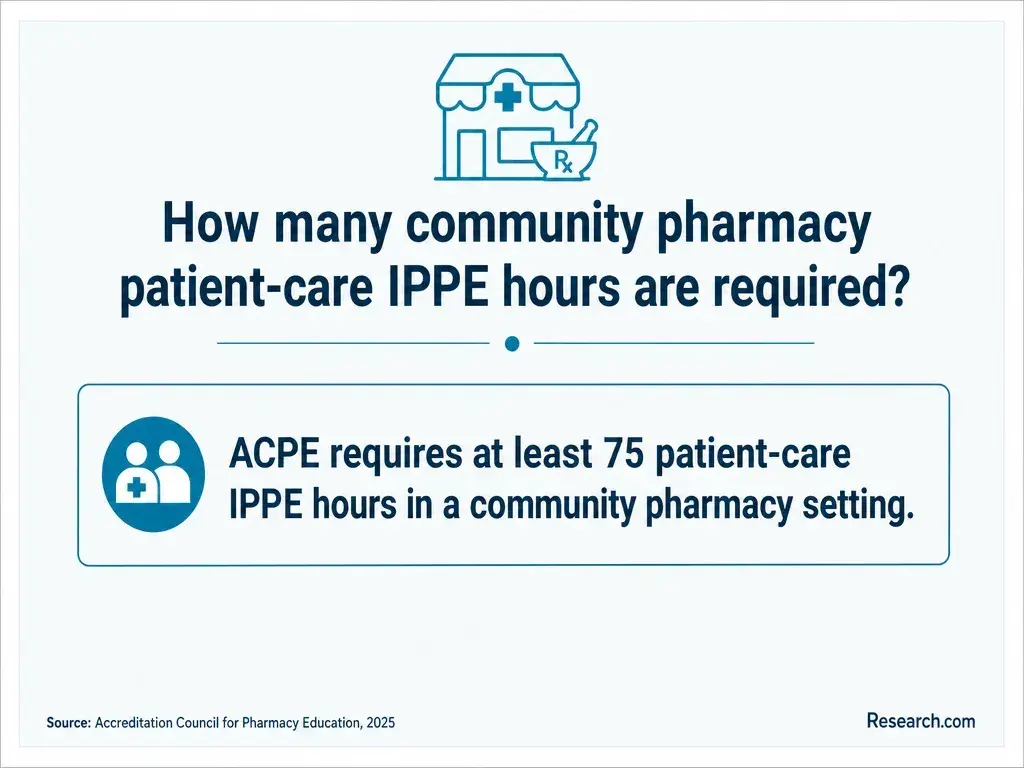
Begin with the pharmacy school's experiential education office and its approved-site directory or placement process. Pharm.D. rotations include introductory pharmacy practice experiences (IPPEs), which introduce students to practice, and APPEs, which provide more advanced supervised work. Schools set the placement calendar and determine whether a site can meet the objectives for each experience.
Use this sequence to find a local option without promising a site something your school cannot approve:
- Get the required rotation types, dates, geographic preferences process, and site-request deadline from your school.
- Search the school's approved sites first, noting which locations actually offer the rotation you need during the relevant block.
- Ask the experiential office whether it accepts student-suggested sites and what information it needs before you contact a pharmacist.
- If permitted, identify a prospective preceptor and ask about capacity, supervision, and availability without representing the placement as confirmed.
- Submit the request through the school's process and wait for written approval before making travel or work-schedule commitments.
If you have not enrolled, ask each school how it serves your home region before selecting a program. Comparing pharmacy degree entry options is useful, but admission and access to local rotations are separate questions.
Does the Pharmacy School Arrange PharmD Rotation Placements?
Typically, the school coordinates or approves placements, establishes educational requirements, and evaluates whether sites and preceptors qualify. Its exact role varies: one program may assign students from an existing network, while another may allow students to nominate local sites for review. Students may still need to rank preferences, complete onboarding, arrange transportation, and respond quickly when a placement changes.
Ask the school who secures the preceptor, handles site agreements, resolves cancellations, and finds a replacement if a proposed local site falls through. Also ask whether sites near your address are available for each required type of rotation. A school's regional partnerships do not guarantee that every student will receive a nearby assignment.
If you are considering a school change, do not assume its placement network—or completed experiences—will carry over with your coursework. Policies for pharmacy programs that accept transfer credits are distinct from the receiving school's decision about rotation credit and future sites.
What Types of Local PharmD Rotation Sites Are Available?
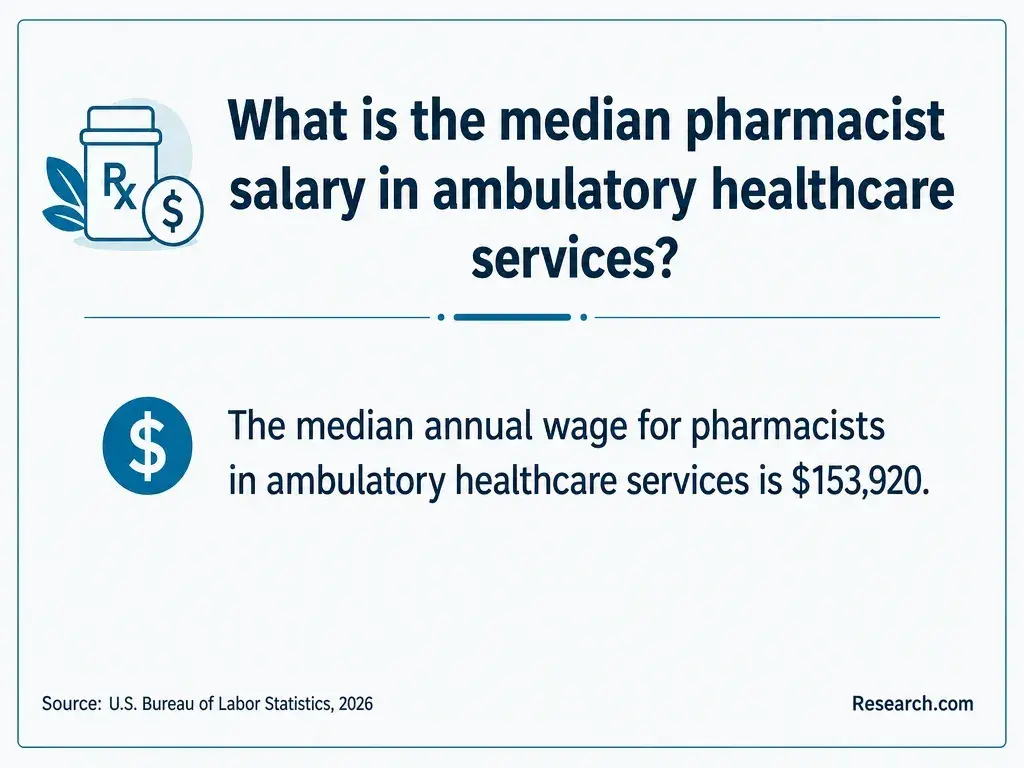
Potential sites include community pharmacies, hospitals, ambulatory care clinics, health systems, long-term care organizations, and other approved practice settings. Availability depends on the school's curriculum, qualified preceptors, and local capacity—not simply on whether a facility employs pharmacists.
The comparison below shows what different settings can offer. It describes typical learning opportunities, not a promise that a particular site qualifies for a required rotation.
| Setting | Typical learning focus | Availability consideration |
| Community pharmacy | Dispensing workflows, patient counseling, and medication access | A nearby store still needs an approved preceptor and an open student slot. |
| Hospital or health system | Medication-use systems and care with clinical teams | Required acute-care experiences may have fewer local openings. |
| Ambulatory care clinic | Longitudinal medication management and patient follow-up | Services and student responsibilities vary by clinic. |
| Elective setting | Areas such as specialty pharmacy, industry, or public health | The school must decide whether the experience meets elective objectives. |
Students coming from biology or chemistry may be especially interested in research-oriented electives. When comparing pharmacy degree options for science majors, remember that an elective interest does not replace required patient-care experiences.
The best site is one that meets a required educational objective, offers dependable supervision, and is workable for your schedule and budget. A convenient elective cannot substitute for a required experience merely because both involve pharmacists.
For each approved option, compare the work you will actually do, preceptor availability, patient population, feedback process, shift expectations, commute, and any housing needs. Ask how the site handles absences and whether its schedule conflicts with employment or caregiving. A longer commute may be worthwhile for a required setting or a strong career match; it may not be worthwhile when a comparable approved site is closer.
Students considering Doctor of Pharmacy accelerated tracks should examine rotation calendars particularly closely. A compressed academic schedule can leave less room to recover from a missed block or delayed site approval.
Requirements depend on the school, site, and state. Common conditions include completing prerequisite professional coursework, meeting academic and professional conduct standards, documenting immunizations or health screening, completing background checks or drug screening, and finishing privacy or safety training. Some states require a pharmacy intern registration or similar authorization for student activities.
Get the school's clearance checklist and each site's onboarding deadline early. A hospital may require documentation beyond the school's baseline requirements, and an expired document can prevent a student from starting on time. Confirm who pays for screening and whether the school or site submits the paperwork.
These rotation clearances are different from the undergraduate coursework needed to enter a Pharm.D. program. If you are still applying, assess pharmacy degree eligibility options separately from the requirements you will face later at clinical sites.
Often, yes—but a request is not a reservation. Schools may invite location rankings or preceptor nominations, then assign students according to curricular needs, site capacity, affiliation agreements, and fairness rules. A preceptor who agrees to talk with you may still be unable to host you in the required block.
Submit preferences by the school's deadline and explain material constraints, such as an accessibility need or a documented travel limitation, through the appropriate school process. Ask when assignments become final and what happens if a site withdraws. Avoid signing a lease or declining another approved placement based solely on an informal invitation.
Keep program length and placement certainty separate when you compare online doctorate lengths. A shorter advertised timeline does not establish that a requested local preceptor will be available when you need one.
Online or hybrid coursework does not make pharmacy practice experiences virtual. Students generally complete required IPPEs and APPEs in person at approved sites, and a program may also require campus visits or hands-on sessions. The school must explain how it approves sites and preceptors for students living away from campus.
Before enrolling in Doctor of Pharmacy distance learning programs, ask whether the school already has approved sites near you, whether you must help identify sites, and what happens if none is available for a required experience. Verify separately that the program holds applicable ACPE professional-program accreditation, can enroll you in your state, and can arrange the clinical experiences you need there. Institutional accreditation, distance-education authorization, and placement approval address different issues.
There is no reliable universal commute. Distance depends on your school's network, where you live, the rotation type, and openings during your assigned block. Some students can commute from home; others may need a longer drive or temporary housing, particularly for a required setting that has limited local capacity.
Ask the school for its written geographic assignment policy and examples of recent placements for students in your area. Clarify whether a stated distance is measured from campus or your residence, whether travel outside the region can be required, and how much notice you will receive. When evaluating online pharmacy degree time to completion, check the credential being described: a short online pharmacy program is not necessarily a Pharm.D., and an online format does not eliminate rotation travel.
Budget beyond tuition. Possible rotation expenses include commuting, parking, temporary housing, required clothing, health documentation, background checks, and site-specific onboarding. A distant placement can also reduce your ability to work paid hours. Ask which costs the school covers, whether any housing assistance is available, and when expenses are due.
Compare those costs alongside pharmacy doctorate tuition and fees rather than judging a program by its advertised tuition alone. If you expect to borrow, request a current cost-of-attendance estimate and discuss your individual aid eligibility with the school's financial aid office; federal borrowing rules changed for many new graduate and professional borrowers beginning July 1, 2026.
How Do PharmD Rotations Support Pharmacist Licensure and Careers?
Rotations build supervised patient-care and practice skills and help students test career interests across settings. Keep records of completed experiences and ask your school and intended state board how educational experiences relate to that jurisdiction's licensure requirements. Requirements vary; completing a Pharm.D. does not itself issue a pharmacist license.
U.S. pharmacist licensure generally involves graduating from an eligible pharmacy program, meeting the state board's requirements, and passing the applicable examinations, including the North American Pharmacist Licensure Examination (NAPLEX). Jurisprudence testing varies by jurisdiction; do not assume every state uses the MPJE. A residency or fellowship is postgraduate training, not a substitute for a license, and specialty board certification is a separate credential.
If your goal is pharmacy-adjacent work rather than pharmacist practice, compare the role's actual entry requirements before committing to a Pharm.D. Some shorter online pharmacy education options lead to different credentials and cannot replace the professional degree and licensure pathway needed to practice as a pharmacist.
Other Things You Should Know About PharmD
Only if your school approves the site, preceptor, activities, and supervision for the specific experience. Employment alone does not award rotation credit.
Do not assume they are. Ask your school about its policies and confirm whether a particular opportunity is an educational placement, paid employment, or a separately approved combination.
Contact the experiential education office immediately. Ask how the replacement will satisfy the same requirement and whether the change affects your schedule, travel, or graduation date.
Possibly, if the school approves the site and the placement meets the other state's applicable student or intern requirements. Confirm approval before making travel plans.
- How to Apply | fda.gov https://www.fda.gov/about-fda/fda-pharmacy-student-experiential-program/how-apply
- WWAMI Clinical Clerkship Site Affiliation Agreement Guide | washington.edu http://depts.washington.edu/gowwami/wwami/affiliationagreements.htm
- Experiential Education | R. Ken Coit College of Pharmacy https://www.pharmacy.arizona.edu/academics/pharmd/experiential-education
- PharmD Experiential Program | CU School of Pharmacy https://pharmacy.cuanschutz.edu/degreesandprograms/pharmd/experiential-program
- Policy on Clinical Rotation Travel | University of North Carolina at Chapel Hill https://policies.unc.edu/TDClient/2833/Portal/KB/PrintArticle
- Preceptor Criteria | utoledo.edu https://www.utoledo.edu/pharmacy/current/Experiential/preceptor-criteria.html
- Experiential Education Site Selection Policy | ucsf.edu https://pharmd.ucsf.edu/policies/site-selection
- Experiential Education | Washington State University https://pharmacy.wsu.edu/pharmd/experiential-services/
- Student Information - Wellstar College of Health and Human Services https://campus.kennesaw.edu/colleges-departments/wellstar/academics/nursing/about/clinical-site-information/students-information.php