2027 BS in Business Administration: A Program with Required Community Service
Audited and Verified:
Our Editorial and Data Verification Process
Research.com uses government datasets, official education statistics and primary institutional information to support its career and degree guides. Our review process checks factual accuracy, occupational definitions, source dates and the requirements associated with the credentials discussed.
How This Article Was Fact-Checked
Our editorial team verifies salary estimates, employment projections, education requirements and program information against original data providers and official organizations. Salary figures are checked against the relevant occupational definitions and reporting periods. Information about licensure, accreditation and required in-person training is reviewed separately.
Fact-checked and verified on:

Co-Founder and Chief Data Scientist
A business administration degree with required community service asks you to do more than complete business courses: you must also meet an approved service requirement to graduate. That can offer useful experience, but it can complicate scheduling, especially if you work or study online.
This guide explains what counts as service, how it differs from an internship, and which policies to check before enrolling. You will also see how to assess the degree's curriculum, cost, accreditation, and career value without assuming that volunteer hours alone make a program a better choice.
Key Things You Should Know
- Required community service is a graduation condition, but the eligible activities, required hours, supervision, and credit rules depend on the institution's published policy.
- Community service is not automatically an internship or business capstone. Check whether the work develops skills relevant to your goals and whether it adds time or expense to an approximately 120-credit bachelor's degree.
- Before enrolling, obtain the service policy and a degree audit or program plan; confirm placement options, scheduling, online-student rules, and who approves completed hours.
What Is a BS in Business Administration With Required Community Service?
It is a bachelor of science degree in business administration whose graduation requirements include an institution-approved activity benefiting a community or nonprofit organization. The business degree typically covers several functions, such as accounting, marketing, management, finance, and operations. The service component may be a separate graduation requirement, part of a course, or a credit-bearing service-learning experience. Its exact status matters: hours completed outside a course may satisfy a requirement without earning academic credit.
Some programs connect service to business learning through work such as preparing a basic budget, reviewing an intake process, or helping plan an outreach event. Others accept a wider range of volunteer activities. Neither approach is inherently better. A student seeking nonprofit operations experience may value a supervised business-related assignment; a student who mainly needs a flexible path to graduation should examine the available placements and approval rules first.
Do not assume a program described as community-oriented has a mandatory service requirement. Request the catalog and graduation checklist for your intended enrollment term. If you are comparing leadership-focused degrees, online leadership bachelor's programs with compressed schedules provide another starting point, but check their actual experiential requirements rather than inferring them from the degree name.
How Does Required Community Service Work in a Business Administration Program?
Schools may specify eligible organizations, a minimum number of hours, training, a faculty-approved learning plan, supervisor verification, and a reflection or presentation. Approval often must come before the activity begins. A student should not assume that an existing volunteer role, current job, or self-arranged project will count retroactively.
The distinctions below help you ask whether an activity satisfies the particular requirement in your degree plan; similar-looking experiences are not interchangeable.
| Experience | Primary purpose | Credit or approval question |
| Community service | Provide an approved community benefit | Does the school require hours, documentation, a course, or all three? |
| Internship | Develop workplace skills under supervision | Is internship credit available, and can the same activity also meet service rules? |
| Business capstone | Demonstrate integrated academic learning | Must the project meet separate faculty assessment criteria? |
For a working student, the decisive issue may be when the work occurs, not simply how many hours it requires. Ask whether evening, weekend, remote, or local placements qualify; whether travel or background checks are required; and whether an approved placement is available near you. Confirm who signs off on hours and what happens if a site cannot provide the promised work. If you need a degree that fits employment, resources on how to study business administration without leaving your job can help frame the comparison, but request the service schedule separately.
Business-related service may involve budgets, donor information, or client records. Obtain permission before using organizational data in coursework, follow the site's privacy rules, and use anonymized or public information if permission is not available. A proposal prepared for a class is not evidence that an organization adopted it.
What Courses Are Required for a BS in Business Administration?
Most programs combine general education with a business core that may include financial and managerial accounting, economics, statistics, finance, marketing, organizational behavior, operations, business law, and strategy. Requirements differ by school: a BS may emphasize quantitative work, but the degree label alone does not establish how much mathematics, analytics, or science you will take.
Compare the published course sequence with the service requirement. A service-learning course may be offered only in certain terms, while accounting or statistics prerequisites may determine when you can take upper-level business courses. If the school offers a concentration, confirm that it is officially recorded and whether its electives add credits or restrict scheduling.
A student hoping to coordinate projects for a community organization might look for operations, budgeting, and project-planning coursework alongside an approved service placement. Those courses are not the same as a dedicated project management degree; affordable pathways to study project management can provide a useful comparison if project delivery, rather than broad business preparation, is the main goal.
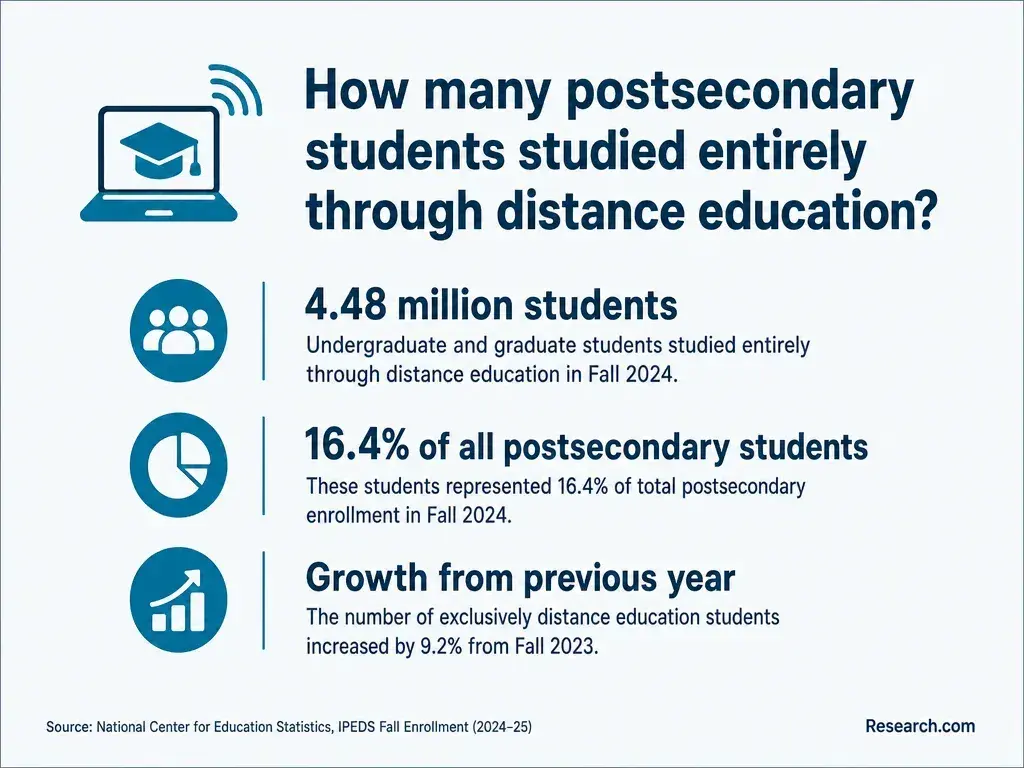
An online degree can offer the same awarded credential and a comparable curriculum when the institution applies the same academic standards. Its practical value depends on more than delivery mode, however: students need access to faculty, group work, career support, and an achievable way to complete required service. Online classes may still have live meetings, fixed deadlines, proctored exams, or team presentations.
Ask whether online students can serve locally, arrange a remote assignment, or must use school-selected partners. Also confirm whether service requires an in-person orientation or campus visit. A program that fits your class schedule but not your placement schedule may be a poor fit. US business college rankings for online learners can help identify options to investigate, but the catalog and service coordinator should confirm what an online student must actually do.
First-year applicants generally apply with a high school credential and required school records; transfer applicants generally submit transcripts from previous colleges. Some institutions also set separate standards for entry to the business major or for upper-level courses. Mathematics preparation, GPA rules, application materials, and deadlines vary, so distinguish admission to the university from admission to the business program.
Previous study may reduce remaining coursework, but accepted credits do not necessarily replace a required business course or the service requirement. Request an official evaluation showing where each credit applies, then ask whether service is required of transfer and second-degree students. For a closer look at academic preparation, see guidance on qualifying for a business administration college program.
A traditional bachelor's plan is commonly built around approximately 120 credits and four years of full-time study. Your remaining time depends on applicable transfer credit, course availability, enrollment pace, and whether service can be completed alongside classes. An accelerated course calendar does not necessarily shorten a placement that requires approval, supervision, and a set period of participation.
Compare costs using the school's current tuition and fee schedule and your official degree plan. Include remaining required credits, course and technology fees, books, transportation to a service site, possible background-check costs, and any lost work time. Service may be unpaid even if the course carrying it has tuition charges. Financial aid and employer benefits can change what you pay, but neither should be assumed before eligibility is confirmed.
When comparing shorter online business administration degrees with cost details, ask each school for a term-by-term plan showing where service fits. The least expensive advertised tuition rate may not produce the lowest completion cost if required courses or approved placements delay graduation.
Check the institution's accreditation status through its accreditor and the U.S. Department of Education's accreditation records. Then verify whether any claimed AACSB, ACBSP, or IACBE business accreditation covers the school or program you are considering. Institutional accreditation and business-specific accreditation address different scopes; neither, by itself, proves that a particular community-service experience is well supervised or leads to a job.
Use the institution's current catalog to confirm the exact degree title, service policy, and requirements for your enrollment term. If a school appears among cost-saving online business administration school choices, verify its accreditation and program policies directly before treating an advertised price as a sound comparison.
The degree can support applications for roles such as operations coordinator, administrative specialist, marketing coordinator, HR assistant, sales operations associate, or project coordinator. The appropriate entry point depends on prior work, internships, technical skills, and the employer's requirements. A graduate who helped a community organization document a purchasing process may have a relevant work sample for an operations role, but the degree and project do not automatically qualify that person to manage a department.
To make service useful in a job search, describe your authorized responsibilities, tools used, and deliverables without claiming unmeasured results. If your aim is supply chain work, compare the general business curriculum with specialized preparation and the supply chain college costs versus potential career outcomes. A function-specific route may make more sense when you need deeper logistics or procurement training than the business core provides.
There is no single salary or growth rate for a BS in Business Administration; labor-market figures describe occupations, not all holders of a degree. For example, the U.S. Bureau of Labor Statistics reports a May 2025 median annual wage of $75,940 for human resources specialists and projects 6% employment growth for that occupation from 2025 to 2035. That occupation-wide median includes experienced workers and is not an expected starting salary for a new graduate or someone whose service involved volunteer coordination.
Use occupation data only after identifying the role you intend to pursue and checking local postings for its skills and experience requirements. If you are weighing a specialized project career against this broader degree, budgeting for online project management college study offers a way to examine education costs; compare those costs with realistic entry routes rather than assuming a specialist occupation's median wage will follow graduation.
Do Business Administration Graduates Need Licenses or Professional Certifications?
Most general business coordination roles do not require a license simply because the applicant studied business administration. Specific work is different: accounting licensure, regulated financial services, and some industry activities have separate rules. Voluntary HR or project management certifications may have their own education, experience, examination, and renewal requirements. Neither the degree nor community-service hours automatically satisfy them.
Start with the requirements of the job you want, then check the relevant licensing board or certifying organization before paying for additional training. Speed should not substitute for fit: explore US business bachelor's fast-track rankings only after confirming that a program leaves room for the coursework, experience, and separately required credentials your target role calls for.
Other Things You Should Know About Business Administration
Possibly, but do not rely on it. Ask whether the school permits prior service, what records it requires, and whether approval had to be obtained before the work began.
Yes. Contact the school's disability services office early to discuss reasonable accommodations and accessible ways to meet the approved learning requirement.
That depends on the institution's eligibility rules and the duties involved. Give the service coordinator a description of the organization and proposed work before committing.
Notify the service coordinator promptly. Ask how completed work will be documented, whether another site can be approved, and whether the change affects your graduation timeline.
- Section 3313.605 | Community service education program. https://codes.ohio.gov/ohio-revised-code/section-3313.605
- School-Determined Requirements | 2024-2025 Federal Student Aid Handbook https://fsapartners.ed.gov/knowledge-center/fsa-handbook/2024-2025/vol1/ch1-school-determined-requirements
- Exploring key service-learning experiences that promote students' learning in higher education - PMC https://pmc.ncbi.nlm.nih.gov/articles/PMC9972304/
- Bachelor of Science in Business Administration | Georgia Tech Catalog https://catalog.gatech.edu/programs/business-administration-bs/
- Community-Engaged Learning as Career Preparation | indianastate.edu https://scholars.indianastate.edu/cgi/viewcontent.cgi
- Bachelor of Science in Business Administration | Universities of Wisconsin Online https://online.wisconsin.edu/degrees-programs/flexible-option-business-administration-bs/
- Service Learning Requirements | California State University Long Beach https://www.csulb.edu/service-learning-requirements
- Online Bachelor's Degree in Business Administration | Purdue Global https://www.purdueglobal.edu/degree-programs/business/bachelor-business-administration/
- BS in Business Administration | Online Bachelor's Degree | Capella University https://www.capella.edu/online-business-degrees/bs-business-program/bachelors-business-administration/
- Developing a Service-Learning Course | Teaching and Learning Resource Center https://teaching.resources.osu.edu/teaching-topics/developing-service-learning-course