PharmD Application With a Non-Science Bachelor’s Degree

Co-Founder and Chief Data Scientist
A non-science bachelor's degree does not rule out pharmacy school, but it may leave you with science courses to complete before enrollment. The important decision is whether the prerequisite work, professional degree, and eventual licensure path make sense for your goals and budget.
This guide shows you how to compare your transcript with Doctor of Pharmacy (Pharm.D.) requirements, plan missing courses, assess program costs and formats, and identify the questions to ask before you apply.
Key Things You Should Know
- Your major is usually not the barrier. Pharm.D. programs evaluate required coursework and other admission criteria; some do not require a bachelor's degree at all.
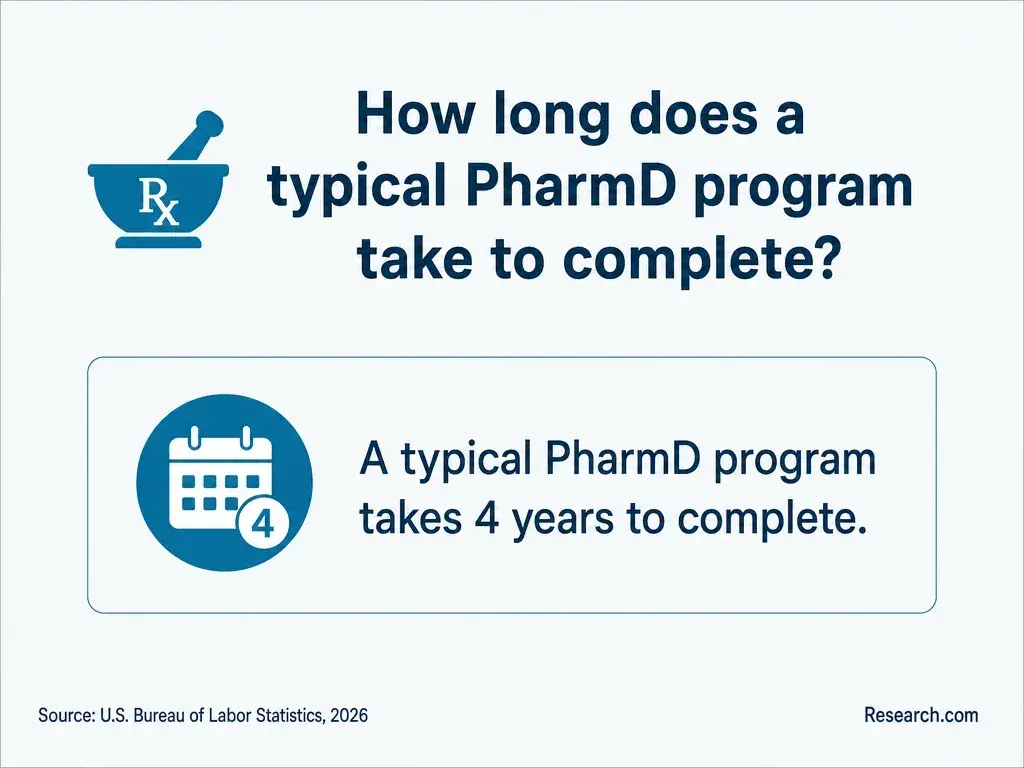
- Plan for two separate stages. Missing undergraduate prerequisites come before the professional Pharm.D. curriculum, which commonly takes about four academic years, though program structures vary.
- Budget beyond tuition. Compare prerequisite costs, the full Pharm.D. cost of attendance, and clinical-placement expenses before borrowing; a Pharm.D. alone does not grant a pharmacist license.
Can you apply to a PharmD program with a non-science bachelor's degree?
Yes. Pharm.D. admissions generally focus on whether you have completed - or will complete by the school's deadline - the required pre-professional courses, not whether your degree says biology or chemistry. A history, business, English, or other non-science graduate can be eligible if the program accepts their coursework and they meet its remaining requirements.
Eligible to apply and ready to enroll may mean different things. Some schools permit outstanding prerequisites when you submit an application but require satisfactory completion before matriculation. Compare each school's policy rather than assuming that pharmacy programs before all requirements are complete will waive the missing courses. A minimum requirement establishes eligibility, not an admission guarantee.
What prerequisite courses do PharmD programs require from non-science majors?
Most applicants need undergraduate science and general education coursework before entering the professional curriculum. Common subjects include biology, general and organic chemistry, anatomy or physiology, microbiology, mathematics or statistics, and writing. Required courses, laboratories, credits, minimum grades, and acceptable substitutions differ by school; there is no single nationwide prerequisite checklist.
Your non-science degree may already cover writing, communication, social science, or quantitative requirements. Science courses taken as electives may count too, but a school must confirm whether a particular course and lab satisfy its rules. If you can build on prior biology or chemistry coursework, compare its content, credit value, grade, and completion date with each target program's current requirements.
Check laboratory rules especially carefully. A lecture-only course is not automatically equivalent to a lecture-and-lab requirement, and policies on online labs, older science courses, and courses still in progress vary.
Do PharmD programs require a bachelor's degree for admission?
Not universally. Some Pharm.D. programs admit students after specified undergraduate prerequisite credits without requiring a completed bachelor's degree; others require or prefer one. Having a bachelor's degree can satisfy a degree requirement where one exists, but it does not automatically satisfy science prerequisites.
Make separate checks for the degree requirement, the prerequisite-course requirements, and any minimum undergraduate credits or GPA. Schools decide how previous coursework applies. Resources on pharmacy transfer planning can help you frame the questions, but acceptance of undergraduate prerequisite credit does not mean those credits transfer into the professional Pharm.D. curriculum.
You can usually take missing courses as a nondegree student at a college or university, or through a structured postbaccalaureate option. Before registering, ask each target Pharm.D. program to review the proposed institution, course descriptions, lab format, and term of completion. The receiving school - not the course provider - decides whether credit meets its prerequisite.
A workable plan has four steps:
- Collect transcripts from every institution attended and compare completed courses with each school's current prerequisite list.
- Ask admissions staff to confirm uncertain equivalencies, course-age rules, minimum grades, and whether planned online or community-college labs are acceptable.
- Sequence courses around their prerequisites; for example, later chemistry courses may depend on earlier chemistry and laboratory work.
- Check whether remaining courses may be in progress when you apply and the deadline for final grades before enrollment.
Include tuition, lab fees, commuting, and any reduced work hours in this plan. A guide to pharmacy program tuition and length is a starting point, but a short advertised program timeline may exclude the prerequisites you still need.
Requirements commonly include prerequisite coursework, transcripts, an application, recommendations, and an interview, but schools set their own GPA thresholds, deadlines, supplemental materials, and experience expectations. The Pharmacy College Admission Test (PCAT) was retired in January 2024; it is not a current exam to schedule for a Pharm.D. application.
Check the current PharmCAS school directory and each program's admissions page to see whether the school uses the Pharmacy College Application Service (PharmCAS) and what it requires separately. Some schools do not use PharmCAS. When comparing pharmacy schools and entry standards, distinguish a published minimum GPA or credit threshold from evidence of competitive admission.
For a non-science applicant, the most useful application explains both why pharmacy and how you prepared. Your previous degree may demonstrate communication, research, or leadership skills, but it cannot substitute for required science preparation or evidence that you understand pharmacists' patient-care responsibilities.
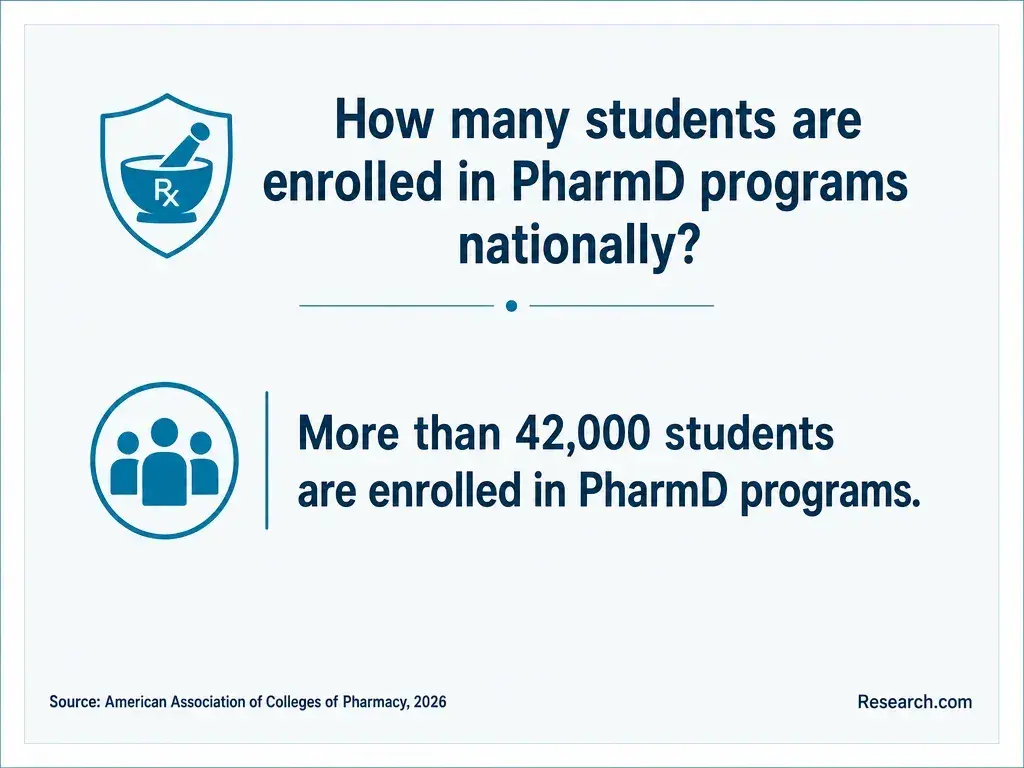
Your timeline equals the time needed for missing prerequisites plus the professional Pharm.D. program. Many professional curricula span about four academic years; accelerated programs may use a more compressed calendar. Neither timeline necessarily includes coursework you must finish before matriculation.
The comparison below separates stages that are easy to conflate. It helps you estimate when you could enter practice without treating your bachelor's degree as automatic advanced standing.
| Stage | What determines its length | Planning implication |
| Missing prerequisites | Your transcript, course sequencing, availability, and each school's rules | A science sequence may take multiple terms even if few courses are missing. |
| Professional Pharm.D. | The program's calendar and required classroom, lab, and clinical education | Confirm the published curriculum length rather than assuming prior bachelor's credits shorten it. |
| Licensure after graduation | State requirements, exam scheduling, and application processing | Graduation is not the date you automatically become licensed. |
Comparing faster Doctor of Pharmacy routes makes sense if you can manage a condensed schedule. Ask whether faster completion changes tuition, time available for paid work, campus attendance, or rotation travel.
Some Pharm.D. programs offer online or hybrid instruction, but a non-science bachelor's degree does not remove their prerequisites. "Online" also does not mean fully remote or self-paced: programs may require live classes, campus labs or assessments, and in-person introductory and advanced pharmacy practice experiences (IPPEs and APPEs).
When reviewing online Pharm.D. schools to compare, verify Accreditation Council for Pharmacy Education (ACPE) professional-program accreditation separately from the institution's accreditation. Also confirm authorization to enroll students where you live and whether the school can approve clinical placements in the relevant states. These are distinct checks.
Ask who arranges rotation sites, whether travel is likely, and what intern registration, immunizations, or background checks apply. Do not assume that a nearby placement or your current job can substitute for a required rotation.
There is no reliable single price for this pathway. Your cost depends on missing prerequisites, the school's tuition and mandatory fees, residency classification, living expenses, and clinical-placement arrangements. A second bachelor's degree is not necessarily required, but taking prerequisites after graduation still adds cost and may delay full-time earnings.
Build a program-specific budget rather than comparing advertised tuition alone. Include books and clinical resources, lab or technology charges, required health and background screenings, rotation travel or temporary housing, and eventual licensure expenses. An affordable route to a Pharm.D. is one whose total cost and schedule you can sustain - not merely one with a lower tuition headline.
Request each school's current cost of attendance and ask its financial aid office how your prerequisite enrollment and later professional enrollment would be classified. Federal borrowing rules changed for many new graduate and professional borrowers beginning July 1, 2026; do not build a budget around assumed Grad PLUS access or an older loan limit. Verify the rules that apply to your entry date and borrowing history.
A U.S. Pharm.D. graduate must obtain a pharmacist license from the jurisdiction where they intend to practice. Typically, that involves meeting the board's education and experiential requirements, passing the North American Pharmacist Licensure Examination (NAPLEX), satisfying any applicable pharmacy-law examination requirement, and completing the board's application and other checks.
Law-exam rules vary: a jurisdiction may use the Multistate Pharmacy Jurisprudence Examination (MPJE), the Uniform Multistate Pharmacy Jurisprudence Examination (UMPJE), another process, or no separate law exam. Check the current state board and National Association of Boards of Pharmacy instructions before registering. Passing the NAPLEX alone does not issue a license.
Be cautious when comparing short online doctorate programs with a Pharm.D. Other doctorates - even pharmacy-related ones - do not replace an ACPE-accredited professional Pharm.D. for the usual U.S.-educated pharmacist licensure route. ACPE accredits education programs; it does not certify or license individual pharmacists.
What careers, salaries, and job outlook can PharmD graduates expect?
Licensed pharmacists work in settings including community pharmacies, hospitals, health systems, and ambulatory care, with duties that vary by employer and state scope-of-practice rules. The Bureau of Labor Statistics reports median annual pay of $140,910 in May 2025 for pharmacists and projects 5% growth from 2025-2035, with about 12,500 openings per year. These occupation-wide figures are context for a career decision, not a starting-salary or job-placement promise.
A postgraduate residency may help prepare a pharmacist for certain clinical roles; fellowships commonly emphasize areas such as industry or research. Neither is universally required for pharmacist employment. Specialty board certification is a separate credential with its own eligibility rules, not a substitute for state licensure.
If your goal is pharmacy work rather than pharmacist practice, consider whether a different route meets it with less time and expense. In particular, fast online pharmacy program choices should not be mistaken for a complete pharmacist-licensure pathway. Pharmacy technician is a separate occupation that does not ordinarily require a Pharm.D.; its responsibilities and credentialing rules differ from those of a pharmacist.
Other Things You Should Know About PharmD
Possibly. Ask each program whether it accepts the credit for the specific subject and whether it still requires a college-level laboratory or an additional course.
Policies vary by school and may depend on when the course was taken. Get confirmation before choosing pass/fail grading for a planned prerequisite.
It may, but programs set their own transcript-evaluation and course-equivalency rules. Ask whether they require an approved credential evaluation or additional U.S. coursework.
First check each school's minimum grade and repeated-course policy. A retake may address an unmet requirement, but schools can differ in how they evaluate both attempts.
- FAQ | OSU College of Pharmacy - Oregon State University https://pharmacy.oregonstate.edu/programs-admissions/pharm-d/faq
- Prerequisite FAQ - UW School of Pharmacy https://sop.washington.edu/pharmd/admissions/prerequisite-info/faq/
- PharmD Pharmacy Admissions Process | Pharmacy & Health Sciences https://cphs.campbell.edu/academic-programs/pharmacy/doctor-of-pharmacy/requirements/
- Prerequisite Coursework | School of Pharmacy https://www.pharmacy.pitt.edu/academics/doctor-pharmacy/apply-pharmd-program/prerequisite-coursework
- Prerequisites - College of Pharmacy - University of Minnesota https://www.pharmacy.umn.edu/doctor-pharmacy/admissions/how-apply/prerequisites
- Doctor of Pharmacy (PharmD) - Prospective Students https://www.pharmacy.umaryland.edu/academics/pharmd/prospective-students/
- How to Apply | School of Pharmacy https://pharmacy.llu.edu/admissions/application-information
- Admissions Requirements | College of Pharmacy | University of Houston https://uh.edu/pharmacy/admissions/pharmd/admissions-requirements/
- Prerequisite Course Requirements at the College of Pharmacy | UNT Health Fort Worth https://www.unthealth.edu/college-of-pharmacy/faqs/prerequisite-course-requirements.html
- Apply to the Pharm.D. Program | College of Pharmacy https://pharmacy.utexas.edu/apply/pharmd/apply