How to compare PharmD programs by admissions timeline

Co-Founder and Chief Data Scientist
Two Doctor of Pharmacy (Pharm.D.) programs can start classes at the same time yet give applicants very different deadlines to apply, interview, and accept an offer. That difference matters if you are finishing prerequisites, waiting on recommendations, or comparing financial aid before paying a deposit. This guide shows prospective U.S. pharmacy students how to map each program's admissions timeline, spot deadlines that could close off an option, and compare timing alongside cost and licensure eligibility.
Key Things You Should Know
- Compare each school's priority deadline, final deadline, interview period, decision date, deposit deadline, and prerequisite-completion deadline - not just its application closing date.
- For rolling admissions, applying before the final deadline can matter because interview slots and seats may be filled as applications are reviewed; a priority deadline is not necessarily a guarantee of early consideration.
- A Pharm.D. professional curriculum commonly takes four academic years, while some accelerated programs use a shorter calendar. Add prerequisite time before enrollment when comparing your actual path to graduation.
How do PharmD admissions timelines typically work?
A Pharm.D. admissions timeline runs from prerequisite planning through application, interview, offer, deposit, and enrollment. Some schools review files as they arrive; others wait until a stated review date. Your useful comparison is therefore the last date you can complete each step without losing a realistic chance to enroll, not simply the first day applications are accepted.
Use this worksheet for every school on your shortlist. Enter dates from the current school admissions page and, where applicable, its Pharmacy College Application Service (PharmCAS) directory listing; leave an item marked "confirm" rather than assuming a missing date does not exist.
| Timeline field | Program A | Program B |
| Intended entering term and application cycle | ________ | ________ |
| Application opening and priority deadlines | ________ | ________ |
| Final application and supplemental deadlines | ________ | ________ |
| Transcript, recommendation, and verification rules | ________ | ________ |
| Interview window and format | ________ | ________ |
| Decision, deposit, and deposit-refund dates | ________ | ________ |
| Prerequisite-completion and orientation dates | ________ | ________ |
Work backward from your intended start term and allow time for coursework, records, and possible interviews. Broader pharmacy degree planning for cost and time can help frame the trade-off, but the school's current admissions calendar controls your application.
When do PharmCAS applications open and close?
PharmCAS operates an annual application cycle, but its opening date and a school's closing date are different things. Participating programs set their own deadlines within the cycle, and not every Pharm.D. program uses PharmCAS. Check the current PharmCAS cycle instructions and each program's directory entry before scheduling submissions; do not reuse last year's dates.
Also distinguish submitting an application from having transcripts received and the file verified. A school may require materials or verification by a particular date, while another may accept materials after its application deadline. Confirm the exact rule with admissions, especially if a term's grades will post late. Compare pharmacy school prerequisite expectations early enough to identify courses that must be finished before enrollment rather than before application.
How do PharmD priority and final deadlines differ?
A priority deadline may bring earlier review or consideration for limited opportunities, depending on school policy. A final deadline is the last date the school accepts the specified application step. Neither label, by itself, tells you whether interview places, scholarships, or seats will remain available afterward.
If prerequisites will still be in progress at the priority deadline, ask whether the school reviews applicants with unfinished courses and when those courses must be completed. Schools may offer pathways for students with varied academic backgrounds, but admission conditions must be verified for the particular entering class. Prefer the earlier deadline when your file can be complete and competitive; do not rush an inaccurate application merely to meet it.
Requirements vary by school and can include prerequisite records, official transcripts, recommendations, written responses, a supplemental application, and an interview. Some programs ask about pharmacy experience; whether it is required or recommended must be checked separately. The Pharmacy College Admission Test (PCAT) was retired in January 2024, so it should not be treated as a current exam applicants can schedule.
Material deadlines deserve their own entries on your worksheet. In particular, confirm whether a course may be in progress, whether a laboratory or older course satisfies the school's rule, and whether transcripts must arrive before review. The receiving school decides how prior coursework applies; pharmacy prerequisite credit evaluation is not the same as receiving transfer credit within the professional Pharm.D. curriculum. Applicants do not universally need a completed bachelor's degree, but each school sets its own eligibility requirements.
Under rolling admissions, a program reviews and makes some decisions during the application period rather than waiting for every application to arrive. That can favor an earlier complete file: applying before the final deadline may leave more interview opportunities or seats. It does not mean every early applicant gets an early decision or that a later applicant cannot be admitted.
Ask when the school begins reviewing complete files, how often it issues decisions, and whether it continues interviews after its priority deadline. If you are finishing a science degree, use the school's policy - not assumptions about your major - to time your application; guidance on Pharm.D. programs for biology majors can help identify questions about remaining prerequisites. An early submission with missing recommendations may offer less advantage than a slightly later complete file.
Compare the first and last interview dates, notice given, format, travel requirements, and expected time from interview to decision. An online interview can reduce travel for admissions without making the degree itself fully online. If two schools' interview or deposit dates overlap, ask whether alternative interview dates are available; do not assume they will be.
Program format also affects the longer calendar you are committing to. Use an online pharmacy program comparison as a starting point, then verify required live classes, campus visits, hands-on work, and in-person clinical rotations with each school. An interview is a useful opportunity to ask who arranges those placements and whether travel could be required.
The professional Pharm.D. curriculum commonly spans four academic years after required pre-professional coursework. Some accelerated programs use a shorter, more intensive calendar; their shorter elapsed time does not eliminate prerequisite study or supervised experiential education. When comparing how accelerated Pharm.D. programs work, examine the actual start date, breaks, course sequence, and graduation date rather than relying on a "three-year" or "four-year" label.
Ask when introductory pharmacy practice experiences (IPPEs) and advanced pharmacy practice experiences (APPEs) occur, who approves sites, and whether travel, intern registration, immunizations, or time away from work will be necessary. These commitments can change which admissions offer is feasible even when two programs have similar classroom schedules.
Before spending money on an application or deposit, check the program's current professional accreditation status in the Accreditation Council for Pharmacy Education (ACPE) directory. ACPE program accreditation is distinct from a university's institutional accreditation and from authorization to enroll an online student in a particular state. General estimates of how long online doctoral programs take cannot establish whether a pharmacy program meets professional education requirements.
A Pharm.D. does not itself issue a pharmacist license. State boards set licensure requirements, which generally involve education, the North American Pharmacist Licensure Examination (NAPLEX), and any applicable jurisdiction-specific law examination or other conditions. Do not assume every jurisdiction uses the Multistate Pharmacy Jurisprudence Examination (MPJE); some began transitioning to the Uniform MPJE (UMPJE) in 2026. Check the board where you intend to practice, including its rules for intern registration and any distance-education or out-of-state clinical placement.
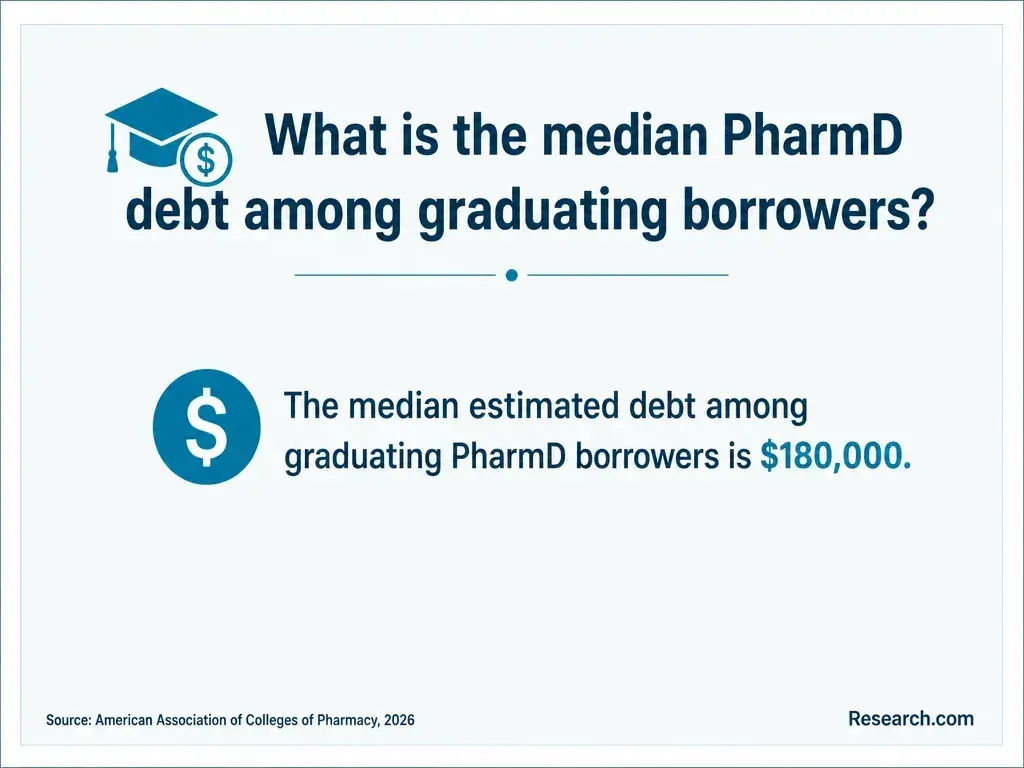
Compare the cost of reaching enrollment as well as the cost of finishing the degree. An earlier deposit can put money at risk while you wait for another school's offer; check its amount, due date, and refund policy. Then request a comparable estimate of tuition, mandatory fees, books and technology, clinical-placement travel, and living expenses for the full program. An online Doctor of Pharmacy price range is a starting reference, not a substitute for each school's current cost of attendance.
Ask each financial aid office for an aid-year-specific explanation of your eligibility and borrowing options. Federal borrowing rules changed for many new graduate and professional students beginning July 1, 2026, so older descriptions of loan limits or Grad PLUS access may not apply to your entering class. Compare the net amount you expect to finance, not tuition alone, and find out whether a deposit is due before an aid offer is available.
How should students choose a PharmD program and career pathway?
Start by eliminating programs whose verified prerequisites, accreditation status, placement requirements, or deadlines do not work for you. Among the remaining options, favor the earlier admissions opportunity when it lets you submit a strong, complete file; favor a later timeline when it allows essential coursework, a more informed cost comparison, or a feasible move. Before accepting, confirm the offer conditions and the date you must finish prerequisites.
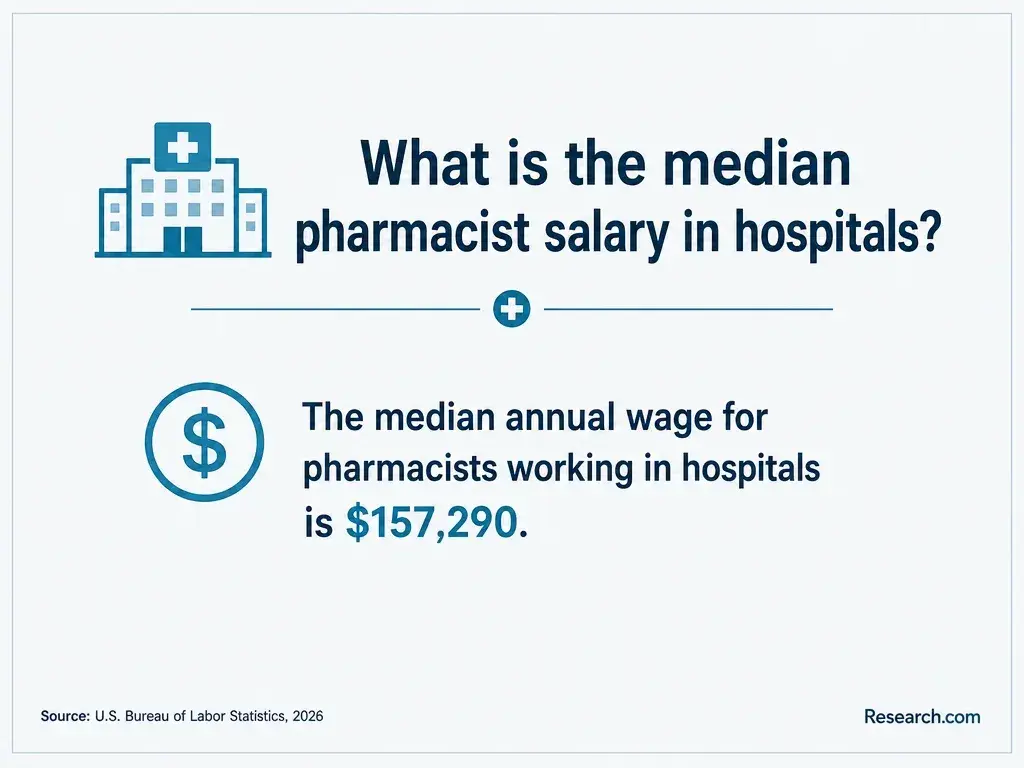
The career goal matters, but it should not turn an admissions decision into a salary promise. The Bureau of Labor Statistics reports median annual pay of $140,910 in May 2025 for pharmacists and projects 5% growth, 2025-2035. Those occupation-wide figures do not predict an individual graduate's pay or justify overlooking debt. A residency, fellowship, or later board certification may serve particular goals but is not a universal requirement for pharmacist practice; each is separate from state licensure.
If your goal is a pharmacy-adjacent role rather than becoming a licensed pharmacist, investigate whether a shorter credential would suffice before committing to professional-school tuition. Claims about online pharmacy degree time to completion may describe credentials other than a licensure-eligible Pharm.D.; verify the exact degree and the role it prepares you for.
Other Things You Should Know About PharmD
Yes. Keep a separate record of each school's requirements and dates, including supplemental steps outside PharmCAS. Applying to multiple schools does not make their deposit or decision deadlines identical.
Check the new cycle's instructions and each school's reapplicant policy. Do not assume previously submitted materials, recommendations, or responses carry over unchanged.
Only if the school permits it under its current policy. Ask whether a deferral is available, what circumstances qualify, and whether any deposit or prerequisite conditions still apply before declining other offers.
Schools set their own international coursework and evaluation requirements. Ask each program which credential evaluation it accepts and when the completed evaluation must arrive; the process can take longer than ordering a domestic transcript.
- Apply - UNC Eshelman School of Pharmacy https://pharmacy.unc.edu/apply/
- PharmD Apply Now - UW School of Pharmacy https://sop.washington.edu/pharmd/admissions/application-procedures/
- Steps to Apply - Pharm.D. Admissions " College of Pharmacy " https://admissions.pharmacy.ufl.edu/steps-to-apply/
- Admissions Deadlines | PharmD Degree Program https://pharmd.ucsf.edu/admissions/steps/apply/deadlines
- Admissions Timeline - Pharmacy Students - UW-Madison https://students.pharmacy.wisc.edu/pre-sop-handbook/admissions-timeline/
- How to Apply to the PharmD Program | Texas A&M University Irma Lerma Rangel College of Pharmacy https://pharmacy.tamu.edu/pharmd/apply.html
- PharmCAS Participating Programs and Deadlines - Liaison https://help.liaisonedu.com/PharmCAS_Applicant_Help_Center/Starting_Your_PharmCAS_Application/Getting_Started_with_Your_PharmCAS_Application/3_PharmCAS_Participating_Programs_and_Eligibility
- 2026-2027 PharmCAS Application Launch https://www.pharmcas.org/node/51