How to Balance Pharmacy School With a Full-Time Job

Co-Founder and Chief Data Scientist
A full-time paycheck may make pharmacy school possible, but a work schedule can also conflict with required labs and clinical rotations. If you are considering a Doctor of Pharmacy (Pharm.D.) degree while employed, the key decision is not simply whether you can study after work. It is whether your employer, finances, and program can accommodate the hours you cannot move.
This guide helps you test that fit, identify when reduced hours may be necessary, and avoid committing to a program whose schedule does not work for you.
Key Things You Should Know
- Full-time work may fit some classroom terms, but required in-person experiences can make it impractical later in the Pharm.D. program.
- Compare your job's fixed hours with live classes, labs, and clinical placements before applying; "online" does not mean self-paced or fully remote.
- Budget for a possible drop in earnings during rotations as well as tuition, travel, and living costs. A shorter program does not remove required clinical training.
How can you balance pharmacy school with a full-time job?
Start with a term-by-term schedule, not a promise to "make time." Put your nonnegotiable work hours beside the program's required classes, exams, labs, and clinical experiences. Then check whether you still have dependable time to study, commute, sleep, and handle unexpected schedule changes.
Use this sequence before accepting an offer or changing your employment arrangement:
- Request the program's sample schedule for every professional year, including required live sessions, campus visits, and experiential terms.
- Ask your employer which hours can move, whether shifts can be reduced, and how much notice you must give for extended absences.
- Build a budget for both your usual earnings and a reduced-hours rotation period.
- Agree on a decision point with your employer and household: if required activities repeatedly overlap work, which commitment changes?
Protect study time as you would a scheduled shift, but do not rely on studying during work unless your employer explicitly permits it. If retaining full-time employment is essential, compare pharmacy degree programs with shorter timelines carefully: a shorter pharmacy-related credential is not necessarily a Pharm.D. or a route to pharmacist licensure.
Is pharmacy school realistic for students working full time?
It can be realistic during some terms if your job is flexible and the program's fixed commitments leave sufficient study time. It is much less realistic if you must keep an inflexible daytime schedule throughout the degree. Pharmacy school involves assessments, hands-on training, and supervised patient-care experiences that cannot simply be moved to evenings.
Working as a pharmacy technician may build familiarity with the workplace, but technician duties do not replace Pharm.D. coursework or automatically count as clinical rotations. Nor should an applicant assume that a program with pharmacy programs with flexible entry requirements will have flexible attendance requirements. Admissions flexibility and schedule flexibility are separate questions.
A workable decision is often conditional: keep full-time hours while the documented schedule allows it, but arrange a financially viable reduction before required daytime training begins. If reducing hours would make housing, insurance, or other essentials unaffordable, postponing enrollment may be safer than assuming you can resolve the conflict later.
What pharmacy school schedule works best for full-time employees?
The best schedule has few fixed conflicts with your job and a credible plan for the terms that do. Evening or recorded instruction can help, but a single required daytime lab or placement can determine whether full-time employment remains possible.
These common arrangements illustrate where scheduling flexibility tends to end. Actual calendars vary by school and term.
| Schedule feature | Potential advantage while employed | Main constraint |
| Recorded coursework | Allows some study outside work hours | Deadlines and exams may still be fixed |
| Live evening classes | May avoid daytime shifts | Leaves less time for study and rest |
| Weekend or concentrated labs | Limits routine weekday conflicts | May require travel or time away from work |
| Clinical rotation blocks | Provides sustained supervised practice | Site schedules may conflict with full-time shifts |
Ask for the full professional-program calendar, not just the first term's timetable. When you compare online doctorate lengths, treat elapsed time as only one measure: compressed courses can increase weekly demands without making clinical placements easier to schedule.
An online or hybrid Pharm.D. may reduce routine commuting, while a campus-based program may make its in-person timetable easier to see in advance. Neither format eliminates hands-on requirements. "Online" can include live classes, campus immersions, in-person assessments, and clinical rotations at approved sites.
This comparison highlights the commitments most likely to affect a work schedule; verify each item against the specific program's published requirements.
| Factor | Online or hybrid pathway | Campus-based pathway |
| Class meetings | May mix recorded and required live sessions | Usually follows scheduled on-campus meetings |
| Hands-on training | May require campus visits or other approved in-person activities | Typically occurs through scheduled campus activities |
| Clinical placements | Require approved in-person sites; a nearby site is not assured | Require approved in-person sites; travel may still be necessary |
| Work-schedule risk | Easy to underestimate fixed obligations | Fixed obligations may be more visible upfront |
When reviewing online Doctor of Pharmacy degree options, obtain written answers about live attendance, campus travel, placement support, and whether your state permits enrollment and the proposed clinical placements. Distance-education state authorization is not the same as eligibility for pharmacist licensure.
Pre-pharmacy courses are undergraduate prerequisites; they are not the professional Pharm.D. curriculum. Within the Pharm.D., students learn to apply drug science to medication selection, dosing, safety, patient counseling, and other pharmacist responsibilities. Programs also assess practical skills through activities that may require attendance at specific times.
The curriculum generally moves from classroom and introductory practice experiences toward more intensive advanced rotations. That progression matters to employed students: a job arrangement that works during lecture-heavy terms may stop working when supervised practice becomes a larger part of the week. Previous biology, chemistry, or pre-pharmacy study can help prepare you, but it does not normally waive the professional training required for the degree. See pharmacy education after a pre-pharmacy track when comparing the transition from prerequisite study to professional coursework.
Ask each school which sessions are mandatory, how far ahead schedules are released, and what happens if a required activity conflicts with an assigned work shift.
Expect school-specific undergraduate prerequisites, often including science courses and labs, plus transcripts and other application materials. A completed bachelor's degree is not universally required. Minimum grades, course-age rules, interview requirements, and policies for courses still in progress vary by program. The Pharmacy College Admission Test (PCAT) was retired in January 2024; it is not a current exam to schedule.
Working applicants should check whether outstanding prerequisites are offered at times they can attend. For previously earned coursework, request a school-specific evaluation rather than assuming community-college, online-lab, or other transfer credit will satisfy a requirement. The receiving school decides how credit applies; transferring prerequisite credit is different from transferring into the professional Pharm.D. curriculum. A pharmacy prerequisite credit evaluation can help you identify questions to resolve before committing to a start date.
Confirm whether your chosen school uses PharmCAS, the centralized pharmacy school application service, and check its own supplemental materials and deadlines. Meeting published minimums does not guarantee admission.
Many Pharm.D. programs follow a four-year professional curriculum after prerequisites; some offer accelerated professional schedules. Your actual timeline depends on prerequisite completion, course sequencing, and the program's calendar. An accelerated schedule may leave less room for paid work, so compare weekly obligations rather than assuming a faster finish is easier.
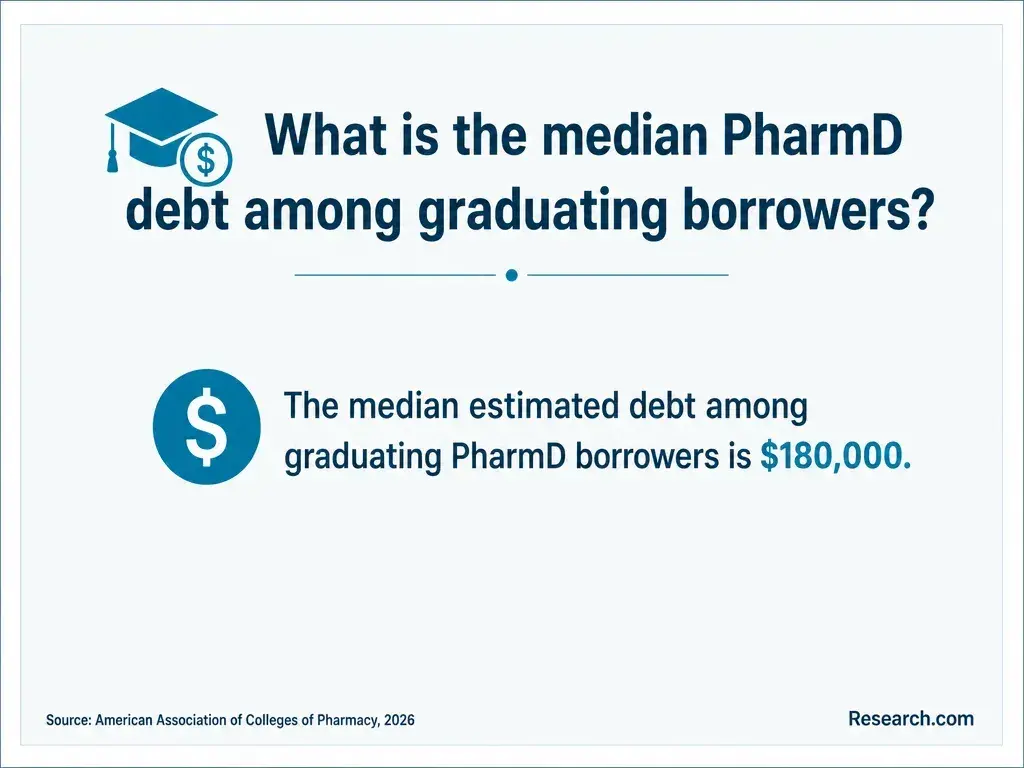
Tuition alone is not a sufficient budget. Include required fees, supplies and technology, background checks and immunizations, campus visits, rotation travel or housing, and potential lost wages. Use each school's current cost of attendance and aid offer to compare online Pharm.D. cost comparison options on comparable terms.
Federal aid eligibility depends on the student, program, and aid year. Federal borrowing rules changed for many new graduate and professional borrowers beginning July 1, 2026, so do not plan around older loan limits or assume Grad PLUS will cover any shortfall. Ask the school's financial aid office which rules apply to your start date and status. A program is financially workable only if you can cover both school costs and the period when work hours may fall.
Introductory pharmacy practice experiences (IPPEs) provide supervised exposure earlier in the program. Advanced pharmacy practice experiences (APPEs) involve more sustained practice in assigned settings later on. Schools set and publish their schedules and placement procedures within accreditation requirements; do not assume every rotation can occur near home or outside ordinary work hours.
Ask the experiential education office who identifies and approves sites, when schedules become final, and whether a proposed placement at your employer is permitted. Students may also need pharmacist-intern registration where required, background checks, immunizations, travel, or temporary housing. A paid pharmacy job is not automatically a substitute for an approved experience.
This is the point at which a plan to work full time most often needs revisiting. Be especially cautious with claims about accelerated online pharmacy degree pathways: a pharmacy-related program with a short timeline should not be mistaken for a complete Pharm.D. pathway that bypasses supervised clinical training.
Before enrolling, verify the professional program's current status with the Accreditation Council for Pharmacy Education (ACPE). ACPE accredits pharmacy education programs, not individual pharmacists. Institutional accreditation and permission to enroll distance-learning students address different questions; neither substitutes for checking the Pharm.D. program's accreditation and your intended state's licensing rules.
A Pharm.D. alone does not issue a pharmacist license. Graduates must meet the relevant state board's requirements, which may include supervised experience, the North American Pharmacist Licensure Examination (NAPLEX), and a jurisdiction-specific law assessment. Do not assume every jurisdiction uses the Multistate Pharmacy Jurisprudence Examination (MPJE); some began transitioning to the Uniform MPJE (UMPJE) in 2026. The board determines the applicable process and issues the license.
Likewise, articles about pharmacy school requirements and exceptions concern possible admissions pathways, not exemptions from professional accreditation standards or state licensure rules. Check the board where you intend to practice before relying on any program's general statement about eligibility.
What careers and salaries can pharmacy graduates pursue after school?
Licensed pharmacists work in settings such as community pharmacies, hospitals, ambulatory care, and specialty pharmacy, with duties that vary by employer and state law. The U.S. Bureau of Labor Statistics reports median annual pay of $140,910 in May 2025 for pharmacists and projects 5% growth, 2025-2035. Those occupation-wide figures are context for weighing tuition and foregone earnings, not a prediction of your starting pay or a particular job offer.
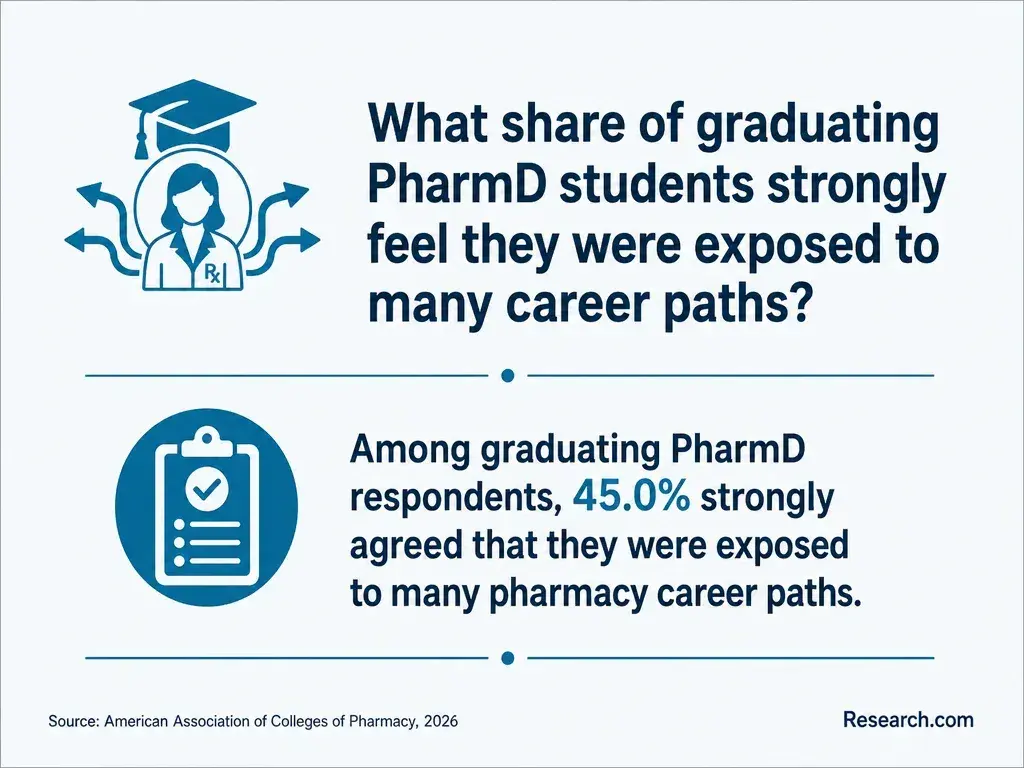
Some positions favor postgraduate training. A postgraduate year one (PGY1) residency provides broad practice training, while a PGY2 typically develops a specialty focus; fellowships follow different, often research- or industry-oriented paths. Board certification is a separate credential, not a pharmacist license. None is universally required for pharmacist employment.
If your immediate goal is to enter pharmacy work without the time and cost of pharmacist training, compare technician roles or other pharmacy-adjacent paths first. Pharmacy technician work is a separate occupation and does not ordinarily require a Pharm.D. If pharmacist licensure is your goal, faster Doctor of Pharmacy routes may merit consideration - but only after you confirm that their weekly schedule, clinical placements, and total cost fit your employment plan.
Other Things You Should Know About PharmD
You do not need to disclose every application detail, but discuss schedule changes early if you will need predictable shifts, leave, or reduced hours. Get any agreed arrangement in writing.
Possibly. Leave-of-absence, readmission, and course-sequencing policies vary by school. Ask how a break would affect financial aid and the date you could resume required courses.
Prior experience may strengthen an application and provide useful skills, but it does not automatically replace professional coursework or supervised experiences. Ask the school for its written credit and waiver policies.
Contact your academic adviser and experiential education office promptly. They can explain attendance rules and available options; do not assume a missed lab or rotation can be made up on your preferred schedule.
- An Advanced Pharmacy Practice Experience in a University's Office of Experiential Education - PMC https://pmc.ncbi.nlm.nih.gov/articles/PMC10159452/
- Cost of Attendance (Budget) | 2025-2026 Federal Student Aid Handbook https://fsapartners.ed.gov/knowledge-center/fsa-handbook/2025-2026/vol3/ch2-cost-attendance-budget
- Pharmacy Practice Experiences | Midwestern University https://catalog.il.midwestern.edu/pharmacy-practice-experiences
- Is Pharmacy School Hard? Insights from an Expert on Making It Work | PCOM https://www.pcom.edu/pharmacy/news/is-pharmacy-school-hard.html
- Doctor of Pharmacy (Pharm.D.) Traditional Pathway | Texas Tech University Health Sciences Center https://www.ttuhsc.edu/programs/doctor-pharmacy-pharmd-traditional-pathway
- Experiential Education | Washington State University https://pharmacy.wsu.edu/pharmd/experiential-services/
- Pharm D Practice Experience Curriculum | Presbyterian College https://www.presby.edu/graduate-programs/pharmacy/pharmd/practice-experience/
- FAQ - Fisher Pharm.D. Online | SJF-PHA https://onlinepharmd.sjf.edu/admissions/faq/
- FAQ | OSU College of Pharmacy - Oregon State University https://pharmacy.oregonstate.edu/programs-admissions/pharm-d/faq
- Pharm.D. Curriculum - College of Pharmacy https://pharmacy.utexas.edu/programs/pharmd/curriculum