PharmD licensure pathway planning worksheet

Co-Founder and Chief Data Scientist
A Pharm.D. program can put you on the path to becoming a pharmacist, but graduation is only one milestone. Prerequisites, accreditation, supervised experience, examinations, and state board approval all affect when—or whether—you can practice. This worksheet helps prospective and current pharmacy students map those requirements before committing to a school or a licensing state. You'll identify missing information, compare the time and cost of possible routes, and leave with a practical sequence of decisions to confirm with programs and pharmacy boards.
Key Things You Should Know
- Start with a licensing state: Its board determines application, intern registration, experience, and jurisprudence requirements; a Pharm.D. or passing an exam alone is not a license.
- Check the professional program: Confirm its current Accreditation Council for Pharmacy Education (ACPE) status and ask how required in-person experiences will work in your intended location.
- Budget beyond tuition: Include prerequisites, rotations, travel, exams, and financing under rules applicable to your enrollment and aid year; pharmacist median pay was $140,910 in May 2025, not a guaranteed return.
What Is the PharmD Licensure Pathway?
The U.S.-educated pharmacist pathway generally runs from school-specific pre-pharmacy prerequisites to an ACPE-accredited professional Doctor of Pharmacy (Pharm.D.) program, supervised experiences, licensing examinations, and approval by a state board of pharmacy. Some experience may be completed during the degree; whether additional hours are needed depends on the jurisdiction. Internationally educated pharmacists follow a different eligibility process and should check the National Association of Boards of Pharmacy (NABP) and their intended board before using this worksheet.
First choose the state where you expect to seek an initial license. Use this snapshot to keep school claims separate from decisions made by that state's board; fill gaps with written answers from the responsible organization.
| Planning field | Your entry | Who confirms it |
| Initial licensing state | __________ | State Board of Pharmacy |
| Target Pharm.D. program and ACPE status | __________ | ACPE and program |
| Prerequisites still needed | __________ | Program admissions office |
| Intern registration and experience rules | __________ | State board and program |
| Examinations and application steps | __________ | State board and NABP |
If you are still deciding whether pharmacist licensure is your goal, examine pharmacy degree entry options without treating easier admission as evidence of easier licensure. A pharmacy technician or pharmaceutical sciences route may fit a different goal, but it does not substitute for a licensure-qualifying Pharm.D.
What Education Is Required to Become a Licensed Pharmacist?
For the usual U.S.-educated route, you complete a professional Pharm.D. program after meeting that program's pre-professional admission requirements. Prerequisites are typically undergraduate science, mathematics, and general education coursework; they are not the professional curriculum. A bachelor's degree is not universally required before entry, although an individual school may require one.
Write down your completed courses and ask each prospective school to evaluate them against its current prerequisite list, including labs, minimum grades, course-age limits, and permitted substitutions. Pharm.D. programs for students with a pre-pharmacy background may offer useful comparisons, but a related major does not automatically satisfy every prerequisite or shorten the professional program.
A pharmacy technician credential, pharmacology degree, or pharmaceutical sciences degree does not independently qualify its holder for pharmacist licensure. If your intended job does not legally require a pharmacist license, compare that alternative's education and time away from work before choosing a Pharm.D.
How Does PharmD Accreditation Affect Pharmacist Licensure?
ACPE accredits professional pharmacy education programs, not individual pharmacists. Its current program record is a critical eligibility check for a U.S. Pharm.D. applicant, but completing an accredited program does not itself grant a license. Verify the specific professional program and its current status in ACPE's official lookup rather than relying on an institution's general accreditation statement.
Keep three separate checks in your school comparison: ACPE professional-program status, institutional accreditation, and, for distance learning, authorization to enroll a student in your state. None automatically resolves whether clinical placements are available or whether your intended licensing board accepts your particular route. When you compare online Doctor of Pharmacy programs, request written confirmation of each issue from the program and check licensure eligibility with the board.
Record the date you checked ACPE status and the name of the board representative or published rule you relied on. Statuses and state requirements can change between admission and graduation.
Map the academic route backward from your intended licensing state and likely application cycle. These steps turn the worksheet into a sequence you can update as schools respond:
- List potential programs and confirm each professional program's current ACPE status.
- Request a school-specific prerequisite review; note missing courses, labs, grades, and completion deadlines.
- Check the school's application method, interview and document requirements, and start date.
- Compare professional-course sequencing and when introductory and advanced practice experiences occur.
- Confirm who arranges rotation sites and what intern registration, health documentation, travel, or time away from work you may need.
- Before enrollment, price the full route and confirm how graduation will connect to your chosen board's licensing process.
Some shorter pharmacy doctorate pathways compress the calendar. Ask what prerequisites must be completed first and whether a denser schedule changes work, rotation, or borrowing plans; a shorter advertised program is not necessarily the shorter route for you.
Requirements vary by school and application cycle. A program may specify prerequisite courses and labs, minimum grades or GPA, recommendations, an interview, and rules for coursework still in progress. Some use the Pharmacy College Application Service (PharmCAS), while others have additional or different application steps. The Pharmacy College Admission Test (PCAT) was retired in January 2024; do not plan around taking it.
For each school, write down its required courses separately from recommended preparation. Ask whether community college, online lab, Advanced Placement, repeated, or older credits count and whether a course must be finished before application or before enrollment. The receiving school decides how prior credit applies; a prior institution's accreditation does not guarantee acceptance. Resources that help you evaluate credits for pharmacy prerequisites can organize the questions, but only the target program can confirm its evaluation.
A stated minimum is an eligibility threshold, not a prediction of admission. Record each school's deadline, transcript and recommendation instructions, supplemental requirements, and deposit terms before ranking it.
The professional curriculum connects biomedical and pharmaceutical sciences with medication therapy, patient assessment, drug information, communication, safety, law, and supervised practice. Introductory pharmacy practice experiences (IPPEs) build early workplace skills; advanced pharmacy practice experiences (APPEs) place students in more sustained clinical and practice settings. The program determines its approved sites, schedules, and assessments.
In your worksheet, note which required courses and experiences support the kind of practice you want, then ask how students receive feedback on patient counseling, calculations, evidence appraisal, and clinical decisions. A curriculum's mention of software, simulation, or a specialty does not establish hands-on proficiency or guarantee a related placement.
A shorter online doctorate pathway in another subject should not be compared with a Pharm.D. on length alone, the question is whether the program provides the professional education and supervised experiences needed for your licensing route.
Time to licensure includes any unfinished prerequisites, the school's professional curriculum, and the period needed to satisfy board requirements after graduation. Published program length may exclude prerequisites and examination or application processing. Compare each school using your own likely start and finish dates rather than its shortest advertised timeline.
Use these fields to compare total educational cost, not just the tuition figure on a program page. Enter each school's published amount and the academic year it covers; mark uncertain expenses as estimates rather than assuming they are included.
| Cost field | Program A | Program B |
| Tuition and mandatory fees; year and unit quoted | __________ | __________ |
| Remaining prerequisite coursework | __________ | __________ |
| Books, technology, supplies, and required checks | __________ | __________ |
| Campus visits and rotation travel or housing | __________ | __________ |
| Licensing applications and examinations | __________ | __________ |
| Time away from paid work | __________ | __________ |
Ways to reduce the cost of pharmacy school are worth comparing alongside placement support and scheduling. Ask the financial aid office which borrowing rules apply to your enrollment and aid year: federal rules changed for many new graduate and professional borrowers beginning July 1, 2026, and transitional exceptions may matter. Do not assume older loan limits or automatic access to Grad PLUS funds.
An online or hybrid format can meet an educational pathway's requirements when the specific professional program has appropriate ACPE status and the student completes its required hands-on components. "Online" does not mean fully remote or self-paced: programs may require live classes, campus labs, in-person assessments, IPPEs, and APPEs.
Record where you can complete each required in-person component, who secures or approves rotation sites, and whether placement near home is possible rather than promised. Ask about site capacity, preceptors, intern registration, background checks, immunizations, travel, and conflicts with your work schedule. State authorization to take online classes is a separate question from clinical placement approval and pharmacist licensure eligibility.
If you mainly need a faster entry into pharmacy-related work, shorter online pharmacy education options may be relevant. Verify the job each credential supports; a shorter non-Pharm.D. program is not a remote shortcut to pharmacist licensure.
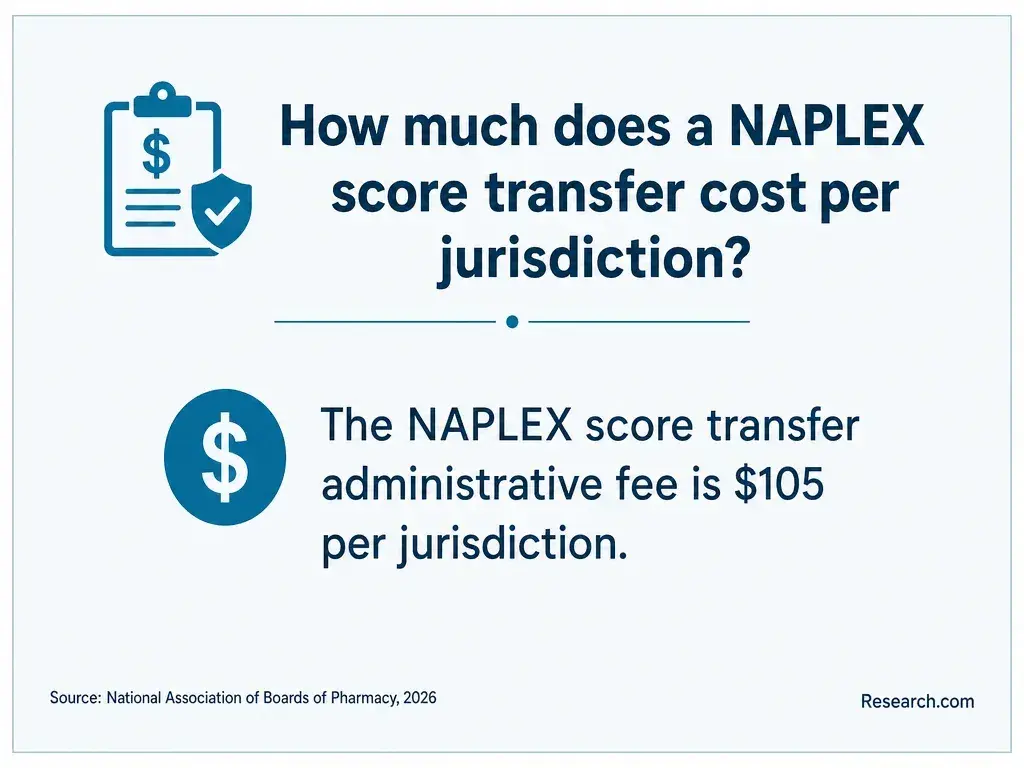
The North American Pharmacist Licensure Examination (NAPLEX) assesses knowledge used in pharmacy practice. Your state board determines licensing eligibility and any additional examination or supervised-experience requirements. Jurisprudence testing is not uniform: a jurisdiction may use the Multistate Pharmacy Jurisprudence Examination (MPJE), the Uniform Multistate Pharmacy Jurisprudence Examination (UMPJE), another process, or no separate jurisprudence exam. Check the board's current instructions and NABP's applicable exam procedures before registering.
Use this board-check sequence before budgeting exam fees or scheduling a move. Keep a copy of the current board instructions alongside your answers.
- Confirm when you must register as an intern and which school experiences, if any, count toward your state's required hours.
- Identify the board's degree, application, identity, background-check, and transcript requirements.
- Verify the examinations required in that jurisdiction, eligibility approval, and current fees directly with the board and NABP.
- Ask how results, completed experience, and any other conditions are documented before a license is issued.
Passing the NAPLEX does not itself issue a license. If you are considering pharmacy admissions for students with prior credits, keep admissions credit decisions separate from board decisions about intern status and qualifying experience.
What Careers, Salaries, and Job Outlook Follow PharmD Graduation?
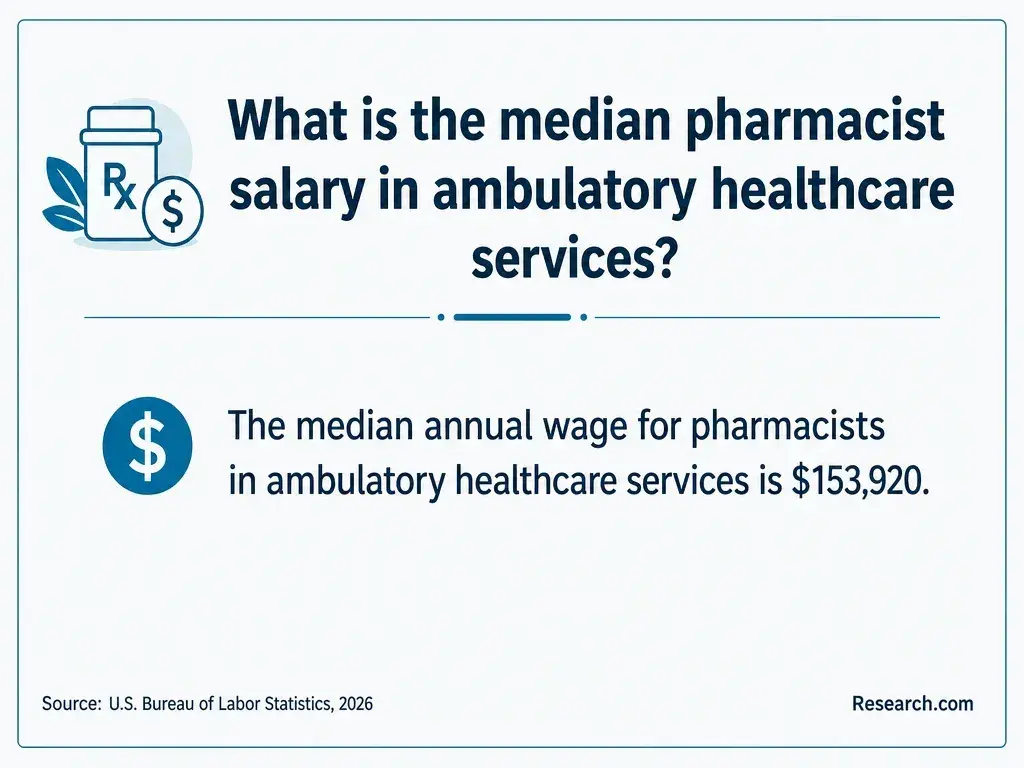
Licensed pharmacists work in community, hospital, ambulatory care, specialty, and other settings; duties and authority depend on the employer and state law. The Bureau of Labor Statistics reports pharmacist median annual pay of $140,910 in May 2025 and projects 5% job growth, 2025-2035, with about 12,500 openings per year. These occupation-wide figures do not predict a new graduate's pay, a particular specialty's openings, or whether the cost of an individual program will pay off.
Postgraduate year one (PGY1) or year two (PGY2) residency training may support some clinical career goals; fellowships generally serve different training aims, often outside standard patient-care residency tracks. Employer expectations vary. Board certification from the Board of Pharmacy Specialties is a separate credential with its own eligibility rules, not a substitute for state licensure, and neither residency nor certification is required for every pharmacist job.
If your preferred work does not require pharmacist licensure, compare its entry requirements before taking on Pharm.D. costs. Some pharmacy degree options with shorter study periods may support different roles. Pharmacy technician is one such separate occupation, not a shortened pharmacist pathway.
Other Things You Should Know About PharmD
Potentially, but each board controls its own application and eligibility rules. Decide where you need an initial license and check other jurisdictions separately rather than assuming approval transfers automatically.
Yes. Retain school-approved documentation of sites, dates, evaluations, and any reported hours according to program and board instructions. It can help resolve questions when you apply for licensure.
Contact the new state's board and your experiential education office promptly. Intern registration, qualifying hours, and site rules may differ, so an early review is safer than waiting until graduation.
Review it before applying, before enrollment, before rotations, and before submitting a licensing application. Recheck board and program requirements whenever your state, schedule, or intended practice location changes.
- Intern Pharmacist License - California State Board of Pharmacy https://www.pharmacy.ca.gov/applicants/intern.shtml
- Pharmacist - Florida Board of Pharmacy https://floridaspharmacy.gov/pharmacist/
- Apply - Pharmacist-Intern Student Application https://www.pharmacy.texas.gov/applicants/apply-pharmacist-intern.asp
- Pharmacist Intern Licensure Snapshot | Department of State https://www.pa.gov/agencies/dos/department-and-offices/bpoa/boards-commissions/pharmacy/pharmacist-intern-licensure-snapshot
- Virginia Board of Pharmacy - FAQ https://www.dhp.virginia.gov/Boards/Pharmacy/PractitionerResources/FAQ/
- NYS Pharmacy: License Requirements - Office of the Professions https://www.op.nysed.gov/professions/pharmacist/license-requirements
- GAC - Chapter 480-2 LICENSURE AS A PHARMACIST https://rules.sos.ga.gov/gac/480-2
- How to Become a Pharmacist | School of Pharmacy https://pharmacy.llu.edu/about-us/school-news/how-become-pharmacist
- Intern Pharmacist License Policy | ucsd.edu https://pharmacy.ucsd.edu/current/intern-pharmacist-license-policy
- La. Admin. Code tit. 46, § LIII-705 - Professional Experience | LII / Legal Information Institute https://www.law.cornell.edu/regulations/louisiana/La-Admin-Code-tit-46-SS-LIII-705