PharmD Scholarship Application Checklist

Co-Founder and Chief Data Scientist
A Pharm.D. scholarship can reduce the cost of pharmacy school, but an incomplete application or overlooked renewal rule can erase that opportunity. This checklist is for prospective and current Doctor of Pharmacy students comparing awards from schools and outside organizations.
It shows what to collect, how to test your eligibility, and how to track each deadline. You'll also learn to compare an award's actual value - not just its advertised amount - before choosing where to apply or enroll.
Key Things You Should Know
- Build a separate checklist for each award: eligibility, required documents, submission method, deadline, award restrictions, and renewal terms can differ.
- Complete the FAFSA when an award requires financial-need information, but check the scholarship's own deadline and your school's aid instructions; submitting the FAFSA alone is not a scholarship application.
- Compare the award with your full Pharm.D. cost and borrowing plan. Federal loan rules changed for many new graduate and professional borrowers beginning July 1, 2026.
What is a PharmD scholarship application checklist?
A PharmD scholarship application checklist is a record of what you must verify, prepare, submit, and follow up on for each award. The professional Pharm.D. curriculum is distinct from undergraduate pre-pharmacy prerequisite coursework; a scholarship may support one stage, the other, or both. Record the covered stage before investing time in an application.
Start one record per award with its sponsor, eligible students, application link or portal, deadline and time zone, required materials, award amount, covered expenses, notification date, and renewal conditions. An advertised online doctorate program with a shorter timeline is not necessarily an entry-to-practice Pharm.D.; confirm the credential before treating its scholarships as relevant.
What documents do PharmD scholarship applications typically require?
Requirements vary by sponsor. Use the award instructions - not a general admissions checklist - as the final authority, then gather the applicable materials before requesting recommendations.
- Application and eligibility evidence: Complete the sponsor's form and collect any requested admission letter, enrollment verification, residency documentation, or membership information.
- Academic records: Obtain transcripts and identify whether unofficial copies are acceptable initially; some sponsors later require official records.
- Written materials: Save the exact essay prompt, word limit, résumé or CV requirements, and any description of pharmacy experience, service, or research.
- Recommendations: Record the number, eligible recommender roles, submission process, and whether letters must remain confidential.
- Financial information: Prepare FAFSA-related information or a separate need statement only when requested; use the sponsor's instructions for sensitive documents.
If prerequisite coursework appears on multiple transcripts, ask how the sponsor evaluates it. A school's decision to accept transferred prerequisites is separate from a scholarship sponsor's eligibility decision; pharmacy prerequisite credit evaluation is a useful issue to resolve early.
How do you qualify for PharmD scholarships?
First, sort awards by eligibility rather than award size. Common criteria include admission or enrollment in a qualifying Pharm.D. program, academic standing, documented financial need, community service, leadership, a practice interest, or membership in a sponsoring organization. Some awards are restricted by geography or stage of study. Meeting every stated minimum makes you eligible to apply; it does not guarantee selection.
For each promising award, check whether its rules apply at the application date, at matriculation, or throughout the award period. If you are still finishing prerequisites, ask whether conditional admission is sufficient. Schools set their own pharmacy degree eligibility requirements; scholarship criteria may be narrower. Do not assume every Pharm.D. applicant needs a completed bachelor's degree.
The Free Application for Federal Student Aid (FAFSA) helps schools determine eligibility for federal aid and may supply information used for need-based institutional scholarships. A private sponsor may use a different form or its own definition of need. Check which FAFSA aid year the award requires, whether the school needs additional forms, and whether the scholarship deadline comes before other financial-aid deadlines.
Need is not the same as tuition alone. Compare tuition and mandatory fees with books, technology, prerequisite courses, clinical-rotation travel, and other required expenses. Then ask the financial-aid office how an outside award would affect your aid package and remaining costs. Federal borrowing rules changed for many new graduate and professional borrowers beginning July 1, 2026; verify your student classification, applicable rules, and any transitional eligibility rather than relying on an older loan-limit example. If format and price are part of your choice, compare cost-conscious online Pharm.D. choices using total required costs, including in-person obligations.
Academic criteria may include a minimum grade point average, satisfactory progress, completed prerequisite courses, or continued enrollment. Check which GPA the sponsor means: cumulative undergraduate, science prerequisite, or professional Pharm.D. GPA. Also note when it will be measured and whether the award must be renewed each year.
A minimum is a screening rule, not evidence that an applicant is competitive. If your transcripts reflect a change of major or additional science preparation, present that record accurately rather than assuming the sponsor will interpret it for you. Applicants comparing Pharm.D. programs for biology majors should separately confirm that their coursework meets each school's admissions rules; admission eligibility and scholarship eligibility are different decisions.
Answer the sponsor's prompt directly. Explain why pharmacy is your chosen profession, support that choice with a specific experience, and show how the award would help you complete your education. A patient-care, workplace, research, or service example is stronger when you describe what you did and learned without disclosing private patient information or overstating your role.
Tailor the final paragraph to the award's purpose. A service-focused sponsor needs different evidence from one funding research or financial need. If your route into pharmacy is nontraditional, briefly explain a relevant academic change or gap and the preparation that followed; do not use the essay to claim an exception the school has not approved. Review pharmacy school requirements and exceptions separately from the scholarship prompt, then proofread against the exact word limit and file instructions.
Choose recommenders who can give firsthand examples relevant to the award. Depending on the sponsor's rules, a science instructor might discuss academic preparation, a pharmacist supervisor might describe reliability and communication, or a service coordinator might document leadership. A detailed letter from an eligible recommender is usually more useful than a prestigious name with little knowledge of your work.
Ask early, provide your résumé, the award criteria, your statement draft, and the submission deadline, and confirm that the letter was received. Do not assume a PharmCAS admissions letter can be reused by a scholarship portal. If you are considering shorter pharmacy doctorate pathways, give recommenders the correct program and award details; they should not guess at your schedule or claim that you have completed work still in progress.
Find scholarships through the financial-aid and pharmacy-school offices of programs you are considering, then check professional associations, employers, community organizations, and state or local groups whose eligibility rules fit your record. Ask whether a school considers applicants automatically for institutional awards or requires a separate application, interview, or admitted-student deadline.
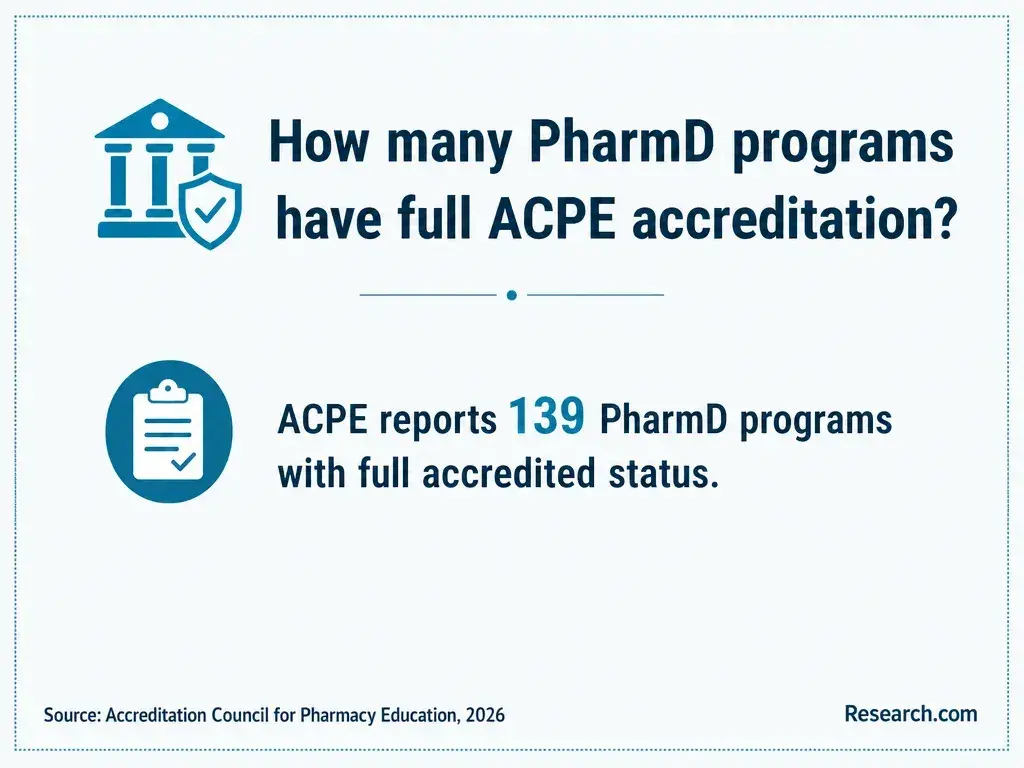
Before committing to a program, confirm its current professional-program accreditation status in the Accreditation Council for Pharmacy Education (ACPE) program lookup. ACPE accreditation is not the same as institutional accreditation or authorization to enroll distance-learning students in your state. Compare scholarship opportunities alongside the program's full cost and required attendance; online Pharm.D. program options can still require in-person labs and clinical experiences. Ask the school which expenses an award can actually cover.
Use the same fields for every award so that a large advertised scholarship does not distract you from an earlier deadline or an ineligible program. Copy the sponsor's instructions into your tracker, and leave uncertain fields marked for confirmation rather than guessing.
| Award and sponsor | Eligibility confirmed? | Deadline and time zone | Documents outstanding | Amount and covered costs | Renewal terms | Submission status |
| _____ | _____ | _____ | _____ | _____ | _____ | _____ |
| _____ | _____ | _____ | _____ | _____ | _____ | _____ |
Once the fields are filled, use this submission sequence for each application:
- Confirm eligibility, the required aid year, and whether the deadline applies to submission or receipt of all materials.
- Request transcripts and letters early; set a personal deadline before the sponsor's deadline.
- Match each essay and attachment to its prompt, format, and file-name rules.
- Submit through the specified portal and save the confirmation or email receipt.
- Check for missing-item notices and record the decision date and any acceptance deadline.
Keep a separate record of program completion time. Lists of pharmacy programs with shorter completion times may include credentials other than an entry-to-practice Pharm.D.; a short timeline does not make an award applicable to your degree.
What career and licensing requirements follow a PharmD degree?
A Pharm.D. is the professional degree used in the U.S. pharmacist pathway, but graduation does not issue a pharmacist license. State boards set licensure requirements, which generally include the North American Pharmacist Licensure Examination (NAPLEX) and may include a jurisdiction-specific law examination, supervised experience, and other conditions. Check the board where you intend to practice; do not assume every jurisdiction uses the MPJE, particularly as some began transitioning to the UMPJE in 2026.
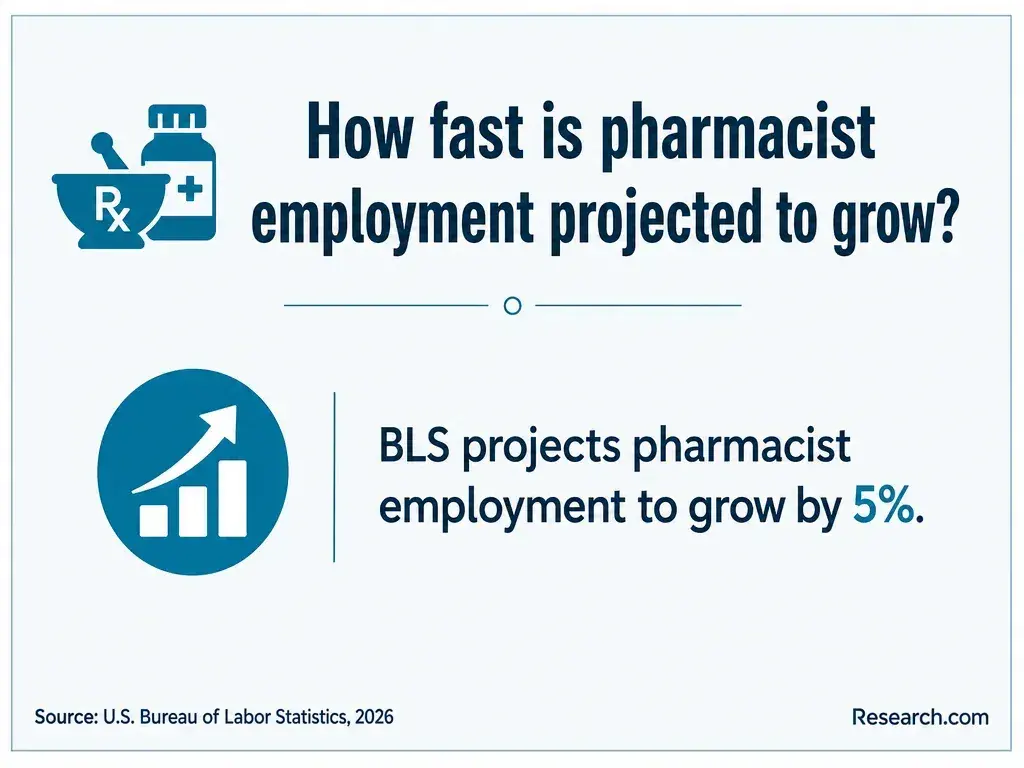
The Bureau of Labor Statistics reports median annual pay of $140,910 in May 2025 for pharmacists and projects 5% growth for 2025-2035. That occupational figure is useful context for a long-term education decision, not a prediction of your starting pay or scholarship's return. Residency or fellowship training may help with particular roles but is not universally required for pharmacist licensure; specialty board certification is a separate credential. If your goal does not require pharmacist licensure, compare cost-effective pharmacy degree options without assuming a pharmacy technician or pharmaceutical sciences credential qualifies you to practice as a pharmacist.
Other Things You Should Know About PharmD
Sometimes. Some sponsors accept prospective students, while others require an admission letter or proof of enrollment. Check what must be true when you apply and what documentation is required before funds are paid.
Often, but disclose outside awards to your school's financial-aid office. Sponsors may prohibit combining particular awards, and additional funding can change other aid in your package.
It depends on the award. Some renew if you meet stated conditions; others require a new application. Save the renewal deadline and verify GPA, enrollment, and reporting requirements each year.
Tax treatment depends on how funds are used and your circumstances. Amounts used for expenses outside qualified tuition and required educational expenses may be taxable. Keep the award terms and spending records, and consult current IRS guidance or a tax professional.
- How To Review and Correct Your FAFSA® Form | studentaid.gov https://studentaid.gov/apply-for-aid/fafsa/review-and-correct
- Packaging Aid | 2025-2026 Federal Student Aid Handbook https://fsapartners.ed.gov/knowledge-center/fsa-handbook/2025-2026/vol3/ch3-packaging-aid
- Pharmacy Scholarship and Financial Aid Resources | Regis University https://www.regis.edu/financial-aid/types-of-financial-aid/graduate-doctoral-students/pharm-scholarships
- Scholarships & Financial Aid | University of Cincinnati | James L. Winkle College of Pharmacy https://www.pharmacy.uc.edu/admissions/scholarships-aid.html
- Scholarships, Grants & Loans | Albany College of Pharmacy and Health Sciences https://www.acphs.edu/admissions-aid/tuition-aid/scholarships-grants-loans/
- USP Scholarship Eligibility Requirements | Scholarship Office https://scholarships.oregonstate.edu/USP-Scholarship-Renewal-Requirements
- School of Pharmacy Scholarships for Current Students | Pacific University https://www.pacificu.edu/directory/student-affairs/enrollment-management/office-financial-aid/types-financial-aid/scholarships/college-health-rehabilitation-sciences-scholarships/scholarships-current-pharmacy-students
- About Submitting Applicant Recommendations | ucsf.edu https://pharmd.ucsf.edu/admissions/steps/apply/pharmcas/rec
- Federal Verification | Policies - Notre Dame financial aid https://financialaid.nd.edu/contact/resources/policies/federal-verification/
- Will outside grants and scholarships affect my financial aid package? | miami.edu https://engagecanes.miami.edu/CC/s/article/Will-outside-grants-and-scholarships-affect-my-financial-aid-package