NAPLEX Readiness Checklist Before Graduation

Co-Founder and Chief Data Scientist
Graduation can arrive before your exam plan is ready. If you are finishing a Doctor of Pharmacy (Pharm.D.) program, the useful decision is not simply when to start studying: it is whether your knowledge, paperwork, budget, and intended licensing jurisdiction are aligned. This checklist helps you identify what to confirm with your school and state board, build a study schedule around clinical rotations, and avoid registering on assumptions that could delay licensure.
Key Things You Should Know
- Before graduation, confirm your Pharm.D. program's accreditation, your target board's eligibility rules, and who reports degree completion; passing the NAPLEX alone does not grant a license.
- Build a study plan around a diagnostic assessment, pharmacy calculations, clinical decision-making, and timed practice - not review hours alone.
- Budget separately for the NAPLEX, any required jurisprudence exam, state applications, and study materials; exam requirements and fees vary by jurisdiction.
What is the NAPLEX, and why is it required for pharmacist licensure?
The North American Pharmacist Licensure Examination (NAPLEX) assesses whether a candidate can apply pharmacy knowledge to practice-related problems. It is administered through the National Association of Boards of Pharmacy (NABP) and is part of the pharmacist licensing process in U.S. jurisdictions. Expect questions that require you to interpret patient information and make medication-related decisions, not just recall drug facts.
Keep the milestones separate: prerequisite undergraduate coursework is not the professional Pharm.D. curriculum; earning a Pharm.D. is not the same as holding a pharmacist license; and a passing NAPLEX result does not replace a state board's other requirements. A science major considering pharmacy degree options for science majors should first determine which route leads to a qualifying professional degree.
What are the NAPLEX eligibility requirements before pharmacy graduation?
For a U.S.-educated candidate, the central education requirement is graduation from an Accreditation Council for Pharmacy Education (ACPE)-accredited professional pharmacy program, subject to the licensing jurisdiction's rules. You may be able to begin an application while still a student, but do not assume you can receive authorization to test before the board accepts the required proof of graduation and clears you. Ask your board and school exactly when they exchange that information.
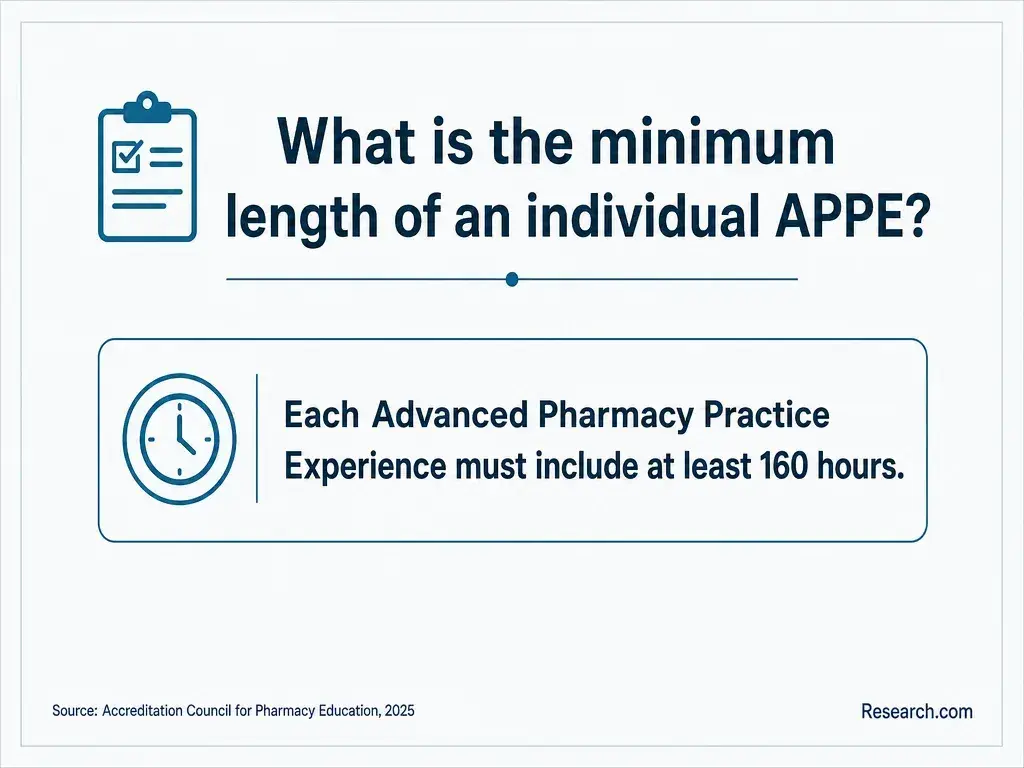
If graduation is at risk because a course or advanced pharmacy practice experience (APPE) remains incomplete, resolve that first: an exam booking strategy cannot substitute for degree completion. Students reviewing pharmacy degree eligibility options should distinguish admission with prerequisites in progress from eligibility for pharmacist licensure after the professional degree. Internationally educated pharmacists generally follow a different pathway involving NABP's foreign graduate certification requirements and jurisdiction-specific conditions; they should not assume the U.S.-graduate checklist applies unchanged.
How can you build an effective NAPLEX study plan before graduation?
Start with a realistic inventory of remaining rotations, exams, work, and graduation tasks. A student in an accelerated Pharm.D. program may have a different study window from a student with a lighter final rotation, but neither should count on uninterrupted time after commencement.
Use this sequence to turn that calendar into a plan you can adjust as evidence of your readiness changes:
- Map the window: Write down your expected degree-conferral date, application milestones, rotation obligations, and the earliest testing period your board's process might permit.
- Take a diagnostic assessment: Record weak topics and whether errors come from knowledge gaps, calculations, reading, or time pressure.
- Schedule targeted review: Give recurring time to calculations, therapeutics, medication safety, and topics you repeatedly miss; practice applying information to patient cases.
- Reassess under exam-like conditions: Use timed question sets, review the reasoning behind every missed answer, and revise the schedule rather than merely repeating familiar material.
- Make a booking decision: Consider your practice performance alongside graduation confirmation, board approval, available study time, and any applicable authorization deadline.
A common mistake is treating completion of a question bank as proof of readiness. Your error log and performance across unfamiliar cases are more useful than a raw count of questions answered.
ACPE accredits professional pharmacy education programs; it does not accredit individual pharmacists or issue licenses. Check the current status of your specific Pharm.D. program in ACPE's official program records, and ask the licensing board about any eligibility question involving your graduation date or program status. Institutional accreditation is a separate matter, as is a school's authorization to offer distance education in a state.
Delivery format does not remove professional or experiential requirements. If you are comparing online Pharm.D. program options, verify required in-person labs, introductory pharmacy practice experiences (IPPEs), APPEs, and any campus visits. Confirm who coordinates placements and whether travel, site approval, or intern registration could affect your ability to finish on schedule. An online pathway is not necessarily a fully remote route to graduation or licensure.
Use NABP's current NAPLEX competency statements as the scope for review. They emphasize applying knowledge to patient-centered medication care and safe pharmacy practice. Preparation should cover interpreting clinical information, selecting and monitoring drug therapy, recognizing contraindications and interactions, performing pharmacy calculations, and handling medication-use and safety problems.
Do not confuse familiarity with a topic with the ability to use it in an unfamiliar case. For example, knowing a drug's usual dose is different from checking whether a patient's characteristics, organ function, other medications, and intended route change the decision. Likewise, shortest online doctoral programs are not interchangeable with a qualifying Pharm.D.; a shorter credential cannot replace the professional education and assessed skills needed for this licensing route.
Choose resources by purpose rather than buying every product offered. NABP's current exam guide and competency statements establish the official scope and policies. A current review source can organize content, a question bank can expose reasoning gaps, and timed practice can reveal pacing problems. Confirm that commercial materials reflect the current exam content outline; a publisher's claimed pass rate is not a personal prediction.
Your coursework, preceptors, and school support services can help you resolve weak areas, but patient information from rotations must remain confidential. If your path included transferred coursework, pharmacy transfer planning also provides a useful reminder: credit accepted toward a degree does not mean every underlying topic still feels fresh. Let diagnostic results - not assumptions about earlier grades - set review priorities.
Choose your intended licensing jurisdiction before submitting exam and board applications. The board determines its application process and may require proof of degree completion, intern experience, background screening, and a law examination. Depending on the jurisdiction and timing, that exam may be the Multistate Pharmacy Jurisprudence Examination (MPJE), the Uniform MPJE (UMPJE), another assessment, or no separate jurisprudence exam. Verify the current rule with the board rather than assuming the MPJE is universal.
If you may seek licensure in another jurisdiction, review NABP's score-transfer process and the receiving board's requirements before testing; transferring a score is not the same as receiving another license. State licensure standards also differ from pharmacy school acceptance criteria. Admission to a Pharm.D. program does not preapprove a future license application.
Build one record from your board's current instructions, your school's graduation procedures, and your NABP account. This worksheet separates dates you control from confirmations that depend on another organization; fill it in before paying or choosing an exam date.
| Record to verify | Your confirmed detail |
| Intended licensing jurisdiction and board application deadline | ____________________ |
| Expected degree-conferral date and school reporting contact | ____________________ |
| Required transcript or graduation verification process | ____________________ |
| NABP and board application status; name match on identification | ____________________ |
| Authorization-to-test validity and scheduling deadline | ____________________ |
| Other required exam, background check, or intern documentation | ____________________ |
After recording the answers, check for a mismatch between the date you hope to test and the date your school can verify graduation. Advice on how to finish an online pharmacy degree sooner does not change a board's documentation or authorization rules. Also check identification and accommodation requirements in the current NABP and testing-provider instructions well before test day.
There is no reliable single nationwide total: the exams you need, board fees, materials you choose, and any retesting costs depend on your situation. Before committing to a test date, obtain current prices directly from NABP, your board, and the resource providers. Use the following categories to make a budget rather than treating a review-course price as the full cost of licensure:
- Required applications and exams: NAPLEX registration, state board application, and any jurisdiction-required law examination.
- Preparation choices: Review materials, practice assessments, and any tutoring you decide is worth its cost.
- Conditional costs: Background checks, transcripts, travel to a test center, accommodations documentation where applicable, or repeat applications and exams.
Set aside a contingency without assuming a retake will be necessary. If broader degree expenses are still part of your decision, compare online pharmacy degree affordability using tuition, required in-person activities, rotation travel, and licensure-related expenses together - not advertised tuition alone. Students borrowing for professional study should check their own aid eligibility against current federal rules rather than assuming older loan options or limits still apply.
What careers and salaries are available after passing the NAPLEX?
After meeting all board requirements and receiving a pharmacist license, you may pursue roles in community, hospital, ambulatory care, specialty, or other pharmacy settings, subject to employer requirements. Passing the NAPLEX alone does not permit independent pharmacist practice. A residency or fellowship can be useful for particular career goals but is not universally required; specialty board certification is a separate credential, not a substitute for licensure.
The U.S. Bureau of Labor Statistics reports median annual pay for pharmacists of $140,910 in May 2025 and projects 5% growth from 2025-2035, with about 12,500 openings per year. Those are occupation-wide figures, not a new graduate's salary offer or a forecast for one practice setting. When weighing pharmacy programs balancing cost and time, account for the time and expense of completing the qualifying Pharm.D. and obtaining a license before using pharmacist pay as a comparison point. Pharmacy technician work is a separate occupation and does not ordinarily require a Pharm.D.
Other Things You Should Know About PharmD
Do not assume you can. Ask your state board and employer which duties, if any, you may perform under your current registration and supervision while your application is pending.
Check the current testing-provider and NABP rules before changing your appointment. Scheduling conditions, fees, and the validity of your authorization can affect your options.
Review NABP's current retake policy and your board's rules before reapplying. Use your performance information to change your study approach rather than immediately repeating the same plan.
If you may need one, review NABP's current documentation and request process early. Approval and scheduling take planning; an accommodation used at school does not automatically carry over to a licensing exam.
- The NAPLEX: Evolution, Purpose, Scope, and Educational Implications - PMC https://pmc.ncbi.nlm.nih.gov/articles/PMC2384208/
- ADA Requirements: Testing Accommodations https://www.ada.gov/resources/testing-accommodations/
- VIRGINIA BOARD OF PHARMACY https://townhall.virginia.gov/l/GetFile.cfm
- Virginia Board of Pharmacy - FAQ https://www.dhp.virginia.gov/Boards/Pharmacy/PractitionerResources/FAQ/
- Pharmacist Licensure Guide | Department of State https://www.pa.gov/agencies/dos/resources/professional-licensing-resources/licensure-processing-guides-and-timelines/pharmacist-guide
- Testing Center Information for Students | University Compliance Office https://compliance.unc.edu/access-and-accommodations/testing-center/testing-center-students/
- Graduation & Licensure | Washington State University https://pharmacy.wsu.edu/pharmd/experiential-services/graduation-licensure/
- Assessing Prior Knowledge & Addressing Learning Gaps | cornell.edu https://teaching.cornell.edu/teaching-resources/assessment-evaluation/assessing-prior-knowledge-addressing-learning-gaps
- NAPLEX Preparatory Perceptions from Recent Graduates at One College of Pharmacy - ScienceDirect https://doi.org/10.1016/j.ajpe.2024.100642
- NAPLEX Prep | Pharmacy Licensure Exam https://nabp.pharmacy/programs/examinations/naplex/