
Veterans Education Benefits for Online PharmD Students

Co-Founder and Chief Data Scientist
An online Doctor of Pharmacy (Pharm.D.) program can look compatible with military life, but its tuition, required campus visits, and in-person clinical rotations may receive different treatment under veterans education benefits. For veterans and eligible family members, the decision is not simply whether a school accepts the GI Bill. It is whether the specific program is approved, how much of its cost your benefit will cover, and whether its schedule and location rules work for you. This guide shows you what to verify before applying or committing your remaining benefits.
Key Things You Should Know
- GI Bill payments depend on your benefit eligibility, the specific program's VA approval, your enrollment, and the school's certified tuition and fees; an online label alone establishes none of these.
- At the Post-9/11 GI Bill's 100% benefit level, Yellow Ribbon may help with eligible tuition and fees beyond the applicable VA payment limit, but participation and award amounts depend on the school's agreement.
- Online-only enrollment generally receives a different housing allowance from qualifying in-person enrollment, while Pharm.D. labs and clinical rotations still require substantial in-person time.
What veterans education benefits can cover an online PharmD degree?
The Post-9/11 GI Bill, also called Chapter 33, can pay eligible tuition and fees directly to a school and may provide housing and books-and-supplies payments. Other routes include the Montgomery GI Bill and Veteran Readiness and Employment (VR&E), or Chapter 31, for eligible veterans with service-connected disabilities.
Dependents may qualify through transferred Post-9/11 benefits or Survivors' and Dependents' Educational Assistance. These programs have different eligibility and payment rules; approval for one is not approval for all.
The distinctions below help you identify which office to contact before comparing tuition bills. Your VA certificate of eligibility or VR&E counselor, rather than a school's general military-friendly designation, determines the benefit you can use.
| Benefit route | What to check for a Pharm.D. |
| Post-9/11 GI Bill | Benefit percentage, remaining entitlement, program approval, tuition limits, and housing eligibility |
| VR&E | Whether the Pharm.D. fits an approved rehabilitation and employment plan and which costs the counselor authorizes |
| Other GI Bill or dependent benefits | Whether payment goes to the student rather than the school and whether it will realistically meet professional-degree costs |
If your goal is a pharmacy-adjacent job rather than pharmacist licensure, compare shorter online pharmacy study options before spending Pharm.D.-level time and benefits. Those credentials generally do not qualify someone for pharmacist licensure.
Can the GI Bill pay for online PharmD tuition and fees?
Yes, the Post-9/11 GI Bill can pay tuition and mandatory fees for a VA-approved online or hybrid Pharm.D. program when the student is eligible and the school certifies enrollment.
At the full benefit level, VA generally pays net tuition and mandatory fees at a public school under its applicable in-state rules; a private school is subject to an annual tuition-and-fees limit. Lower benefit percentages reduce what VA pays. The current VA rate year, school classification, and certified charges matter more than a program's advertised price.
Ask the school's certifying official for a term-by-term estimate showing tuition, mandatory fees, scholarships applied to tuition, expected VA payment, and any balance.
Separately budget for prerequisite courses, campus travel, rotation-related housing or transportation, equipment, and licensing expenses: a charge can be necessary for school without being a tuition or fee payment VA will send to the institution. Compare that remaining cost with affordable Doctor of Pharmacy options, using the same cost categories for each school.
Do not assume federal loans will automatically close a gap. Federal borrowing rules changed for many new graduate and professional borrowers beginning July 1, 2026; ask the financial aid office which rules apply to your entry date and circumstances.
How does Yellow Ribbon funding work for online PharmD programs?
Yellow Ribbon is a supplement to the Post-9/11 GI Bill, not a separate benefit that every Pharm.D. student receives. For a student who meets VA's Yellow Ribbon eligibility rules, a participating school may contribute toward eligible tuition and fees above the applicable Post-9/11 GI Bill payment, and VA matches that contribution under the school's agreement. A program's online delivery does not, by itself, rule it in or out.
Confirm that the institution participates for your entry year, whether its agreement covers professional Pharm.D. students, how many awards are available, and whether the contribution has an annual limit.
Ask how the award is handled if your tuition changes during clinical rotations. If a private program still leaves a balance, pharmacy programs with faster completion options may be worth comparing - but a shorter calendar does not necessarily mean lower tuition or fewer required clinical experiences.
They can be, but VA approval must cover the specific institution and program, not merely the university or a similarly named campus degree. Before applying, ask the school's VA certifying official to confirm the exact Pharm.D. pathway, its delivery location, and which benefits the school can certify. Request clarification if a program is new, changes format, or requires enrollment through a partner institution.
"Online" usually describes academic instruction, not the whole degree. Professional pharmacy education includes hands-on requirements such as labs, introductory pharmacy practice experiences (IPPEs), and advanced pharmacy practice experiences (APPEs).
Check scheduled live classes, campus visits, placement locations, and time away from work when comparing online Pharm.D. pathways for future pharmacists. State authorization to enroll you at a distance, permission for clinical placements, and VA approval are separate questions.
Post-9/11 GI Bill housing payments depend on eligibility, rate of pursuit - the measure of how much coursework you take relative to full-time enrollment - and how VA classifies your instruction. Students generally must pursue more than half-time study to receive a housing allowance.
Exclusively distance-learning enrollment is subject to a distinct, lower maximum based on a national housing-rate formula; qualifying in-person instruction can instead make the campus-location rate relevant. A campus visit does not automatically make every term an in-person term.
Ask the certifying official how each term will be reported to VA, particularly when coursework, campus labs, and APPEs follow different schedules. Housing payments are tied to qualifying enrollment periods, so build a budget around the actual academic calendar rather than a year-round monthly assumption.
Guidance on online doctoral program duration can provide general planning context, but your Pharm.D. school's term and rotation schedule is what matters for this calculation.
Yes, but accreditation and VA approval answer different questions. The Accreditation Council for Pharmacy Education (ACPE) accredits professional Pharm.D. programs. Institutional accreditation concerns the university; state authorization concerns where it may enroll distance students; and VA approval concerns certification for education benefits. Verify each status separately rather than treating one as proof of the others.
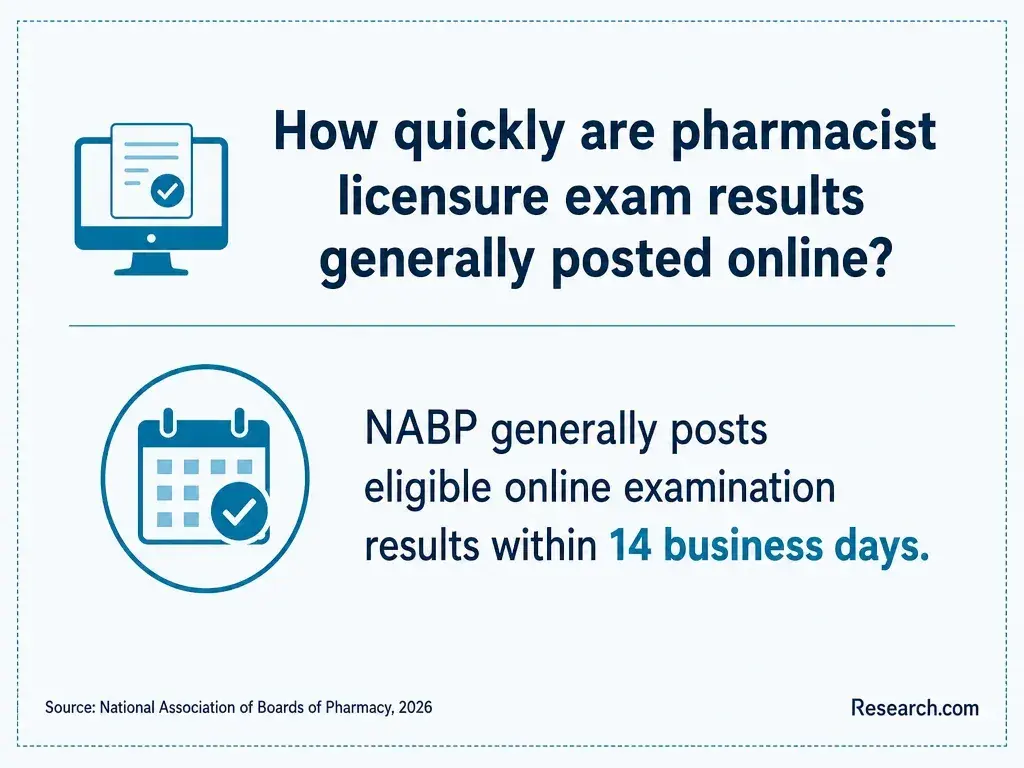
For a U.S. pharmacist pathway, check the program's current ACPE status in ACPE's official records and ask your intended state board of pharmacy about licensure eligibility. A Pharm.D. graduate must still meet that board's requirements, which can include intern experience, the North American Pharmacist Licensure Examination (NAPLEX), and an applicable law examination.
Jurisdictions do not all use the same law exam; some use the MPJE, some have transitioned to the UMPJE, and others have different requirements. Neither accreditation nor passing an exam issues a license by itself.
Accreditation also does not guarantee that previous coursework will count toward the degree. Review pharmacy transfer credit requirements with the receiving school, which decides how prior credit applies.
Applicants generally complete specified pre-professional undergraduate courses before entering the professional Pharm.D. curriculum. The exact science courses and labs, minimum grades, GPA rules, coursework-age limits, and need for a bachelor's degree vary by school. Military training or earlier college credit may be reviewed, but neither automatically replaces a prerequisite or transfers into the professional curriculum.
Check the current school admissions page and, where the school participates, its PharmCAS directory entry. Confirm application deadlines, transcripts, recommendations, interviews, and whether unfinished prerequisites are allowed when applying.
The PCAT was retired in January 2024; do not plan around taking it. Some pharmacy programs with flexible entry requirements may let applicants finish specified courses before matriculation, but a conditional application pathway is not a waiver of those courses.
The timeline depends on completed prerequisites, the program's professional-course sequence, and required in-person experiences. A shorter advertised pathway may still demand full-time clinical rotations or travel that interrupts paid work. Veterans should compare remaining benefit entitlement against the school's actual term schedule, not just its stated graduation date.
A useful cost comparison separates charges VA may pay from expenses you may need to fund yourself. Request a written estimate for your anticipated entry year because program tuition and required fees can change.
| Cost category | Decision-relevant detail |
| Tuition and mandatory fees | Term-by-term certified charges, applicable GI Bill limit, and any Yellow Ribbon award |
| Required academic expenses | Technology, references, supplies, background checks, and immunizations |
| In-person requirements | Campus visits and IPPE/APPE travel, lodging, or lost work time |
| Path to licensure | State applications and required examinations after graduation |
If earlier science credits reduce only your prerequisite time, they may not shorten the professional curriculum. Ask for a course-by-course evaluation before assuming you can build on prior biology or chemistry coursework in the way your budget assumes.
An ACPE-accredited Pharm.D. can support the educational pathway toward pharmacist licensure regardless of whether some instruction is online. Licensed pharmacists work in settings including community pharmacies, hospitals, clinics, and specialty pharmacy; specific duties and advancement depend on state law, employer requirements, and experience.
A residency, fellowship, or specialty board certification may help with particular roles but is not a universal requirement for pharmacist practice and does not replace a state license.
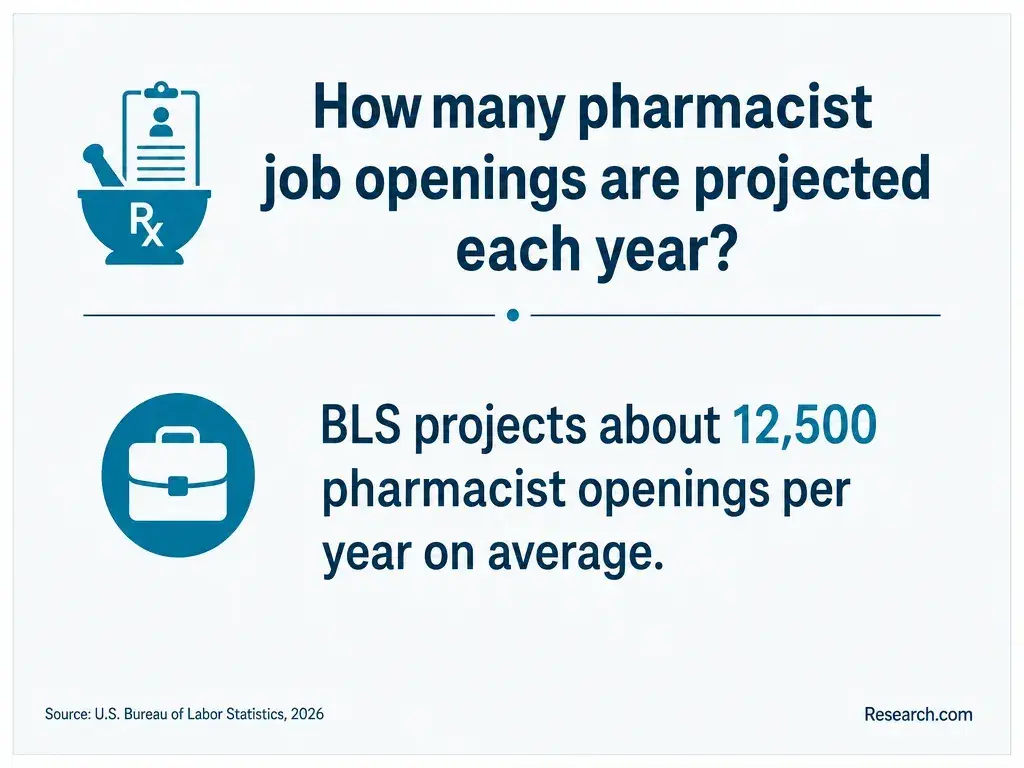
The Bureau of Labor Statistics reports pharmacist median annual pay of $140,910 in May 2025 and projects 5% growth, 2025-2035, with about 12,500 openings per year. These national occupational figures are not expected earnings or placement results for graduates of an online program.
If you want a pharmacy role without becoming a licensed pharmacist, compare shorter pharmacy programs with career potential; pharmacy technician work, for example, is a separate occupation that does not ordinarily require a Pharm.D.
How can veterans compare reputable online PharmD programs?
Start with programs whose professional accreditation, VA approval, and enrollment eligibility you can confirm. Then compare the same practical constraints at each school. The checks below are intended to prevent a favorable-looking tuition or online label from hiding a benefit gap or an unworkable rotation schedule.
- Confirm the exact program's ACPE status, VA approval, distance-education authorization for your location, and clinical-placement eligibility in your intended states.
- Ask the VA certifying official for a term-by-term estimate of certified charges, Yellow Ribbon availability, enrollment classification, and likely housing-rate treatment.
- Ask who arranges IPPE and APPE sites, whether a placement near home is possible, and what intern registration, travel, and full-time attendance may be required.
- Compare admissions decisions using written prerequisite evaluations, total out-of-pocket costs, published licensure-exam outcomes where available, and your intended state board's rules.
If admission flexibility matters, researching pharmacy schools that may be easier to enter can help build an application list. Treat any such ranking as a starting point, not a substitute for verifying current requirements or program quality. Choose only after you know both what your benefit will cover and whether you can complete the program's in-person obligations.
Other Things You Should Know About PharmD
Possibly. A spouse or child may use transferred Post-9/11 GI Bill entitlement only if the service member obtained an approved transfer under Department of Defense rules. Some dependents may instead qualify for a separate VA education benefit. Confirm the person's own eligibility before relying on it for tuition.
Generally, yes, if you still have eligible entitlement and the new program is approved. Check your VA benefit record for your remaining entitlement and ask the pharmacy school how its academic calendar will be certified.
Possibly, under VA rules for courses required to enter an approved program. Coverage depends on the course, your eligibility, and how the school can certify it. Get confirmation before enrolling, especially if the prerequisites are offered by a different institution.
VA may reimburse an eligible beneficiary for an approved licensing test. Check whether the NAPLEX is approved for your benefit, retain proof of payment, and follow VA's test-reimbursement process. Reimbursement does not mean VA or a state board has approved you for a pharmacist license.
- Find A Yellow Ribbon School | Veterans Affairs https://www.va.gov/education/yellow-ribbon-participating-schools/
- Qualified Ed expenses | Internal Revenue Service https://www.irs.gov/credits-deductions/individuals/qualified-ed-expenses
- Pharmacist Licensure Snapshot | Department of State https://www.pa.gov/agencies/dos/department-and-offices/bpoa/boards-commissions/pharmacy/pharmacist-licensure-snapshot
- About GI Bill Education Benefits | militaryonesource.mil https://www.militaryonesource.mil/benefits/gi-bill-education-benefits/
- Cost of Attendance (Budget) | 2025-2026 Federal Student Aid Handbook https://fsapartners.ed.gov/knowledge-center/fsa-handbook/2025-2026/vol3/ch2-cost-attendance-budget
- Veteran Readiness and Employment (VR&E) Home | va.gov https://www.benefits.va.gov/vocrehab/
- Post-9/11 GI Bill® - Chapter 33 - Military and Veteran Students https://veterans.temple.edu/military-education-benefits/gi-bill-benefits/post-911-gi-bill-chapter-33
- Do All Pharmacy Programs Offer Experiential Education? | Belmont University https://www.belmont.edu/stories/articles/2024/pharmacy-program-experiential-education.html


