PharmD work and study time planning worksheet

Co-Founder and Chief Data Scientist
A Pharm.D. schedule can look manageable until labs, paid work, commuting, and clinical rotations land on the same calendar. This worksheet helps prospective and current Doctor of Pharmacy students test whether their plans leave enough time for learning, sleep, and unexpected changes. You'll build separate weekly budgets for coursework and rotations, identify commitments that cannot move, and decide whether to reduce work hours, change support arrangements, or reconsider a program's format before those conflicts become costly.
Key Things You Should Know
- Start with the 168 hours available each week. Reserve time for sleep, required attendance, travel, and basic needs before assigning hours to study or paid work.
- Make separate worksheets for classroom terms and advanced pharmacy practice experiences (APPEs). An online course format does not make in-person labs or clinical rotations self-paced.
- Set an employment limit using your busiest credible week, not your easiest one. Compare the income you would lose by working less with your full educational costs and available aid.
What Is a PharmD Work and Study Time Planning Worksheet?
A Pharm.D. work and study time planning worksheet is a weekly capacity check. It places fixed commitments alongside flexible ones so you can see whether a proposed job schedule fits a professional pharmacy curriculum. Unlike a course calendar, it includes travel, meals, household responsibilities, and recovery time.
Copy the table for each materially different term. Enter hours you can realistically sustain, not the minimum you hope each activity will take. Leave the final column for a second scenario, such as fewer work shifts or a rotation farther from home.
| Weekly time category | Usual week: hours | Busy week: hours | Fixed or adjustable? |
| Sleep | _____ | _____ | _____ |
| Scheduled classes and assessments | _____ | _____ | _____ |
| Labs, simulations, or clinical placement | _____ | _____ | _____ |
| Independent study and assignments | _____ | _____ | _____ |
| Paid employment | _____ | _____ | _____ |
| Travel and transitions | _____ | _____ | _____ |
| Meals, household tasks, and caregiving | _____ | _____ | _____ |
| Personal time and contingency buffer | _____ | _____ | _____ |
| Total; compare with 168 | _____ | _____ |
If the total exceeds 168 - or fits only by eliminating sleep or a contingency buffer - the plan is not workable as written. Even a lower total can conceal conflicts when two fixed activities occur at the same time. A pharmacy education with shorter completion time comparison may help you explore alternatives, but a shorter calendar does not necessarily mean lighter weeks or the same route to pharmacist licensure.
How Can PharmD Students Balance Coursework, Employment, and Personal Responsibilities?
Protect fixed commitments first, then negotiate employment around them. A shift that starts when a lab ends may still be impossible if travel, a meal, or preparation is missing from the calendar. Caregiving and household responsibilities deserve scheduled space rather than an assumption that they will fit wherever time remains.
Use this sequence to turn the worksheet into a decision about work hours:
- Enter required class, lab, assessment, and placement times from the actual term schedule.
- Add sleep, travel, caregiving, meals, and recurring appointments before estimating study time.
- Place study blocks near the coursework they support, then add a buffer for exams and schedule changes.
- Offer an employer only the shifts that remain feasible in the busy-week scenario; identify who can cover conflicts.
- Recalculate after the first major assessment and whenever a rotation or household obligation changes.
If reducing paid hours creates a funding gap, calculate that gap before enrolling rather than assuming more shifts will be possible later. Students completing prerequisites while working should also check pharmacy admission pathways for nontraditional students; admission conditions and the eventual professional-school schedule are separate questions.
How Many Hours Should PharmD Students Study Each Week?
There is no reliable nationwide weekly study-hour requirement for Pharm.D. students. The useful number is the time you need to prepare for your own courses and demonstrate proficiency, after scheduled instruction is accounted for. A fixed "hours per class hour" rule can understate the demands of an exam-heavy pharmacotherapy course or overstate those of material you already know.
For the first weeks of a term, record actual time spent previewing material, practicing calculations, reviewing cases, completing assignments, and preparing for assessments. Use those observations to replace your worksheet estimate. If study routinely consumes the buffer, reduce an adjustable commitment before the next intensive block; do not treat missed sleep as newly available study time.
Expect the busiest week - not the average - to determine whether employment is sustainable. Accelerated pharmacy school options may shorten the overall calendar, but condensed terms can leave less room to recover from a difficult course or missed work shift. Obtain a sample term-by-term schedule before assuming acceleration fits your job.
The professional Pharm.D. curriculum builds on, but is distinct from, undergraduate pre-pharmacy prerequisites. Students commonly move among pharmaceutical sciences, pharmacotherapy, patient assessment, calculations, medication safety, communication, skills labs, and supervised practice. A weekly calendar may combine lectures or live online sessions with small-group cases, hands-on work, and assessments; the mix changes by school and term.
For planning purposes, label every scheduled activity as required attendance, work with a variable deadline, or independent preparation. Then check whether the program publishes its timetable far enough ahead for your employer to schedule around it. A prior biology or chemistry degree may satisfy some admission prerequisites without removing professional Pharm.D. coursework. Readers considering pharmacy doctorate options after biology should request an individual prerequisite review and the professional curriculum calendar.
Labs need more than the meeting time shown on a timetable: include preparation, required equipment or attire, travel, and any scheduled practical assessment. Experiential education creates a larger change. Introductory pharmacy practice experiences (IPPEs) occur during the professional program; advanced pharmacy practice experiences (APPEs) generally occupy extended clinical blocks later in it. Their exact timing and schedules vary by school and site.
Create a separate rotation worksheet using the assigned site's expected hours and commute, rather than carrying forward a classroom-term estimate. Ask the program who coordinates and approves placements, when assignments become final, whether travel or temporary housing may be necessary, and whether a proposed site near home is eligible. Students may also need intern registration, immunizations, background checks, or other site clearance. Do not assume a current pharmacy job can replace a required rotation or that an online student can complete one remotely.
Prior coursework can affect the route into a program, but not necessarily its experiential sequence. If that distinction matters to your timeline, review pharmacy school transfer admission policies and obtain the receiving school's written evaluation before counting on a shorter schedule.
Online or hybrid instruction may reduce routine trips to campus and give some students more control over when they complete recorded coursework. Campus-based instruction may make it easier to use on-site labs, meet classmates, and access scheduled support. Neither format, by itself, determines whether a student can keep a particular job.
The practical comparison is the calendar: required live sessions, in-person labs or campus visits, exam times, and clinical placements. "Online" does not mean asynchronous, fully remote, or self-paced. When comparing online pharmacy school programs, request those requirements for every professional year and ask about distance-education authorization for your location. State authorization, Accreditation Council for Pharmacy Education (ACPE) professional-program accreditation, and eligibility for licensure in a chosen state are distinct checks.
ACPE accredits professional pharmacy education programs; it does not admit students or license pharmacists. Admission requirements are school-specific. They may include designated undergraduate prerequisite courses and labs, grades or GPA thresholds, references, an interview, and application materials. Some schools require a bachelor's degree; others admit students after specified prerequisite coursework. The Pharmacy College Admission Test (PCAT) was retired and should not be treated as a current routine requirement.
Before reserving time or money for additional courses, compare your transcript with each school's current rules for substitutions, course age, work in progress, and transfer credit. Check whether the school uses the Pharmacy College Application Service (PharmCAS), what supplemental steps it requires, and its deadlines. A published minimum is an eligibility threshold, not an admission promise. Admission pathways for pharmacy students can help frame the search, but the current school directory and admissions office control the requirements for your application.
A traditional professional Pharm.D. curriculum commonly spans four academic years after required pre-professional coursework; accelerated and other pathways use different calendars. For a working student, elapsed time is only half the comparison. A shorter program can concentrate tuition payments, coursework, and time away from employment into fewer months.
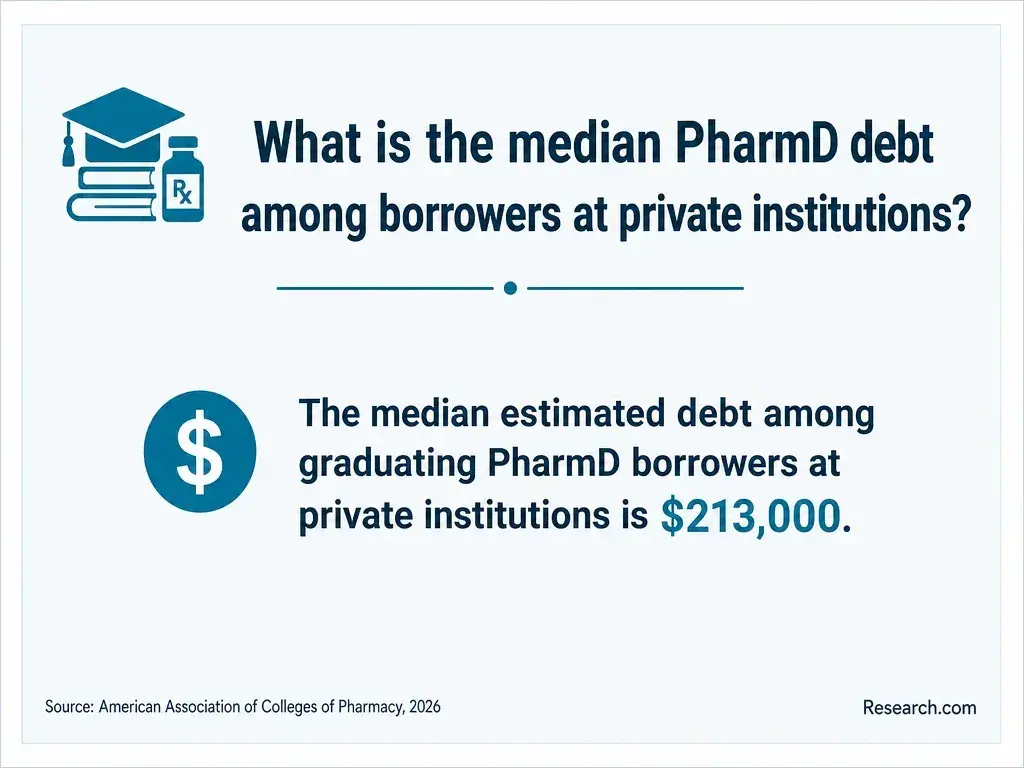
Build a cost estimate from the school's current tuition and mandatory fees, then add prerequisites, books or clinical resources, technology, lab supplies, required travel, rotation housing if applicable, and eventual licensing expenses. Record expected weekly take-home pay in each worksheet scenario. The difference between those income estimates is an opportunity cost, not a charge on the tuition bill. Use pharmacy doctorate tuition and fees comparisons as a starting point, and verify each school's current figures and what they include.
Ask the financial aid office how your specific program and entry date affect federal loan eligibility. Rules changed for many new graduate and professional borrowers beginning July 1, 2026; older descriptions of borrowing limits or Grad PLUS access may not apply. Do not make a work-hours decision based on unconfirmed aid.
Completing an ACPE-accredited Pharm.D. does not itself issue a pharmacist license. U.S.-educated graduates generally must apply through the relevant state board, meet that jurisdiction's supervised-experience and other conditions, and satisfy examination requirements. The North American Pharmacist Licensure Examination (NAPLEX) assesses practice-related knowledge; a jurisdiction may also require a law examination or another form of jurisprudence assessment. Do not assume the Multistate Pharmacy Jurisprudence Examination (MPJE) is required everywhere: requirements differ, and some jurisdictions began transitioning to the Uniform Multistate Pharmacy Jurisprudence Examination (UMPJE) in 2026.
Put anticipated application, exam, and study periods on a postgraduation calendar, then confirm current requirements and fees with the state board and National Association of Boards of Pharmacy. Passing an exam alone does not grant a license. Similarly, short online doctorate programs in other subjects are not substitutes for the professional pharmacy education required for the usual U.S.-educated pharmacist pathway.
How Can Students Choose a Reputable PharmD Program and Plan Their Careers?
Choose among programs using the same evidence for each: current ACPE professional-program status, prerequisite evaluation, a term-by-term attendance calendar, placement policies, full cost, aid eligibility, and published graduate or licensure outcomes with their context. Confirm the institution's accreditation separately. Ask what happens if a clinical assignment conflicts with work, requires travel, or changes with limited notice; a favorable sample timetable is not a placement guarantee.
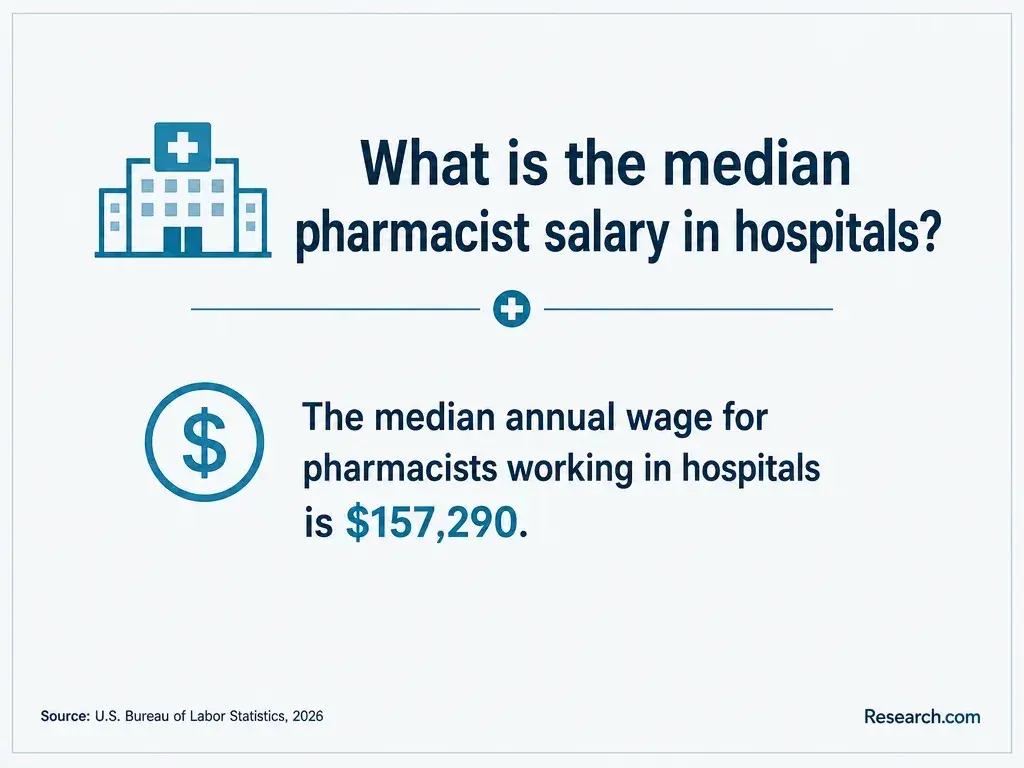
Career plans affect how much flexibility you need later. The Bureau of Labor Statistics reports median annual pay of $140,910 in May 2025 for pharmacists and projects 5% growth, 2025-2035, with about 12,500 openings per year. Those national occupational figures are useful context, not a prediction of your starting pay, local opportunities, or return on tuition. Postgraduate residency or fellowship training may serve particular goals but is not universally required for pharmacist employment; optional specialty board certification is also distinct from state licensure.
If your goal is to work in a pharmacy rather than practice as a licensed pharmacist, compare the time and cost of the Pharm.D. against the actual requirements of the role. Some short-duration pharmacy programs may relate to pharmacy-adjacent or technician work, but they do not replace a Pharm.D. for pharmacist licensure. The sound choice is the program whose verified schedule and total cost remain workable in your busy-week worksheet, not merely the one with the most appealing advertised format.
Other Things You Should Know About PharmD
Use whichever you will update consistently. A calendar is helpful for detecting overlapping appointments; a weekly worksheet makes the total time commitment easier to see. Many students benefit from using both.
Review it when you receive each term schedule, after your first major assessment, and before every new placement. Revise it sooner if your commute, employment, or caregiving changes.
Ask how far ahead shifts are assigned, whether hours can fall during exam periods or rotations, and whether someone can cover a last-minute schedule conflict. Get any promised flexibility clarified before relying on it.
Yes, if you qualify. Check which expenses are covered, when reimbursement is paid, any minimum work commitment, and what happens if you reduce hours or leave the job.
- Systematic review of distributed practice and retrieval... - PMC https://pmc.ncbi.nlm.nih.gov/articles/PMC11078833/
- Guidelines for Creating a Study Schedule | Learning Strategies Center https://lsc.cornell.edu/guidelines-for-creating-a-study-schedule-2/
- Spacing and retrieval practice guide | edresearch.edu.au https://www.edresearch.edu.au/guides-resources/practice-guides/spacing-and-retrieval-practice-guide-full-publication
- Estimate Study Hours | USU https://www.usu.edu/academic-support/time/estimate_study_hours
- Experiential Education - Albany College of Pharmacy and Health Sciences https://www.acphs.edu/pharmacy/doctor-of-pharmacy-pharmd/experiential-education/
- College Employment and Student Performance | Penn Wharton Budget Model https://budgetmodel.wharton.upenn.edu/p/2021-10-04-college-employment-and-student-performance/
- Essential Study Strategies for PharmD Final Exams | MCPHS https://www.mcphs.edu/academics/schools/pharmacy/leadership-in-pharmacy-education-institute/networking-and-support/learning-resources
- PharmD Student Voices: A Clinical Training Explainer | Doctor of Pharmacy https://pharmacy.wisc.edu/2025/08/13/pharmd-student-voices-a-clinical-training-explainer/
- Understanding the Impacts of Employment on Students' Lives | pdx.edu https://pdxscholar.library.pdx.edu/cgi/viewcontent.cgi
- How Much Should We Assign? Estimating Out of... - Rice CTE https://cte.rice.edu/blog/2016/workload