PharmD clinical skills lab curriculum

Co-Founder and Chief Data Scientist
A Pharm.D. curriculum can look comprehensive on paper, but course titles alone do not show how often students practice counseling, medication preparation, or clinical decisions before caring for patients. If you are comparing pharmacy schools, the clinical skills lab deserves a close look - especially if you are considering an online or accelerated pathway. This guide explains what strong labs teach, how schools assess readiness, and which questions to ask about in-person requirements, rotations, costs, and licensure before you enroll.
Key Things You Should Know
- A Pharm.D. skills lab should provide repeated, supervised practice and feedback in patient communication, medication-use processes, clinical reasoning, and safety - not just demonstrations or virtual cases.
- Online coursework does not eliminate hands-on requirements: compare required campus sessions, in-person assessments, and supervised introductory and advanced rotations before choosing a program.
- The Bureau of Labor Statistics reports pharmacist median annual pay of $140,910 in May 2025, but a Pharm.D. and its labs do not themselves grant a pharmacist license or guarantee that salary.
What is included in a PharmD clinical skills lab curriculum?
A Pharm.D. clinical skills lab is the practice component of the professional Doctor of Pharmacy curriculum. Students apply classroom learning to simulated or supervised tasks, receive feedback, and demonstrate improvement. Undergraduate pre-pharmacy science courses build a foundation, but they are not substitutes for professional patient-care training; schools also make their own decisions about pharmacy prerequisite credit evaluation.
Lab activities differ by school. This comparison shows the main components to look for and the evidence that matters more than a course title.
| Lab component | What students may practice | What to check in a curriculum |
| Patient communication | Medication histories, counseling, teach-back, and communication with other clinicians | Whether students receive observed feedback across multiple encounters |
| Clinical decision-making | Reviewing patient information, identifying medication-related problems, and explaining recommendations | Whether cases become more complex as students progress |
| Medication-use processes | Prescription review, dispensing workflows, documentation, and error prevention | Whether assessments test accuracy as well as speed and communication |
| Preparation and procedures | Compounding or other hands-on tasks taught by the program | Which activities use equipment and require an in-person practical assessment |
Ask for the current course sequence and assessment descriptions. A strong answer identifies what each student must do, how performance is evaluated, and what happens when a student needs more practice.
How do PharmD skills labs prepare students for patient care?
Skills labs let students make and correct mistakes in a controlled setting before supervised patient encounters. A student might review a medication order, recognize a potential problem, explain a recommendation to a simulated prescriber, and counsel a standardized patient - an individual trained to portray a patient consistently. Faculty can then evaluate the reasoning, accuracy, and communication separately.
Preparation is strongest when practice is repeated, feedback is specific, and later assessments require students to combine skills rather than perform isolated tasks. Ask whether the program uses observed practical exams, how remediation works, and how lab performance feeds into readiness for rotations. Even among doctoral programs with accelerated timelines, a shorter calendar is not evidence that essential practice can be skipped.
Simulation has limits: a successful lab encounter does not establish that a student can practice independently. Real patients, workflow interruptions, site policies, and supervision during clinical experiences add demands that a classroom cannot fully reproduce.
What courses and hands-on skills are taught in PharmD programs?
Professional Pharm.D. coursework typically integrates pharmacology, therapeutics, drug information, calculations, ethics, and pharmacy law with lab practice. Pharmacology addresses how drugs act; therapeutics applies medication evidence to patient problems. A skills lab turns that knowledge into tasks such as gathering a medication history, checking a dose calculation, documenting a care plan, or explaining safe medication use.
Schools organize these topics differently, so compare the sequence, not just the catalog labels. Find out when students first practice with simulated patients, whether counseling and calculations are assessed repeatedly, and which preparation skills involve hands-on equipment. Students entering pharmacy education after undergraduate science coursework should expect to apply that background to new clinical and communication tasks, not simply repeat their science prerequisites.
For students who completed their initial pharmacy education outside the United States, navigating the licensure process often involves additional steps, such as transcript evaluations, equivalency exams, and specific clinical hour requirements to transition into domestic practice. Preparing for these equivalency standards ensures foreign medical graduates and internationally trained pharmacy candidates can align their prior training with U.S. accreditation standards.
Some pharmacy programs with a fast timeline lead to credentials other than a Pharm.D. Check the exact degree and intended occupation before treating a short pharmacy-related curriculum as preparation for pharmacist licensure.
An online Pharm.D. pathway may deliver some lectures, discussions, or case work remotely. It does not necessarily deliver compounding practice, observed procedures, practical exams, or clinical rotations remotely. Review the actual schedule for online Doctor of Pharmacy degree options rather than assuming "online" means asynchronous or self-paced.
The useful comparison is where and when required practice occurs. This table separates instructional flexibility from the hands-on obligations that can affect work and travel plans.
| Feature | Online or hybrid pathway | Campus pathway |
| Classroom learning | May include remote classes with scheduled live participation | Usually follows an on-campus class schedule |
| Skills practice | May combine virtual cases with required campus or other approved in-person sessions | Typically uses campus labs on scheduled days |
| Practical assessments | May require travel or attendance at designated sites | Typically take place at campus facilities |
| Clinical rotations | Require supervised practice at approved sites; local placement is not automatic | Require supervised practice at approved sites; travel may still be necessary |
Ask for required immersion dates, live-session times, practical-exam locations, and placement policies in writing. Also verify institutional state authorization to enroll you and any rules affecting placements in your state; neither is the same as eligibility for a pharmacist license.
Admissions requirements vary by school. Applicants usually need specified undergraduate prerequisite courses before entering the professional curriculum, but a completed bachelor's degree is not a universal requirement. Schools set their own rules for science labs, minimum grades, course age, transcripts, recommendations, interviews, and courses still in progress. Review each program's current pharmacy school prerequisites alongside its official admissions page rather than relying on a general checklist.
Some schools use the Pharmacy College Application Service, known as PharmCAS; others have their own application route or additional requirements. Confirm the current application cycle, prerequisite completion deadline, and whether your previous coursework is accepted. The Pharmacy College Admission Test, or PCAT, was retired in January 2024 and should not be treated as a currently available standard entrance exam.
A stated minimum makes an application eligible for consideration, not admission. If you need additional prerequisites, include their tuition and the time they add when comparing programs.
Many professional Pharm.D. curricula run over four academic years after prerequisites, while some schools offer accelerated schedules. Your actual timeline also depends on unfinished prerequisites, course sequencing, and rotation availability. A faster calendar may reduce time away from earnings but can concentrate labs, exams, and travel into a less flexible schedule.
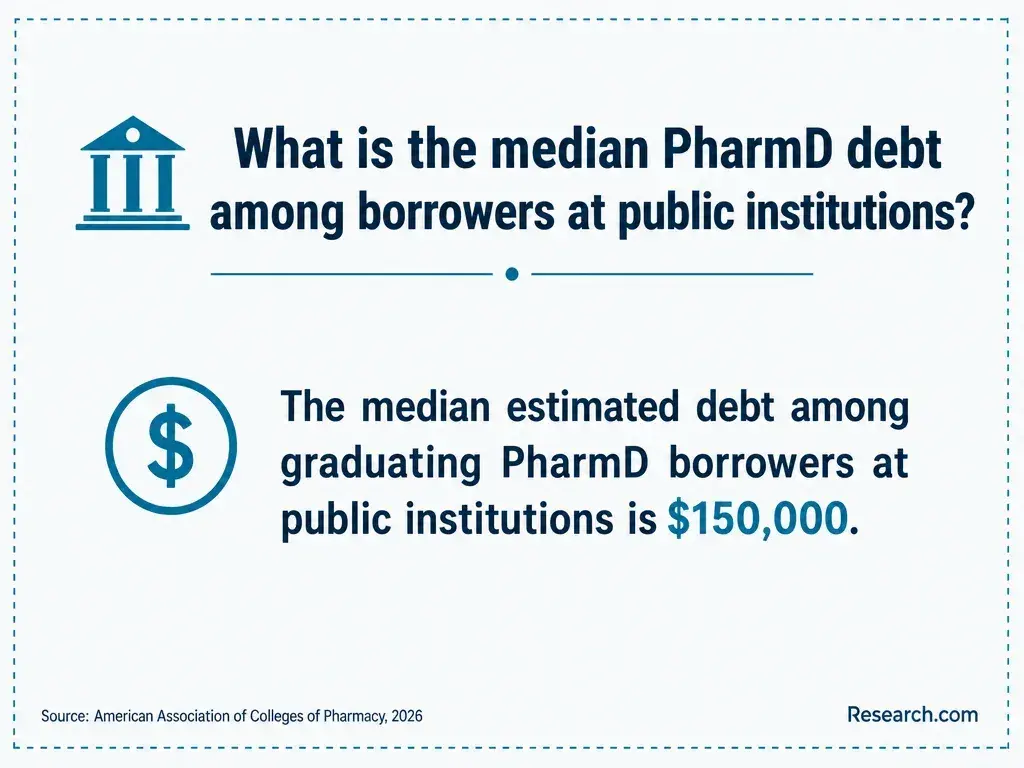
There is no single reliable price for a Pharm.D.: tuition varies by institution, residency status, and program format. An advertised price for a low-cost online pharmacy doctorate is only a starting point if required in-person sessions and rotations add expenses. Request a current, itemized estimate that includes tuition and mandatory fees, supplies and technology, travel or temporary housing, placement-related requirements, and eventual licensing costs.
Compare estimates for the same academic year and the same scope of expenses. Ask financial aid staff how your enrollment and borrowing eligibility will be treated under rules applicable to your start date: federal borrowing rules changed for many new graduate and professional students beginning July 1, 2026. Do not assume an older loan limit or unrestricted access to Grad PLUS will cover a projected shortfall.
The Accreditation Council for Pharmacy Education (ACPE) accredits professional Pharm.D. programs against educational standards that address curriculum and experiential education. Accreditation is a critical eligibility check for a prospective U.S.-educated pharmacist, but it is not a ranking of labs or a guarantee of an individual graduate's exam performance.
Check the program and its current status in ACPE's official program records before paying a deposit. Then assess the details accreditation alone cannot settle: frequency of observed skills practice, feedback and remediation, clinical-site support, and published outcomes interpreted in context. That is a more useful approach to pharmacy degree planning for cost and time than choosing on tuition or duration alone.
Keep three checks separate: ACPE professional-program accreditation concerns the Pharm.D.; institutional accreditation concerns the college or university; and state authorization concerns where a distance-education institution may enroll students. None of these alone issues a pharmacist license.
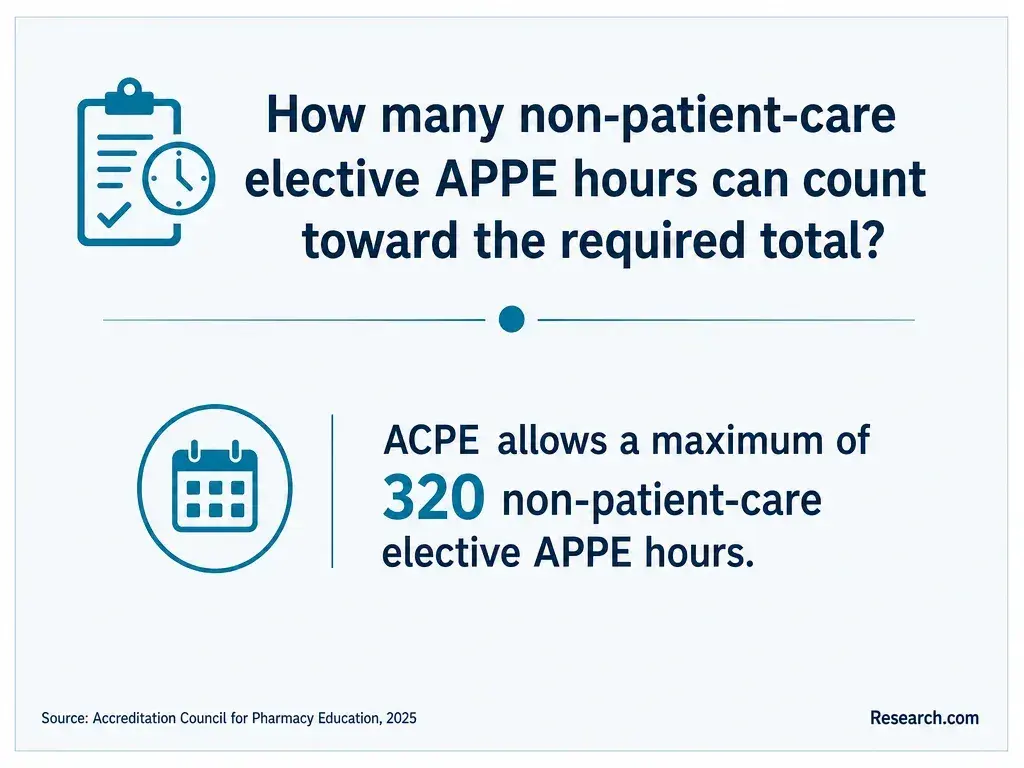
Clinical rotations are supervised experiential education, not a replacement for skills labs. Introductory pharmacy practice experiences (IPPEs) expose students to practice earlier in the program. Advanced pharmacy practice experiences (APPEs) come later and require more developed application of patient-care and professional skills. Programs arrange their settings and schedules under applicable accreditation requirements; do not assume every school offers the same site choices or a placement near home.
Before enrolling, ask who secures and approves sites and preceptors, when schedules are released, and what happens if a placement changes. Students may need intern registration, background checks, immunizations, transportation, or temporary housing, depending on the site and jurisdiction. For someone exploring pharmacy school routes for returning students, rotation availability and time away from work can matter as much as the classroom timetable.
A current pharmacy job is not automatically an approved rotation. The school must determine whether a site and experience meet its educational requirements, and applicable state rules still apply.
A Pharm.D. is an educational credential, not permission to practice independently. U.S.-educated graduates generally must meet their state board of pharmacy's requirements, which commonly include an accredited degree, the North American Pharmacist Licensure Examination (NAPLEX), and any applicable law examination or other state-specific conditions. Some jurisdictions use the Multistate Pharmacy Jurisprudence Examination (MPJE), while others use different processes; the Uniform MPJE (UMPJE) began replacing the MPJE in some jurisdictions in 2026. Check the board where you intend to practice before registering for exams.
Intern registration and supervised-hour rules can also affect students before graduation. Passing an exam does not itself issue a license: the licensing board determines when all conditions have been satisfied. Internationally educated pharmacists face a distinct eligibility process and should not assume a U.S. student pathway applies to them.
Postgraduate residencies and fellowships provide additional training, while Board of Pharmacy Specialties credentials recognize eligible pharmacists who meet specialty certification requirements. Neither replaces state licensure. Likewise, pharmacy programs with a fast timeline that award a different credential do not create a shortcut around pharmacist licensing requirements.
What careers, salaries, and job outlook can PharmD graduates expect?
Licensed pharmacists work in settings such as community pharmacies, hospitals, ambulatory care, and other medication-focused services. The clinical tasks and authority available to them depend on the position and state law. A strong lab curriculum can help a new graduate communicate, identify medication problems, and work safely, but employment, practice setting, and starting pay are not guaranteed.
The Bureau of Labor Statistics reports median annual pay for pharmacists of $140,910 in May 2025 and projects 5% job growth for 2025-2035, with about 12,500 openings per year. Those occupation-wide figures are useful context, not a salary forecast for a new graduate or a particular specialty. Pharmacy technician work is a separate occupation that does not ordinarily require a Pharm.D.
Choose a program by testing whether its lab practice and rotations align with the work you hope to do, then weigh its full cost and schedule against that preparation. Pharm.D. programs for a faster path may appeal if their pace is manageable without sacrificing needed practice. If your goal is a pharmacy-adjacent role rather than licensed pharmacist practice, compare the time and cost of a less extensive credential before committing to a Pharm.D.
Other Things You Should Know About PharmD
Do not assume so. Technician experience can provide useful workflow familiarity, but the Pharm.D. program decides how students meet its professional lab requirements; technician duties also differ from pharmacist responsibilities.
Lab practice alone does not grant authority to immunize. Student participation depends on training, supervision, site policies, and applicable state law.
Policies vary. Ask whether the school offers feedback, additional practice, reassessment, or remediation, and whether an unsuccessful assessment delays progression to rotations.
Students can contact a school's disability services office about its accommodation process. Ask early how approved accommodations apply to timed practical assessments and required in-person activities.
- Pharmacist's Role in Medication Safety | PSNet https://psnet.ahrq.gov/primer/pharmacists-role-medication-safety
- The impact of simulation-based training in medical education | nih.gov https://pmc.ncbi.nlm.nih.gov/articles/PMC11224887/
- Medication Reconciliation - Patient Safety and Quality - NCBI https://www.ncbi.nlm.nih.gov/books/NBK2648/
- Predicting NAPLEX scores using student performance in the clinical skills laboratory setting - ScienceDirect https://www.sciencedirect.com/science/article/abs/pii/S1877129718301527
- Pharmacy (Grad) | Notre Dame of Maryland University https://catalog.ndm.edu/pharmacy-grad
- Pharm D Practice Experience Curriculum | Presbyterian College https://www.presby.edu/graduate-programs/pharmacy/pharmd/practice-experience/
- Curriculum and Dual Degrees | umaryland.edu https://www.pharmacy.umaryland.edu/academics/pharmd/curriculum/