
Federal student loans for PharmD students

Co-Founder and Chief Data Scientist
Financing a Doctor of Pharmacy (Pharm.D.) degree now requires more than comparing tuition with a loan offer. Federal borrowing rules changed for many students entering professional programs on or after July 1, 2026, making enrollment timing and the school's full cost of attendance especially important.
This guide explains which federal loans may be available, how to estimate a funding gap, and when to consider alternatives. It is for prospective and current U.S. Pharm.D. students who want to borrow enough to complete an accredited program without taking on avoidable debt.
Key Things You Should Know
- For many new Pharm.D. borrowers beginning July 1, 2026, the Direct Unsubsidized Loan limit is $50,000 per academic year and $200,000 in aggregate for professional study; the school's cost of attendance can impose a lower limit.
- New graduate and professional borrowers generally cannot use Grad PLUS Loans after July 1, 2026. A limited transition exception may apply to students who borrowed for the same program before that date.
- Submit the FAFSA for each aid year, then compare the school's full cost—not tuition alone—with grants, scholarships, available federal loans, and any remaining funding gap.
What Federal Student Loans Are Available to PharmD Students?
Direct Unsubsidized Loans are the main federal borrowing option for eligible Pharm.D. students. Interest accrues while a student is in school, even when payments are not required. Certain schools also participate in the federal Health Professions Student Loan (HPSL) program, which has different eligibility and repayment terms.
Grad PLUS Loans are no longer a general backstop for students starting professional study after the July 2026 rule change. Students covered by a transition exception should ask their financial aid office to confirm eligibility rather than assume they can borrow the difference between other aid and the school's budget.
These options are tied to a professional pharmacy degree, not every pharmacy-related course. If pharmacist licensure is not your goal, shorter online pharmacy education options may have a different cost and aid structure; they do not substitute for a Pharm.D. when a pharmacist license is required.
How Do PharmD Students Qualify for Federal Student Loans?
Students generally need to meet federal aid eligibility rules, enroll at least half-time in an eligible program, maintain satisfactory academic progress, and complete the Free Application for Federal Student Aid (FAFSA). The school determines the student's enrollment classification and loan eligibility. Admission to pharmacy school does not, by itself, establish federal aid eligibility.
Pre-pharmacy coursework and the professional Pharm.D. curriculum can have different aid rules and borrowing limits. A student transitioning from undergraduate chemistry, for example, should confirm when professional program enrollment begins; Pharm.D. programs for chemistry majors may evaluate prior coursework differently. Ask the aid office to identify your classification for each term before relying on a professional-student loan estimate.
How Much Can PharmD Students Borrow in Federal Loans?
For many new professional-student borrowers beginning July 1, 2026, the Direct Unsubsidized limit is $50,000 per academic year, with a $200,000 aggregate limit for graduate and professional borrowing under the new rules. These are ceilings, not automatic awards. A school cannot award aid above its approved cost of attendance after accounting for other aid, and a student's remaining federal eligibility may be lower.
Enrollment timing matters. Federal Student Aid provides a limited transition exception for certain students who had a direct loan for their program before July 1, 2026; its duration and applicability depend on the student's circumstances. Ask the aid office for a written, year-by-year projection showing your applicable limit, prior borrowing, expected scholarships, and any transition eligibility.
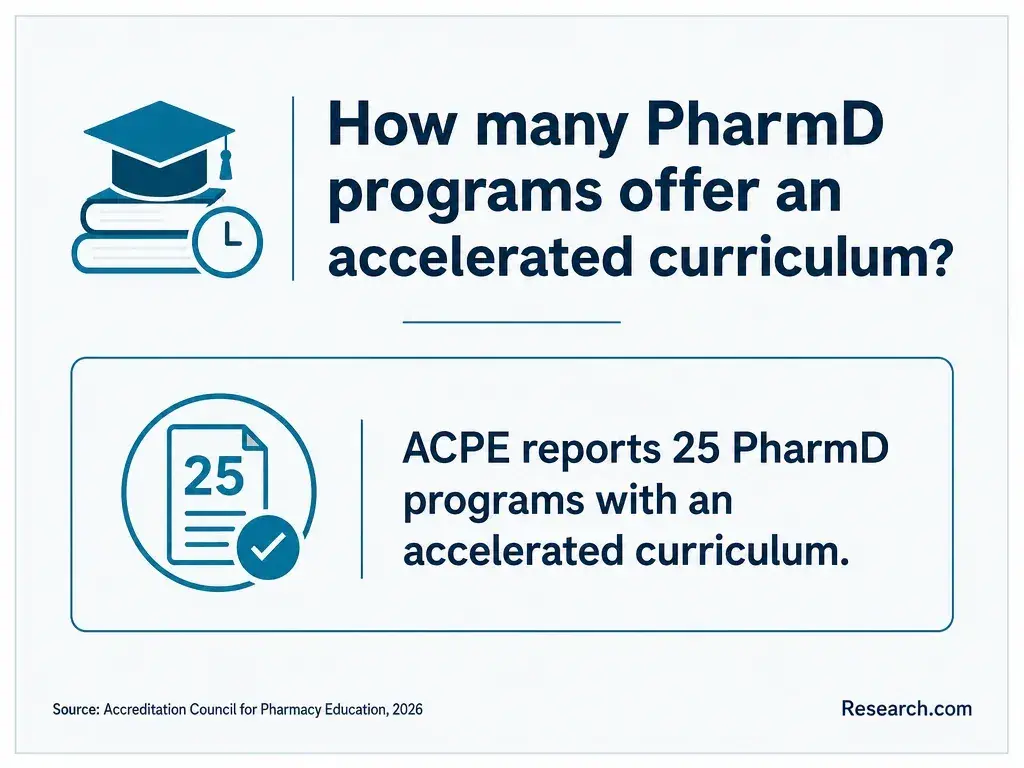
Program length also changes the total amount you may need, even when the annual limit stays the same. Compare the actual tuition and living costs of pharmacy degree programs with accelerated timelines with their schedules: a shorter program is not necessarily cheaper per term or easier to combine with paid work.
Complete the FAFSA for each academic year you want federal aid, list the schools you are considering, and review each school's aid offer and requested follow-up documents. Pharm.D. students classified as graduate or professional students are generally independent for FAFSA purposes. HPSL can have separate financial-need documentation requirements, including parental information, so ask a participating school what it requires.
The FAFSA does not replace a pharmacy school application or guarantee an admission or loan offer. While reviewing pharmacy admissions criteria, keep application deadlines separate from FAFSA and school-specific financial aid deadlines. Once admitted, request the school's cost-of-attendance budget and an explanation of any expenses it will consider adjusting for documented circumstances.
The main practical difference is current access: Direct Unsubsidized Loans remain a core option for eligible new professional students, while Grad PLUS generally does not for new borrowers after the July 2026 change. The table compares the loans for students who may still qualify for Grad PLUS through a transition exception:
| Feature | Direct Unsubsidized | Grad PLUS, if transition-eligible |
| Borrowing | Subject to applicable annual and aggregate limits and cost of attendance | Previously could cover eligible costs not met by other aid; confirm the exception and applicable limits with the school |
| Credit check | No credit check for ordinary eligibility | Adverse-credit check applies |
| Interest | Accrues during school | Accrues during school; rates and fees differ from Direct Unsubsidized |
Compare the published interest rate and origination fee for the year each loan is disbursed, not an older student's rate. Schedule is another borrowing variable: online pharmacy course completion timelines are not necessarily Pharm.D. completion timelines, and an intensive professional curriculum may limit work income.
Yes, potentially. HPSL is a federal, need-based program that includes eligible pharmacy students, but the school must participate and have funds available. Its fixed interest rate is 5%, and interest generally does not accrue while an eligible student is in school or during its grace period. The school determines awards under program rules; HPSL is not an automatic supplement to the Direct Loan limit.
Ask the financial aid office whether its Pharm.D. program offers HPSL, what financial information it requires, and when its funds are awarded. If you are considering pharmacy degree programs for transfer students, also confirm which terms the receiving school will treat as eligible professional enrollment. Acceptance of prior credits and eligibility for a particular loan are separate decisions.
Compare the total amount repayable, not just the advertised rate. Federal Direct Loans have rates and fees set for each disbursement year and offer federal repayment and potential forgiveness options. Private lenders set their own rates, credit and cosigner requirements, repayment terms, and hardship provisions; federal income-driven repayment and Public Service Loan Forgiveness (PSLF) do not apply to private loans.
If a federal limit leaves a gap, first check whether the school's budget includes required rotation travel, housing, and other documented costs, and whether institutional aid is available. Then request private-loan offers on comparable terms, checking whether rates are fixed or variable and whether a cosigner can be released. Comparing online doctorate lengths is useful only if the programs lead to the credential you need: a shorter non-Pharm.D. doctorate will not solve the financing problem for someone seeking pharmacist licensure.
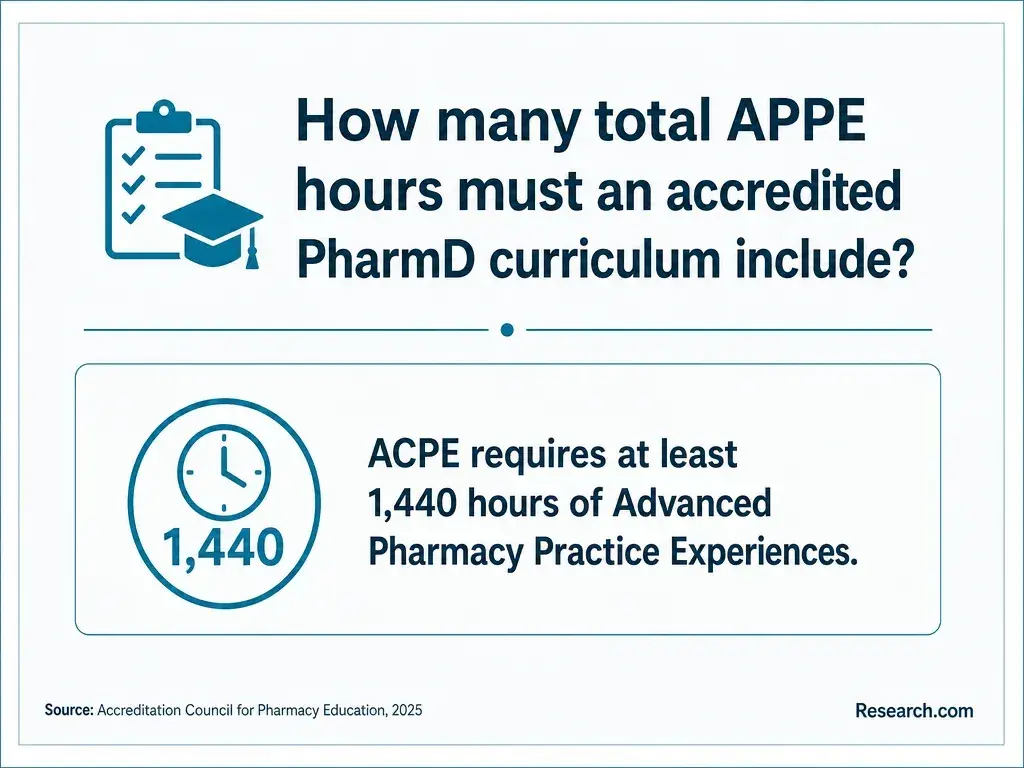
Tuition is only part of the decision. A school's cost-of-attendance budget also estimates allowable living expenses, while your actual required costs may include fees, textbooks and clinical references, equipment, background checks, immunizations, rotation travel or temporary housing, and eventual licensure expenses. Ask for budgets covering every year of the professional curriculum, particularly years with advanced pharmacy practice experiences (APPEs), which are supervised clinical rotations.
Use online Doctor of Pharmacy tuition as a starting point, then verify current charges and in-person requirements directly with each school. A lower advertised price may be offset by travel, housing, prerequisite coursework, or reduced ability to work. The Bureau of Labor Statistics reports pharmacists' median annual pay at $140,910 in May 2025; that occupation-wide figure is context for a long-term repayment plan, not a promised starting salary.
Direct Loan repayment generally begins after the applicable post-enrollment grace period; Grad PLUS and HPSL have different terms. Available federal repayment plans depend partly on when a loan was made, so review your loan types and current plan eligibility with your servicer before graduation. Income-driven options can reduce required payments for eligible borrowers but may increase the time spent repaying and the total interest paid.
PSLF may forgive a qualifying remaining Direct Loan balance after the required qualifying payments while working full-time for an eligible government or nonprofit employer. A pharmacist job title alone does not qualify, and private loans are ineligible. Residency or fellowship training can affect income and repayment choices, but neither is required for every pharmacist position.
Before accepting another year of borrowing, request a current loan balance and estimate payments under plans for which you qualify. For pharmacy admissions for students with prior credits, obtaining a written credit evaluation before enrollment can also clarify whether additional coursework—and its associated borrowing—is necessary.
How Do PharmD Accreditation and Licensure Affect Loan Decisions?
Before committing to debt, verify that a school's professional Pharm.D. program has the appropriate Accreditation Council for Pharmacy Education (ACPE) accreditation status and that the institution and program meet applicable federal aid requirements. ACPE professional-program accreditation, institutional accreditation, and state authorization for distance education are different matters. For a hybrid or online pathway, confirm required campus visits and how introductory and advanced clinical placements are arranged.
A Pharm.D. does not itself grant a pharmacist license. Graduates must satisfy their state board's requirements, which generally include the NAPLEX and may include a jurisdiction-specific law examination and other conditions. Check the board where you intend to practice before taking on loans based on an assumed licensing path. When you review online pharmacy doctorate programs, verify that each option is a professional Pharm.D. rather than a different pharmacy-related doctorate.
Other Things You Should Know About PharmD
Not necessarily. Accept only what you reasonably need after accounting for other aid and realistic expenses. You can ask your aid office how to reduce an award and how returning unused funds affects charges.
Yes, if the expenses fall within the school's approved cost-of-attendance budget and your total aid remains within that budget. Ask the school how it estimates housing, food, transportation, and rotation-related costs.
Your enrollment status can change disbursement eligibility and when repayment starts. Contact the school and loan servicer before taking leave, especially if you expect to remain away beyond an approved leave period.
A residency is postgraduate employment and training, not automatically enrollment in an aid-eligible degree program. Ask a loan servicer about repayment options while you receive a resident salary rather than assuming new student loans will be available.
- Federal Student Loan Repayment Plans | studentaid.gov https://studentaid.gov/manage-loans/repayment/plans
- Primary Care Loan (PCL) FAQs - Bureau of Health Workforce https://bhw.hrsa.gov/funding/schools-apply-loan-program/primary-care-loans-faq
- How Enrollment Affects Your Federal Student Loans | The University of Iowa https://financialaid.uiowa.edu/types-aid/loans/how-enrollment-affects-your-federal-student-loans
- Changes to 2026-2027 Federal Student Loans | columbia.edu https://sfs.columbia.edu/content/changes-2026-2027-federal-student-loans
- PharmD Sources of Financial Aid - USF Health https://health.usf.edu/financial-aid/pharmd-program/sources-of-financial-aid
- Loan Repayment - Student Financial Services - UCSF https://finaid.ucsf.edu/types-of-aid/loans/loan-repayment
- Definition of Professional Degree Affecting Graduate and Professional Degree Loan Limits | Policy Tracker https://policytracker.wiche.edu/federal-regulation/definitions-professional-student-and-graduate-student-affecting-loan-limits
- Legacy Provision Borrowing Limits | WVU Hub https://hub.wvu.edu/types-of-aid/loans/federal/borrowing-limits/legacy
- Navigating Changes to Federal Student Loans for Pharmacy Students - Texas Pharmacy Association https://www.texaspharmacy.org/page/federal-student-loans
- New Federal Student Loan Rules Took Effect | ETS.org https://www.ets.org/grad-school-journey/student-loan-changes-2026.html


