PharmD Program Research Checklist for Prospective Students

Co-Founder and Chief Data Scientist
Choosing a Doctor of Pharmacy (Pharm.D.) program means committing to more than coursework: prerequisites, clinical placements, borrowing, and state licensing rules can all change your timeline and cost. This guide is for prospective U.S. pharmacy students comparing programs before they apply or accept an offer. It gives you a research checklist, questions to ask schools, and a side-by-side scorecard so you can identify a program that supports your intended path to pharmacist licensure without overlooking expensive or difficult-to-change requirements.
Key Things You Should Know
- Verify a program's current Accreditation Council for Pharmacy Education (ACPE) status and your intended state board's licensing requirements before paying a deposit; admission and graduation do not confer a pharmacist license.
- Compare the entire pathway - not just tuition - including remaining prerequisites, required in-person training, rotation travel, aid eligibility, and time away from work.
- Use published outcomes carefully: the Bureau of Labor Statistics reports $140,910 in median annual pay for pharmacists in May 2025, but that occupation-wide figure does not predict an individual graduate's earnings.
What Is a PharmD Program?
A Pharm.D. is the professional degree designed to prepare students for pharmacist practice. It combines classroom learning, skills training, and supervised experiences with patients and medication-use systems. Pre-pharmacy courses - whether taken during a bachelor's degree or another undergraduate pathway - are admission prerequisites, not the professional Pharm.D. curriculum.
Start your checklist with your endpoint: Do you want to become a licensed pharmacist? If so, confirm that each option is a professional Pharm.D. program rather than a degree in pharmaceutical sciences, pharmacology, or pharmacy technology. If you already have a science degree, pharmacy doctorate options after biology can help frame your search, but the receiving school must evaluate your individual prerequisites.
Is PharmD Program Accreditation Required for Pharmacist Licensure?
For the standard U.S.-educated route to pharmacist licensure, completing an ACPE-accredited professional Pharm.D. program is a critical eligibility requirement. Check the specific program and its current status in ACPE's official directory, then confirm requirements with the pharmacy board where you expect to practice. A school's institutional accreditation is separate from ACPE professional-program accreditation; authorization to enroll an online student in a particular state is separate again.
Add these fields to your research notes: program name and campus or pathway; ACPE status and date checked; institutional accreditor; your state's distance-education authorization, if relevant; and the state board's licensure eligibility guidance. Apply the same checks to leading online pharmacy degree programs. Neither an online format nor an accreditation claim on a marketing page settles your eligibility.
What Are the Education and Licensing Requirements for Pharmacists?
The usual U.S.-educated path is to complete accepted undergraduate prerequisites, earn the professional Pharm.D., satisfy applicable supervised-experience requirements, pass the North American Pharmacist Licensure Examination (NAPLEX) and any jurisdiction-required law assessment, and receive a license from the relevant state board. Requirements for intern registration, examinations, background checks, and experience vary by jurisdiction. Do not assume every jurisdiction uses the Multistate Pharmacy Jurisprudence Examination (MPJE); some began transitioning to the Uniform MPJE (UMPJE) in 2026.
Record both your likely practice state and a backup state, then compare their current board instructions with each program's placement and graduate-eligibility information. The receiving school decides how transfer coursework toward pharmacy prerequisites applies; accepted undergraduate credits do not automatically shorten the professional curriculum. Internationally educated pharmacists follow a different eligibility pathway and should consult the National Association of Boards of Pharmacy (NABP) and the relevant state board.
Separate time to qualify for admission from time in the professional program. Professional curricula commonly take about four academic years, while some programs use compressed schedules; remaining prerequisites can add time before either pathway begins. Graduation may be followed by licensing steps and, for some career goals, postgraduate training.
For each school, write down your earliest eligible entry term, remaining courses, professional-program calendar, summer obligations, and expected final rotation period. Compare accelerated pharmacy education options by actual calendar and clinical commitments, not the advertised number of years alone. A shorter calendar may leave less time for paid work and does not eliminate required training.
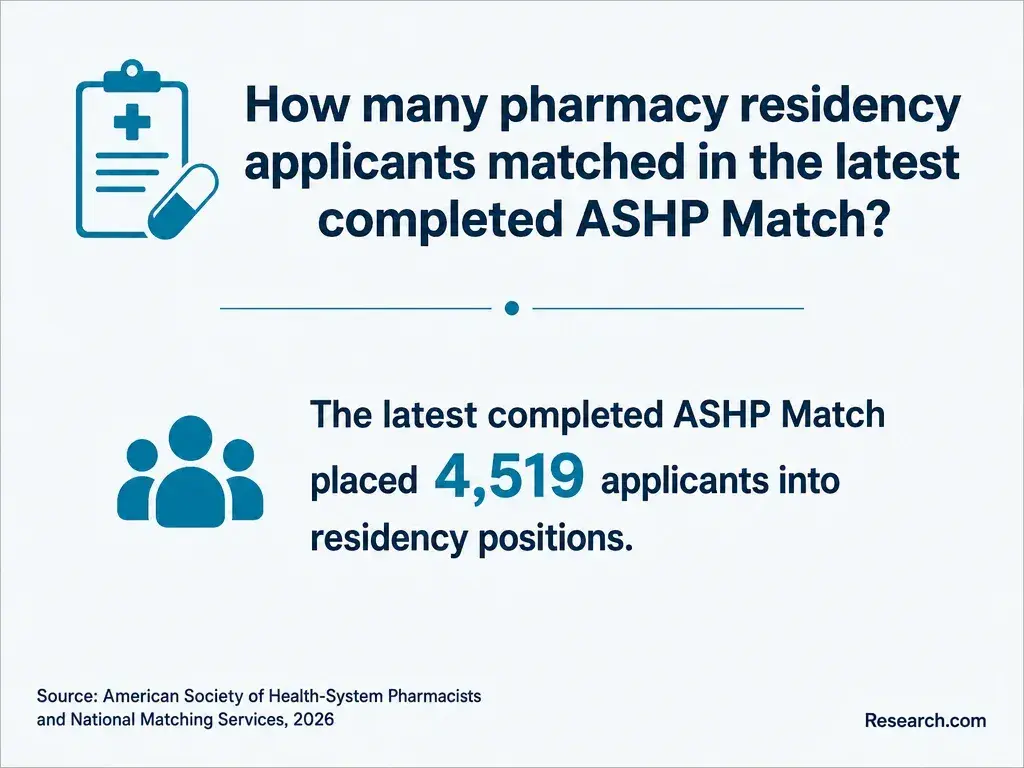
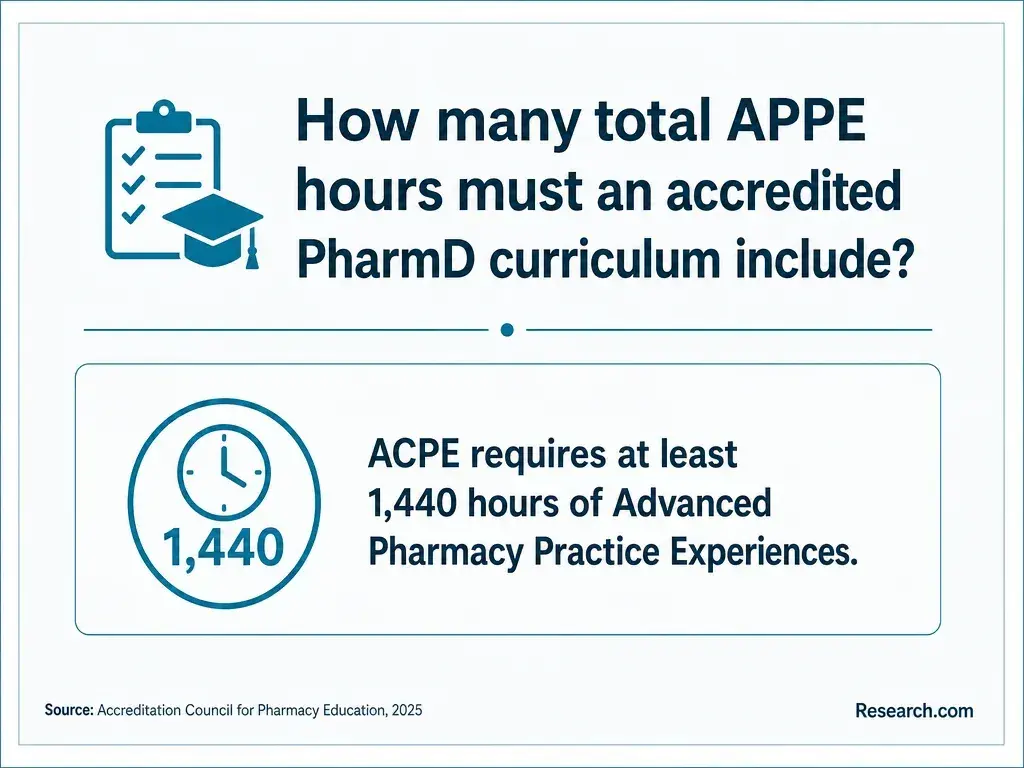
Typical professional study covers medication mechanisms and use, therapeutics, calculations, patient assessment, communication, medication safety, and the legal and ethical aspects of pharmacy practice. Introductory pharmacy practice experiences (IPPEs) introduce supervised practice; advanced pharmacy practice experiences (APPEs) provide more extensive rotations in settings such as community, hospital, and direct patient care. The sequence, sites, and learning opportunities depend on the program.
Compare published curricula for when hands-on skills begin, how students receive feedback, and which required rotations serve your interests. Ask who approves placements and what happens if a site becomes unavailable. When weighing affordable pharmacy studies with a focused timeline, check that a compressed schedule still gives you workable time for required labs, assessments, and rotations.
Requirements vary: a completed bachelor's degree is not universally required. Schools set their own prerequisite courses and labs, acceptable grades, GPA thresholds, course-age rules, interview policies, and conditions for courses still in progress. Many use the Pharmacy College Application Service (PharmCAS), while application and supplemental requirements remain school-specific. The Pharmacy College Admission Test (PCAT) was retired in January 2024; do not plan around it as a current exam.
Build an admissions checklist from each school's current catalog and application instructions. These checks prevent a seemingly eligible application from failing on a course or deadline detail:
- Match every completed and planned course - including its lab - to the school's prerequisite list; request written clarification on substitutions, repeated courses, and online labs.
- Check whether AP/IB, community-college, international, or previously earned credits count, and whether unfinished courses are permitted at application or must be completed before enrollment.
- Record the application route, transcript and recommendation rules, interview steps, supplemental materials, deadlines, and deposit terms.
Some pharmacy degree options without every prerequisite completed may allow courses in progress. Confirm the specific courses and completion deadline; permission to apply early is not permission to skip a matriculation requirement.
Delivery format alone does not establish educational quality. Compare ACPE status, required hands-on training, student support, published outcomes, and whether the actual schedule is feasible for you. "Online" may include live classes, campus visits, in-person assessments, and supervised IPPE and APPE placements; it does not necessarily mean self-paced study or a fully remote degree.
Ask each program for its current calendar of live sessions and campus immersions, who secures or approves rotation sites, whether local placements are possible, and what travel or time away from work students should expect. Confirm state authorization to enroll you separately from clinical-placement permissions and eventual licensure eligibility. Be especially cautious when comparing accelerated online pharmacy degree pathways: a short online pharmacy credential should not be assumed to replace an entry-to-practice Pharm.D.
There is no useful single price for all applicants. Compare each school's current tuition and mandatory fees over the remaining time you personally need, using the same academic-year basis. Add prerequisite courses, books and clinical references, equipment, background checks, immunizations, campus travel, rotation transportation or housing, and licensing-related expenses. Ask whether tuition changes by residency status or enrollment period.
Request an individual cost-of-attendance estimate and an aid review rather than assuming advertised tuition equals your bill or borrowing capacity. Federal loan rules changed for many new graduate and professional borrowers beginning July 1, 2026; eligibility and any transitional provisions require a current determination from the financial aid office. Use low-cost online pharmacy doctorate comparisons as a starting point, then test the apparent savings against required travel, placement costs, and your aid package.
Licensed pharmacists work in settings including community pharmacies, hospitals, clinics, and specialty pharmacy services; duties and permitted activities vary by employer and state law. The Bureau of Labor Statistics reports pharmacists' median annual pay of $140,910 in May 2025 and projects 5% job growth from 2025-2035. Those occupation-wide figures are context for a career decision, not a starting-salary forecast or a return-on-tuition calculation.
For some specialized clinical jobs, employers may prefer or require a postgraduate year one (PGY1) residency and sometimes postgraduate year two (PGY2) training. Fellowships serve different training goals, while Board of Pharmacy Specialties certification is a separate credential - not a state license. If your target is a pharmacy-adjacent role rather than pharmacist practice, compare its actual hiring requirements before committing to a Pharm.D.; shortest online doctoral programs are not interchangeable routes to pharmacist licensure.
How Can You Choose a Reputable PharmD Program?
Shortlist programs only after you establish licensure-pathway eligibility. Then compare your own admissions readiness, schedule, total cost, and evidence of student support. Published NAPLEX results can add context, but compare the same reporting period and understand cohort size and reporting limitations; a pass rate cannot promise your result.
This scorecard gives you fields for a side-by-side comparison. Fill it with dated information from ACPE, state boards, current school documents, and written answers from program staff rather than relying on rankings alone.
| Comparison field | Program A | Program B |
| Program, pathway, and ACPE status | _____ | _____ |
| Intended-state enrollment and licensure eligibility | _____ | _____ |
| Prerequisites still needed; earliest entry term | _____ | _____ |
| Professional-program length and required in-person dates | _____ | _____ |
| IPPE/APPE placement responsibility and likely travel | _____ | _____ |
| Tuition, fees, additional costs, and individual aid estimate | _____ | _____ |
| Latest comparable NAPLEX results and student support | _____ | _____ |
Before accepting an offer, resolve any blank that could affect licensure, affordability, or your ability to attend required training. Treat an unverified accreditation claim, unclear rotation arrangements, or a price that excludes substantial mandatory costs as a reason to pause. For an initial shortlist, pharmacy school prerequisites can help identify questions to investigate - not establish that admission will be easy.
Other Things You Should Know About PharmD
Only if the school permits it. Ask whether deferral is available for your reason, whether your deposit carries forward, and whether prerequisites or other conditions must be updated.
Yes. Contact the school's accessibility office early about its process and the program's essential requirements. Accommodation requests for licensing examinations follow the examination administrator's separate procedures.
Ask the program how it identifies replacement sites, communicates schedule changes, and handles possible travel. Keep any placement commitments and contingency arrangements in writing.
Generally, yes, subject to each school's application rules. Request feedback if offered, then address the specific weakness - such as a missing prerequisite or limited experience - before submitting a new application.
- Cost of Attendance (Budget) | 2025-2026 Federal Student Aid Handbook https://fsapartners.ed.gov/knowledge-center/fsa-handbook/2025-2026/vol3/ch2-cost-attendance-budget
- Association Between NAPLEX Preparation Program... - PMC https://pmc.ncbi.nlm.nih.gov/articles/PMC10159439/
- Pharm.D. Experiential Education - College of Pharmacy https://pharmacy.utexas.edu/programs/pharmd/experiential
- Admissions Frequently Asked Questions and Tips | ucsf.edu https://pharmd.ucsf.edu/admissions/faq-tips
- Costs - UGA Student Financial Aid - University of Georgia https://osfa.uga.edu/costs/
- Accreditation Status - Doctor of Pharmacy (PharmD) https://pharmsci.uci.edu/degrees-programs/doctoral-programs/pharmd/accreditation-status/
- Pharm D Practice Experience Curriculum | Presbyterian College https://www.presby.edu/graduate-programs/pharmacy/pharmd/practice-experience/
- College News | College of Pharmacy | University of Houston https://uh.edu/pharmacy/news-and-events/news-releases-2025/february/acpe-reaccredits-uhcop-pharmd/