How to Plan Work Leave for PharmD Immersions

Co-Founder and Chief Data Scientist
A PharmD program can fit around a job on paper but become difficult when campus immersions or clinical rotations require days away from work. For employees considering pharmacy school, the decision depends on more than whether lectures are online: it depends on required attendance, placement locations, employer flexibility, and lost income.
This guide shows you how to map those commitments, request workable leave, and budget for schedule changes before accepting an offer or committing to a work arrangement.
Key Things You Should Know
- Get the program's written calendar and rotation policies before promising an employer you can maintain your current hours; online coursework does not eliminate in-person requirements.
- For planning only, a four-week rotation scheduled at 40 hours per week creates 160 hours of potential conflict with a daytime job. Your school's actual hours, shifts, and dates control.
- Price leave as part of the degree: account for lost take-home pay, travel, housing, benefits, and the possibility that a clinical placement changes.
How can PharmD students plan work leave for required immersions?
Start with a calendar, not a leave request. Ask the school for the dates and attendance rules for campus sessions, labs, assessments, introductory experiences, and advanced rotations. Separate dates already assigned from dates that are only projected; a tentative rotation window is not an approved vacation period.
Then compare those commitments with your employer's scheduling cycle. The following sequence turns an uncertain school schedule into a leave plan you can revise:
- Record every required in-person block, its location, expected daily hours, and the date the school expects to confirm it.
- Mark work conflicts, travel days, and any shifts you cannot safely work around a clinical assignment.
- Ask your manager and human resources which combinations of paid time off, reduced hours, shift changes, and unpaid leave are actually available.
- Submit requests at the employer's required notice date, and agree on how you will report changes if a placement moves.
- Recheck the plan before each academic term and each confirmed rotation assignment.
When comparing online Pharm.D. schools to compare, request the same calendar and placement details from each. A flexible lecture format is useful only if its required in-person schedule is workable for you.
What are PharmD immersions, IPPEs, and APPEs?
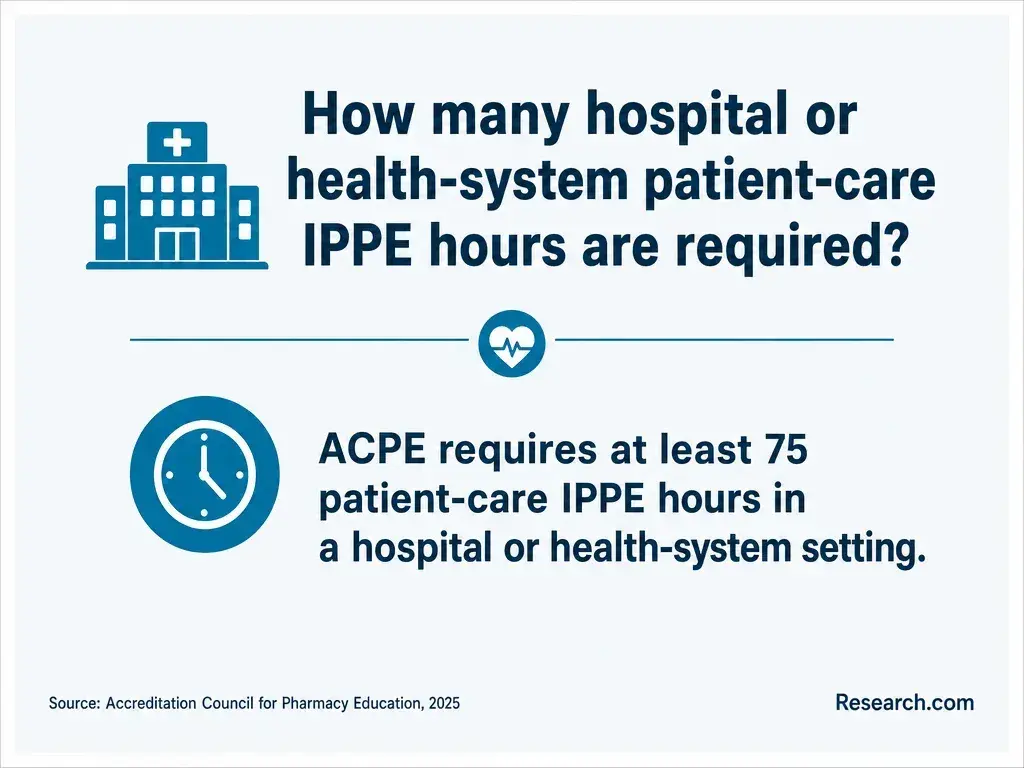
A Doctor of Pharmacy (Pharm.D.) is the professional degree studied after required pre-professional coursework; those prerequisites are not the professional clinical curriculum. A campus immersion is a school-scheduled in-person learning block that may include labs, skills practice, or assessments. Introductory pharmacy practice experiences (IPPEs) introduce supervised work in pharmacy settings, while advanced pharmacy practice experiences (APPEs) are more extensive supervised rotations later in the program.
These are different calendar commitments. An immersion may require travel to campus for a defined block, while an IPPE or APPE depends on an approved site, preceptor, and assigned schedule. Being employed in a pharmacy does not automatically turn work shifts into experiential credit; the school must approve the experience under its policies. A student entering through Pharm.D. programs for chemistry majors should make the same distinction: prior science coursework may address prerequisites, but it does not remove professional experiential requirements.
How long do PharmD rotations require students to be away from work?
There is no dependable nationwide leave schedule for an individual student. Schools publish their own sequencing and assign sites with differing shifts, so ask for both the total experiential requirements and a sample term-by-term calendar. APPEs in particular can conflict with a conventional daytime job over consecutive weeks.
This comparison shows which school documents answer different scheduling questions; it is not a promise about any program's timetable.
| Commitment | What determines time away from work | Document to request |
| Campus immersion | Required dates, attendance hours, and travel | Immersion calendar and attendance policy |
| IPPE | Assigned site, scheduled shifts, and term placement | Experiential schedule and placement policy |
| APPE | Rotation blocks, site shifts, and placement location | APPE calendar and rotation handbook |
If an assigned block lasted four weeks at 40 hours per week, it would occupy 160 hours before commuting or travel. That is a planning example, not a universal rotation length or proof that you must take 160 hours of leave: approved evening work or a different clinical schedule could change the conflict. Listings about online pharmacy degree time to completion may cover credentials other than a licensure-qualifying Pharm.D.; they cannot substitute for a program's actual rotation calendar.
Some employees can keep working during portions of a program, but online does not mean self-paced or entirely remote. Live classes, fixed assessments, campus skills sessions, and in-person IPPEs and APPEs may all limit work hours. Full-time employment is most difficult to sustain when an assigned rotation overlaps the employer's regular shifts.
Ask a prospective school which classes are synchronous, how far ahead it publishes immersion dates, whether rotations can be scheduled near home, and whether the school permits a student to request a particular site. A request is not a placement guarantee. Also ask whether changing to a lighter work schedule would affect your ability to meet the program's course sequence or attendance rules.
General comparisons of online doctorate time to completion are not a reliable measure of Pharm.D. flexibility. For this decision, required clinical attendance matters more than how conveniently lectures are delivered.
Potential options include accrued paid time off, an approved shift swap, a temporary reduction in hours, employer tuition assistance, or an employer-approved unpaid leave. Eligibility depends on the employer's policies, your position, and any applicable agreement. Tuition assistance may pay educational charges without replacing wages, so ask about each benefit separately.
Before relying on a benefit, get written answers to these questions:
- How much notice is required, and can leave be taken in separate blocks for multiple immersions or rotations?
- What happens to health coverage, other benefits, and tuition assistance if hours fall or leave is unpaid?
- Does tuition assistance have grade, service, repayment, or approved-program conditions?
- Can you return to your usual schedule if the school changes a placement date?
Ordinary school attendance does not, by itself, establish eligibility for job-protected family or medical leave. If work flexibility is limited, compare budget-friendly pharmacy education options carefully: some pharmacy-related credentials lead to different roles and do not qualify a graduate for pharmacist licensure.
Build a cash-flow forecast for each confirmed immersion or rotation block rather than treating tuition as the full cost. Calculate lost take-home pay from shifts you will actually miss, then add costs caused by the placement. Keep a separate reserve for dates or locations that have not yet been assigned.
This worksheet separates costs you can estimate now from amounts that may change when the school confirms a site. Enter your own figures; published tuition alone will not fill these gaps.
| Budget item | Amount for assigned block | Amount for unassigned block |
| Lost take-home pay | _____ | _____ |
| Travel and parking | _____ | _____ |
| Temporary housing and meals above usual spending | _____ | _____ |
| Required site onboarding costs | _____ | _____ |
| Changes to employer benefits or dependent care | _____ | _____ |
Add the applicable entries, subtract pay or approved assistance you will still receive, and compare the result with savings available before the block begins. Ask the financial aid office whether eligible rotation-related expenses can be included in your school's cost-of-attendance assessment and what aid is available to you. Federal borrowing rules changed for many new graduate and professional borrowers beginning July 1, 2026, so do not assume an older loan limit or access to Grad PLUS applies. When comparing lower-cost online Pharm.D. pathways, include placement travel and lost earnings alongside tuition.
A calendar is only useful if you know what attendance requires. Schools and sites may set rules for punctuality, missed-day makeups, dress, safety training, immunizations, background checks, drug screening, and required documentation. A state or site may also require pharmacist intern registration before certain activities. Requirements and processing times vary; completing a check for one site does not necessarily clear you for another.
Request the current student and experiential handbooks, then flag requirements with deadlines before your first in-person day. Ask whether a missed lab or rotation day can be made up, who approves the makeup, and whether an absence could delay progression. Do not assume a current employer can serve as your rotation site or that a virtual activity can replace an assigned in-person experience.
If you are considering pharmacy application requirement flexibility, distinguish permission to finish an admissions condition later from permission to miss a professional-program attendance or site-clearance deadline. They are separate decisions.
Keep the school's experiential office and your employer working from the same confirmed dates. The school approves educational placements and preceptors; your employer controls its own staffing and leave approvals. Neither party's agreement automatically commits the other.
Use this coordination checklist whenever a placement window is released:
- Ask the experiential office which dates and locations are confirmed, which remain tentative, and when assignments may change.
- Disclose your commuting limits and any proposed employer site early; ask about conflicts of interest and whether the school permits that site.
- Give your employer the confirmed absence dates and a separate estimate of possible changes, following workplace notice rules.
- Obtain written approval for the work arrangement, and identify a school contact and workplace contact for urgent schedule changes.
- Update both calendars when the preceptor or site issues the actual shift schedule.
If prior coursework might shorten the path to starting professional study, review how to apply prior college credits to pharmacy programs. The receiving school decides what satisfies prerequisites or transfers; earlier entry should not be mistaken for fewer required rotations.
Verify a prospective professional program's current status in the Accreditation Council for Pharmacy Education (ACPE) program records, and ask how its curriculum meets supervised experiential education requirements. ACPE accreditation concerns the professional pharmacy program; it is different from the university's institutional accreditation and from authorization to enroll a distance-learning student in a particular state. A clinical placement may involve additional state and site approvals.
For work-leave planning, accreditation is necessary context, not a calendar. Ask the school for its published IPPE and APPE policies, required settings, placement responsibilities, and what happens if a nearby site is unavailable. Even when reviewing pharmacy schools that may be easier to enter, verify program status and experiential logistics independently of admissions claims. No admissions statistic resolves whether you can attend required sessions.
How do PharmD immersions affect pharmacist licensure and career planning?
Required immersions and supervised experiences are part of completing the professional degree, not optional career extras. Plan leave with the possibility that a missed requirement could delay graduation and, in turn, your intended licensure timeline. A Pharm.D. alone does not issue a pharmacist license: state boards determine eligibility, examinations, and any additional requirements. The North American Pharmacist Licensure Examination (NAPLEX) is part of the licensing process, while jurisprudence requirements vary by jurisdiction; do not assume every state uses the same examination.
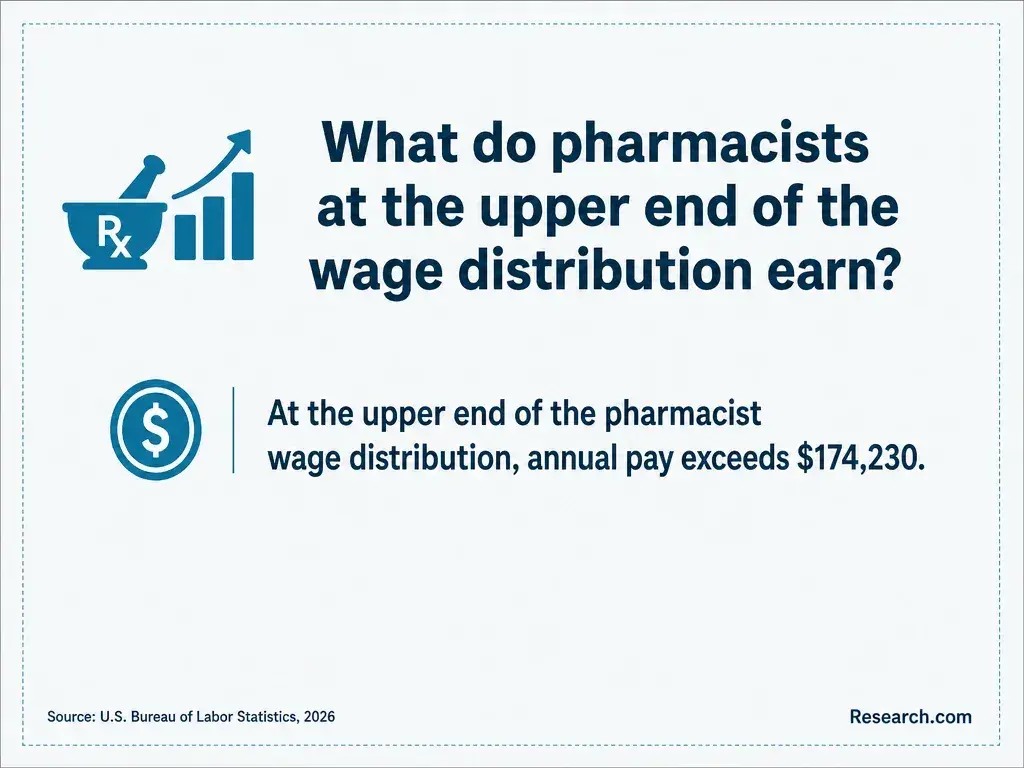
The U.S. Bureau of Labor Statistics reports median annual pay of $140,910 in May 2025 for pharmacists. That occupation-wide figure is context for a long-term decision, not a forecast of your earnings or a reason to assume unpaid leave will pay for itself. Pharmacist work also differs from pharmacy technician work, which does not ordinarily require a Pharm.D.
When assessing Pharm.D. completion pathways, compare when their required in-person blocks occur, not just the advertised finish date. A faster schedule may concentrate absences and make continued employment harder. After licensure, some roles may value postgraduate residency or fellowship training; those paths and optional specialty board certifications are distinct from the degree and from state licensure.
Other Things You Should Know About PharmD
Do not assume they are. Ask the school whether any assigned experience provides compensation and whether its policies permit payment from a site. Your employer's wages for separate work shifts are a different matter.
Contact the school's experiential office promptly. It can explain the reassignment process, possible effects on progression, and when you can give your employer reliable replacement dates.
Yes. Contact the school's disability services office early to discuss its accommodation process. The school can explain what documentation is needed and how an approved accommodation applies to essential course or clinical requirements.
Ask about the school's academic leave and return policies before assuming a pause is possible. Course sequencing, rotation availability, and return conditions can affect when you resume and graduate.
- Family and Medical Leave (FMLA) | dol.gov https://www.dol.gov/general/topic/benefits-leave/fmla
- Enforcement Guidance on Reasonable Accommodation and Undue Hardship under the ADA https://www.eeoc.gov/laws/guidance/enforcement-guidance-reasonable-accommodation-and-undue-hardship-under-ada
- Leaves of Absence | UNC Eshelman School of Pharmacy https://pharmdstudenthandbook.web.unc.edu/student-support/leaves-of-absence/
- PharmD Professional Experience Programs | usc.edu https://mann.usc.edu/program/doctor-of-pharmacy-pharmd/pharmd-professional-experience-programs/
- Experiential Education | Washington State University https://pharmacy.wsu.edu/pharmd/experiential-services/
- Experiential Education Site Selection Policy | ucsf.edu https://pharmd.ucsf.edu/policies/site-selection
- FAQ - Fisher Pharm.D. Online | SJF-PHA https://onlinepharmd.sjf.edu/admissions/faq/