PharmD Books, Technology, and Supply Costs

Co-Founder and Chief Data Scientist
A Pharm.D. tuition quote may leave out expenses that arrive before classes start, during clinical rotations, and after graduation. For applicants and current students, the useful question is not simply how much books cost, but which materials must be purchased separately, when they are needed, and whether financial aid can cover them.
This guide breaks down textbooks, devices, software, lab supplies, and placement-related expenses so you can compare pharmacy programs on a consistent basis and avoid committing to a budget that works only on paper.
Key Things You Should Know
- There is no reliable single price for Pharm.D. books and supplies: compare each school's current cost-of-attendance allowance with its actual required-item list and fee schedule.
- Ask whether tuition or mandatory fees already cover electronic drug references, exam software, lab kits, and clinical-placement services before buying them separately.
- Federal borrowing rules changed for many new graduate and professional students beginning July 1, 2026; confirm your own aid eligibility before assuming loans will cover a laptop or rotation travel.
What do PharmD books, technology, and supply costs include?
These costs span three different stages: prerequisite undergraduate coursework, the professional Doctor of Pharmacy (Pharm.D.) curriculum, and supervised clinical training. A program's published estimate may combine them under "books and supplies," even though they are purchased at different times and from different sellers.
Typical categories include required print or digital textbooks; drug-information databases and other clinical references; a compatible computer, internet service, and exam software; protective clothing and lab or compounding materials; and items needed at clinical sites, such as approved attire. Background checks, immunizations, and travel may appear elsewhere in the school's budget rather than in its supply line.
Students entering from another major should separate prerequisite science-course materials from professional-program costs. A guide to Pharm.D. programs for biology majors can help frame that transition, but the receiving school determines which previous courses satisfy its requirements. Do not purchase professional-course materials until the program issues a current list: editions, access codes, and institutional subscriptions can change.
How much do PharmD students spend on books and required supplies?
There is no defensible national amount to put in every Pharm.D. budget. Spending depends on whether a school supplies electronic resources, requires individual purchases, charges a materials fee, or provides equipment for shared use. A school's cost of attendance is its financial-aid budget, not a bill or a promise that each student will spend exactly that amount.
For a usable estimate, obtain the current academic-year cost-of-attendance breakdown and the required materials list for your entering cohort. Separate one-time purchases from recurring subscriptions, and mark the term in which each payment is due. Then ask the bookstore or course coordinator which editions and access codes are mandatory. Compare that result with your available funds before adding optional NAPLEX preparation resources.
Do not assume a faster program automatically means fewer supply purchases. Doctor of Pharmacy accelerated tracks may compress the timing of required purchases and reduce opportunities to earn income between terms. Confirm the actual course sequence and charges rather than dividing a conventional program's estimate by its length.
What technology costs should PharmD students expect?
Budget first for the school's published computer specifications, dependable internet access, and any required peripherals. Pharmacy coursework may use a learning management system, electronic references, recorded instruction, secure testing, and simulation tools. Access is not the same as ownership: a database available through the library may require no separate student subscription, while a testing platform may carry a mandatory fee.
For online or hybrid study, ask whether exams require a webcam, a supported operating system, specific browser settings, or a private testing space. Check whether the school lends equipment or offers technical support before replacing a working device. Also ask when access to clinical-reference tools expires; a student license should not be treated as a permanent professional subscription.
If your goal is exploration rather than pharmacist licensure, shorter online pharmacy study options may have different technology requirements. They do not substitute for a professional Pharm.D. when that degree is required for the U.S.-educated pharmacist licensure pathway.
Coverage is program-specific. Tuition generally pays for instruction, while mandatory fees may fund technology, laboratory activities, student services, or other resources. Neither label proves that a particular textbook, software license, laptop, white coat, background check, or rotation expense is included.
Use the school's current fee schedule alongside its course-materials list. If a resource appears in both, ask whether the fee provides access or merely supports the platform. Also distinguish required charges billed by the school from estimated costs paid directly to retailers, clinical sites, or travel providers. That distinction affects when cash is needed, even if both categories appear in the financial-aid budget.
When comparing affordable pharmacy doctoral education, request an itemized estimate for your cohort and delivery format. A lower tuition figure can lose its advantage if required travel, separately purchased resources, or repeated campus visits materially increase your total cost.
The core professional curriculum still requires hands-on learning. An online or hybrid format may shift spending toward home internet, a compatible device, remote-testing equipment, and travel to scheduled campus activities. A campus-based format may instead involve more routine commuting or relocation. Neither format is inherently cheaper for every student.
Clinical training matters more than the course-delivery label. Introductory pharmacy practice experiences (IPPEs) and advanced pharmacy practice experiences (APPEs) take place in supervised practice settings. Ask who secures or approves sites, whether placements can be near home, and who pays for transport or temporary housing. Do not assume online lectures mean remote rotations or an unrestricted full-time work schedule.
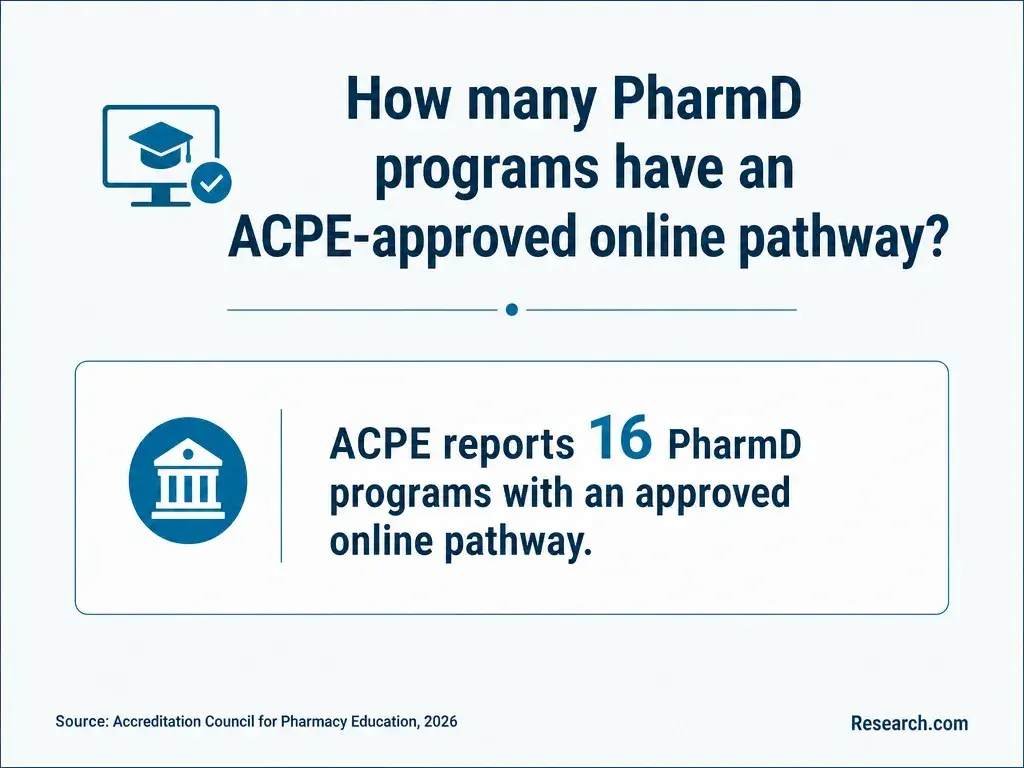
When reviewing pharmacy doctorate programs with distance learning, verify required campus visits and clinical logistics directly with each school. Check Accreditation Council for Pharmacy Education (ACPE) professional-program accreditation separately from institutional accreditation and any state authorization to enroll distance students; those are distinct questions.
Requirements follow the activity, not a universal shopping list. Skills labs may call for approved clothing or protective equipment; compounding instruction may use materials supplied on campus or included in a lab fee. Courses may require an electronic access code, while clinical sites may set their own identification, attire, or equipment rules.
The largest purchasing mistake is buying a "pharmacy student kit" before checking who provides its contents. Ask the program for a term-by-term required list and identify items supplied by the school, items you must own, and items required only by a particular placement. A site may also require health documentation or screening, which should be budgeted separately from classroom supplies.
Students who apply to pharmacy school while finishing prerequisites should make a second list for remaining undergraduate courses and labs. Those purchases belong in the pre-professional budget; completing prerequisites does not itself place a student in the professional Pharm.D. curriculum.
Start with the required-item list, not a retailer's suggested bundle. The savings that matter are those that leave you with materials that still work for assignments, exams, and clinical learning. Before spending, take these steps:
- Check library and program-provided access to required books, drug references, and software.
- Confirm whether an older edition, rental, or used copy is allowed and whether a new access code must be purchased separately.
- Compare the timing and total cost of a required subscription with buying individual resources.
- Ask whether shared lab equipment, device loans, or a campus technology program are available.
Borrowing or buying used is less useful when a course requires a unique, unused code. For pharmacy degree programs for transfer students, wait for the receiving school's credit decision before purchasing materials for courses you may not need. Transfer credit is determined by that school, not guaranteed by a previous school's accreditation.
Compare costs for the same student circumstances and time period: your residency status, entry pathway, expected housing situation, and full professional-program sequence. The worksheet below separates amounts a school bills from estimates you may pay elsewhere. Enter figures from each school's current documents; leave an item marked "unknown" rather than treating a missing charge as $0.
| Cost item | School A | School B |
| Tuition | - | - |
| Mandatory fees | - | - |
| Books and supplies | - | - |
| Housing and living expenses | - | - |
| Other program costs | - | - |
| Total estimated cost | - | - |
A shorter calendar is not automatically a lower-cost route: compare total required purchases and time away from paid work. Likewise, short online doctorate programs should not be treated as interchangeable with an ACPE-accredited professional Pharm.D. if your goal is pharmacist licensure. Resolve unknowns with the pharmacy program and financial-aid office before accepting an offer.
Eligible aid may help pay educational expenses included in the school's cost of attendance, such as books and a reasonable allowance for supplies or equipment. That does not mean the school will pay a vendor directly or that every requested purchase will be approved. Ask the financial-aid office how its budget treats a required computer, when aid is disbursed, and whether documented expenses can be considered for an adjustment.
Funding depends on the student's classification, the specific program, the aid year, eligibility, and applicable borrowing limits. Federal rules changed for many new graduate and professional borrowers beginning July 1, 2026, including access to Grad PLUS Loans; transitional provisions may affect some existing borrowers. Confirm your status with the school rather than relying on an older loan-limit summary. Scholarships and institutional aid may also have restrictions on what they cover.
Different admission pathways for pharmacy students can involve different prerequisite and professional-course timelines. Ask which expenses fall before Pharm.D. enrollment, since that timing may change how your aid package applies.
How do PharmD costs affect pharmacist licensing and career planning?
Keep a post-graduation category in your budget. A Pharm.D. does not itself confer a pharmacist license: graduates must meet the requirements of the jurisdiction where they seek to practice. Those may include the NAPLEX, an applicable jurisprudence examination, applications, and other board requirements, each with its own potential charges. Do not assume every jurisdiction uses the MPJE; examination requirements vary, and some jurisdictions began moving to the UMPJE in 2026.
The Bureau of Labor Statistics reports median annual pay of $140,910 in May 2025 for pharmacists, with 5% projected growth, 2025-2035. Those occupation-wide figures can provide career context, but they do not predict an individual graduate's pay or justify borrowing more for supplies. Residency or fellowship training can add time and related expenses for students pursuing particular roles; neither is a universal licensure requirement, and optional specialty board certification is distinct from state licensure.
Use your intended role to test the investment. When considering affordable pharmacy studies with a focused timeline, verify that the credential actually matches that role. Pharmacy technician education, for example, is a separate pathway and does not ordinarily require a Pharm.D.
Other Things You Should Know About PharmD
Only if the course instructor permits it. Check assigned page references and whether coursework requires a new, single-use access code before buying.
Not necessarily. Confirm the program's operating-system and secure-testing requirements; an app that works on a tablet may not support required exam software.
Do not assume so. Ask the library when student access ends and plan separately for any references you need in practice.
Contact the school's disability-services office early to discuss accommodations and compatible testing arrangements. Do this before purchasing equipment or scheduling an exam.
- Cost of Attendance | HESC - NY.gov https://hesc.ny.gov/dictionary/tap-coach/term/cost-attendance
- Assessment and Recommendations of Compounding... - PMC https://pmc.ncbi.nlm.nih.gov/articles/PMC3448483/
- Types of Financial Aid: Grants, Work-Study, and Loans | studentaid.gov https://studentaid.gov/understand-aid/types
- Program: Pharmacy, PharmD | south.edu https://catalog.south.edu/preview_program.php
- TechHUB Computer Recommendations | duq.edu https://www.duq.edu/about/departments-and-offices/computer-store/computer-recommendations.php
- III. FEES OTHER THAN TUITION - The City University of New York https://www.cuny.edu/about/administration/offices/legal-affairs/university-tuition-fee-manual/iii-fees-other-than-tuition/
- Personal Protective Equipment Requirements for Laboratories | ncsu.edu https://ehs.ncsu.edu/laboratory-safety/personal-protective-equipment-requirements-for-laboratories/
- Tools & Technology | Mid-State Technical College https://www.mstc.edu/experience-mid-state/student-services-and-support/tools-and-technology
- Costs & Aid - College of Pharmacy - University of Minnesota https://www.pharmacy.umn.edu/doctor-pharmacy/admissions/costs-aid
- Fees and Billing | Language and Culture Institute - Virginia Tech https://lci.vt.edu/handbook/fees-and-billing.html