
Physics Prerequisites for PharmD Programs

Co-Founder and Chief Data Scientist
A physics course can affect which Doctor of Pharmacy (Pharm.D.) programs you can apply to - and whether you must spend another term completing prerequisites. Requirements differ by school, particularly for labs, online courses, and exam credit.
This guide helps prospective U.S. pharmacy students identify the right course, check whether existing credit counts, and avoid paying for coursework that will not satisfy an admissions requirement.
Key Things You Should Know
- Many Pharm.D. programs require college-level physics, but the required course, lab, credits, and acceptable substitutes are school-specific.
- Do not assume that an online lab, AP score, or transferred course counts; obtain a written equivalency decision from each admissions office before enrolling.
- Physics is pre-professional coursework, not a substitute for the professional Pharm.D. curriculum or a pharmacist license.
What physics prerequisites do PharmD programs typically require?
Programs that require physics generally ask for college-level introductory physics. The acceptable version may be algebra-based or calculus-based, and a program may specify a lecture, a laboratory, or both. Other programs may not list physics as a separate prerequisite. There is no nationwide physics course or credit requirement for Pharm.D. admission.
Start with the course description, not its title alone: "general physics," "college physics," and "physics for life sciences" can cover different material at different institutions. Students comparing pharmacy degree options for science majors should check their completed coursework against each school's published prerequisite list rather than assuming a science major covers every requirement.
These are pre-professional admission prerequisites - courses completed before entering the professional Pharm.D. curriculum. A completed bachelor's degree is not a universal admission requirement; each school sets its own degree and prerequisite-credit rules.
Do all PharmD programs require physics with a laboratory?
No. Some programs explicitly require a physics lab, while others accept a lecture without one or do not require physics at all. When a lab is required, check whether it must be taken with the lecture and whether the school accepts a separately listed lab course.
A course carrying lecture and lab credit at your college may not match how a pharmacy school evaluates it. Before registering, send the admissions office the course number, description, credit breakdown, and lab format. This is especially important for students using community-college or other prior credit: pharmacy transfer planning depends on the receiving school's evaluation, not simply on whether the original college awarded credit. Acceptance as a prerequisite also does not mean credit transfers into the professional Pharm.D. curriculum.
How can you verify a PharmD program's physics prerequisite?
Use the admissions page and prerequisite list for the application cycle you intend to enter. If the school participates in the Pharmacy College Application Service (PharmCAS), compare its current PharmCAS directory entry with its own policy. PharmCAS application procedures do not replace program-specific prerequisite decisions, and not every school uses PharmCAS.
Use this sequence before you pay for a course or submit an application:
- Record each target school's required physics course, lab, credits, minimum grade, and deadline for completion.
- Compare those rules with your transcript and the proposed course's catalog description and syllabus.
- Ask admissions in writing whether your exact course, institution, delivery format, and lab satisfy the requirement.
- Save the response and confirm whether a course still in progress may be listed at application but must be finished before enrollment.
Also ask about any course-age limit and what happens if the catalog and directory appear inconsistent. Comparing pharmacy programs with varied admission routes can help build a school list, but an apparently flexible route is not confirmation that your physics course qualifies.
They can at some schools, but acceptance is not automatic. A program may distinguish an online lecture from an online or at-home lab, or apply different rules depending on when a course was taken. Ask admissions to evaluate both components and the institution awarding the credit before enrolling.
Do not confuse an online prerequisite with an online professional degree. Even pharmacy schools offering online Pharm.D. study may require scheduled instruction, in-person activities, and supervised clinical experiences. A school's delivery format does not establish its prerequisite policy, Accreditation Council for Pharmacy Education (ACPE) professional-program accreditation, or authorization to enroll a student in a particular state.
High school physics by itself generally should not be treated as completed college-level prerequisite credit. Advanced Placement (AP) physics may count if your college awarded the appropriate credit and the Pharm.D. program accepts that credit for its specific physics requirement. Policies differ, so a qualifying AP score or a transcript notation is not, by itself, proof of acceptance.
Send each admissions office your AP result, college transcript notation, and the equivalent course your college awards. Ask whether the school requires a college physics lab even if it accepts AP lecture credit. Guides to pharmacy application requirement flexibility may help you identify questions to ask; they cannot grant an AP waiver or determine whether you may finish a missing course after applying.
Each school determines its minimum acceptable grade, credit amount, treatment of repeated courses, and whether a lab needs its own passing grade. A course can appear on your transcript yet fail to meet a program's credit or grade rule. The minimum needed to satisfy a prerequisite also does not guarantee admission.
Check these details before choosing a shorter course or retaking one: semester versus quarter credits, whether lecture and lab credits are counted separately, and whether the school accepts your most recent or highest grade. Students considering shortened Doctor of Pharmacy pathways should confirm prerequisite completion deadlines early; a faster professional curriculum does not necessarily make an unfinished physics requirement easier to schedule.
Physics develops comfort with units, quantitative reasoning, measurement, and relationships among variables. Those habits can support later work with drug-delivery concepts, medical devices, and interpretation of scientific evidence. The connection is practical, but an introductory physics class is not a replacement for Pharm.D. coursework in pharmacology, therapeutics, or patient care.
For a student choosing between acceptable courses, the best choice is the one that meets target schools' rules and provides a solid foundation without delaying other required sciences. Broad comparisons of fast online doctoral study are not a reliable way to judge pharmacy readiness: the professional Pharm.D. includes its own academic and supervised experiential requirements, regardless of how quickly a prerequisite can be completed.
Pharm.D. programs commonly specify other pre-professional work in chemistry, biology, mathematics, and communication or general education. The exact courses, labs, grades, and credits vary. Build a school-by-school plan rather than assuming that completing physics - or any particular major - finishes the prerequisite package.
Keep the credential you need in view when comparing online pharmacy programs under two years. A shorter pharmacy-related degree or technician pathway may suit a different career goal, but it is not interchangeable with an ACPE-accredited professional Pharm.D. for the standard U.S.-educated pharmacist licensure pathway. A pharmaceutical sciences or pharmacology degree does not automatically qualify its holder for pharmacist licensure either.
The pathway has distinct stages: prerequisite coursework, the professional Pharm.D. program, and state licensure steps after graduation. Time spent on prerequisites depends on credits you already hold and course sequencing. Professional-program length and tuition vary by school, so adding physics may mean anything from using an existing qualifying course to paying for an additional term of study.
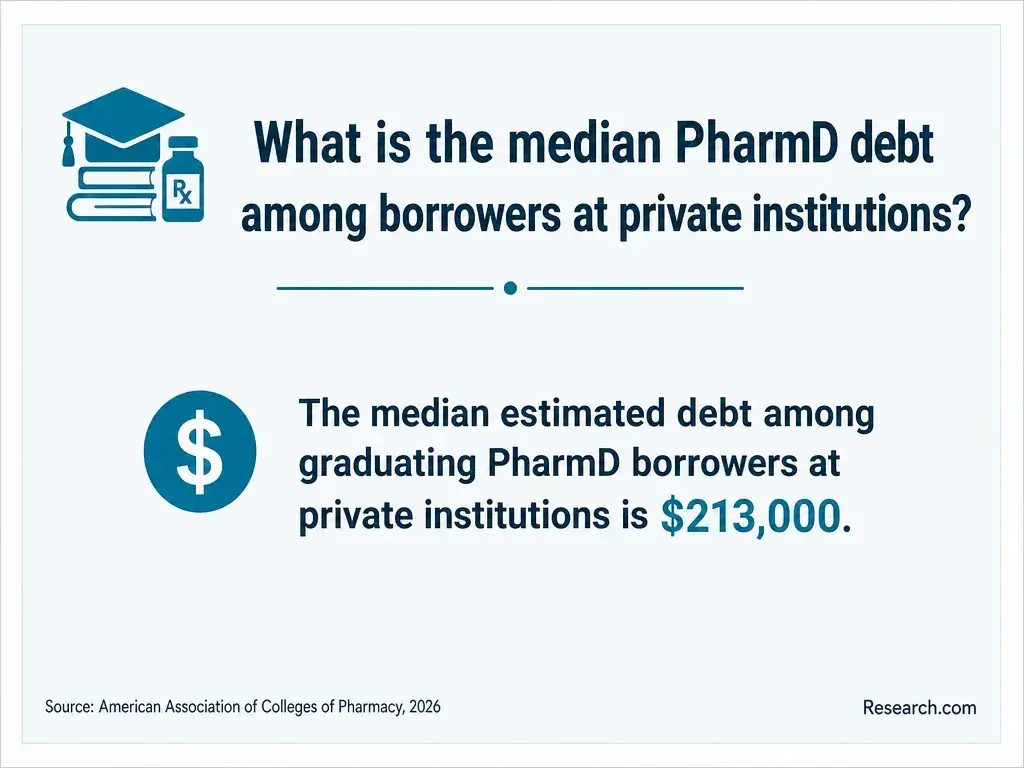
For a useful cost comparison, price the remaining prerequisite courses separately from Pharm.D. tuition and mandatory fees. Then account for books, lab expenses, required travel or housing for in-person activities and clinical rotations, and eventual licensing costs. Published online Doctor of Pharmacy price range comparisons are a starting point, not a substitute for each school's current total cost of attendance.
If you expect to borrow, confirm your eligibility and limits for the relevant aid year with the school's financial aid office. Federal borrowing rules changed for many new graduate and professional borrowers beginning July 1, 2026; older assumptions about Grad PLUS availability may not apply. The least expensive physics course is not a saving if your target program will not accept it.
What careers, salaries, and licensing requirements follow a PharmD degree?
A Pharm.D. prepares graduates to pursue pharmacist licensure; graduation alone does not authorize practice. U.S.-educated applicants generally must meet their state board's requirements, which include the North American Pharmacist Licensure Examination (NAPLEX) and may include a jurisdiction-specific law exam or other conditions. Do not assume every jurisdiction uses the Multistate Pharmacy Jurisprudence Examination (MPJE); check the board's current rules. ACPE accredits professional pharmacy programs, while state boards issue pharmacist licenses.
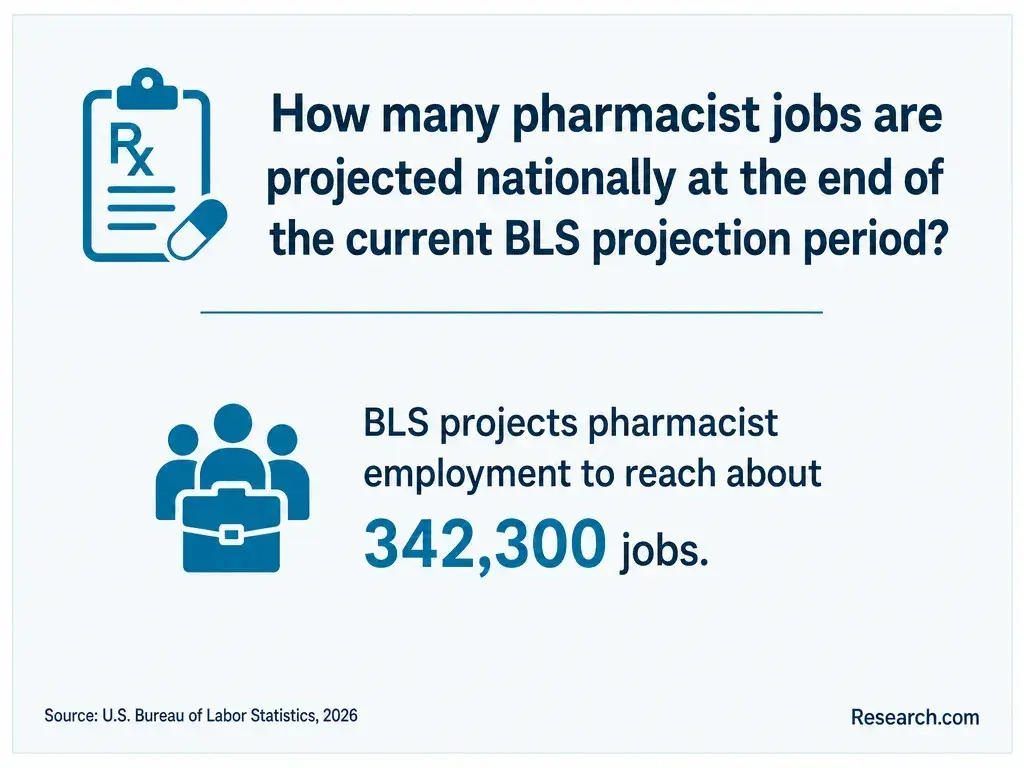
The Bureau of Labor Statistics reports median annual pay of $140,910 in May 2025 for pharmacists and projects 5% growth, 2025-2035, with about 12,500 openings per year. These are occupation-wide figures, not a starting salary or a return promised by any Pharm.D. program. Residency or fellowship training may support particular career goals, and specialty board certification is separate from state licensure; none is universally required for every pharmacist job.
Before committing to an extra prerequisite, connect the cost and delay to the career you want. Pharmacy degree planning for cost and time should account for licensure eligibility and clinical training - not just the advertised length of a degree. Pharmacy technician work is a separate occupation that does not ordinarily require a Pharm.D. or confer pharmacist status.
Other Things You Should Know About PharmD
No. Schools evaluate the required coursework, not the major's name. Check whether your transcript contains an accepted physics course or credit.
Possibly, but schools set their own grading policies. Ask whether the program accepts pass/fail credit for science prerequisites and whether it needs evidence of an underlying letter grade.
Only if the receiving program accepts the resulting college credit as equivalent to its physics requirement. Submit the applicable transcript and course documentation for review.
Potentially. A program may require a specified credential evaluation and may still make its own course-equivalency decision. Confirm both requirements before relying on the credit.
- Relevance of Physics to the Pharmacy Major - PMC https://pmc.ncbi.nlm.nih.gov/articles/PMC1959210/
- PharmD Application Process and Requirements | umich.edu https://pharmacy.umich.edu/pharmacy-programs/pharmd-program/application-process-requirements/
- PharmD Prerequisite Course Requirements | Pharmacy Students https://students.pharmacy.wisc.edu/pre-sop-handbook/pharmd-prerequisites-uw-madison/
- PharmD Program Prerequisites - Temple School of Pharmacy https://pharmacy.temple.edu/pharmdprereqs
- AP/IB Credit - UW School of Pharmacy https://sop.washington.edu/pharmd/admissions/prerequisite-info/apib-credit/
- PharmD FAQs - UNC Eshelman School of Pharmacy https://pharmacy.unc.edu/education/pharmd/pharmd-admissions-faqs/
- How to Apply - MUSC College of Pharmacy https://pharmacy.musc.edu/programs/apply
- Prerequisites - College of Pharmacy - University of Minnesota https://www.pharmacy.umn.edu/doctor-pharmacy/admissions/how-apply/prerequisites
- UConn PharmD Applicants | Pharmacy Advising Center https://advising.pharmacy.uconn.edu/faq/uconn-pharmd-applicants/
- PharmD Prerequisites - Doctor of Pharmacy https://pharmacy.wisc.edu/pharmd/prerequisites/


