PharmD Clinical Rotation Readiness Checklist

Co-Founder and Chief Data Scientist
A clinical rotation can be delayed before it begins if a student lacks site clearance, misses an intern-registration requirement, or cannot meet the schedule.
For Doctor of Pharmacy (Pharm.D.) students approaching supervised patient care - and applicants comparing programs - this checklist separates must-have approvals from skills worth practicing. Use it to confirm what your school and site require, prepare for your first day, and identify placement questions before committing to a program or rotation.
Key Things You Should Know
- Confirm school, site, and state-board clearance before making travel or work plans; requirements and deadlines can differ by placement.
- Under Accreditation Council for Pharmacy Education (ACPE) standards, Pharm.D. students complete at least 300 hours of introductory pharmacy practice experiences and 1,440 hours of advanced pharmacy practice experiences.
- Arrive able to find reliable drug information, present a patient case, protect health information, and ask a preceptor for help before acting beyond your training.
What Is a PharmD Clinical Rotation Readiness Checklist?
A Pharm.D. clinical rotation readiness checklist is a go/no-go tool for supervised practice. It covers eligibility and clearance, patient-care preparation, and site-specific logistics. A student is ready to start only when the school and site have approved the placement and the student can meet its attendance and professional expectations.
These rotations are part of the professional Pharm.D. curriculum, not undergraduate pre-pharmacy prerequisites. Unlike many short doctoral degree completion options, a U.S. pharmacist-qualifying Pharm.D. includes substantial supervised practice. Finishing the degree - or a rotation - does not itself grant a pharmacist license; state boards set licensure requirements.
Use the checklist as a working record: mark each item confirmed, pending, or not applicable, and record who confirmed it and its deadline. Do not treat "submitted" as "approved."
What Requirements Must PharmD Students Complete Before Clinical Rotations?
Progression rules depend on the school and the particular introductory pharmacy practice experience (IPPE) or advanced pharmacy practice experience (APPE). A school may require completed coursework, satisfactory earlier experiences, and approval from its experiential education office before releasing a student to a site. Admission through pharmacy school routes for returning students does not waive later rotation requirements.
Work through these eligibility checks with your experiential office before accepting other commitments:
- Confirm the required courses, assessments, and prior IPPEs are complete and that your academic standing permits the assigned experience.
- Ask whether pharmacist-intern registration or another student practice authorization is required in the placement state; verify its effective dates with the relevant board.
- Confirm the school has approved the site and preceptor; do not arrange an independent placement or substitute your current job without written permission.
- Get the rotation dates, expected weekly schedule, attendance policy, and process for reporting an absence or changing sites.
Decision point: If registration, progression, or site approval remains pending near the start date, contact the experiential office immediately. A verbal offer from a site is not a substitute for school approval.
How Do IPPEs Prepare Students for APPE Clinical Rotations?
IPPEs introduce students to supervised pharmacy practice while foundational coursework is underway. APPEs are later, more intensive experiences in which students apply pharmacotherapy knowledge across required and elective settings. ACPE standards establish minimum experiential hours, but schools determine their calendars, assessments, and approved placements.
Use your IPPE evaluations to choose what to practice before APPEs: accurate medication histories, patient counseling, documentation, workflow communication, and recognizing when to refer a question to the pharmacist. In an APPE, a preceptor may expect a more developed assessment and recommendation, while retaining responsibility for supervision and evaluation.
Ask how the school sequences experiences if you are comparing accelerated Pharm.D. degree options. A shorter academic calendar does not eliminate experiential requirements; it can leave less flexibility for employment, travel, or a delayed placement.
Prior science courses support pharmacy study, but they do not replace the clinical reasoning taught in the professional curriculum. Students exploring pharmacy education after undergraduate science coursework should distinguish that academic starting point from readiness to assess medication therapy under supervision.
Focus your review on tasks you can demonstrate, not on memorizing every drug. Use your upcoming site's patient population to prioritize these checks:
- Explain a common condition's treatment goals, first-line options, monitoring parameters, and important safety concerns using current references.
- Reconcile a sample medication list and identify missing information, potential interactions, duplicate therapy, allergies, and adherence barriers.
- Practice presenting a concise patient assessment that separates verified facts from proposed recommendations.
- Locate and cite a trustworthy answer to a drug-information question, including when evidence or patient information is incomplete.
- Rehearse counseling in plain language and confirm understanding without assuming the patient can follow the proposed plan.
If you cannot explain the reasoning behind a recommendation, identify that gap for your preceptor. Review is preparation for supervised learning, not permission to make independent treatment decisions.
There is no single nationwide packet. Schools and sites may specify immunization evidence, tuberculosis screening, background checks, drug screening, health or safety training, privacy training, identification, or a particular life-support certification. Verify the accepted form, expiration date, and submission channel rather than assuming a certificate earned elsewhere will qualify.
Build one private tracker for the documents your assigned sites request. These checks help prevent an avoidable delay:
- Record each document's issuer, expiration date, submission deadline, and approval status in the school or site portal.
- Check whether the site requires a specific certification provider or training version before paying for a course.
- Ask how to address a missing immunization record, accommodation request, or background-check concern through the school's established process.
- Confirm whether placement in another state requires separate intern registration or additional screening before travel.
Compliance, transportation, and temporary housing can add to the cost of attendance. When comparing budget-friendly pharmacy degree programs, ask which rotation expenses are covered and which students pay themselves.
Once the placement is approved, obtain the site's instructions through your school or preceptor. The first-day goal is to arrive authorized, on time, and ready to learn - not to demonstrate that you can practice without supervision.
Complete this short sequence before reporting to the site:
- Confirm the start time, address, parking or transit plan, entrance, check-in contact, dress code, and permitted devices.
- Test access to school-approved references and bring only documents or identification the site requests; do not store patient information on a personal device.
- Review the site type and likely patient needs, then prepare a brief introduction and learning goals.
- Ask how to report illness, lateness, or an emergency, and leave enough travel time for an unfamiliar commute.
For students who review online pharmacy doctorate programs, this step is especially important: online coursework does not mean an in-person clinical rotation can be completed remotely or near home. Confirm placement geography and travel expectations with the program.
A preceptor is the practitioner who supervises and evaluates learning at the site. On the first day, clarify permitted activities, how to present cases, documentation rules, the evaluation rubric, and when to seek approval before speaking with a patient or team member. Expectations can differ between community, hospital, ambulatory care, and elective settings.
Make feedback usable throughout the rotation, not just at its end:
- Agree on specific learning goals and when you will check progress with the preceptor.
- Ask for an example when feedback is unclear, then explain what you will change on the next case or task.
- Keep a de-identified record of learning points and follow site rules for documentation and patient information.
- Raise an unsafe assignment, supervision concern, or unresolved evaluation issue through the school's stated escalation process.
Attendance and remediation policies can affect online pharmacy degree time to completion as well as campus-based timelines. Ask the school how missed days or an unsuccessful experience are made up; never assume extra hours can be arranged informally with a site.
Compare programs by what they publish and what their experiential office can confirm, rather than by a promise of "many clinical opportunities." Check the program's current ACPE professional-program accreditation status separately from institutional accreditation and, for an online or hybrid pathway, state authorization. None of these checks guarantees a particular placement or pharmacist license.
Use this fillable comparison to capture answers for each program under consideration. Record the source or office that confirmed each answer before weighing pharmacy program value and duration.
| Comparison field | Program A | Program B |
| Current ACPE professional-program status and date checked | _____ | _____ |
| Who secures and approves IPPE/APPE sites? | _____ | _____ |
| Required settings and elective availability | _____ | _____ |
| Placement geography and likely travel or housing needs | _____ | _____ |
| Intern-registration support for out-of-state sites | _____ | _____ |
| Process for site changes, missed time, and remediation | _____ | _____ |
A program offering wider placement choices may still impose travel costs; a convenient local network may offer fewer electives. Ask for written policies and a realistic description of how assignments are made, especially if you must keep a job or care for family.
Students must follow their school's conduct rules, the site's policies, applicable privacy requirements, and the practice restrictions of the placement state. A student's permitted activities depend on supervision and state law; an intern registration is not an unrestricted pharmacist license. Meeting pharmacy program application requirements does not establish authority to practice independently.
Use these boundaries whenever an assignment is unfamiliar:
- Identify yourself as a student and confirm who must review your work before an order, recommendation, or patient communication is finalized.
- Access patient records only for authorized activities, use approved systems, and avoid identifiable patient details in personal notes or presentations outside the site.
- Report a suspected medication error or safety concern promptly through the site's procedure rather than trying to resolve it alone.
- Check the site's rules before using artificial intelligence or other outside tools with clinical information; never enter protected patient information into an unapproved service.
If a requested task appears to exceed your training or legal authority, pause and ask the preceptor or experiential office. Safety and supervision take priority over appearing confident.
What Career Skills Can PharmD Clinical Rotations Develop?
Rotations can develop clinical reasoning, medication-use safety, patient communication, interprofessional teamwork, and the ability to learn from feedback. They also let students test whether a practice setting fits their interests before seeking employment or postgraduate training. A residency or fellowship is additional training, not a pharmacist license; specialty board certification is a separate credential with its own eligibility rules.
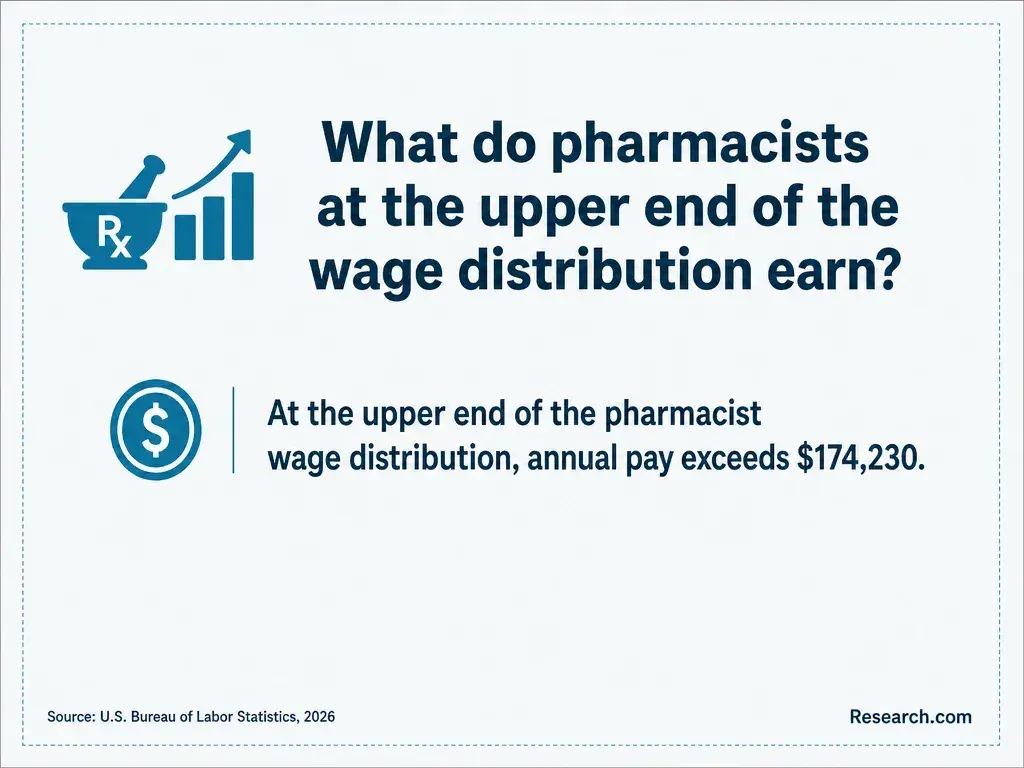
The U.S. Bureau of Labor Statistics reports median annual pay of $140,910 in May 2025 for pharmacists. That occupation-wide figure does not predict a new graduate's pay or make one rotation setting more lucrative than another. Use experiences to gather evidence about responsibilities and fit, then check the licensing and hiring requirements for roles you want.
At the end of each experience, save a de-identified account of a problem you assessed, the evidence you used, your supervised contribution, and feedback you applied. Students entering pharmacy after another field can also evaluate credits for pharmacy prerequisites, but transferred undergraduate coursework is distinct from the clinical skills demonstrated during Pharm.D. rotations.
Other Things You Should Know About PharmD
Ask the experiential office before making arrangements. Schools may restrict employment-site placements or require a different preceptor, duties, or schedule to ensure the experience meets educational standards.
That depends on the school's assignment and change policies. Raise a documented conflict promptly; declining a site without an approved alternative may delay progression.
Contact your school's disability or accommodations office early to learn its process. It can help coordinate approved accommodations with the site while limiting unnecessary disclosure of personal medical information.
Yes, if you describe your own supervised work accurately and omit details that could identify a patient. Explain what you learned rather than claiming responsibility for a decision made by the supervising pharmacist.
- DELEGATION AND SUPERVISION - NCBI - NIH https://www.ncbi.nlm.nih.gov/books/NBK610432/
- How to Apply | fda.gov https://www.fda.gov/about-fda/fda-pharmacy-student-experiential-program/how-apply
- Third-Party Onboarding Organizations as Gatekeepers for Student Placement Decisions - PMC https://pmc.ncbi.nlm.nih.gov/articles/PMC5822945/
- HIPAA Training and Resources | hhs.gov https://www.hhs.gov/hipaa/for-professionals/training/index.html
- Communicating for Safety Standard | safetyandquality.gov.au https://www.safetyandquality.gov.au/national-standards/nsqhs-standards/communicating-safety-standard
- Pharmacy Students: Year 4: Evidence-Based Practice | usc.edu https://libguides.usc.edu/c.php
- How to Formulate Effective Clinical Questions with Evidence-Based Practice | HETI Higher Education https://heti.edu.au/news/news/how-to-formulate-effective-clinical-questions-with-evidence-based-practice
- Experiential Education | R. Ken Coit College of Pharmacy https://www.pharmacy.arizona.edu/academics/pharmd/experiential-education
- HIPAA Training/Protecting Patient Privacy | University Privacy Office https://privacy.stanford.edu/training/hipaa-trainingprotecting-patient-privacy
- FAQs for Coordinators of Students Onboarding with OnBase | providenceready.org https://www.providenceready.org/our-programs/school-affiliations/faqs-for-coordinators-of-students-onboarding-wit/