Pharmacy Education Decision Guide for Prospective Students

Co-Founder and Chief Data Scientist
Choosing pharmacy school means committing to more than a degree. You need a program that meets professional accreditation standards, fits your finances and schedule, and prepares you to pursue licensure where you intend to practice.
This guide is for prospective and returning students weighing a Doctor of Pharmacy (Pharm.D.) against other pharmacy-related paths. It explains the admissions, training, cost, and career decisions in the order you are likely to face them - and gives you a way to compare programs before you commit.
Key Things You Should Know
- To become a U.S.-educated pharmacist, plan for pre-professional coursework, an accredited Pharm.D. program, and separate state licensure requirements; a pharmacy technician credential or science degree is not a substitute.
- Compare each program's total cost, clinical placements, accreditation status, and licensing outcomes - not tuition or online convenience alone. Federal borrowing rules changed for many new professional students beginning July 1, 2026.
- Pharmacists' median annual pay was $140,910 in May 2025, with 5% projected job growth during 2025-2035, according to the Bureau of Labor Statistics. Those occupation-wide figures do not predict an individual graduate's earnings or job prospects.
What Is Pharmacy Education and What Does a Pharmacist Do?
Pharmacy education prepares students to use medication science in patient care. A pharmacist reviews prescriptions, assesses medication appropriateness and interactions, counsels patients, collaborates with other clinicians, and helps prevent medication errors. Duties and authority vary by practice setting and state law.
Undergraduate pre-pharmacy courses build the scientific foundation for admission; the professional Pharm.D. curriculum develops the clinical judgment and supervised practice skills needed to pursue pharmacist licensure. Students with prior biology or chemistry coursework should still compare their transcripts with individual schools' prerequisites. A relevant starting point is online pharmacy programs for science-background students, followed by confirmation of each school's current policies.
A pharmacy technician is a different occupation. Technicians help prepare and distribute medications under applicable supervision and do not ordinarily need a Pharm.D. If your goal is technical pharmacy work rather than responsibility for pharmacist-level clinical decisions, investigate technician training and state requirements before taking on a professional degree.
What Degree Do You Need to Become a Pharmacist?
For the standard U.S.-educated route to pharmacist licensure, you need a Doctor of Pharmacy degree from a program accredited by the Accreditation Council for Pharmacy Education (ACPE), followed by satisfaction of your licensing jurisdiction's requirements. A bachelor's degree may help with admission but is not required by every Pharm.D. program; required prerequisite courses and credits vary.
The credentials below serve different goals. Use the distinction to avoid paying for a degree that does not lead to the role you want.
| Education route | Primary purpose | Does it replace a Pharm.D. for the standard U.S.-educated pharmacist route? |
| Pre-pharmacy coursework or a science bachelor's degree | Builds academic preparation and may satisfy admission prerequisites | No |
| Pharm.D. | Provides professional pharmacy education and supervised clinical experiences | It is the required degree route, but graduation alone does not grant a license |
| Pharmacy technician education | Prepares students for technician duties, subject to state rules | No |
| Pharmaceutical sciences or pharmacology degree | Focuses on research or drug science rather than the professional pharmacist curriculum | No |
Some schools offer accelerated professional sequences, but a shorter calendar does not eliminate required coursework or clinical training. Compare actual prerequisite and graduation timelines when reviewing how accelerated Pharm.D. programs work.
What Are the Requirements for Pharmacist Licensure?
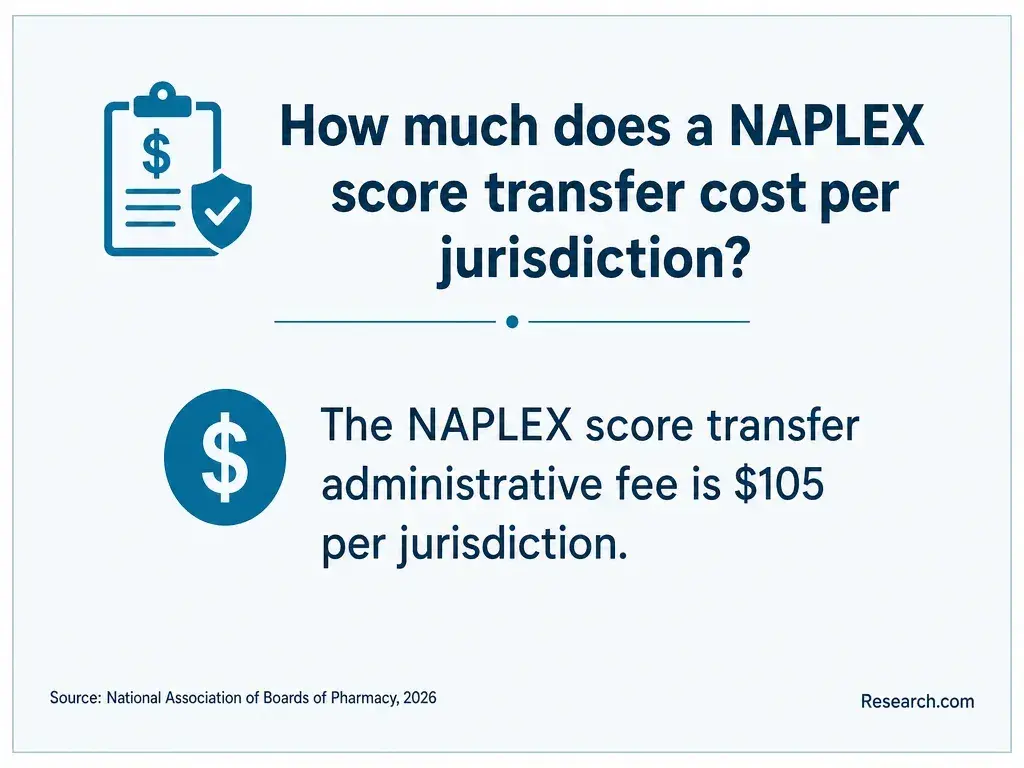
A Pharm.D. graduate must apply to the pharmacy board in the jurisdiction where they seek to practice. Common requirements include an eligible pharmacy degree, the North American Pharmacist Licensure Examination (NAPLEX), applicable pharmacy-law assessment, and any required intern experience, background review, or other board conditions. The board - not the school or exam administrator - issues the license.
Do not assume every jurisdiction uses the Multistate Pharmacy Jurisprudence Examination (MPJE). Jurisprudence requirements differ, and some jurisdictions began transitioning to the Uniform Multistate Pharmacy Jurisprudence Examination (UMPJE) in 2026. Before enrolling, check your intended board's current rules, particularly if you expect to study or complete rotations across state lines. Review online Pharm.D. pathways for future pharmacists against those rules; online delivery does not waive licensure requirements.
Graduates of pharmacy programs outside the United States may face a different pathway, including foreign-graduate credential requirements. They should confirm eligibility directly with the relevant board and the National Association of Boards of Pharmacy rather than assuming a foreign degree follows the U.S.-educated route.
ACPE accredits professional pharmacy education programs; it does not certify pharmacists or issue licenses. Confirm a prospective program's current professional-program status in ACPE's official program records, including any conditions or status changes. An institution's separate institutional accreditation does not substitute for ACPE professional-program accreditation.
Accreditation also does not settle every enrollment question. For distance study, ask whether the school is authorized to enroll you from your state and whether it can arrange or approve your required clinical placements there. Neither authorization nor accreditation guarantees that previously earned courses will count: the receiving school decides how credit applies. That distinction matters when investigating pharmacy programs that accept transfer credits.
A Pharm.D. curriculum connects biomedical and pharmaceutical science with pharmacotherapy, medication safety, patient assessment, communication, law, and professional decision-making. Students learn to evaluate drug therapy and explain recommendations; coursework alone does not authorize unsupervised practice.
Experiential education is central to the degree. Introductory pharmacy practice experiences (IPPEs) expose students to supervised practice earlier in the program. Advanced pharmacy practice experiences (APPEs) are more intensive rotations in later stages, with settings and schedules determined by the school and its approved sites. Ask who coordinates placements, which sites are available, and whether travel, intern registration, immunizations, or background checks will be your responsibility.
Compressed schedules warrant particular scrutiny. When comparing how quickly can an online pharmacy degree be completed, check the exact credential being advertised: a short pharmacy-related degree is not necessarily a licensure-eligible Pharm.D.
Some Pharm.D. programs deliver portions of instruction online or in a hybrid format. That does not mean the professional degree can be completed entirely from home. Hands-on training, assessments, campus visits, IPPEs, and APPEs may require attendance at specified times and places.
Ask for the current cohort calendar before treating flexibility as a deciding advantage. Confirm live-class times, required campus immersions, who secures rotation sites, whether placements near home are possible, and how much time you may need away from work. State authorization to enroll online is a separate question from clinical-placement approval and eventual licensure eligibility.
Be especially careful when comparing a Pharm.D. with accelerated online doctoral education in other fields. Similar delivery labels do not imply comparable clinical obligations or professional licensing outcomes.
Requirements differ by school. Programs evaluate specified undergraduate prerequisites, which may include science courses and labs, alongside their own grade, GPA, course-recency, interview, and application rules. Some admit eligible applicants without a completed bachelor's degree. Meeting a published minimum does not guarantee admission.
Many schools use the Pharmacy College Application Service (PharmCAS), but not all do; a participating school may also require supplemental materials or an interview. The Pharmacy College Admission Test (PCAT) was retired in January 2024, so it is not a current exam applicants can schedule.
A strong comparison begins with each school's current admissions page and PharmCAS directory entry, where applicable. Use this sequence to turn a general interest in pharmacy schools with accessible admissions into an application plan:
- Match every prerequisite, lab, minimum grade, and course-recency rule to your transcript; ask the school to assess uncertain credits.
- Check application, transcript, recommendation, interview, and deposit deadlines separately.
- Confirm whether unfinished prerequisites may remain in progress when you apply and when they must be completed.
Many Pharm.D. professional curricula take about four academic years after prerequisites, while some use accelerated calendars. Your total time depends on courses you still need, the program's sequence, and any interruptions. A shorter calendar may also leave less room for paid work.
Advertised tuition is only one part of the decision. This comparison shows costs that can change the amount you need to finance; request a program-specific estimate rather than assuming another school's figures apply.
| Cost category | What to compare |
| School charges | Tuition by academic year or credit, mandatory fees, and charges during rotations |
| Required preparation | Remaining prerequisites, books, clinical references, technology, and lab supplies |
| Attendance and placements | Campus visits, transportation, temporary housing, background checks, and immunizations |
| Transition to practice | Licensure applications, examinations, and any additional training you choose to pursue |
Federal student-aid eligibility depends on the student, program, and aid year. Rules changed for many new graduate and professional borrowers beginning July 1, 2026; do not assume older loan limits or automatic access to Grad PLUS loans apply. Ask each financial aid office for your borrowing options and remaining funding gap, then compare the full budget with online pharmacy school cost options. A lower tuition quote may lose its advantage if it brings substantial travel or housing costs.
Licensed pharmacists work in community pharmacies, hospitals and health systems, ambulatory care, specialty pharmacy, and other settings. Responsibilities range from dispensing and counseling to medication management with care teams. Employer requirements and the activities a pharmacist may perform vary by role and jurisdiction.
Graduates may seek direct employment or apply for postgraduate training. A postgraduate year one (PGY1) residency provides broad supervised practice development; a postgraduate year two (PGY2) residency typically builds on it in a focused area. Fellowships commonly emphasize a particular research or industry-related pathway. Board of Pharmacy Specialties certification is a separate professional credential with its own eligibility rules - not a license, residency, or universal hiring requirement.
For career changers, prior science knowledge or customer-facing experience can help, but neither replaces professional clinical training. If you are returning after time away from school, compare pharmacy school routes for returning students with the prerequisites you must finish before enrollment. If your intended work is primarily drug research, operations, or technician practice, also consider whether a different credential reaches that goal with less time and debt.
What Are Pharmacist Salaries and Job Outlook Expectations?
The Bureau of Labor Statistics reports median annual pay of $140,910 in May 2025 for pharmacists and projects 5% job growth during 2025-2035, with about 12,500 openings per year. These are occupation-wide measures, not starting salaries or guarantees for graduates; location, setting, hours, and experience can affect an individual offer.
For comparison, pharmacy technicians had median annual pay of $45,750 in May 2025 and projected job growth of 6% during 2025-2035, with about 44,700 openings per year. Technician work is a separate occupation that does not ordinarily require a Pharm.D. The pay difference alone is not a return-on-investment calculation: a prospective student must also account for prerequisite time, professional-school costs, borrowing, and income forgone during training.
Be cautious with claims that pharmacy degree programs with shorter timelines lead quickly to pharmacist pay. Check whether the listed credential actually qualifies you to pursue pharmacist licensure. Before committing, compare your complete financing plan with the work you want to do - not just an occupation's median wage.
Other Things You Should Know About PharmD
Generally, no. A school must determine whether you have completed its required supervised experiences. Technician work can provide useful exposure, but do not assume it counts as an IPPE or APPE.
Possibly. Intern registration, permitted duties, and supervision rules depend on the state. Check the relevant pharmacy board's requirements before accepting a position.
Not for every research role. Required credentials depend on the job and whether it involves activities legally reserved for pharmacists. Compare job descriptions before choosing a Pharm.D. over a research-focused degree.
Ask the school about leave, readmission, course sequencing, and the maximum time allowed to finish. A missed sequence may delay graduation, and changes to enrollment can affect financial aid.
- Cost of Attendance (Budget) | 2025-2026 Federal Student Aid Handbook https://fsapartners.ed.gov/knowledge-center/fsa-handbook/2025-2026/vol3/ch2-cost-attendance-budget
- Pharmacist Licensure by Exam - Texas State Board of Pharmacy https://www.pharmacy.texas.gov/applicants/pharmacist-exam.asp
- DAPIP | Homepage - Office of Postsecondary Education (OPE) https://ope.ed.gov/dapip/
- Pharmacist Licensure Guide | Department of State https://www.pa.gov/agencies/dos/resources/professional-licensing-resources/licensure-processing-guides-and-timelines/pharmacist-guide
- Pharmacist - Florida Board of Pharmacy https://floridaspharmacy.gov/pharmacist/
- Pharmacy Tuition and Fees - KU Financial Aid https://financialaid.ku.edu/calculate-costs/tuition-and-fees/pharmacy
- How to Become a Pharmacist: A Step-by-Step Guide | MCPHS https://www.mcphs.edu/admission-and-aid/blog/how-to-become-a-pharmacist
- Admissions Requirements & Prerequisites | llu.edu https://pharmacy.llu.edu/admissions/requirements
- Cost of Attendance | PharmD Program | Financial Aid | USF Health https://health.usf.edu/financial-aid/pharmd-program/cost-of-attendance
- Admissions: USC Mann PharmD Program https://mann.usc.edu/program/doctor-of-pharmacy-pharmd/admissions/