PharmD Versus PhD in Pharmacology

Co-Founder and Chief Data Scientist
A Doctor of Pharmacy (Pharm.D.) and a Ph.D. in pharmacology both involve medicines, but they prepare students for different work. Choosing the wrong route can mean years of training that do not qualify you for your intended job.
This guide is for prospective pharmacists, future drug researchers, and career changers comparing the two degrees. It explains the licensing boundary, what each program teaches, and how to weigh admissions, time, funding, and career opportunities before applying.
Key Things You Should Know
- Choose an accredited Pharm.D. pathway if your goal is U.S. pharmacist licensure; a pharmacology Ph.D. does not substitute for the professional pharmacy degree.
- Choose a pharmacology Ph.D. if your primary goal is to design experiments and investigate how drugs work, rather than provide licensed patient care.
- Costs and outcomes require separate comparisons: the Bureau of Labor Statistics reports pharmacist median pay of $140,910 in May 2025, but that figure does not describe pharmacology Ph.D. jobs or guarantee a graduate's earnings.
What is the difference between a PharmD and a PhD in pharmacology?
A Pharm.D. is a professional degree designed to prepare students for pharmacist practice. A Ph.D. in pharmacology is a research doctorate focused on discovering and explaining how drugs interact with biological systems. Both can lead to work involving medicines, but only the Pharm.D. is the standard U.S. educational route toward pharmacist licensure.
The comparison below separates the degrees by their principal purpose. It also shows why a shared interest in drugs is not, by itself, enough to choose between them.
| Decision factor | Pharm.D. | Ph.D. in pharmacology |
| Primary preparation | Medication use and patient-centered pharmacy practice | Original research on drug effects and mechanisms |
| Typical final training component | Supervised pharmacy practice experiences | Independent research and dissertation defense |
| Pharmacist licensure pathway | Provides the professional degree required in the standard U.S.-educated pathway; other state requirements still apply | Does not qualify its holder for pharmacist licensure by itself |
| Best fit | Someone who wants responsibility for medication-related patient care | Someone who wants to formulate and test scientific questions |
Applicants moving from biology, chemistry, or pre-pharmacy study can explore Pharm.D. admission after pre-pharmacy coursework. That undergraduate coursework may meet admission prerequisites, but it is not the professional Pharm.D. curriculum.
Which degree is required to become a licensed pharmacist?
For someone pursuing the standard U.S.-educated route, the required degree is a Pharm.D. from a pharmacy program accredited by the Accreditation Council for Pharmacy Education (ACPE). Graduation alone does not issue a license. A state board of pharmacy determines eligibility, including applicable supervised experience, the North American Pharmacist Licensure Examination (NAPLEX), a jurisprudence examination or other law requirement where applicable, and additional state conditions.
Do not assume every jurisdiction uses the Multistate Pharmacy Jurisprudence Examination (MPJE): requirements differ, and some jurisdictions began moving to the Uniform Multistate Pharmacy Jurisprudence Examination (UMPJE) in 2026. Check the board for the state where you intend to practice. Internationally educated pharmacists follow a different eligibility process and should not assume either U.S. degree alone resolves it.
A pharmacology Ph.D. is not a substitute for the professional degree, even if the researcher teaches pharmacy students or studies medications. When evaluating pharmacy school admission requirements, work backward from the licensing jurisdiction and confirm that the specific Pharm.D. program meets the educational requirement.
What careers can you pursue with a PharmD versus a pharmacology PhD?
Licensed Pharm.D. graduates may work in community pharmacies, hospitals, ambulatory care, managed care, or other settings where pharmacists assess medication use, counsel patients, and collaborate with care teams. Practice authority varies by state and setting. A Pharm.D. can also support nonclinical industry or research roles, though the degree alone does not ensure entry into them.
Pharmacology Ph.D. graduates commonly pursue research in universities, government, biotechnology, and pharmaceutical companies. Their work may involve experimental design, drug-target studies, data analysis, and scientific communication. They generally do not dispense medications or provide pharmacist services unless they separately qualify for a pharmacist license.
Postgraduate pharmacy residencies, including PGY1 and sometimes PGY2 training, can be relevant to particular clinical jobs; industry fellowships serve different training goals. Neither is universally required for pharmacist employment. Specialty board certification is another distinct credential, not a replacement for licensure. If your goal is a pharmacy technician job rather than pharmacist practice or drug research, consider pharmacy degree options with shorter study periods instead of assuming either doctorate is necessary.
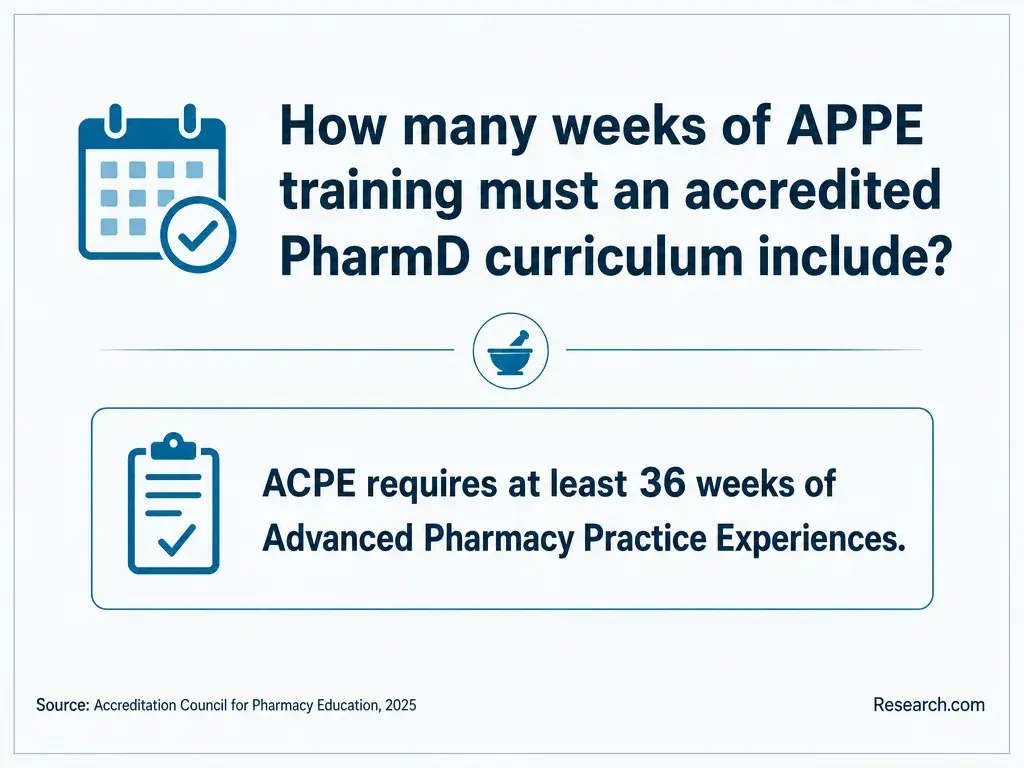
Pharm.D. students study areas such as pharmacotherapy, pharmacokinetics, medication safety, pharmacy law, patient communication, and the evaluation of clinical evidence. They also complete supervised introductory pharmacy practice experiences (IPPEs) and advanced pharmacy practice experiences (APPEs). These are part of professional education, not permission to practice independently before licensure.
Pharmacology Ph.D. students study drug mechanisms and research methods, then develop expertise through laboratory, computational, translational, or other supervised research. Coursework and dissertation topics vary considerably by department and adviser. A prospective applicant should read faculty research descriptions as closely as the course catalog: a program's name may not reveal whether it supports the specific work they want to do.
Prior university study may help with prerequisites, but acceptance of coursework into the professional curriculum is a separate decision made by the receiving school. Review pharmacy transfer credit requirements before assuming earlier graduate-level pharmacology courses will shorten a Pharm.D.
Pharm.D. applicants typically complete specified undergraduate prerequisite courses before entering the professional curriculum. A completed bachelor's degree is not universally required. Schools set their own course, laboratory, grade, credit, and deadline policies, and may require interviews and recommendations. The Pharmacy College Admission Test (PCAT) was retired in January 2024; it is not a current exam applicants can plan to take.
Pharmacology Ph.D. admissions usually emphasize preparation for scientific research, including relevant coursework, research experience, recommendations, and a convincing match with available faculty. Some programs require a bachelor's degree, while policies on prior graduate study and standardized tests vary. Research experience may matter more than having a degree titled "pharmacology."
Some Pharm.D. schools permit an application while specified prerequisites remain in progress, but require their completion before enrollment. Compare pharmacy degree options without every prerequisite completed against each school's current matriculation rules; permission to apply is not a waiver of required coursework.
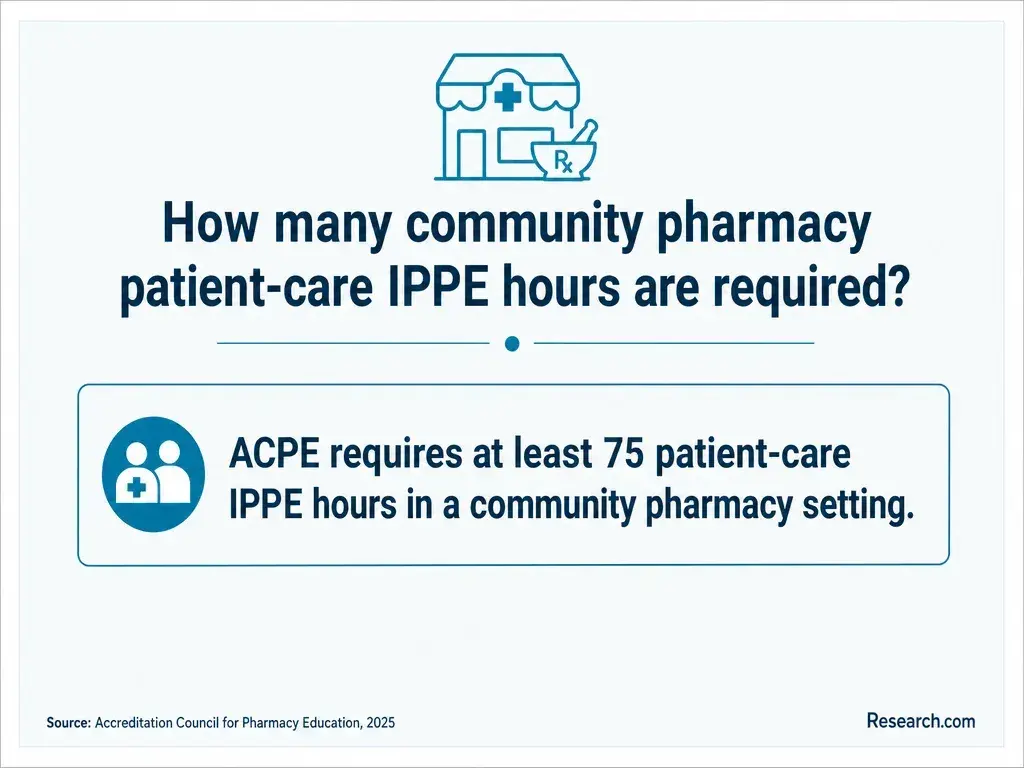
A traditional Pharm.D. professional curriculum commonly takes four academic years after required pre-professional study. Some schools offer accelerated schedules, but their shorter calendar usually comes with a more intensive pace. Total time depends on which prerequisites an applicant has already completed and whether the school accepts them.
A pharmacology Ph.D. has a less predictable endpoint. Coursework, research progress, dissertation requirements, and available funding can all affect completion time. Before applying, ask a department for its recent median time to degree and whether support continues through dissertation completion.
Compare accelerated online pharmacy programs by their full sequence, including required in-person work, rather than by an advertised graduation date alone. Finishing the Pharm.D. faster does not eliminate subsequent state licensing requirements.
There is no useful single price for either degree. Pharm.D. students may pay professional-program tuition and fees plus costs for prerequisites, supplies, background checks, immunizations, rotations, travel, and licensing applications. A pharmacology Ph.D. may come with a tuition waiver and stipend tied to a research or teaching appointment, but funding, fees, benefits, work obligations, and the number of supported years vary.
The key comparison is net cost and forgone earnings over the full training period, not advertised tuition alone. Ask Pharm.D. schools for a current cost-of-attendance estimate and ask Ph.D. departments for a written funding offer. Then account for any prerequisite semesters, rotation-related travel, and expected time away from paid work.
Federal student-aid rules changed for many new graduate and professional borrowers beginning July 1, 2026, including restrictions affecting Grad PLUS access. Do not assume an older borrowing arrangement will cover a new program. Confirm your classification, eligibility, and applicable loan limits with each school's financial aid office; use compare online Pharm.D. costs as a starting point, not a substitute for a personalized budget.
Some Pharm.D. programs deliver portions of instruction online or in a hybrid format. "Online" does not mean entirely remote or self-paced: hands-on activities, assessments, IPPEs, and APPEs can require attendance at approved sites or on campus. Before enrolling, confirm who arranges placements, whether travel is expected, and whether your intended state permits the relevant educational activities and eventual licensing pathway.
Online or hybrid research doctorates require even closer scrutiny. A pharmacology Ph.D. built around laboratory experiments may depend on regular access to facilities, equipment, collaborators, and an adviser. Ask what research can actually be done remotely, what in-person attendance is mandatory, and whether the program offers the research supervision you need. Comparisons of online doctoral study duration should not be read as evidence that an experimental pharmacology dissertation can be completed fully online or on a fixed schedule.
The Bureau of Labor Statistics reports median annual pay of $140,910 in May 2025 for pharmacists, with 5% projected job growth, 2025-2035, and about 12,500 openings per year projected. Those figures describe an occupation, not the earnings or job prospects of every Pharm.D. graduate. Location, setting, experience, licensure, and hours worked matter.
There is no equally precise BLS occupational category covering all pharmacology Ph.D. graduates: researchers may be classified under different scientific, academic, or management occupations. A pharmacist median therefore cannot support a claim that one doctorate pays more than the other. Compare the actual positions you would seek, their hiring requirements, and the cost of reaching them. Cost-effective pharmacy degree options may also be worth examining if your target job does not require either doctorate.
How can you choose an accredited PharmD or pharmacology PhD program?
For a Pharm.D., verify the specific professional program's current ACPE status, not merely the university's institutional accreditation. Institutional accreditation and authorization to enroll a student in an online program address different questions; neither replaces confirmation of professional-program accreditation or state licensure eligibility. For a pharmacology Ph.D., check institutional accreditation and examine research fit, adviser availability, facilities, funding terms, and graduates' career destinations. ACPE professional-program accreditation is not the appropriate test for a research Ph.D.
Use the following checks to turn those distinctions into an application shortlist. Obtain answers from the program and the relevant licensing board before paying a deposit.
- State the job you want, then determine whether it legally requires pharmacist licensure or primarily requires research training.
- For each Pharm.D., confirm ACPE status, your prerequisite eligibility, placement arrangements, total expected costs, and the licensing rules in your intended state.
- For each Ph.D., identify potential advisers, ask whether they are taking students, and request written details on funding, research expectations, and recent completion times.
- Compare the offers against your available time, likely borrowing, and willingness to relocate or travel for training.
When building a Pharm.D. shortlist, top online pharmacy doctorate programs can help identify options to investigate. Verify each program's current format and status directly; a convenient delivery model is not evidence that required clinical experiences will fit your schedule.
Other Things You Should Know About PharmD
Yes. Some institutions offer coordinated or dual-degree opportunities, while others require separate applications. Ask how coursework, research, funding, and clinical schedules interact; earning both takes more planning and is unnecessary for many jobs.
Typically not. Pharm.D. programs emphasize professional coursework and supervised practice rather than the original dissertation research that defines a Ph.D. Individual programs may still require research projects or presentations.
Yes, depending on the role and research preparation. A Pharm.D. can be valuable in clinical or medication-use research, while positions centered on independent laboratory research may favor or require a Ph.D.
Not automatically. The Ph.D. program decides whether prior coursework meets its requirements, and the dissertation still requires original research. Ask for a written credit evaluation and a realistic training plan before assuming either degree will reduce the length of the other.
- Fast Facts: Tuition costs of colleges and universities (76) | ed.gov https://nces.ed.gov/fastfacts/display.asp
- Short-Term Research Experience (SRE) in the Traditional Lab | nih.gov https://pmc.ncbi.nlm.nih.gov/articles/PMC6755894/
- U.S. Graduate Pharmacy References | EducationUSA https://educationusa.state.gov/your-5-steps-us-study/research-your-options/graduate/graduate-student/what-graduate-programs-a-4
- Types of Financial Aid: Grants, Work-Study, and Loans | studentaid.gov https://studentaid.gov/understand-aid/types
- What Can You Do With a PharmD Degree? | Bouvé College of Health Sciences https://bouve.northeastern.edu/news/what-can-you-do-with-a-pharmd-degree/
- PharmD Degree: What It Is & How to Earn One | Marshall University https://www.marshall.edu/blog/what-is-pharm-d-degree/
- Curriculum - UW School of Pharmacy https://sop.washington.edu/pharmd/curriculum/
- Curriculum and Dual Degrees | umaryland.edu https://www.pharmacy.umaryland.edu/academics/pharmd/curriculum/
- Curriculum | usc.edu https://mann.usc.edu/program/doctor-of-pharmacy-pharmd/curriculum/
- Benefits | PharmD-PhD Degree Program https://pharm.ucsf.edu/pharmd-phd/benefits