How to Choose Between Residency and Direct Employment

Co-Founder and Chief Data Scientist
A pharmacy residency can open doors to structured clinical training, but it also delays the move into a full pharmacist salary. Direct employment brings income and on-the-job experience sooner, though some clinical positions may be harder to enter without postgraduate training.
This guide is for Pharm.D. students and graduates weighing those paths. It explains what each route can - and cannot - do for your career, then gives you a way to compare actual residency offers and job opportunities before committing.
Key Things You Should Know
- Choose a residency when your target positions commonly expect supervised postgraduate clinical training; choose direct employment when an available job develops the skills you need without that additional training year.
- A postgraduate year one (PGY1) residency is generally a one-year commitment, with optional further specialty training such as PGY2. Compare its stipend and expenses with a specific job offer - not with an assumed future salary.
- Neither a Pharm.D. nor a residency grants a pharmacist license. The Bureau of Labor Statistics reports pharmacist median pay of $140,910 in May 2025, but that occupation-wide figure does not describe resident stipends or guarantee a new graduate's pay.
What is the difference between residency and direct employment in legal careers?
The distinction needs translating for this decision: a pharmacy residency is a defined postgraduate training program, not a legal-career credential. Direct employment means taking a pharmacist job without first completing that program. A Pharm.D. graduate must meet the applicable state board's licensing requirements for either route; employers and residencies may have different deadlines for obtaining a license.
The comparison below shows what each pharmacy route provides. It also identifies what to check in a real offer rather than assuming that one path is always better.
| Decision factor | Pharmacy residency | Direct pharmacist employment |
| Primary purpose | Structured, supervised practice and feedback | Perform an employer-defined role while gaining experience |
| Typical starting route | PGY1; PGY2 may follow for more focused training | Apply to positions whose hiring requirements you meet |
| Compensation | Program stipend and benefits | Employer salary or hourly pay and benefits |
| Main limitation | Training demands and forgone earnings from an alternative job | Training quality varies; some desired positions prefer residency experience |
A residency is particularly worth investigating if it supplies clinical experiences you cannot reasonably get in the jobs available to you. It is not automatically necessary for community pharmacy or every position carrying a specialty-related title. If you are considering a shorter academic route instead, accelerated pharmacist education concerns the path to the degree - not a substitute for postgraduate residency.
Do paralegals need a license, certification, or formal education to work?
Paralegal qualifications are a separate legal-career question and should not be used as a model for pharmacist practice. Pharmacists need state licensure. Generally, U.S.-educated candidates complete a professional Doctor of Pharmacy (Pharm.D.) program accredited by the Accreditation Council for Pharmacy Education (ACPE), then satisfy their board's examination and other requirements. The North American Pharmacist Licensure Examination (NAPLEX) is part of that process; a jurisprudence examination or other requirements depend on the jurisdiction. Passing an exam alone does not issue a license.
Check your board's rules before accepting either offer, including intern registration, exam eligibility, and the deadline for full licensure. This is especially important when a residency is in a different state. Undergraduate prerequisites, which vary by school, are not the Pharm.D. professional curriculum; pharmacy degree entry requirements also should not be confused with licensing requirements after graduation.
Which education pathways lead to residency or direct employment in law?
Legal education does not provide a pathway into pharmacist residency or pharmacist employment. For the U.S.-educated pharmacist route, prospective students complete a school's prerequisite coursework and an eligible professional Pharm.D. program. Pharm.D. completion precedes applications for many residencies, but graduates can also seek direct employment once they meet the employer's licensing conditions. A pharmaceutical sciences degree or pharmacy technician credential does not replace the professional Pharm.D. for pharmacist licensure.
If you already have a science degree, compare your transcript with each school's prerequisites rather than assuming your major covers every required course or lab. A guide to pharmacy school for biology and chemistry graduates can help frame that earlier education decision. Once enrolled, use clinical rotations to test whether the work you want truly calls for residency training.
Delivery format matters differently in pharmacy. An online or hybrid Pharm.D. may deliver some instruction remotely, but hands-on requirements and introductory and advanced pharmacy practice experiences - IPPEs and APPEs - require supervised practice. Schools may also require campus visits, scheduled live sessions, or travel to rotation sites. Neither online study nor a campus-based degree, by itself, determines whether residency is the better career choice.
If flexibility affects your ability to explore practice settings, ask a prospective school who approves rotations, whether local placements are available, and how often you might need time away from work. Compare online Pharm.D. pathways for future pharmacists against those concrete commitments. Later, evaluate residencies by their actual schedules and sites, not by the format of your degree.
Legal coursework does not prepare a graduate to practice pharmacy. In a Pharm.D. program, pharmacotherapy, medication safety, patient communication, and supervised rotations can help you identify the clinical work you want to do next. A residency builds on that foundation through an organized training plan; direct employment develops skills within the duties, supervision, and learning opportunities of a particular job.
Use your APPE evaluations and preceptor feedback as evidence. If you want to manage complex patients in a setting where employers commonly prefer PGY1 training, ask whether the residency provides the relevant rotations and feedback. If you thrive in a setting offering strong onboarding and mentorship, direct employment may be the more efficient route. Be careful not to confuse pharmacy degree programs with accelerated schedules with a guarantee of faster Pharm.D. completion or shorter residency training; check the precise credential and eligibility.
Paralegal admissions rules do not govern pharmacy residency applications. Pharmacy graduates should review each residency's eligibility criteria, licensure deadline, required materials, and application process. Programs may use the Pharmacy Online Residency Centralized Application Service (PhORCAS) and participate in the ASHP Match, but candidates must check the current requirements and dates for each program rather than assume all programs use the same process.
Residency selection is competitive, so apply based on fit and have a direct-employment plan as well. Earlier in the pipeline, admission to a Pharm.D. program is a different decision: schools set their own prerequisites and selection criteria, and meeting a minimum is not a promise of admission. Research on pharmacy schools with accessible admissions may help you build a school list, but it does not predict your residency prospects.
For this pharmacy decision, the consequential time difference is usually an initial PGY1 training year before - or instead of - full-time direct employment. PGY2 adds further training when it matches a focused career goal. A residency typically pays a stipend, so the financial comparison is not "tuition versus salary." It is the actual residency compensation and expenses versus the compensation, benefits, and development available from an attainable job.
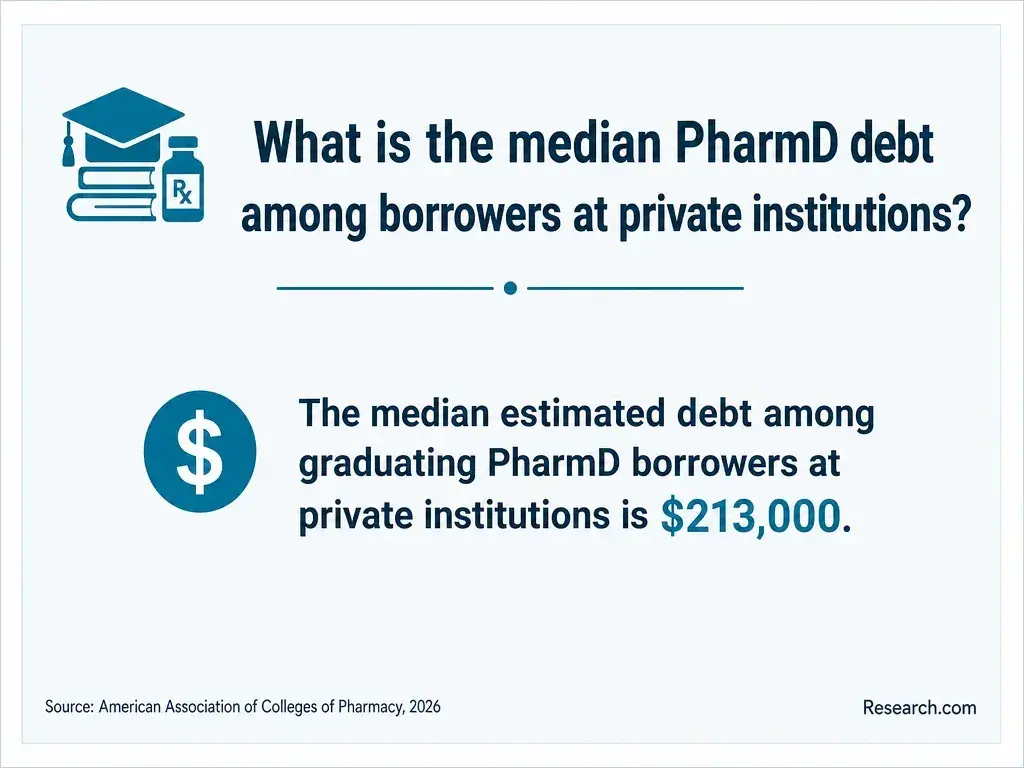
Build a personal comparison using written offers or published program terms: pay, health coverage, loan payments, relocation, licensing fees, commuting, and expected hours. Include the value of structured training without treating a later promotion as guaranteed. If you are still selecting a school, an online Pharm.D. cost comparison addresses a separate, earlier expense. For federal loans, confirm your own repayment options with your servicer; eligibility depends on the loan and borrower.
Legal roles and pharmacist roles are distinct. After pharmacist licensure, direct-employment opportunities may include community, hospital, or other pharmacy settings, depending on the position's hiring criteria. PGY1 can strengthen preparation for some clinical roles; PGY2 offers more focused training. Fellowships are another postgraduate route, often oriented toward industry or research, but they are not interchangeable with practice residencies.
Start with job postings for the work you actually want. Separate a legally required license from a stated residency requirement and an employer preference. If the available jobs already offer your desired responsibilities and credible mentorship, an affordable route through pharmacy education followed by direct employment may better limit debt and delayed earnings. If repeated postings for your target role strongly favor residency, ask programs for evidence that their graduates enter comparable positions.
Legal-career pay figures cannot answer a pharmacy earnings question. For pharmacists as an occupation, the Bureau of Labor Statistics reports median annual pay of $140,910 in May 2025 and projected job growth of 5%, 2025-2035, with about 12,500 openings per year projected. Those broad figures do not separate residents from directly employed new pharmacists, practice settings, or locations. They are context for the market - not an estimate of either offer in front of you.
A higher immediate salary favors direct employment financially, but the longer-term comparison depends on which jobs you could realistically obtain through each route. Compare actual terms and likely skill development before assigning a return to a residency. Doctoral degree length comparisons address time spent earning a credential; your residency decision begins after the Pharm.D. and has its own opportunity cost.
How can students evaluate an accredited and reputable legal education program?
For pharmacy, evaluate the institution, professional degree, and postgraduate program separately. Institutional accreditation is not the same as ACPE accreditation of a Pharm.D. program. Authorization to enroll an online student in a state is another separate question. For a residency, check its current accreditation status, training goals, practice sites, preceptors, staffing expectations, stipend, and licensure rules directly with the program and relevant accrediting organization.
Before committing, make the following checks against both the residency and your strongest realistic job alternative:
- Identify the position you want after the training year and compare its current hiring requirements with your qualifications.
- Ask the residency for its rotation schedule, supervision, resident responsibilities, licensure deadline, and written compensation and benefits.
- Ask the employer about onboarding, mentorship, advancement, scheduling, and support for future training.
- Compare net income, loan payments, relocation, workload, and skills gained; then choose the route with the stronger evidence for your specific goal.
If you are still completing the degree, verify school-specific credit policies before making a cost or timeline assumption. Pharmacy school credit transfer options do not mean that a receiving school must accept prior coursework or apply it to the professional Pharm.D. curriculum.
Other Things You Should Know About PharmD
Yes, but track each employer's deadlines and any commitments you make. If you participate in a residency Match, read its current rules before accepting or withdrawing from another opportunity.
That depends on the program and jurisdiction. Ask for the program's written licensing deadline and confirm the board's process early enough to address exam or paperwork delays.
No. Board certification is a separate credential with specialty-specific eligibility and examination requirements. It is also separate from state pharmacist licensure.
Direct employment remains a valid path. Review your application and interview feedback, pursue positions with relevant mentorship, and check any future residency program's eligibility rules before deciding whether to apply again.
- Exploring the Growing Impact of Career Pathways | IES https://ies.ed.gov/learn/blog/exploring-growing-impact-career-pathways
- Personal values and career-related preferences among young adults - PMC https://pmc.ncbi.nlm.nih.gov/articles/PMC11891975/
- Explore career options - Minnesota MyHigherEd https://myhighered.mn.gov/adult-students/explore-career-options
- Stackable credentials can open doors to new career opportunities | Brookings https://www.brookings.edu/articles/stackable-credentials-can-open-doors-to-new-career-opportunities/
- Your Job Search: How to Choose a Job After Residency, Part 2 | healthecareers.com https://www.healthecareers.com/career-resources/job-boards/your-job-search-how-to-choose-a-job-after-residency-part-2
- Residency vs. Job | DentistJobCafe.com https://www.dentistjobcafe.com/blog/1282/residency-vs-job
- What is residency? | American Medical Association https://www.ama-assn.org/medical-residents/residency-life/what-residency