PharmD Cost Planning for Students with Dependents

Co-Founder and Chief Data Scientist
A Pharm.D. budget can fail even when tuition is covered: childcare, health insurance, and travel to clinical rotations still have to be paid. For students supporting children or other dependents, the decision is whether a program's full cost and schedule are manageable through graduation and licensure. This guide shows you how to compare family expenses with school charges, evaluate financial aid, and identify scheduling risks before accepting an offer.
Key Things You Should Know
- Compare each school's tuition and fees with a separate family budget for childcare, housing, insurance, and rotation travel; a lower tuition quote may not mean a lower total cost.
- For 2026-27 borrowing, ask each aid office which federal loan rules apply to your enrollment date and eligibility. Do not assume a prior student's Grad PLUS access or borrowing limits apply to you.
- A Pharm.D. is not a pharmacist license. Before committing, verify the program's ACPE status, clinical-placement expectations, and the licensing requirements where you intend to practice.
How much does a PharmD cost for students with dependents?
There is no dependable single price for a family's Pharm.D. education. Published tuition and mandatory fees cover only part of the decision; your actual cost also depends on program length, prerequisite courses, childcare, living expenses, and where introductory and advanced pharmacy practice experiences - IPPEs and APPEs - take place. Ask each school for its current professional-program cost of attendance, then compare it with what your household will actually spend.
This worksheet keeps school charges separate from family expenses. Fill in amounts for the same academic period at both schools, and note costs that may rise during full-time rotations.
| Cost component | Program A | Program B |
| Tuition and mandatory fees | To verify | To verify |
| Books, technology, and required supplies | To verify | To verify |
| Housing, food, and household utilities | To estimate | To estimate |
| Childcare and backup care | To estimate | To estimate |
| Health insurance and dependent coverage | To verify | To verify |
| Rotation travel or temporary housing | To verify | To verify |
| Income reduced by school or rotations | To estimate separately | To estimate separately |
Reduced earnings are an opportunity cost, not a school charge or necessarily an allowable financial-aid expense. Compare the completed worksheet with available income, savings, grants, and borrowing - not with tuition alone. Lists of budget-friendly pharmacy degree programs can help you find candidates, but request each school's current charges before ranking them.
How can students with dependents pay for PharmD school?
Start with money that does not need repayment: school scholarships, eligible employer assistance, outside awards, and any grants for which your particular coursework qualifies. Then compare your remaining school-approved cost of attendance with federal loan eligibility and, only if needed, private loans. A professional Pharm.D. student should not assume the same grant or loan eligibility they had as an undergraduate completing pre-pharmacy prerequisites.
Before paying a deposit, use the following sequence to test whether the funding plan works across the entire program, including rotations:
- Request a written aid estimate for your entry year and ask how awards renew, whether summer terms are covered, and when funds are disbursed.
- Ask the aid office which federal borrowing rules apply to you. Rules changed for many new graduate and professional borrowers beginning July 1, 2026; eligibility and any transition provisions require an individual review.
- Ask whether documented dependent-care expenses can be included in your cost of attendance or addressed through a professional-judgment review. An increased allowance may permit eligible borrowing; it is not a childcare grant.
- Build a term-by-term cash-flow plan that accounts for deposits, childcare bills, lost work hours, and aid that arrives after expenses are due.
Private loans may have different rates, protections, and approval requirements than federal loans. Compare the amount you would need to borrow under each option, not just its first-term payment. A broader guide to pharmacy degree planning for cost and time is useful only if you also verify that a listed credential meets your pharmacist goal.
What living expenses should families budget for during a PharmD program?
Budget for the household you will support, not the standard student allowance alone. Include rent, utilities, groceries, dependent health coverage, transportation, childcare during class and study hours, and backup care when a child is sick or a caregiver is unavailable. Check whether your existing work schedule can continue during labs and rotations before treating wages as reliable income.
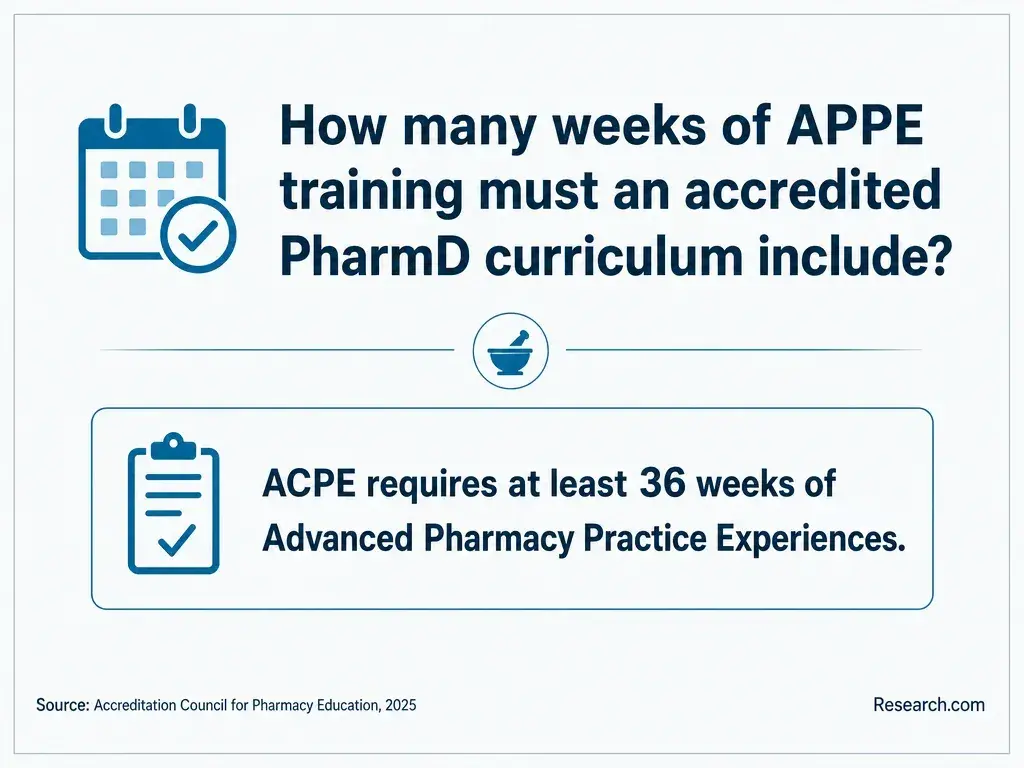
Rotations can change the budget abruptly. Ask whether the school arranges or approves sites, how far students may have to travel, whether evening or weekend schedules are possible, and what happens if a placement conflicts with caregiving. Do not assume a rotation can be completed remotely, at your current workplace, or near home. Students arriving with earlier science study may be able to avoid some additional prerequisite coursework, but that depends on the school's evaluation; online Pharm.D. for students with prior science study is a starting point for questions, not a promise of advanced standing.
Online instruction may reduce routine commuting or relocation costs, but it does not automatically make a Pharm.D. cheaper or fully remote. Compare tuition on the same basis, then add technology requirements, scheduled online sessions, campus visits, hands-on labs, and travel or housing for in-person IPPEs and APPEs. A campus program may cost more to commute to yet be easier for a family if its clinical sites and childcare support are nearby.
When reviewing online Pharm.D. program options, get a written calendar of required in-person activities and ask who secures clinical placements. Also confirm that the institution can enroll you from your state and that the pathway supports licensure eligibility where you plan to practice. State authorization, clinical-placement approval, and licensure eligibility are separate questions.
Students in an eligible graduate or professional program are generally treated as independent for federal aid purposes, but independence does not itself create a grant or cover every family expense. Federal aid eligibility depends on the program, enrollment, application information, and rules for the applicable aid year. If you are still taking undergraduate prerequisites, ask how those courses are classified for aid rather than assuming professional-program rules apply.
Request each school's list of required fees and purchases. Potential costs include prerequisite courses, textbooks and clinical references, a suitable computer, lab or compounding supplies, background checks, drug screening, immunizations, intern registration where required, and travel to approved practice sites. Near graduation, allow for applications, licensing examinations, and state board fees; the amounts and required examinations vary by jurisdiction.
Earlier coursework can affect this budget, but the receiving school decides whether credit satisfies its prerequisites or applies to its professional curriculum. Check how pharmacy programs review transfer credits, then obtain a school-specific evaluation before assuming a previous class will save time or tuition. A common budgeting mistake is counting a possible credit or nearby rotation as a confirmed saving.
The timeline has two distinct parts: any undergraduate pre-pharmacy prerequisites you still need, followed by the professional Pharm.D. curriculum. Professional programs commonly span several academic years, but calendars, year-round enrollment, and entry pathways differ. An accelerated pharmacist education option may shorten elapsed time without reducing the intensity of coursework or supervised clinical experiences.
For a family, the relevant measure is not the advertised finish date alone. Compare when full-time rotations begin, how many weeks require daytime availability, whether summer study is mandatory, and how a leave of absence would affect course sequencing and aid. A shorter program can lower living costs during enrollment while increasing childcare needs or reducing your ability to work.
Schools set their own prerequisite courses, laboratory and grade rules, application deadlines, interviews, and policies on work still in progress. A completed bachelor's degree is not universally required. Some programs use PharmCAS; others have additional or different application steps. The Pharmacy College Admission Test, or PCAT, was retired in January 2024 and should not be treated as a current routine admissions hurdle.
Check each school's current pharmacy program application requirements against its official admissions instructions. Ask whether an offer would be conditional on finishing prerequisites, and price those courses - including labs and childcare - before applying. Meeting a stated minimum does not guarantee admission.
Verify a professional Pharm.D. program's current status directly in the Accreditation Council for Pharmacy Education (ACPE) program records. ACPE professional-program accreditation is different from a university's institutional accreditation, permission to enroll online students in your state, or approval for a clinical placement. These distinctions matter because a low-cost program is poor value if it does not support the licensing pathway you need.
A Pharm.D. graduate must still meet the relevant state board's requirements, which generally include examinations and other conditions. The North American Pharmacist Licensure Examination (NAPLEX) is part of that process; jurisprudence requirements differ by jurisdiction, including whether an MPJE, UMPJE, or another approach applies. Other accelerated online doctoral education options may suit different careers, but a doctorate in another subject is not interchangeable with an ACPE-accredited professional Pharm.D. for U.S. pharmacist licensure.
What pharmacist careers, salaries, and job outlook follow a PharmD?
Licensed pharmacists work in settings such as community pharmacies, hospitals, ambulatory care, and specialty pharmacy. The U.S. Bureau of Labor Statistics reports median annual pay of $140,910 in May 2025 for pharmacists and projects 5% job growth for 2025-2035. Those occupation-wide figures can inform a borrowing decision, but they do not predict a new graduate's pay, local job availability, or ability to combine work with caregiving.
Some roles favor postgraduate residency or fellowship training; neither is universally required for pharmacist employment. Board certification is a separate specialty credential, not a substitute for state licensure. If your goal is pharmacy-related work rather than pharmacist practice, compare the education and licensing requirements before borrowing for a Pharm.D. Guides to online pharmacy course completion timelines may describe other credentials; a short pharmacy course does not qualify someone to practice as a pharmacist.
Other Things You Should Know About PharmD
Ask the school for its written leave and reentry policies before enrolling. Required courses and rotations may run in sequence, so a leave can delay graduation; the aid office can explain effects on enrollment, disbursements, and loan status.
Eligibility for programs such as nutrition or health coverage assistance depends on household circumstances and applicable state and program rules. Check with the agency administering the benefit rather than assuming student status either qualifies or disqualifies you.
Not until you know the placement calendar and site expectations. Ask the experiential education office when schedules are confirmed, how schedule changes are handled, and whether your provider can cover early starts or travel time.
Treat that as a warning sign until the program confirms its class, lab, and rotation schedule. Compare a later start, a different program, or a smaller prerequisite course load rather than relying on work hours you may not be able to maintain.
- Cost of Attendance (Budget) | 2025-2026 Federal Student Aid Handbook https://fsapartners.ed.gov/knowledge-center/fsa-handbook/2025-2026/vol3/ch2-cost-attendance-budget
- Health Care Coverage Options for College Students https://www.healthcare.gov/young-adults/college-students/
- How Financial Aid Is Calculated | studentaid.gov https://studentaid.gov/complete-aid-process/how-calculated
- Financial Aid Establishment and Revisions to the Cost of Attendance | NEOMED https://www.neomed.edu/policies/3349-ac-255-financial-aid-establishment-and-revisions-to-the-cost-of-attendance/
- What Happens in Pharmacy Clinical Rotations? | Chapman Blogs https://blogs.chapman.edu/pharmacy/2026/04/22/what-happens-in-pharmacy-clinical-rotations/
- Tuition and Scholarships - College of Pharmacy | University of South Carolina https://sc.edu/study/colleges_schools/pharmacy/pharmacy_education/pharm_d_program/tuition_and_scholarships/
- Financial Aid - Pharm.D. Admissions " College of Pharmacy " https://admissions.pharmacy.ufl.edu/financial-aid/
- PharmD Experiential Program | CU School of Pharmacy https://pharmacy.cuanschutz.edu/degreesandprograms/pharmd/experiential-program
- Scholarships, Grants & Loans | Albany College of Pharmacy and Health Sciences https://www.acphs.edu/admissions-aid/tuition-aid/scholarships-grants-loans/
- How Enrollment Affects Your Federal Student Loans | The University of Iowa https://financialaid.uiowa.edu/types-aid/loans/how-enrollment-affects-your-federal-student-loans