
Board Certification Options for Pharmacists by Specialty

Co-Founder and Chief Data Scientist
Choosing a pharmacist specialty is easier when you start with the work you want to do, not the initials you want after your name. Board certification can demonstrate advanced expertise, but each specialty serves a different practice setting and has its own eligibility rules.
This guide compares Board of Pharmacy Specialties (BPS) options and explains how licensure, experience, residency, exams, costs, and renewal fit together. Whether you are considering a Doctor of Pharmacy (Pharm.D.) degree or already practicing, you can use it to identify a realistic next step.
Key Things You Should Know
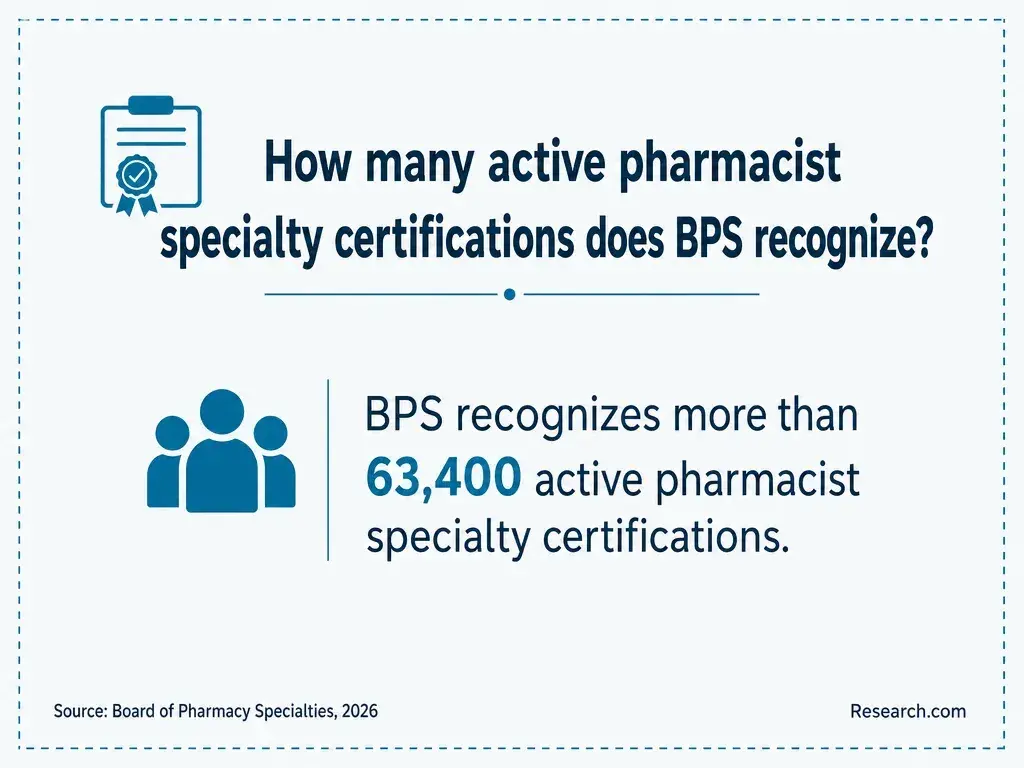
- BPS offers credentials spanning broad pharmacotherapy and focused areas such as oncology, ambulatory care, and sterile compounding; choose according to your actual duties and the eligibility rules for that specialty.
- Board certification is separate from a pharmacist license. Specialty practice experience or qualifying residency training and a certification exam are generally required; a Pharm.D. alone is not enough.
- Certification has application, examination, and ongoing renewal costs. Compare those costs with the roles you can realistically pursue - not with a promised pay increase.
What is pharmacist board certification, and why does specialty matter?
Pharmacist board certification is a voluntary credential awarded after a pharmacist meets a certifying body's eligibility requirements and passes its specialty examination. BPS credentials assess expertise in a defined area of pharmacy practice. They do not grant a state license, expand legal scope of practice, or replace employer training.
Specialty matters because employers may need different evidence of expertise for different jobs. A pharmacist managing chronic conditions in an outpatient clinic might consider ambulatory care certification, while one routinely caring for critically ill inpatients might consider critical care. Pharmacotherapy certification covers a broader range of medication-related clinical decisions and may suit pharmacists whose duties span multiple conditions.
If you have not yet entered pharmacy school, keep the milestones separate: prerequisite coursework, the professional Pharm.D., state licensure, postgraduate training, and certification each serve a different purpose. Doctoral degree length comparisons can help frame the education commitment, but a shorter degree timeline does not waive BPS practice requirements.
Which pharmacy specialties offer board certification through BPS?
The table groups BPS specialty options by the work they most directly reflect. These are practice-fit descriptions, not promises that certification qualifies someone for a particular position; confirm the current specialty listing and eligibility criteria with BPS before applying.
| BPS specialty | Practice fit to investigate |
| Ambulatory care; geriatric pharmacy | Outpatient chronic-disease management; medication care for older adults |
| Pharmacotherapy | Broad clinical medication management across conditions and settings |
| Cardiology; critical care; emergency medicine | Cardiovascular care; intensive care; emergency department practice |
| Infectious diseases; oncology | Antimicrobial therapy and stewardship; cancer-related medication care |
| Pediatric pharmacy; psychiatric pharmacy | Care of children; behavioral health medication management |
| Solid organ transplantation; nutrition support | Transplant medication management; specialized nutrition therapy |
| Nuclear pharmacy; sterile compounding pharmacy | Radiopharmaceutical practice; preparation and oversight of sterile compounded medications |
A specialty name is not an entry-level job description. If you are changing careers and have not established that pharmacist practice is your goal, compare pharmacy programs for career changers before planning around a credential that requires pharmacist eligibility.
What are the eligibility requirements for pharmacist specialty certification?
BPS eligibility is specialty-specific. Applicants generally need an active pharmacist license and must document qualifying specialty practice, an accepted postgraduate residency pathway, or another route expressly permitted for that credential. BPS also specifies how much of an applicant's work must involve the specialty. Passing the exam is required after eligibility is established.
Do not assume a year in any pharmacy job counts as a year of specialty practice. Duties, practice intensity, residency accreditation, and documentation can matter. Nor should a pharmacist assume that coursework or pharmacy school prior learning credits substitute for BPS-required professional practice.
Before choosing an exam, compare your job description and training records with that specialty's current BPS candidate guide. If your duties are split across services, ask BPS whether they satisfy its practice-percentage rule rather than estimating eligibility from your job title.
For a typical U.S.-educated candidate, the path begins with required pre-pharmacy coursework and a professional Pharm.D. from a program accredited by the Accreditation Council for Pharmacy Education (ACPE). Graduates then apply through the state board of pharmacy, meet its supervised-experience and other requirements, and complete the examinations that jurisdiction requires. The North American Pharmacist Licensure Examination (NAPLEX) assesses pharmacy practice knowledge; jurisprudence testing varies by jurisdiction and may involve the MPJE, the UMPJE, or another state process. The board - not the degree, exam, or BPS - issues the license.
Check the board where you intend to practice rather than assuming one state's rules apply elsewhere. If you are still choosing a school, confirm its professional-program accreditation and your intended state's licensure rules; pharmacy school application eligibility is a separate question from eventual licensing or certification eligibility. Internationally educated pharmacists should verify the applicable foreign-graduate and state-board pathway.
A postgraduate year one (PGY1) pharmacy residency builds broad clinical practice experience after pharmacy school; a postgraduate year two (PGY2) residency concentrates on a practice area. Where the relevant BPS specialty accepts the residency route, qualifying training can provide a more direct eligibility path than accumulating practice experience alone. Residency completion does not automatically award certification: candidates still must meet the specialty's rules and pass its exam.
Residencies also have an opportunity cost: they require a substantial supervised training commitment, and positions, stipends, and application procedures vary. Check a program's accreditation, rotations, specialty fit, and participation in the applicable application and Match processes before ranking it. How accelerated Pharm.D. programs work is a different planning issue; shortening a degree pathway does not shorten a residency or waive certification requirements.
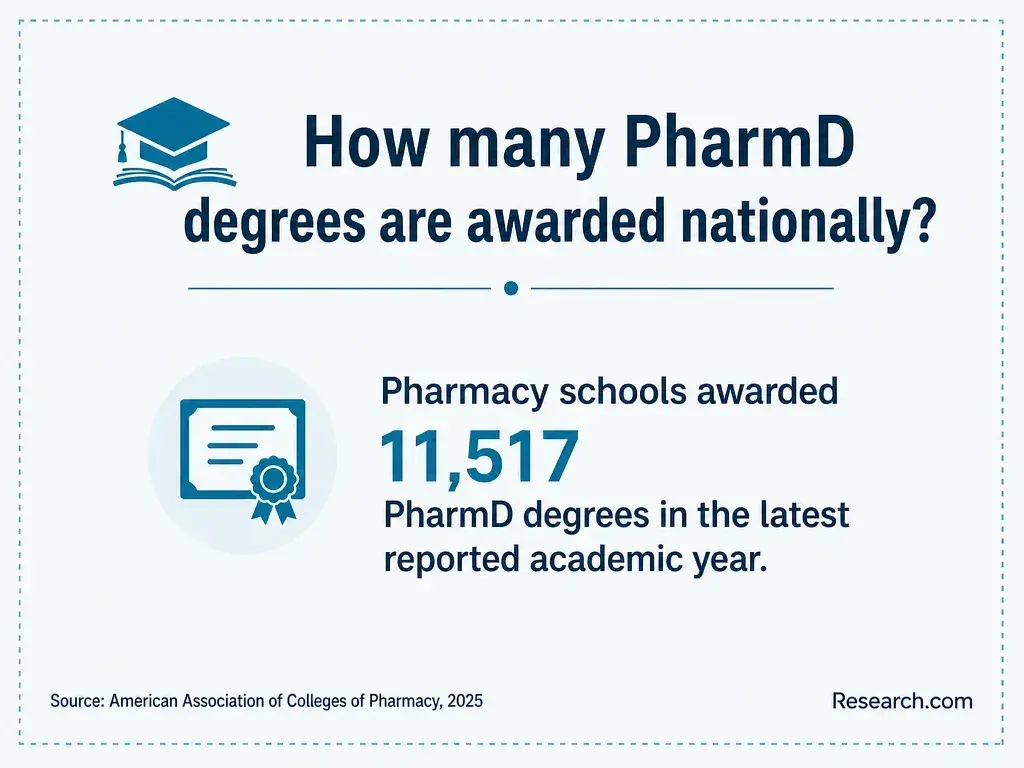
The educational foundation is pharmacist preparation: prerequisite undergraduate study followed by the professional Pharm.D. curriculum, including supervised introductory and advanced pharmacy practice experiences. Pre-pharmacy courses are not themselves a Pharm.D. After licensure, a pharmacist develops specialty expertise through relevant patient-care or technical practice, mentorship, continuing education, and, where appropriate, residency or fellowship training.
Choose training for the work it teaches. Clinical rotations and residencies may be especially useful for direct patient-care specialties; a pharmacist considering sterile compounding or nuclear pharmacy should examine training tied to those practices and the credential's specific rules. Fellowships often emphasize research, industry, or another defined focus and should not be assumed to substitute for an eligible residency or specialty practice.
Applicants building their education plan can examine Pharm.D. programs for students with a pre-pharmacy background, then assess how each program's experiential opportunities support their interests. No school rotation guarantees a later specialty position or BPS eligibility.
Start with the position and practice you want, then work backward to a credential. This avoids paying for an exam that does little for your target role - or selecting a narrow specialty before you have the duties needed to qualify.
Use these checks to narrow the choice:
- Compare current and target job duties with BPS specialty descriptions, not just credential names.
- Read postings from employers you would consider and distinguish required credentials from preferred ones.
- Match your documented experience or planned residency against the exact specialty eligibility rules.
- Ask whether a broader credential, a focused credential, relevant experience, or no certification best addresses the gap.
For prospective students, rotations and access to appropriate practice settings may be more useful selection criteria than a school's list of possible career titles. If considering online Pharm.D. schools to compare, verify required in-person labs and rotations as well as accreditation and state authorization; online instruction does not make clinical training or licensing remote.
Budget for the applicable BPS application and examination fees, preparation materials or courses you choose to buy, possible travel, and future renewal expenses. BPS fees and testing arrangements can change, so use the current specialty candidate materials for a quote rather than relying on an old fee schedule. Ask whether an employer reimburses the initial exam, preparation, or recertification - and what happens if you change jobs.
The timeline depends chiefly on when you meet that specialty's practice or accepted residency requirement, followed by the available examination window. A pharmacist who already has qualifying documented experience may be closer to applying than a new licensee; a residency route still requires completing the qualifying training. If you are financing the degree that precedes all this, pharmacy doctorate financial planning should account for education and licensure costs separately from optional certification.
BPS certification is not a one-time credential. Certification cycles generally run for seven years, with recertification requirements that depend on the specialty and the route selected. Pharmacists may need to complete approved continuing education or assessment activities, meet deadlines, pay fees, and maintain an active license. Check the current BPS recertification guide for your credential before relying on a particular activity or provider.
Keep a record of completed activities as you go rather than assembling evidence near the deadline. State license renewal and its continuing education requirements are separate obligations; one activity may count toward both only when each organization's rules allow it. Likewise, online pharmacy course completion timelines do not establish whether a course qualifies for BPS recertification.
What careers, salaries, and job prospects follow specialty certification?
Certified pharmacists may pursue clinical, ambulatory care, hospital, specialty pharmacy, leadership, or practice-specific roles aligned with their training. Employers set hiring criteria: some prefer a BPS credential, some emphasize residency or demonstrated experience, and some do not require certification. Certification does not guarantee a promotion or higher pay.
The Bureau of Labor Statistics reports median annual pay of $140,910 in May 2025 for pharmacists and projects 5% growth from 2025-2035, with about 12,500 openings per year. These occupation-wide figures do not isolate BPS-certified pharmacists or establish a specialty salary premium.
For a career decision, compare actual postings, compensation, training time, and certification support in your desired market. If you are still weighing the degree itself, consider pharmacy program value and duration alongside the added time required to become eligible for specialty certification.
Other Things You Should Know About PharmD
Yes, provided the pharmacist independently meets each specialty's eligibility, examination, and renewal requirements. Multiple credentials also mean multiple ongoing obligations.
No. Pharmacy technician credentials follow separate pathways and do not confer pharmacist licensure or eligibility for a BPS pharmacist specialty credential.
Potentially, but the pharmacist must meet the applicable BPS eligibility rules, including licensing requirements. Foreign education alone does not establish U.S. pharmacist licensure; check the relevant state board and BPS specialty guide.
After BPS awards the certification. Completing training, applying, or passing a practice exam does not authorize someone to present themselves as board-certified.
- Licensing And Certification Tests And Prep Courses | Veterans Affairs https://www.va.gov/education/about-gi-bill-benefits/how-to-use-benefits/licensing-and-certification-tests/
- Standard Certificate Renewal and Continuing Professional Education (CPE) Information | Texas Education Agency https://tea.texas.gov/educators/certification/certification-renewals/standard-certificate-renewal-and-continuing-professional-education-cpe-information
- Licensure | Oregon State University https://education.oregonstate.edu/licensure
- 20 Types of Pharmacists [+ Required Skills & Salary] | Marshall University https://www.marshall.edu/blog/types-of-pharmacists/
- Rewards, recognition, and advancement for clinical pharmacists | wiley.com https://accpjournals.onlinelibrary.wiley.com/doi/10.1002/jac5.1775
- White Paper: Value of Specialty Certification in Pharmacy | sciencedirect.com https://www.sciencedirect.com/science/article/abs/pii/S1544319115317921
- Board of Pharmacy Specialties (BPS) | bpsweb.org https://bpsweb.org/
- Frequently Asked Questions About Board Certification | accp.com https://www.accp.com/careers/boardFAQ.aspx
- About the Certification in Public Health (CPH) | NBPHE https://www.nbphe.org/certified-in-public-health/


