
How to become a board-certified infectious diseases pharmacist

Co-Founder and Chief Data Scientist
Becoming a board-certified infectious diseases pharmacist takes more than an interest in antibiotics. You need a pharmacist license, qualifying specialty experience or residency training, and a passing result on the Board of Pharmacy Specialties exam. For prospective Pharm.D. students and licensed pharmacists alike, the important decision is which training route fits the work they want to do—and whether certification is necessary for their target jobs.
This guide separates requirements from employer preferences, explains the routes to eligibility, and shows what to verify before investing in additional education or training.
Key Things You Should Know
- The Board of Pharmacy Specialties (BPS) awards the Board Certified Infectious Diseases Pharmacist (BCIDP) credential; it does not issue a pharmacist license.
- Eligible pharmacists can pursue BCIDP through qualifying infectious diseases practice, a PGY1 residency plus qualifying practice, or a qualifying PGY2 infectious diseases residency. Check BPS's current experience criteria before applying.
- U.S. pharmacists had a median annual pay of $140,910 in May 2025, but that figure covers all pharmacists—not BCIDP holders specifically.
What Does a Board-Certified Infectious Diseases Pharmacist Do?
A BCIDP is a licensed pharmacist who has demonstrated specialized knowledge through BPS certification. Infectious disease pharmacists evaluate antimicrobial therapy, recommend drug selection and dosing, monitor safety, interpret microbiology results, and work with clinicians to improve treatment. Many participate in antimicrobial stewardship: organized efforts to use antibiotics and other antimicrobials appropriately while limiting avoidable harm and resistance.
The credential signals specialty expertise; it does not grant independent prescribing authority or expand a pharmacist's legal scope of practice. Those rules depend on the state and practice arrangement. If your goal is a pharmacy-related support role rather than licensed clinical decision-making, consider shorter online pharmacy education options before committing to a Pharm.D. and specialty training.
What Are the Requirements to Become Board-Certified in Infectious Diseases Pharmacy?
BPS requires qualifying pharmacy education, an active pharmacist license or registration, specialty eligibility, and a passing score on its infectious diseases pharmacy certification exam. Board certification is an additional credential, not a substitute for licensure.
The main eligibility routes differ in how they establish infectious diseases expertise. Verify the current BPS candidate guide before relying on a particular job or residency to qualify:
- Complete the required period of infectious disease pharmacy practice, with the required share of work devoted to specialty activities.
- Complete a qualifying postgraduate year one (PGY1) pharmacy residency, followed by the required period of infectious diseases practice.
- Complete a qualifying postgraduate year two (PGY2) infectious diseases pharmacy residency.
Keep descriptions of your duties, dates, supervisors, and residency documentation; a job title alone may not establish that your practice meets BPS criteria. If you have not entered pharmacy school, explore pharmacy admission pathways for nontraditional students first. Admission flexibility does not waive later licensure or BPS requirements.
What Education and Training Does an Infectious Diseases Pharmacist Need?
The usual U.S. path starts with required undergraduate pre-pharmacy coursework, followed by the professional Doctor of Pharmacy (Pharm.D.) curriculum. Prerequisite courses are not themselves a pharmacy degree, and schools differ on whether applicants need a bachelor's degree. Students then complete classroom learning and supervised clinical experiences before seeking pharmacist licensure.
Infectious disease preparation builds on pharmacotherapy, microbiology, pharmacokinetics, patient assessment, and interpretation of clinical evidence. During pharmacy school, seek relevant advanced pharmacy practice experiences, projects, and mentors. Those experiences can help you test your interest, but they do not replace the post-licensure experience or residency required for BCIDP eligibility. Students entering from another science major can review Pharm.D. admission after pre-pharmacy coursework while checking each school's exact prerequisites.
For the conventional U.S.-educated route, choose a professional Pharm.D. program accredited by the Accreditation Council for Pharmacy Education (ACPE). ACPE accredits education programs, not individual pharmacists. An institution's general accreditation, a pharmaceutical sciences degree, or a pharmacy technician credential is not the same as completion of an ACPE-accredited professional pharmacy program.
BPS also publishes education eligibility rules for pharmacists educated outside the United States; those rules should not be confused with a state board's separate requirements for obtaining a U.S. license. Before enrolling, verify the program's current ACPE status and confirm that its degree meets the requirements of the state where you intend to seek licensure. For online pharmacy education options, also check in-person laboratory and rotation requirements and any relevant state authorization. Online instruction does not make clinical training fully remote.
An active pharmacist license or registration is a BPS eligibility requirement. In the United States, a state board—not BPS or a pharmacy school—decides whether an applicant receives a pharmacist license. Graduating with a Pharm.D. and passing the North American Pharmacist Licensure Examination (NAPLEX) do not, by themselves, issue one. State-specific application, experience, background-check, and law-exam requirements may also apply; do not assume every jurisdiction uses the same jurisprudence exam.
Plan backward from the state where you want to practice, especially if you may attend school or complete rotations elsewhere. Even when comparing pharmacy programs with varied admission routes, treat admission eligibility and eventual licensure eligibility as separate checks. Maintaining the license required by BPS matters after certification as well as before the exam.
A PGY1 residency develops broad clinical pharmacy practice; a PGY2 infectious diseases residency provides focused specialty training. The sequence is a strong fit if you want structured mentorship, substantial infectious disease exposure, and to compete for positions that prefer residency-trained applicants. Qualifying practice-based routes mean residency is not universally required for BCIDP certification, although particular employers may prefer it.
Residencies also involve applications, possible relocation, and time spent in training rather than a permanent position. Confirm an individual program's accreditation, prerequisites, application process, and participation in the ASHP Match rather than assuming every opportunity follows identical rules.
A fellowship may emphasize research or another specialized aim; do not assume it counts as a qualifying residency. If you are still choosing a degree, compare Pharm.D. completion pathways separately from postgraduate training: finishing pharmacy school sooner does not eliminate licensure or BPS eligibility requirements.
The BPS infectious diseases pharmacy exam assesses application of specialty knowledge, not simply recall of drug names. Preparation should cover the current BPS content outline, including patient assessment, microbiology and diagnostic information, antimicrobial selection and monitoring, prevention, stewardship, practice management, and evaluation of evidence. Use the current outline to identify weaknesses before selecting review materials; exam content and policies can change.
Certification preparation comes after qualifying professional education, licensure, and specialty experience or training. Comparisons of online pharmacy program length are not shortcuts to exam eligibility: a shorter pharmacy-related program may lead to a different credential rather than a licensable Pharm.D.
Budget for the full path, not just the exam. BPS charges certification-related fees, and ongoing certification has maintenance or recertification obligations. Check the current BPS fee schedule before applying rather than relying on an older advertised amount. Your larger costs may include Pharm.D. tuition and required fees, licensure expenses, review resources, and travel or relocation for specialty training. A residency may reduce the time available for other paid work.
If you have not yet enrolled in pharmacy school, compare online Pharm.D. costs using total required expenses, including in-person clinical placements and travel—not tuition alone. Check current financial-aid eligibility for your enrollment period; federal borrowing rules changed for many new graduate and professional borrowers beginning July 1, 2026. Certification is most defensible financially when it supports a role you actually want, not an assumed salary increase.
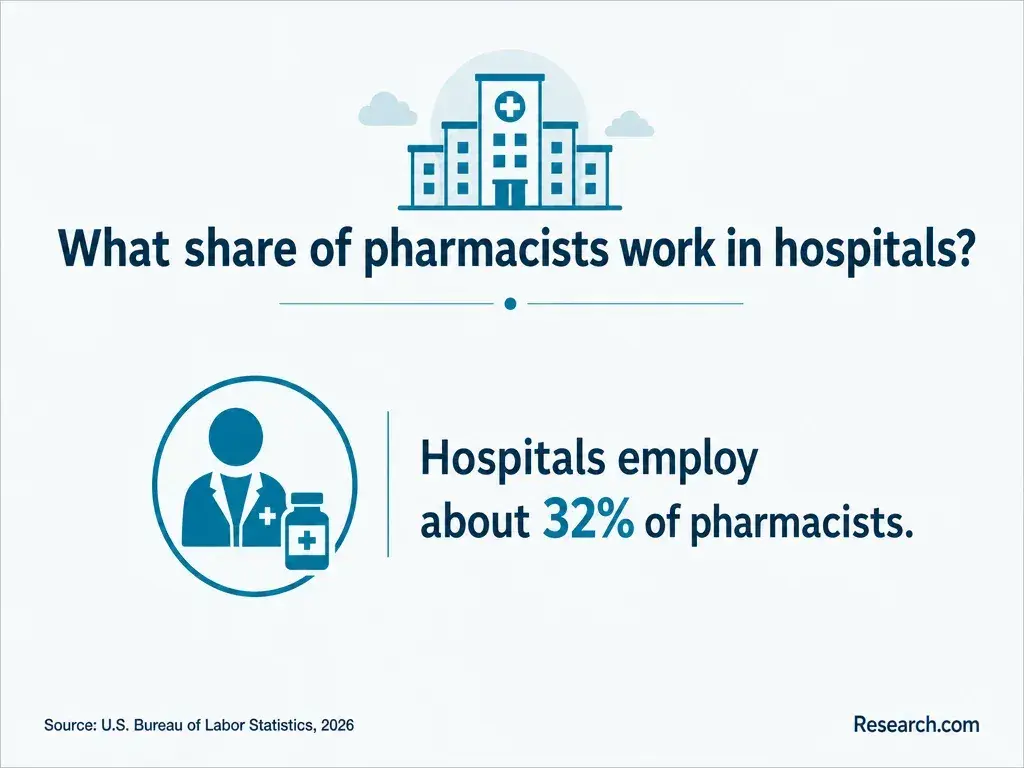
Common settings include hospitals, health systems, antimicrobial stewardship programs, outpatient infectious diseases services, and organizations involved in infection prevention or public health. Work may center on direct patient consultations, development of treatment guidance, education, research, or analysis of antimicrobial use. Responsibilities and hiring criteria vary by employer; an infectious diseases pharmacist position does not always require BCIDP.
Review actual job postings in your preferred setting before choosing a training route. If you are changing careers, ask prospective Pharm.D. programs how they evaluate prior coursework; transfer coursework toward pharmacy prerequisites may reduce repeated study, but the receiving school decides what it accepts. Prior science or healthcare experience can be useful without replacing pharmacist education and licensure.
What Salary and Job Outlook Can Infectious Diseases Pharmacists Expect?
The Bureau of Labor Statistics reports a median annual pay of $140,910 in May 2025 for pharmacists and projects 5% employment growth from 2025 to 2035, with about 12,500 openings per year. These are occupation-wide figures, not a BCIDP salary or a forecast for infectious disease positions. Setting, location, experience, and responsibilities can affect an individual offer.
Use local job postings and actual compensation offers to evaluate whether additional training fits your goals. When weighing education costs against future earnings, even a comparison of online doctorate lengths must distinguish a licensable Pharm.D. from unrelated doctoral degrees. A shorter doctorate cannot substitute for the pharmacist credentials an infectious disease role requires.
Other Things You Should Know About PharmD
No. A student can pursue infectious diseases coursework, rotations, and projects, but must meet applicable pharmacist licensure requirements before practicing as a pharmacist.
No. Stewardship is an important area of work focused on appropriate antimicrobial use. Infectious diseases pharmacy also encompasses individual treatment decisions, monitoring, education, and other specialty activities.
Maintaining the credential requires following BPS's current recertification and other continuing requirements. Check the BPS schedule when planning how you will document ongoing specialty learning.
Ask how much of their work involves direct patient care versus stewardship or policy, what training their employer expects, and which experiences helped them qualify for the role. Their answers can help you judge whether the daily work - not just the credential - fits your interests.
- Infectious diseases pharmacy residency programs - PMC - NIH https://pmc.ncbi.nlm.nih.gov/articles/PMC7110091/
- PGY2 Infectious Disease Pharmacy Residency | upenn.edu https://departments.med.upenn.edu/academic-departments/locations/penn-presbyterian-medical-center/pharmacy-residency/infectious-disease-pharmacy-residency
- Infectious Diseases Pharmacy Residency Curriculum | NYU Langone Health https://medli.nyu.edu/education/other-educational-programs/pharmacy-residency-programs/pgy-2-infectious-diseases-pharmacy-residency
- Upcoming Deadlines, Dates, and Fees | bpsweb.org https://bpsweb.org/upcoming-deadlines-dates-and-fees/
- BCIDP - Board Certified Infectious Diseases Pharmacist https://careers.ashp.org/career-resources/on-the-job-3/bcidp-board-certified-infectious-diseases-pharmacist-a-practical-guide-for-health-system-pharmacy-professionals-116
- Board Certified Infectious Diseases Pharmacist | Credly https://www.credly.com/org/board-of-pharmacy-specialties/badge/board-certified-infectious-diseases-pharmacist
- BCIDP - Board Certified Infectious Diseases Pharmacist https://careers.accp.com/career-resources/on-the-job-3/bcidp-board-certified-infectious-diseases-pharmacist-a-practical-guide-for-clinical-pharmacy-professionals-142


