PharmD state authorization verification checklist

Co-Founder and Chief Data Scientist
A Pharm.D. program can accept your application yet still require separate checks before you can study from your state, complete local rotations, or qualify for pharmacist licensure there. That distinction matters most when a program teaches online or places students across state lines. This checklist helps prospective students document each approval, identify questions the school cannot answer on its own, and compare programs before paying a deposit. You will leave with a practical way to decide whether a program works in the state where you will study, train, and seek a license.
Key Things You Should Know
- Confirm three separate matters: permission to enroll from your location, permission and capacity for required clinical placements, and eligibility to pursue licensure in your intended state.
- Check the specific professional Pharm.D. program's current ACPE status; institutional accreditation or permission to teach online is not a substitute.
- Get written answers for your state and expected start term before paying a nonrefundable deposit; authorization and pharmacy-board requirements can change.
What is a PharmD state authorization verification checklist?
It is a record of whether a Doctor of Pharmacy (Pharm.D.) program can enroll you where you live and support the education you need for your intended pharmacist license. State authorization concerns an institution's permission to offer education to students in a state. It is not the same as Accreditation Council for Pharmacy Education (ACPE) accreditation, approval of a clinical site, or a pharmacy board's determination of licensure eligibility.
Keep those decisions separate when comparing schools. Even pharmacy program applicant requirements answer a different question: meeting admissions criteria does not establish that you can enroll or complete rotations from your state.
This comparison record gives you a place to capture each program's answer and its source. Leave a field unresolved rather than treating a verbal assurance as approval.
How do you verify a PharmD program's authorization in your state?
Start with the state where you will physically participate in coursework, not just the school's location. A school's disclosures may describe authorization, an exemption, or participation in a reciprocity arrangement; the important point is whether its current arrangement covers your program, location, and start term. Flexible admissions do not remove this check: pharmacy programs with flexible entry requirements must still address where students may enroll.
Use this sequence before accepting an offer:
- Tell the school's state-authorization or compliance office where you will live during coursework and whether you expect to move.
- Request its current written disclosure for Pharm.D. students in that state, including any enrollment restrictions or conditions.
- Ask whether the disclosure covers the entire pathway or whether in-person labs and rotations require separate review.
- Check the relevant state higher-education agency's current authorization information if the school's explanation is unclear or conditional.
- Save the response, its date, the staff contact, and any conditions in your comparison record.
Decision rule: If the school cannot confirm your enrollment status in writing, treat authorization as unresolved - not as an implied yes.
Does a PharmD program meet your state's pharmacist licensure requirements?
Ask the board of pharmacy in the state where you intend to practice. The board - not an admissions office - determines how its education, supervised experience, examinations, and application rules apply to you. State authorization to enroll does not mean that completing the degree will satisfy every licensing condition.
Send the board the school's name, the exact Pharm.D. pathway, its ACPE status, your expected graduation date, and the states where you expect to complete rotations. Ask whether its rules impose conditions on intern registration, experience credit, or education delivered across state lines. Keep the board's written reply. If you already have undergraduate science coursework, remember that pharmacy programs for students with science credits may evaluate those credits for admission, but pre-pharmacy coursework is not the professional Pharm.D. curriculum.
If the board directs you to a statute, regulation, or application instructions, record that reference and confirm it still applies near graduation. A favorable preliminary response is useful planning evidence, not a license or a promise of future approval.
Verify the specific professional Pharm.D. program in ACPE's current program directory or accreditation records. Record the school and program name, listed status, any relevant conditions, and the date you checked. If the pathway is new or its status is changing, ask ACPE and the intended licensing board how that status affects your expected graduation cohort.
Institutional accreditation addresses the institution; ACPE accreditation addresses its professional pharmacy program. Neither establishes that the school may enroll you from your state or place you at a particular clinical site. A listing among online doctoral degree options likewise says nothing by itself about professional Pharm.D. accreditation or pharmacist licensure eligibility.
Pause before depositing if a school substitutes institutional accreditation for an answer about ACPE status, or describes an accreditation application as though approval has already been granted.
Online coursework does not make a professional Pharm.D. fully remote. Schools may require scheduled live classes, campus visits, hands-on labs, in-person assessments, and supervised pharmacy practice at approved sites. These obligations may occur in different states and trigger different school, site, or student requirements. Compare pharmacy doctorate programs with distance learning using their published schedules and placement policies rather than the word "online" alone.
Get a separate written answer for your proposed rotation state: Does the school arrange sites, approve student-proposed sites, or require travel when local capacity is unavailable? Ask who confirms any state permissions for the placement and whether a move during the program changes your eligibility. A school that can enroll you online may still be unable to secure an acceptable nearby rotation.
For a U.S.-educated applicant, the usual sequence is a qualifying professional pharmacy education, applicable supervised experience and intern registration, required examinations, and a state-board application. The North American Pharmacist Licensure Examination (NAPLEX) tests pharmacy practice knowledge; a jurisdiction may also require a jurisprudence examination or another assessment. Check the National Association of Boards of Pharmacy (NABP) and your board for the current exam, eligibility, and application rules. Do not assume every jurisdiction uses the MPJE; some began transitioning to the UMPJE in 2026.
Shorter-looking pathways need particular scrutiny. A listing of accelerated online pharmacy degree pathways may include credentials that are not professional Pharm.D. programs and do not qualify graduates to seek pharmacist licensure. Internationally educated pharmacists may face a different certification and licensing route. In every case, passing an examination or earning a degree does not itself issue a pharmacist license.
Pharm.D. experiential education includes introductory pharmacy practice experiences (IPPEs) and advanced pharmacy practice experiences (APPEs). Ask each school for its current schedule, settings, site-assignment process, preceptor requirements, and policies for missed or unavailable placements. The school's published requirements - not a general description of pharmacy education - should guide your planning.
Before relying on a local placement, verify who approves the site and who obtains any required affiliation agreement. Ask what you must arrange yourself, such as intern registration, background checks, immunizations, transportation, or temporary housing. Also ask whether employment at a pharmacy can count; do not assume it can. Even accelerated pharmacist education must account for the pathway's required experiential work, so a shorter academic calendar does not necessarily mean less time away from work.
A local-site preference is not a guaranteed assignment. If a program cannot explain what happens when nearby capacity disappears, include possible travel and schedule disruption in your decision.
Create a dated folder for each school so you can distinguish confirmed facts from questions still awaiting an answer. These records are particularly important when admissions, compliance, experiential education, and the licensing board provide different parts of the picture.
Collect the following before paying a deposit:
- The school's written state-authorization disclosure for your location and start term.
- The current ACPE professional-program listing or status record, with the date checked.
- The state board's written guidance or referenced requirements for your intended licensing route.
- The program's current catalog, delivery schedule, campus-visit requirements, and IPPE/APPE placement policies.
- Written estimates of tuition, required fees, and likely travel costs, plus the deposit and refund terms.
- Any written evaluation of your prerequisites or proposed transfer credit.
If you are comparing pharmacy programs with transfer pathways, keep the receiving school's course-by-course decision. Acceptance of undergraduate prerequisites does not imply transfer into the professional Pharm.D. curriculum. Mark any missing authorization, placement, or board response as unresolved and follow up before committing.
Compare the cost and calendar of the entire pathway you would actually complete, including remaining prerequisites, professional tuition, mandatory fees, campus travel, rotation travel or housing, and time away from paid work. The cheapest advertised tuition may not produce the lowest total cost. Use online Doctor of Pharmacy tuition as a starting point, then request each school's current, itemized estimate for your circumstances.
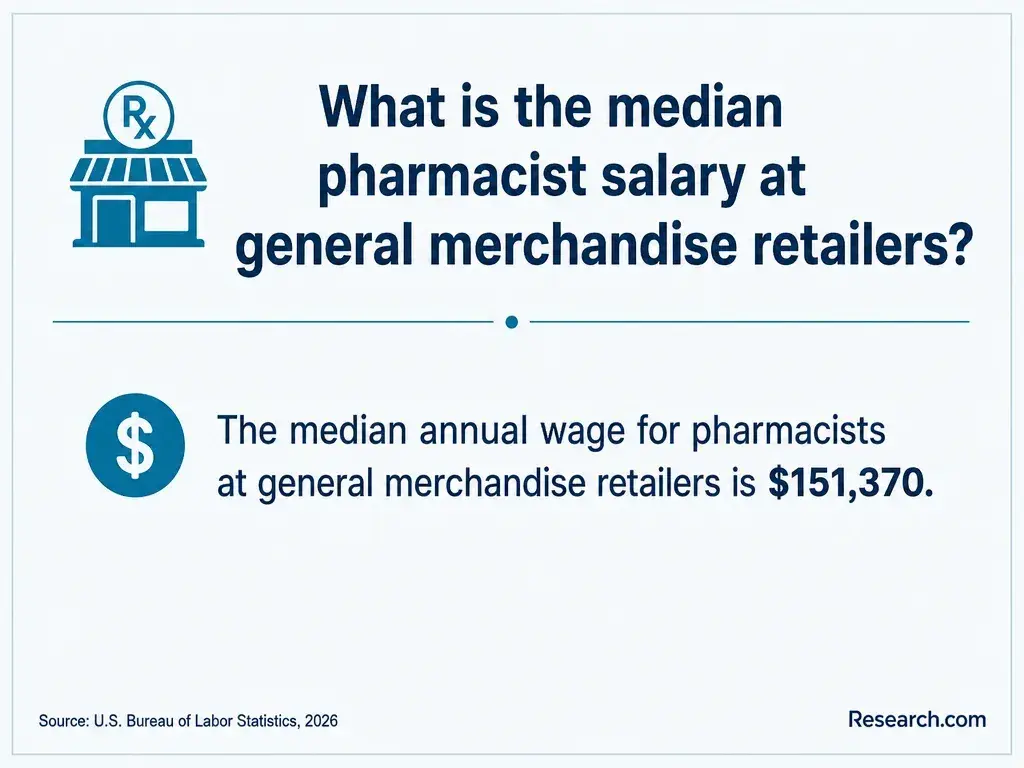
The Bureau of Labor Statistics reports pharmacists' median annual pay at $140,910 in May 2025. That occupation-wide figure is career context, not an earnings forecast for a particular graduate or a reason to overlook additional borrowing.
Compare live-class hours, required campus visits, rotation blocks, and the earliest realistic graduation date alongside cost. For students borrowing federally, confirm the applicable aid year and individual eligibility with each financial aid office: federal rules changed for many new graduate and professional borrowers beginning July 1, 2026. Do not budget on the assumption that an older borrowing arrangement still applies.
Which questions should you ask a school before enrolling in its PharmD program?
Send one written request to admissions and ask it to route specialized questions to state-authorization, experiential-education, and financial-aid staff. A specific answer tied to your location is more useful than a general assurance that graduates practice nationwide.
These questions test the conditions most likely to affect whether you can finish the program as planned:
- Can you enroll a Pharm.D. student living in my state for my intended start term, and where is that status documented?
- Which in-person visits, live sessions, and rotation blocks are required, and when are they scheduled?
- Can required rotations occur in my preferred state, who secures and approves sites, and what happens if no local site is available?
- What is this exact program's current ACPE status, and are there conditions relevant to my cohort?
- What written information can you provide to help my intended pharmacy board evaluate education and experience eligibility?
- What are my itemized costs, likely travel obligations, deposit terms, and financial aid options under the rules applicable to my start date?
When reviewing pharmacy program tuition and length, compare the school's answers against your documented state and board checks. Enroll only when the essential approvals are confirmed and the remaining costs and travel obligations are workable; otherwise, ask for a written resolution or consider a different program.
Other Things You Should Know About PharmD
Notify the school before moving. Your new location may change enrollment eligibility, placement options, or other requirements, even if your courses remain online.
Not necessarily. Save the dated answer and reconfirm it if you move, change pathways, defer enrollment, or learn that a school's authorization status has changed.
Do not assume so. The program must explain its site-approval process, and your employer may not meet a rotation's setting, supervision, or scheduling requirements.
No. Pharmacy technician and pharmacist are different roles with different education and legal requirements. Technician experience may be useful preparation, but it does not replace a professional Pharm.D. or a pharmacist license.
- NYS Pharmacy: License Requirements - Office of the Professions https://www.op.nysed.gov/professions/pharmacist/license-requirements
- Pharmacy | Department of State https://www.pa.gov/agencies/dos/department-and-offices/bpoa/boards-commissions/pharmacy
- Pharmacist Licensure by Exam - Texas State Board of Pharmacy https://www.pharmacy.texas.gov/applicants/pharmacist-exam.asp
- Pharmacy Public Resources | iowa.gov https://dial.iowa.gov/licenses/health-professions/pharmacy/pharmacy-public-resources
- South Carolina Board of Pharmacy - SCLLR https://llr.sc.gov/bop/
- Pharmacist Renewal - Florida Board of Pharmacy https://floridaspharmacy.gov/pharmacist-renewal/
- Experiential Education | Washington State University https://pharmacy.wsu.edu/pharmd/experiential-services/
- Accreditation - UM College of Pharmacy - University of Michigan https://pharmacy.umich.edu/about/accreditation/