PharmD Healthcare Systems Curriculum

Co-Founder and Chief Data Scientist
A Pharm.D. program may promise preparation for "healthcare systems," but that phrase alone says little about what you will study or practice. If you hope to work in a hospital, health plan, ambulatory clinic, or pharmacy operations, the curriculum and clinical placements matter more than the label. This guide explains what systems-focused training typically includes, how to assess a school's actual offerings, and where accreditation, cost, licensure, and postgraduate training affect your decision.
Key Things You Should Know
- A strong healthcare systems curriculum connects medication-use policy, safety, financing, and population health to supervised patient care - not just lectures about hospital administration.
- Compare each school's published courses and introductory and advanced practice placements; a systems-focused elective does not guarantee a hospital or health-plan rotation.
- The U.S. pharmacist median annual pay was $140,910 in May 2025, but that occupation-wide figure does not predict pay for a particular healthcare systems role or justify any program's cost by itself.
What is a PharmD healthcare systems curriculum?
A Doctor of Pharmacy (Pharm.D.) healthcare systems curriculum is the part of a professional pharmacy degree that examines how organizations deliver, finance, evaluate, and improve medication-related care.
It may cover health policy, formulary decisions, quality improvement, access to medicines, and coordination among care teams. Schools may integrate these subjects throughout the degree rather than offer a formally named "healthcare systems" track.
This is professional Pharm.D. education, not undergraduate pre-pharmacy coursework. Prior study in biology, chemistry, or another science may satisfy some admission prerequisites, but it ordinarily does not replace professional coursework or supervised practice.
Students comparing an online Pharm.D. for students with prior science study should confirm exactly which earlier credits meet prerequisites and which, if any, apply to the professional degree.
Look for a progression from learning how a medication-use system works to analyzing its performance and making supervised, evidence-based improvements. A concentration name alone is weaker evidence than course descriptions, assignments, and available practice sites.
What courses are included in a PharmD healthcare systems curriculum?
Course titles vary, and healthcare systems content may be embedded in broader classes. This table shows common subject areas and the work that would make each one relevant to a future pharmacist.
| Subject area | What students may learn to do | What to check in a curriculum |
| Healthcare delivery and policy | Explain how care settings, regulation, insurance, and access affect medication use. | Whether students apply policy concepts to realistic patient or organizational cases. |
| Pharmacoeconomics and population health | Compare medication-related costs and outcomes across groups of patients. | Whether coursework includes appraisal of evidence rather than cost alone. |
| Medication safety and quality improvement | Investigate process failures and propose measurable changes. | Whether students complete a project using a defined problem and outcome measure. |
| Pharmacy operations and informatics | Examine workflows, data, and technology that support dispensing and clinical decisions. | Whether students get supervised practice with relevant workflows or tools, rather than only hearing about them. |
These subjects complement - not replace - pharmacotherapy, patient assessment, counseling, and other clinical training. When comparing schools, ask for the current course sequence and distinguish an available elective from a required course.
If you hope to transfer courses into a pharmacy degree, obtain a school-specific credit evaluation; acceptance of undergraduate prerequisites does not mean professional Pharm.D. courses will transfer.
How does a PharmD prepare students for healthcare systems careers?
Classroom work provides the framework; experiential education tests whether students can use it. Introductory pharmacy practice experiences (IPPEs) introduce supervised practice, while advanced pharmacy practice experiences (APPEs) involve more substantial rotations later in the professional curriculum.
Depending on the school and available sites, students may encounter hospital medication distribution, ambulatory care, transitions of care, managed care, or medication safety work.
For a systems-oriented career, investigate what students do during those experiences: review a workflow, assess drug-use data, contribute to a quality project, or present a formulary recommendation under supervision.
Ask which rotations are required, which are competitive electives, who arranges placements, and whether travel is likely. Schools and sites may also require intern registration, health documentation, background checks, or other clearances.
A systems focus can add value, but it also carries opportunity costs if electives, travel, or postgraduate training extend the path to a desired job. Use pharmacy degree planning for cost and time as a starting point, then compare each Pharm.D. program's actual clinical schedule and total expenses rather than assuming the shortest advertised pathway offers equivalent preparation.
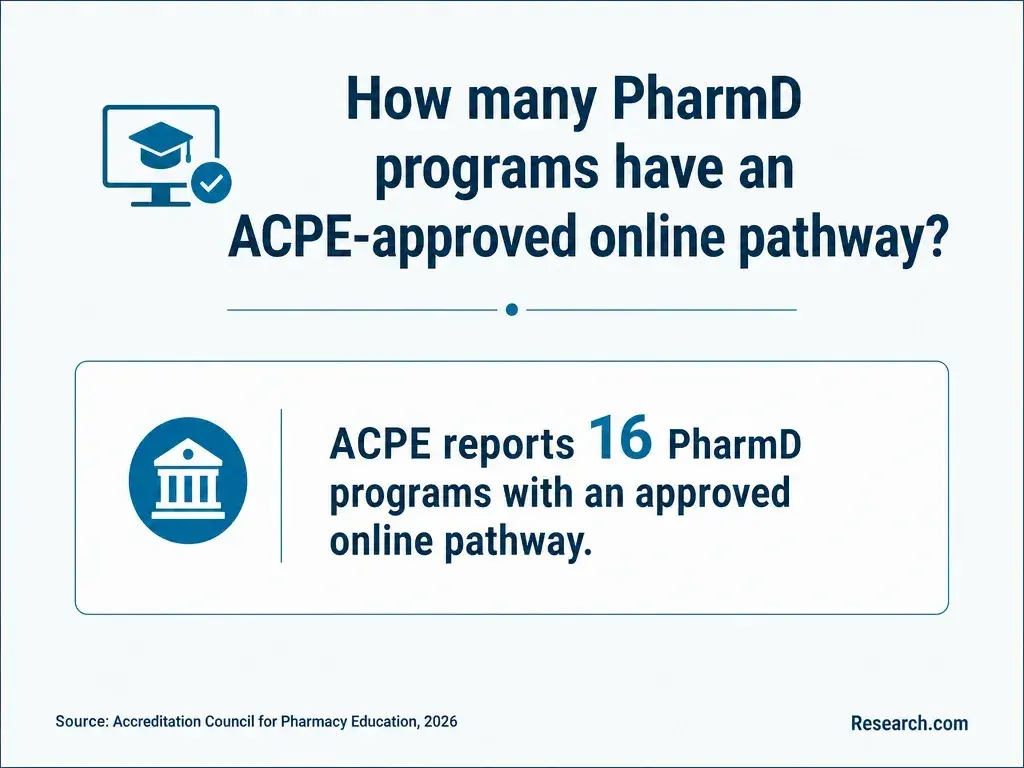
For a U.S. professional Pharm.D. program, verify its current status with the Accreditation Council for Pharmacy Education (ACPE). ACPE accredits the professional pharmacy program, not individual pharmacists. A college's institutional accreditation is a separate matter, as is a distance-learning program's authorization to enroll a student in a particular state.
Check the exact institution, campus or pathway, and accreditation status rather than relying on a general statement that a university is accredited.
This matters especially when reviewing pharmacy doctorate programs with distance learning: online delivery does not remove in-person practice requirements, and state authorization does not itself establish eligibility for pharmacist licensure. Ask the school and your intended licensing board about any jurisdiction-specific constraints before enrolling.
Admission generally involves specified undergraduate prerequisites and a review of academic preparation and other application materials. The required courses, laboratories, grades, credit totals, bachelor's-degree policy, interviews, and deadlines differ by school.
Some programs use the Pharmacy College Application Service (PharmCAS); others may have different application procedures or additional school-specific steps. The Pharmacy College Admission Test (PCAT) was retired in January 2024, so it is not a current exam applicants can plan to take.
Some schools permit an application while prerequisites are in progress, provided the required work is finished before enrollment. If you plan to apply to pharmacy school while finishing prerequisites, check the school's completion deadline, accepted course formats, laboratory rules, and treatment of repeated or older courses. Meeting a published minimum makes an application eligible for consideration; it does not guarantee admission.
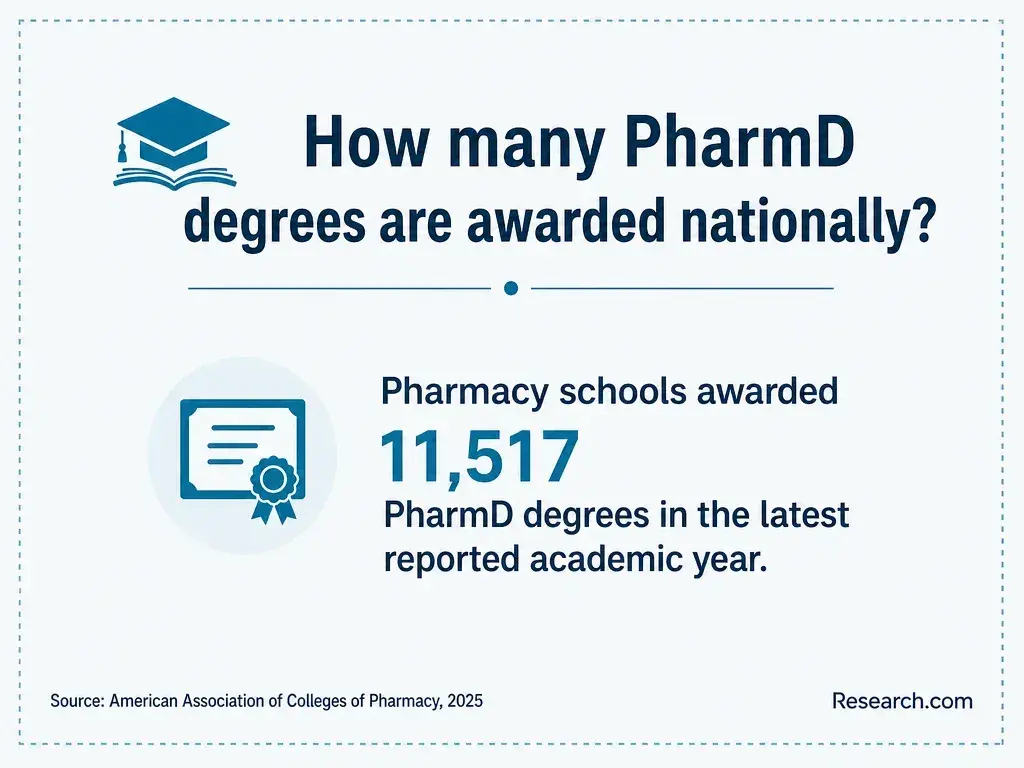
The professional Pharm.D. commonly takes four academic years after prerequisites, although schools may offer different calendars or accelerated formats. Applicants who still need undergraduate prerequisites must add that time. Required course sequencing and in-person practice experiences limit how much a student can compress the schedule.
When evaluating Pharm.D. completion pathways, compare the calendar from your current starting point - not just the advertised professional-phase length.
Check whether the schedule leaves room for paid work, when IPPEs and APPEs occur, and whether an accelerated calendar changes tuition, living costs, or access to desired electives. A shorter calendar is advantageous only if you can meet its academic and financial demands.
Some Pharm.D. pathways deliver parts of their academic instruction online, but online does not necessarily mean asynchronous, self-paced, or fully remote. Programs may require live classes, campus visits, hands-on assessments, and in-person IPPEs and APPEs. A student's current pharmacy job should not be assumed to count as a rotation.
Request a written schedule of required campus attendance and clinical experiences before comparing an online Doctor of Pharmacy price range. Tuition is only part of the comparison: technology, campus travel, temporary housing, rotation transportation, and time away from work can materially change the cost. Also ask who secures or approves sites near your home and whether placement in your preferred location is possible, not merely permitted in principle.
Graduates need a pharmacist license from the jurisdiction where they intend to practice. A Pharm.D. degree does not issue that license. State boards determine eligibility and requirements, which commonly include the North American Pharmacist Licensure Examination (NAPLEX) and any applicable law examination or other state-specific steps.
Do not assume every jurisdiction uses the Multistate Pharmacy Jurisprudence Examination (MPJE); requirements, including use of the Uniform Multistate Pharmacy Jurisprudence Examination (UMPJE), can vary.
This distinction is important when evaluating claims about fastest online pharmacy degree programs. A shorter pharmacy-related credential, such as technician training or a pharmaceutical sciences degree, is not automatically an entry-level Pharm.D. or a route to pharmacist licensure. Before committing, confirm the credential awarded and review your intended state board's current education, examination, and application rules.
Licensed pharmacists may pursue roles in hospital pharmacy, ambulatory care, health plans, medication safety, specialty pharmacy, informatics, or pharmacy operations. Responsibilities differ: a clinical pharmacist may focus on patients and care teams, while a medication safety pharmacist may analyze system failures and improvement measures. Employer expectations also differ, so a relevant rotation or project may matter as much as a concentration title.
Some positions favor postgraduate training. A postgraduate year one (PGY1) residency builds broad practice experience; a postgraduate year two (PGY2) residency offers more specialized training.
Fellowships generally serve different, often research- or industry-oriented goals. Board certification is a separate professional credential, not a substitute for state licensure, and none of these options is universally required for systems-related employment.
If your goal is to practice as a pharmacist, compare the admissions and training requirements of pharmacy schools with accessible admissions without treating ease of entry as evidence of curriculum quality. If your goal is primarily health data analysis, administration, or technician work rather than pharmacist practice, compare those occupations' required credentials before taking on a professional Pharm.D.
What are pharmacist salaries and job outlook projections?
According to the Bureau of Labor Statistics, pharmacists had median annual pay of $140,910 in May 2025, with 5% projected job growth from 2025-2035 and about 12,500 openings per year projected. These figures describe pharmacists as a broad occupation; they do not isolate hospital informatics, managed care, or other healthcare systems positions. Location, employer, experience, and role can affect an individual offer.
Compare that broad salary benchmark with a program's full educational cost and the time until you can seek licensure. General online doctorate time to completion comparisons are not a substitute for a Pharm.D. program's required professional courses and rotations.
Ask schools for current tuition and mandatory fees, estimate travel and living costs, and check current aid terms for your own enrollment period; federal borrowing rules changed for many new graduate and professional borrowers beginning July 1, 2026.
Other Things You Should Know About PharmD
Not necessarily. Review the hospital-relevant courses, rotation opportunities, and hiring requirements for the roles you want. A named concentration can help organize your studies, but it is not a universal hiring requirement.
Not for every management position. Employers may value operational experience, leadership, and project results; some roles prefer additional business training. Check actual job postings before paying for another degree.
Coding can be useful in some data-focused positions, but informatics roles vary. First identify the systems, data skills, and clinical knowledge required by the jobs that interest you.
A concise portfolio might include a supervised quality-improvement project, a medication-use evaluation, or a presentation explaining a workflow change. Remove patient identifiers and share work only with permission from the site or school.
- Interprofessional Education for Collaboration - NCBI - NIH https://www.ncbi.nlm.nih.gov/books/NBK207102/
- Preparing Pharmacy Graduates for Traditional and Emerging Career Opportunities - PMC https://pmc.ncbi.nlm.nih.gov/articles/PMC2828318/
- Pharmacist Role in Patient Safety | PSNet https://psnet.ahrq.gov/perspective/pharmacist-role-patient-safety
- Evaluating Curriculum Differences in US PharmD Programs | nih.gov https://pubmed.ncbi.nlm.nih.gov/38782241/
- Curriculum - Doctor of Pharmacy https://pharmacy.wisc.edu/pharmd/curriculum/
- Pharmacy Practice | Midwestern University https://catalog.il.midwestern.edu/pharmacy-practice
- Curriculum and Dual Degrees | umaryland.edu https://www.pharmacy.umaryland.edu/academics/pharmd/curriculum/
- PharmD Core Competencies | Western New England University https://wne.edu/pharmacy-and-health-sciences/academics/pharmd/core-competencies.cfm
- Curriculum - UW School of Pharmacy https://sop.washington.edu/pharmd/curriculum/
- PharmD Courses | umaryland.edu https://catalog.pharmacy.umaryland.edu/courses/pharmd