How to Succeed in the First Year of Pharmacy School

Co-Founder and Chief Data Scientist
The first year of pharmacy school can make familiar science subjects feel new: instead of recalling facts, you must use them to make safe, defensible medication decisions. If you are entering a Doctor of Pharmacy (Pharm.D.) program, your best preparation is a plan for learning, managing fixed commitments, and seeking help before problems compound.
This guide shows you what to expect, how to study and assess your progress, and which school policies to check so you can make sound decisions about your time and goals.
Key Things You Should Know
- Build a weekly schedule around classes, labs, assessments, and any introductory pharmacy practice experiences (IPPEs); protect time for retrieval practice rather than relying on rereading.
- Check your program's progression rules early, including minimum grades, remediation options, attendance, and professional conduct requirements.
- Admission does not guarantee advancement to the next year. Use faculty feedback and support services as soon as a concept becomes unclear; assess your progress after each exam instead of waiting for a final grade.
What should first-year pharmacy students expect from the PharmD curriculum?
The professional Pharm.D. curriculum builds on undergraduate prerequisite courses, often called pre-pharmacy coursework. In the first year, expect science, calculations, patient communication, and professional practice to connect. The exact sequence varies by school; an accelerated program may also compress the time available between courses. If you are considering pharmacy programs with faster completion options, compare term calendars and experiential schedules, not just the advertised completion time.
This overview shows how common first-year components contribute to later coursework and supervised practice. Use your school's current curriculum map to identify which components you will actually take.
| Curriculum component | What you learn to do | Why it matters early |
| Foundational sciences | Connect anatomy, physiology, microbiology, or biochemistry to disease and drug action. | Provides the reasoning behind later treatment decisions. |
| Pharmaceutics and calculations | Work with dosage forms, concentrations, and medication-related math. | Requires accuracy that can be checked, not just memorized. |
| Skills and practice courses | Practice interviewing, counseling, documentation, and teamwork under supervision. | Turns knowledge into observable professional behavior. |
| Experiential education | Observe and participate in approved practice settings as your program permits. | Shows how classroom concepts apply to patients and workflows. |
How can students manage the workload and study effectively in pharmacy school?
Start with your actual timetable, not an idealized study plan. Enter fixed classes, labs, commute time, work, and placement obligations first. Then reserve shorter study blocks for reviewing new material and longer blocks for practice questions and cumulative review. Revisit the plan each week because assessments and lab preparation will not be evenly distributed.
If paid work is necessary, ask your program when attendance and IPPEs are scheduled before committing to shifts. Estimate your full cost of attendance - including supplies and placement travel - rather than assuming more work hours will always solve a budget gap. An online Pharm.D. cost comparison can help frame expenses, but confirm your own program's current charges, in-person requirements, and financial aid terms. Federal borrowing rules changed for many new graduate and professional borrowers beginning July 1, 2026; ask your financial aid office which rules apply to you.
A useful warning sign is repeatedly borrowing time from sleep to finish routine work. Before that becomes normal, reduce optional commitments and speak with an academic adviser about priorities.
What are the most effective ways to succeed academically in pharmacy school?
Study for application, not recognition. After learning a drug class or disease process, explain its mechanism in plain language, work through a patient case, and identify what information you would still need before making a recommendation. For calculations, show units and check whether the answer is plausible.
Your undergraduate background can shape where you need extra practice. Students exploring pharmacy school for biology and chemistry graduates may bring strong laboratory knowledge but still need to develop medication-history, communication, and practice-setting skills. Neither prior major nor an easy first exam predicts mastery of every part of the Pharm.D.
After each assessment, sort missed items by cause: knowledge gap, misread question, calculation error, or poor time management. Take the pattern to office hours and change one study method before the next assessment. Following your school's academic-integrity rules is part of success, especially when using shared notes or AI tools.
First-year course titles differ, but programs commonly introduce medicinal chemistry or drug action, pharmaceutics, pharmacokinetics, calculations, patient assessment, communication, pharmacy law or ethics, and introductory therapeutics. Some integrate these subjects into organ-system courses rather than teaching each as a separate class. Skills labs and IPPEs may begin early or appear later in the professional sequence.
Do not confuse these courses with admission prerequisites such as undergraduate chemistry or biology. If you are comparing pharmacy programs for students with varied academic backgrounds, check which prerequisites must be complete before matriculation; an admission pathway does not necessarily replace professional coursework.
Before the term starts, request the current curriculum map and syllabi. Mark courses with required labs or attendance, and note which subjects feed directly into later courses. That will tell you where a weak foundation needs attention immediately.
Preparation depends on what an assessment measures. A written exam may test case reasoning; a calculations exam tests accuracy; a skills assessment may require you to counsel a simulated patient while an evaluator observes. Ask for the rubric and permitted resources rather than assuming the same study method works for all three.
Use a repeating preparation cycle so that mistakes become feedback before they affect progression:
- Match each learning objective to a task you can demonstrate, such as explaining a mechanism or solving a dose calculation.
- Practice from memory with new cases or problems, then check answers against course materials and document recurring errors.
- Rehearse timed skills aloud with a partner when appropriate, using the school's rubric rather than an improvised script.
- Review marked work promptly and ask the instructor what would make an answer safe, complete, and accurate.
Prior coursework does not automatically exempt you from a professional course or its assessments. If you expect advanced standing, review how pharmacy programs review transfer credits and obtain your receiving school's written decision before changing your course plan.
Treat labs and practice experiences as fixed appointments, not study blocks you can move. Check preparation requirements, travel time, dress standards, and submission deadlines at the beginning of each week. If responsibilities collide, contact the relevant coordinator early; do not assume a placement or required lab can be rescheduled.
IPPEs are supervised introductory experiences; advanced pharmacy practice experiences (APPEs) occur later in the curriculum. Your school sets or approves sites and evaluates performance, while you may be responsible for requirements such as intern registration, immunizations, background checks, or travel. Rules and site availability vary by school and state. Students reviewing online pharmacy doctorate programs should confirm scheduled sessions, campus labs, and in-person placements: online coursework does not make the full Pharm.D. remotely completable.
In every setting, follow your supervisor's directions and the limits of your student role. Needing clarification is safer than acting beyond your training or authority.
Find out how to reach course faculty, your academic adviser, peer tutoring, accessibility services, counseling, and financial aid before you need them urgently. For placement or professionalism concerns, identify the experiential education office and the person responsible for student conduct. A documented question sent early is easier to resolve than a missed requirement discovered afterward.
Ask what happens after a low exam score: Is there review, tutoring, remediation, or a deadline to appeal a grade? Policies differ. If finances are affecting attendance or study time, meet with the financial aid office about your current aid eligibility and full cost of attendance. Guides to an affordable route through pharmacy education can generate questions, but your school must confirm its charges and your aid options.
Support is most useful when you bring a specific problem - for example, the types of calculations you miss or the placement requirement you cannot complete on time.
They matter before enrollment and throughout the first year. The Accreditation Council for Pharmacy Education (ACPE) accredits professional pharmacy programs; that is distinct from an institution's accreditation and, for distance education, state authorization. Verify your program's current ACPE status through ACPE's official program records, and ask the school about any location-specific enrollment or placement restrictions.
Read the student handbook for minimum course grades, cumulative performance rules, remediation, attendance, and professional conduct. Ask what happens if a course is offered only once per year: a repeat may delay progression and add cost. A shorter doctoral route is not necessarily a substitute for the accredited professional education needed for pharmacist licensure; evaluate short doctoral degree completion options against the credential you actually need.
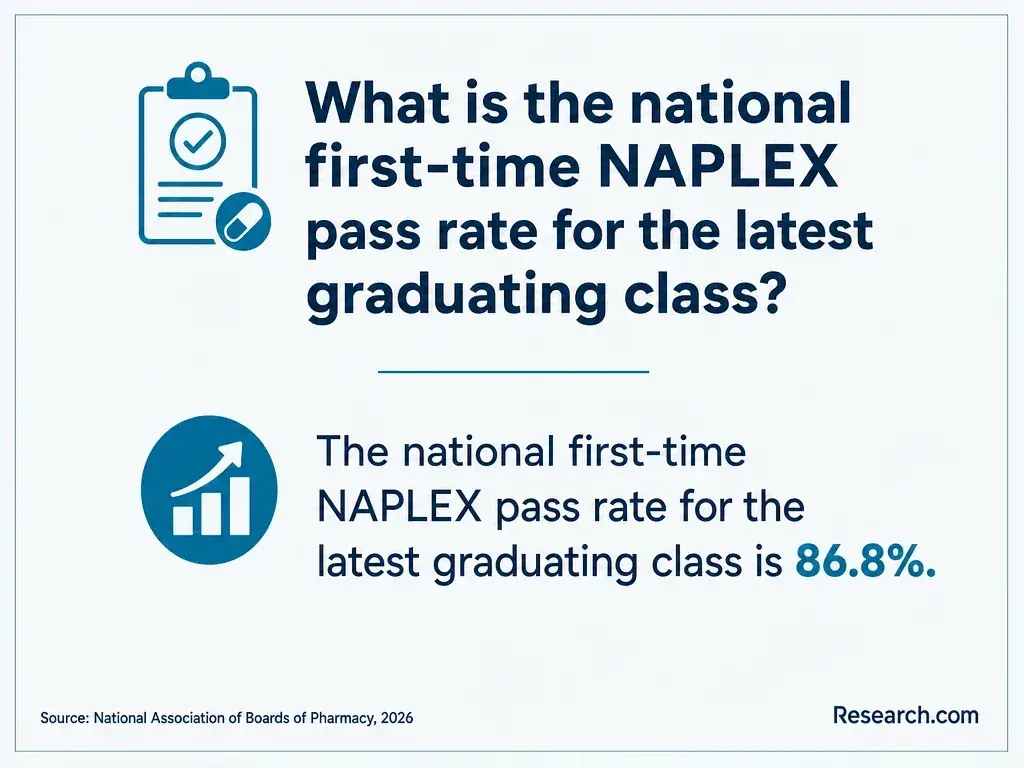
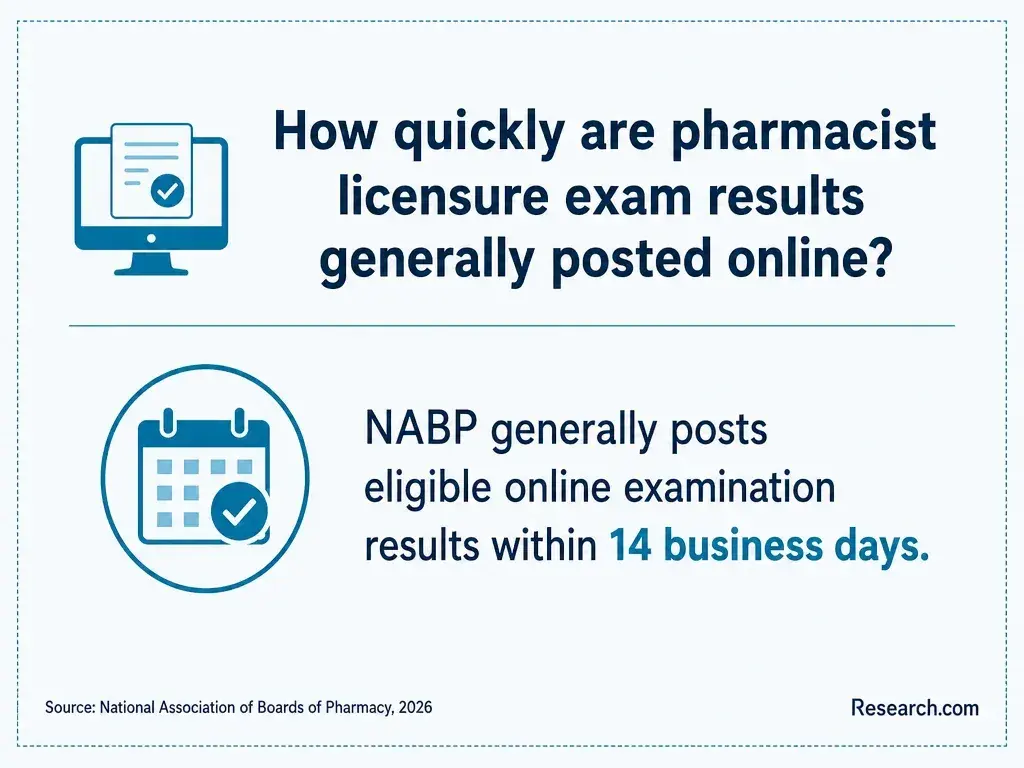
Finishing an accredited Pharm.D. does not itself grant a pharmacist license. Graduates must meet the requirements of their licensing jurisdiction, which generally include examinations and may include other conditions.
Use the first year to test your interests rather than choose a specialty permanently. Speak with pharmacists in community, hospital, ambulatory care, industry, and other settings when opportunities arise. Ask what their typical day involves, which skills they use, and what training their employer requires. An IPPE can offer a closer view, though one site cannot represent an entire field.
The Bureau of Labor Statistics reports median annual pay of $140,910 in May 2025 for pharmacists and projects 5% employment growth for 2025-2035. That broad occupational figure does not predict a new graduate's pay or the outlook for a particular specialty. If your goal is pharmacist practice, be cautious with online pharmacy programs under two years: verify the credential awarded, because a shorter pharmacy-related program is not automatically a professional Pharm.D. pathway.
Residency, fellowship, and optional specialty board certification are different possibilities to investigate later; none replaces state pharmacist licensure, and postgraduate training is not required for every pharmacist job.
How can students build professional skills and networks in pharmacy school?
Begin with dependable habits: arrive prepared, communicate promptly, protect patient information, accept correction, and follow through on tasks. In group work, practice explaining the evidence behind a recommendation and listening when another student or preceptor sees a risk you missed.
Build relationships through office hours, student organizations, supervised practice, and school career events. Keep brief notes on each conversation: the setting, skills mentioned, and one question to investigate. Request advice rather than a job, and thank people who give their time. When you apply for later opportunities, you will have specific examples of your work and a clearer sense of which settings fit your interests.
For now, choose a manageable academic plan even from an online pharmacy school, confirm your progression and placement requirements, and schedule an adviser conversation if the plan depends on uncertain grades, work hours, or costs.
Other Things You Should Know About PharmD
Not necessarily. Schools set their own prerequisite coursework and degree requirements. Check the admissions policy for the program and entry pathway you intend to use.
No universal technician-work requirement applies to Pharm.D. admission. The experience may help you understand pharmacy workflow, but technician and pharmacist are separate roles with different qualifications.
Possibly, but admission and professional-course credit are determined by the receiving school. Ask for its transfer policy and a written credit evaluation before assuming you can enter at the same point in the curriculum.
Speak with an adviser and financial aid counselor before withdrawing. Ask which completed credits might apply elsewhere, what leaving means for aid and repayment, and whether another health or science pathway better matches your goals.
- Ten simple rules to improve academic work-life balance - PMC https://pmc.ncbi.nlm.nih.gov/articles/PMC8282063/
- Guidelines for Creating a Study Schedule | Learning Strategies Center https://lsc.cornell.edu/guidelines-for-creating-a-study-schedule-2/
- FAQ | OSU College of Pharmacy - Oregon State University https://pharmacy.oregonstate.edu/programs-admissions/pharm-d/faq
- P4 Student Advice to P1 Students - School of Pharmacy https://pharmacy.ku.edu/pharmacy-school-advice
- Academic Alert and Academic Warning | uw.edu https://advising.uw.edu/academic-support/alert-and-warning/
- Academic Warning & Probation for Undergraduates | George Fox University https://www.georgefox.edu/catalog/handbook/academic/standing/probation_ugrd.html
- Peer Mentor/Tutoring Program | brcn.edu https://www.brcn.edu/current-students/peer-mentortutoring-program
- PharmD Curriculum | CU School of Pharmacy https://pharmacy.cuanschutz.edu/degreesandprograms/pharmd/curriculum
- Assessing Laboratory Learning | UNSW Staff Teaching Gateway https://www.teaching.unsw.edu.au/assessing-laboratory-learning
- The 12 Fundamentals of Highly Effective Communicators | wmich.edu https://scholarworks.wmich.edu/cgi/viewcontent.cgi