
PharmD transfer planning checklist by course

Co-Founder and Chief Data Scientist
A course can appear on your transcript yet do nothing to shorten a Doctor of Pharmacy (Pharm.D.) program. The receiving school may count it as an admission prerequisite, accept it into the professional curriculum, or reject it for a required sequence. This guide is for pre-pharmacy students and current Pharm.D. students considering a move. It gives you a course-by-course worksheet, the questions to ask admissions offices, and a way to compare graduation dates and costs before you commit to a transfer.
Key Things You Should Know
- Classify every completed course separately as an admission prerequisite, a professional Pharm.D. equivalent, or neither; only the receiving school can confirm how it applies.
- Professional-course credit does not necessarily advance your graduation date: required sequences, clinical experiences, and available cohort entry points may still determine your start term.
- Compare written credit decisions with the remaining tuition, fees, and living costs. A shorter-looking plan can cost more if transferring adds a term or requires relocation.
What Is a PharmD Transfer Planning Checklist by Course?
It is a record of what you have taken, what each prospective school requires, and how that school proposes to apply your credit. Pre-professional prerequisites are courses used to qualify for admission. The professional Pharm.D. curriculum is the pharmacy degree coursework and supervised practice completed after entry. Meeting a prerequisite does not mean you have completed part of the professional curriculum.
Keep one worksheet per destination. For each course, record its title, institution, term, credits, grade, laboratory format, syllabus, and the receiving school's written decision. Students comparing pharmacy degree programs for transfer students should also record the degree requirement satisfied, not merely the number of credits accepted.
The useful outcome is a term-by-term plan showing requirements still outstanding. A transcript evaluation that says "credit accepted" is incomplete for planning purposes unless you know whether that credit replaces a required course, counts only as an elective, or satisfies an admission condition.
Which Courses Transfer Into a PharmD Program?
Undergraduate biology, chemistry, mathematics, writing, and other courses may satisfy a destination school's prerequisites. Previously completed professional pharmacy courses face a different test: the school may compare their content, assessments, credits, and place in its curriculum. Acceptance varies by institution; course titles alone cannot establish equivalence.
This worksheet separates those decisions so that an accepted undergraduate course is not mistaken for time saved in the Pharm.D. program. Copy the rows for each course and fill in the destination school's written response.
| Course to check | Your course, credits, and lab | Destination requirement | School's decision and remaining requirement |
| General chemistry | ________ | Prerequisite: ________ | ________ |
| Organic chemistry | ________ | Prerequisite: ________ | ________ |
| Biology or microbiology | ________ | Prerequisite: ________ | ________ |
| Mathematics or statistics | ________ | Prerequisite: ________ | ________ |
| Writing or other general education | ________ | Prerequisite: ________ | ________ |
| Professional pharmacotherapy or other Pharm.D. course | ________ | Professional requirement: ________ | ________ |
| Introductory or advanced practice experience | ________ | Experiential requirement: ________ | ________ |
Students moving from biology, chemistry, or pre-pharmacy should generally investigate admission with prerequisites first, rather than assume their science degree supplies professional-course credit. Doctor of Pharmacy pathways for career transitions can help frame that distinction, but the destination school's evaluation controls.
What Prerequisites Are Required Before Transferring to Pharmacy School?
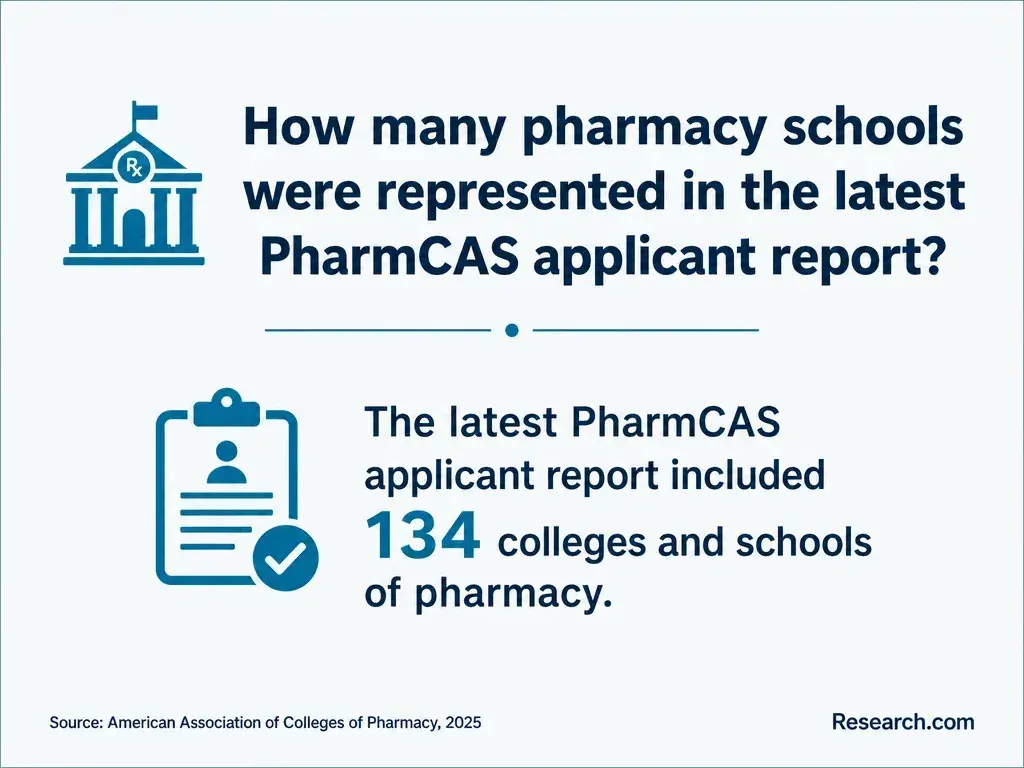
There is no nationwide course list or universal bachelor's-degree requirement for Pharm.D. admission. Schools set their own subject, laboratory, grade, minimum-credit, and course-recency rules. Check the current admissions page and, where applicable, the PharmCAS school directory for each destination. Confirm whether unfinished prerequisites may be listed at application and when they must be completed.
Use the following sequence to turn a prerequisite list into an application-ready plan. It matters especially when similar course names conceal different laboratory or content requirements.
- Match each required subject to a course on your transcript and record its grade, credits, completion term, and laboratory format.
- Flag missing courses and ask whether the school accepts your proposed institution, online laboratory, or substitute course before enrolling.
- Check minimum grades and age limits, then mark the last term in which each outstanding course may be completed.
- Request written clarification for every uncertain match and retain the response with your worksheet.
Some applicants can begin planning before every requirement is finished; pharmacy program preparation requirements still need to be met by that school's stated deadline. Do not treat permission to apply with coursework in progress as permission to matriculate with it unfinished.
The receiving school determines equivalency. An evaluator may examine official transcripts, detailed syllabi, contact hours, laboratory work, learning outcomes, grades, and when the course was taken. An undergraduate credit award, admission-prerequisite approval, and waiver of a professional Pharm.D. requirement are three different decisions.
Professional courses can be harder to place because a destination may teach related material across several integrated courses or require a particular sequence before rotations. Ask whether each approved course replaces a named requirement, earns elective credit, or leaves the required course intact. Request the resulting entry term and expected graduation term in writing; those dates reveal whether the credit actually saves time.
Likewise, admission to Doctor of Pharmacy accelerated tracks is a separate pathway decision. Prior credits do not automatically place a student into an accelerated cohort or excuse its required courses and experiences.
Not necessarily. Undergraduate prerequisites are not themselves professional Pharm.D. courses and need not come from an ACPE-accredited Pharm.D. program merely to be considered. For professional coursework, a receiving school may require prior enrollment in an Accreditation Council for Pharmacy Education (ACPE)-accredited program or apply other school-specific restrictions. Ask for its current policy before assuming professional credit will transfer.
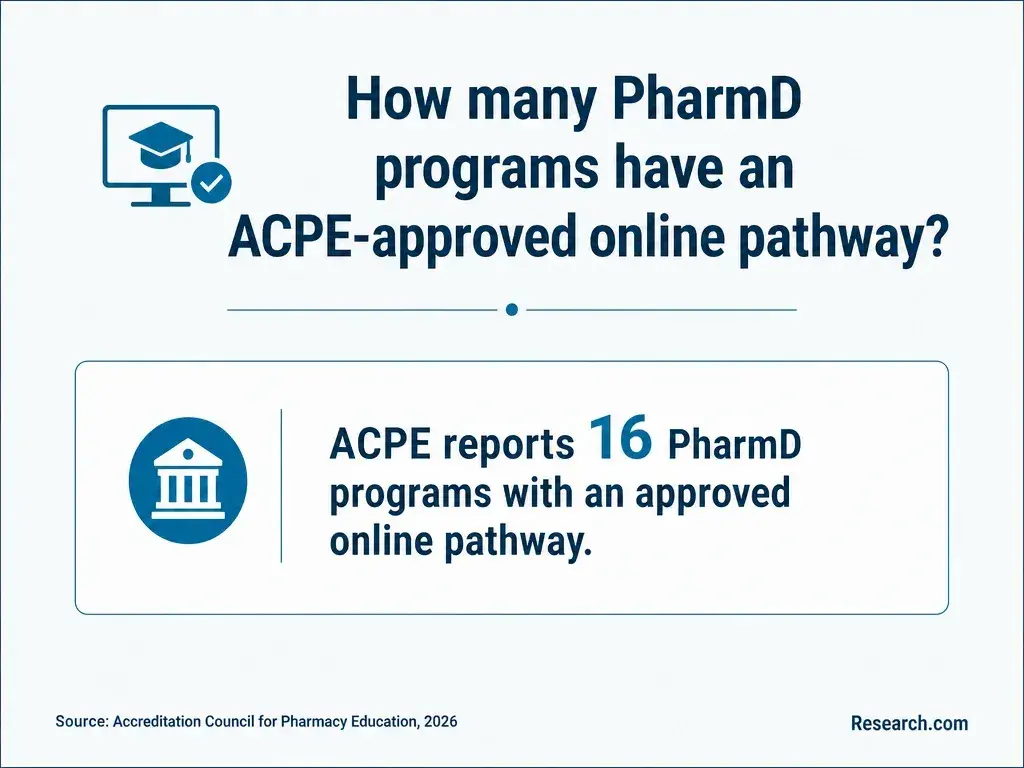
Verify the destination's professional-program status in ACPE's official records. That is distinct from the institution's accreditation and, for distance education, its authorization to enroll students in your state. If you plan to choose an online Pharm.D. program, separately confirm in-person labs or campus visits, clinical placement arrangements, and state authorization. Online instruction does not make supervised practice remote or guarantee a placement near home.
A school may admit a student through its regular Pharm.D. entry process while reviewing prior professional work separately, or it may offer a distinct transfer process with limited entry points. Confirm which route applies to you. Review the current requirements for prerequisites, grades or GPA, academic standing, interviews, recommendations, transcripts, and any supplemental application or deposit. Minimum eligibility is not an admission guarantee.
Ask whether the school uses PharmCAS for your applicant category and which materials must also go directly to the institution. The Pharmacy College Admission Test (PCAT) was retired in January 2024; do not plan around taking it. Published pharmacy school acceptance criteria can orient a search, but the current school-specific transfer policy and deadline should govern your application.
Before accepting an offer, request both an admission decision and a separate, written professional-credit evaluation. An offer of admission without an advanced-standing decision may leave you starting at the beginning of the professional sequence.
The decisive figure is the destination school's projected graduation term, not the total credits printed on your old transcript. Pharm.D. curricula are sequenced, and introductory pharmacy practice experiences (IPPEs) and advanced pharmacy practice experiences (APPEs) require supervised placements. Even substantial accepted credit may not replace a course offered only in a particular term or an experiential requirement.
Compare a written term-by-term schedule at each destination with the schedule you would follow if you stayed. If a program suggests you could finish an online pharmacy degree sooner, verify that the claim applies to a licensure-oriented Pharm.D. transfer pathway, your accepted courses, required in-person work, and available entry cohort - not a different pharmacy-related credential.
Count any time needed to repeat coursework, relocate, complete placement clearances, or wait for the next cohort. That opportunity cost may outweigh a small credit award.
Compare the remaining total cost, not tuition per credit alone. Request each school's current tuition and mandatory fees for your residency and enrollment status, then add prerequisite courses still needed, books and technology, clinical-placement travel or housing, and expected living costs. Use the school's written course and graduation plan to estimate how many terms you would pay for.
For a benchmark on advertised program prices, see the online Doctor of Pharmacy price range; it is not a substitute for an individualized transfer estimate. Ask the financial aid office to calculate eligibility for your entry term and aid year. Federal borrowing rules changed for many new graduate and professional borrowers beginning July 1, 2026, so an older student's loan package may not describe your options.
A useful decision is the additional cost of transferring versus staying, alongside the difference in graduation date. Include lost earnings if the move delays completion, but do not assume that accepting more credits always produces the cheaper route.
A Pharm.D. is the educational route toward pharmacist licensure, not a job or license by itself. Licensed pharmacists work in settings such as community pharmacies, hospitals, ambulatory care, and other medication-focused services; hiring expectations and scope of practice vary by position and state. Some roles favor postgraduate residency or fellowship training, while many do not require it. Specialty board certification is a separate credential, not a replacement for licensure.
The Bureau of Labor Statistics reports pharmacist median annual pay of $140,910 in May 2025 and projects 5% growth, 2025-2035. Those occupation-wide figures are context for the investment decision, not a predicted starting salary for a transfer student. If your goal is a pharmacy support role rather than pharmacist practice, investigate affordable short pharmacy programs carefully: pharmacy technician training is a distinct pathway and does not ordinarily require a Pharm.D.
What Licensing Requirements Follow PharmD Graduation and Transfer?
Transferring schools does not transfer a pharmacist license. After graduating from a qualifying Pharm.D. program, a U.S.-educated candidate must satisfy the board of pharmacy requirements in the jurisdiction where they seek licensure. These commonly include the North American Pharmacist Licensure Examination (NAPLEX), applicable pharmacy-law assessment, and jurisdiction-specific application, background, and practical-experience requirements. Check the current board and National Association of Boards of Pharmacy instructions; do not assume every jurisdiction uses the MPJE, as some began transitioning to the UMPJE in 2026.
During school, ask whether the move changes your pharmacy intern registration or affects where you may complete supervised experiences. Graduation, exam passage, and intern registration do not individually authorize independent pharmacist practice. A list of shortest online doctoral programs cannot establish pharmacist licensure eligibility; the relevant questions are the Pharm.D. program's status and the rules of your intended licensing jurisdiction.
Other Things You Should Know About PharmD
Possibly. Ask each destination whether it accepts the specific exam credit for the specific prerequisite and whether the credit must appear on a college transcript. Science laboratory requirements may be evaluated separately.
That depends on the school, the course, and when it was taken. Obtain a written decision rather than assuming that college credit also meets a prerequisite grade rule or professional-course standard.
Yes, subject to each program's application rules. Request separate evaluations: one school's equivalency decision does not bind another, and application or deposit deadlines may arrive before every evaluation is complete.
No. Your destination may calculate its own GPA under its policies, but previous coursework remains on your academic record. Expect to disclose all required college transcripts when applying.
- School-Determined Requirements | 2024-2025 Federal Student Aid Handbook https://fsapartners.ed.gov/knowledge-center/fsa-handbook/2024-2025/vol1/ch1-school-determined-requirements
- .14 Evaluation and Review Process for Transfer of Courses and Credits. | Library of Maryland Regulations https://regs.maryland.gov/us/md/exec/comar/13B.06.02.14
- An Advanced Pharmacy Practice Experience in a University's Office of Experiential Education - PMC https://pmc.ncbi.nlm.nih.gov/articles/PMC10159452/
- Experiential Education | R. Ken Coit College of Pharmacy https://www.pharmacy.arizona.edu/academics/pharmd/experiential-education
- PharmD FAQs - UNC Eshelman School of Pharmacy https://pharmacy.unc.edu/education/pharmd/pharmd-admissions-faqs/
- Transfer of Credit Policy | South University https://catalog.southuniversity.edu/transfer-of-credit-policy
- Experiential Education | Washington State University https://pharmacy.wsu.edu/pharmd/experiential-services/
- Transfer or Advanced Standing Policy - USC School of Pharmacy https://mann.usc.edu/program/doctor-of-pharmacy-pharmd/admissions/transfer-or-advanced-standing-policy/
- FAQ | OSU College of Pharmacy - Oregon State University https://pharmacy.oregonstate.edu/programs-admissions/pharm-d/faq
- PharmD Preprofessional Requirements | Ernest Mario School of Pharmacy https://pharmacy.rutgers.edu/pharmd-preprofessional-requirements/


