How to Reduce Pharm.D. Borrowing Before Enrollment

Co-Founder and Chief Data Scientist
A Pharm.D. acceptance can arrive before you know what the degree will actually cost. Tuition is only part of the decision: prerequisites, living expenses, clinical rotations, and financing terms can change how much you need to borrow.
This guide is for prospective U.S. pharmacy students comparing offers or planning applications. It shows how to build a realistic cost estimate, identify ways to borrow less, and decide whether a lower-priced program will still meet your educational and licensing goals.
Key Things You Should Know
- Compare the full cost through graduation, not just advertised tuition, including prerequisites, required fees, living expenses, and rotation travel.
- Confirm aid eligibility before accepting an offer, federal borrowing rules changed for many new graduate and professional students beginning July 1, 2026.
- Test projected debt against your likely career path, not a promised salary, the U.S. Bureau of Labor Statistics reports pharmacist median annual pay of $140,910 in May 2025.
How much does PharmD school cost before borrowing?
Your starting figure should be the program's total educational cost, not its tuition rate. Pre-pharmacy prerequisites are undergraduate courses completed before admission; they are separate from the professional Doctor of Pharmacy (Pharm.D.) curriculum. A school's published cost of attendance can help, but its standard housing allowance may not match your circumstances or cover every expense you face.
The categories below show where an applicant's estimate can diverge from an advertised price. Check each school's current tuition schedule and cost-of-attendance budget rather than applying one school's figures to another.
| Cost category | What may be included | Potential gap in an advertised tuition figure |
| Before enrollment | Unfinished prerequisites, application costs, deposits | Courses that must be completed or repeated |
| Professional coursework | Tuition, mandatory fees, books, clinical references, technology, lab supplies | Annual increases or charges billed separately |
| Experiential education | Travel or temporary housing for clinical rotations, screenings, immunizations | Placements away from a student's usual residence |
| Living and transition | Housing, food, transportation, health coverage, licensing-related expenses | Costs that continue between terms or after graduation |
Program length also affects rent and time away from paid work. Broad guides to online doctorate program length are not substitutes for a Pharm.D. school's required calendar, in-person activities, and clinical schedule.
What strategies can reduce PharmD borrowing before enrollment?
The largest savings usually come from decisions made before paying a deposit: choosing where to take accepted prerequisites, comparing net program costs, and securing funding that does not require repayment. A shorter pathway can help only if it reduces total expenses without leaving out required coursework or creating an unworkable schedule; compare claims about pharmacy education with shorter completion time against each school's actual requirements.
Use this sequence so an apparent saving does not create a later expense:
- Request a written prerequisite evaluation from each program before registering for additional courses.
- Build a through-graduation estimate that includes fees, living costs, rotation logistics, and expected time away from work.
- Apply for school, state, employer, and outside funding with deadlines that fall before enrollment.
- Compare remaining funding gaps under your actual federal and private loan eligibility, reduce discretionary borrowing before accepting any loan.
Do not pay for a faster route merely because it advertises fewer terms. Required course sequencing and clinical placements may limit how quickly you can finish or how much you can work.
How can you compare PharmD programs by total cost and debt?
Put offers on the same timeline: from the prerequisites you still need through graduation. Compare net cost after confirmed grants and scholarships, then separately estimate the amount you would finance. A lower tuition rate can lose its advantage if a program requires relocation, substantial travel, or additional terms. Lists of cost-conscious online Pharm.D. choices can supply candidates, but each candidate needs its own full-cost calculation.
This worksheet keeps the comparison units consistent. Fill both columns using current school documents and your own budget; leave uncertain amounts marked as unknown rather than treating them as free.
| Comparison field | Program A | Program B |
| Remaining prerequisite cost | - | - |
| Tuition and required fees through graduation | - | - |
| Books, technology, screenings, and supplies | - | - |
| Living expenses and transportation | - | - |
| Rotation or campus-travel expenses | - | - |
| Confirmed nonrepayable aid | - | - |
| Estimated amount to finance | - | - |
Subtract only aid you are eligible to keep, accounting for renewal conditions. Before choosing, confirm the program's current professional accreditation status in the Accreditation Council for Pharmacy Education (ACPE) directory. ACPE accreditation concerns the pharmacy program; institutional accreditation and authorization to enroll an out-of-state online student are separate questions.
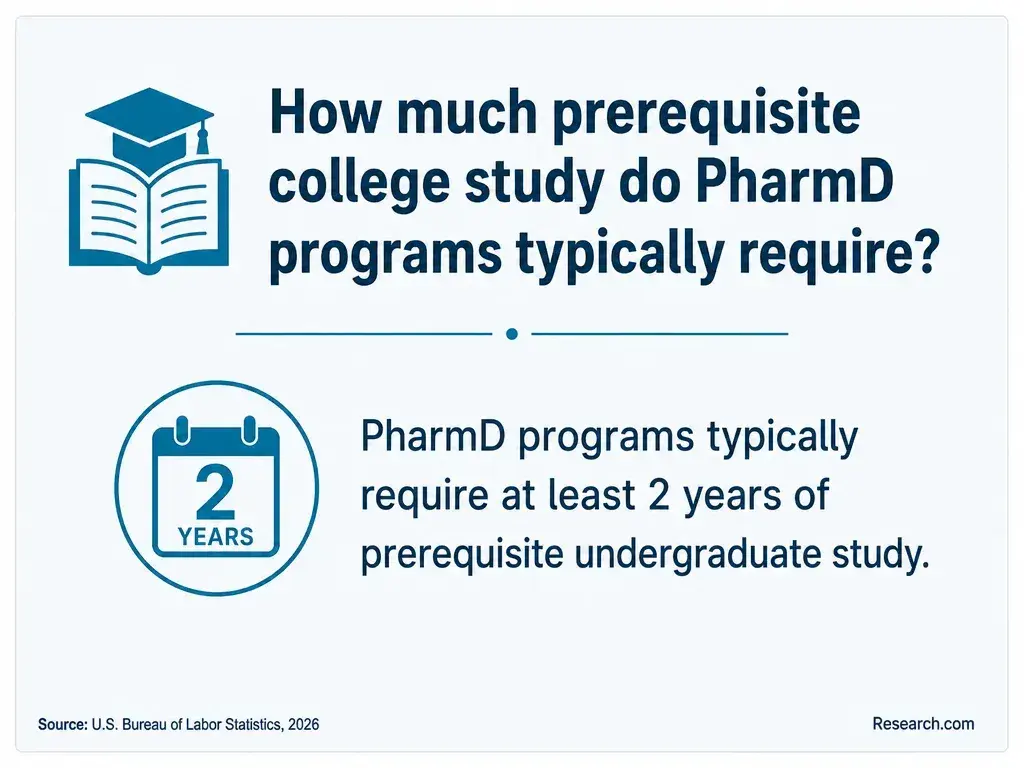
First determine what each target program actually requires. Some admit applicants after specified undergraduate pre-pharmacy coursework without a completed bachelor's degree; others have different degree or credit expectations. Science courses and labs are common, but accepted courses, minimum grades, course-age limits, and the deadline for finishing in-progress work vary. Programs described as pharmacy schools and prerequisite completion options still require you to meet their matriculation conditions.
Send the admissions office your transcripts and proposed course descriptions before enrolling in a cheaper replacement course. Ask whether a local public college, summer term, Advanced Placement credit, or online lab satisfies that school's specific requirement. The receiving Pharm.D. program - not the institution offering the inexpensive course - decides whether it applies. Paying to repeat a course that already qualifies can erase the savings you hoped to find.
Scholarships and grants reduce the amount you need to finance if they apply to your professional-program charges and you meet their terms. Ask each financial aid office which awards are automatic, which require separate applications, whether they are renewable, and whether outside awards change other aid. An admission offer is not itself a funding offer; discussions of pharmacy schools and entry standards should not be mistaken for evidence of scholarship availability.
Compare awards over the full program, not just the first term. A renewable scholarship with an academic-performance requirement carries a different risk from a one-time award. Also confirm whether a grant is available to you as a professional student: eligibility for undergraduate aid does not automatically continue unchanged after you enter the Pharm.D. curriculum.
An in-state public program deserves a close look when its resident tuition and your ability to live at home reduce total cost. Neither "public" nor "online" guarantees a lower net price, however. A private school's confirmed aid could narrow the difference, while travel for an online program's campus sessions or in-person rotations could widen it. Use lists of top online pharmacy doctorate programs to identify possibilities, not to assume the degree can be completed entirely from home.
Check when residency classification is determined and whether it can change after enrollment. For any online or hybrid option, verify required on-campus activities, who approves clinical placements, state authorization for your location, and potential travel. Favor the lower-cost offer when these requirements are workable and its professional-program status meets your needs; reconsider if the savings depend on an unconfirmed residency rate or an assumed nearby rotation.
Yes, community college courses can reduce pre-pharmacy spending when a target school accepts them for the specific prerequisites you need. Acceptance may differ for laboratory sciences, upper-level coursework, or courses taken long ago. Guides to pharmacy programs for students with prior coursework can help frame questions, but prior undergraduate credit applying to prerequisites is not the same as transferring into the professional Pharm.D. curriculum.
Request written confirmation of the course equivalency and grade rule before registering. Include the course number, description, lab format, and intended completion term. If the school requires a different course, compare the cost of taking it now with the risk of delaying enrollment. A low-priced course saves nothing if it fails to satisfy the receiving program's requirement.
Separate gift aid, which generally does not require repayment when its conditions are met, from loans and work opportunities. Compare each offer against the same realistic cost estimate. If a program offers a Pharm.D. completion pathway, confirm its actual terms and your eligibility before assuming a shorter borrowing period.
Federal loan rules changed for many new graduate and professional borrowers beginning July 1, 2026. Do not assume a past student's Direct Unsubsidized Loan limit or access to Grad PLUS applies to you; transitional provisions and student classification can matter. Have each school's financial aid office confirm your applicable rules, borrowing limits, remaining eligibility, and disbursement schedule under current Federal Student Aid guidance.
Read a loan offer as a repayment obligation, not a discount. Compare interest, origination charges, when interest accrues, repayment protections, and any gap you would need to cover with private credit. A large approved loan amount is permission to borrow, not a recommendation to take it all.
Estimate housing, utilities, food, transportation, health coverage, and a reserve for unexpected expenses for every term you expect to be enrolled. Add possible temporary housing or commuting during introductory and advanced pharmacy practice experiences - IPPEs and APPEs, the supervised clinical components of the degree. Comparisons of online pharmacy program length should not replace the school's own calendar when you project how long those expenses will continue.
Ask whether the program arranges or approves rotation sites and whether placements may require travel, intern registration, screenings, or time away from a job. Do not budget on the assumption that a rotation will be remote, near home, or interchangeable with existing employment. Compare your personal budget with the school's aid allowance; if essential expenses exceed that allowance, ask the aid office about its documented adjustment process before relying on additional borrowing.
How do pharmacist salaries and licensing requirements affect borrowing decisions?
The U.S. Bureau of Labor Statistics projects 5% pharmacist job growth from 2025-2035, with about 12,500 openings per year. That outlook describes the occupation nationally, not the availability or pay of your preferred job in a particular location. Stress-test an estimated loan payment against a conservative take-home-pay budget rather than assuming you will immediately earn the national median.
Graduating from an ACPE-accredited Pharm.D. program does not itself grant a pharmacist license. State boards set licensure conditions, which typically include the North American Pharmacist Licensure Examination (NAPLEX) and may include a jurisdiction-specific law examination or other requirements. Verify the board's current rules where you intend to practice; do not assume every jurisdiction uses the same law exam. A pharmacy technician role is a different occupation and does not ordinarily require a Pharm.D.
If you are still deciding whether to apply, resources on Pharm.D. admission after pre-pharmacy coursework can help you distinguish the professional degree from earlier study. If your intended role calls for a pharmacist license, include licensure-related expenses in your plan. If it does not, compare the opportunity cost of a Pharm.D. with less extensive routes. Residency and fellowship are postgraduate training options, while specialty board certification is a separate credential; none replaces state licensure, and none is required for every pharmacist job.
Other Things You Should Know About PharmD
Possibly, if additional savings or paid prerequisite coursework would meaningfully reduce borrowing. Compare that benefit with any lost scholarship, changed admission terms, or delayed earnings, and ask the school whether deferral is permitted before paying a deposit.
Some employers offer tuition assistance, but eligibility, annual coverage, work commitments, and repayment requirements vary. Get the policy in writing and check whether a Pharm.D. schedule would allow you to keep the qualifying job.
It depends on the school's written policy and the date you withdraw. Confirm the refund terms and decision deadline before paying; a deposit should not stand in for a review of the full aid offer.
Yes. A cosigner may be responsible for repayment if the borrower cannot pay, and release is not automatic. Review the lender's terms together before using a cosigner to close a funding gap.
- Annual and Aggregate Loan Limits | 2025-2026 Federal Student Aid Handbook https://fsapartners.ed.gov/knowledge-center/fsa-handbook/2025-2026/vol8/ch4-annual-and-aggregate-loan-limits
- Subsidized and Unsubsidized Loans | studentaid.gov https://studentaid.gov/understand-aid/types/loans/subsidized-unsubsidized
- Tuition and Fees for Doctor of Pharmacy (PharmD) Year 1 | UNT Health Fort Worth https://www.unthealth.edu/tuition-and-fees/cop-tuition-and-fees/pharmd-year-1.html
- Scholarships and Financial Aid - UW School of Pharmacy https://sop.washington.edu/pharmd/student-affairs/financial-aid-scholarships-awards/
- PharmD Admissions & Aid | Belmont University https://www.belmont.edu/academics/majors-programs/pharmd/admissions.html
- Changes to 2026-2027 Federal Student Loans | columbia.edu https://sfs.columbia.edu/content/changes-2026-2027-federal-student-loans
- Scholarships, Grants & Loans | Albany College of Pharmacy and Health Sciences https://www.acphs.edu/admissions-aid/tuition-aid/scholarships-grants-loans/
- Cost of Attendance " Pharm.D. Admissions " | ufl.edu https://admissions.pharmacy.ufl.edu/financial-aid/anticipated-expenses/
- R. Ken Coit College of Pharmacy | PharmD | University of Arizona Office of Scholarships & Financial Aid https://financialaid.arizona.edu/types-of-aid/graduate/pharmd
- Tuition, Financial Aid and Scholarships | umich.edu https://pharmacy.umich.edu/admissions/tuition-financial-aid-scholarships/