Online PharmD versus hybrid PharmD: format comparison

Co-Founder and Chief Data Scientist
An online Pharm.D. may offer more flexibility than a hybrid program, but neither format necessarily lets you study entirely from home. Both can involve scheduled classes, hands-on training, and in-person clinical rotations. If you are comparing programs around work, family, or where you live, the label alone will not tell you whether the schedule is manageable. This guide explains the differences that matter - accreditation, licensure, curriculum, travel, time, and cost - so you can identify which format is realistic before you apply.
Key Things You Should Know
- "Online" does not mean fully remote: Pharm.D. students generally complete in-person clinical experiences, and programs may also require campus labs or immersions.
- Format does not determine licensure eligibility: Check the professional program's ACPE status and the requirements of the state where you intend to practice.
- Compare the full commitment, not just tuition: Required travel, rotation schedules, and time away from paid work can outweigh differences in online coursework.
What Is the Difference Between Online and Hybrid PharmD Programs?
An online Doctor of Pharmacy (Pharm.D.) pathway delivers much of its classroom instruction remotely. A hybrid pathway deliberately combines remote instruction with recurring in-person instruction. Schools use these terms differently, however: an "online" program can still require campus visits, live virtual classes, and supervised practice at physical sites. Neither label makes the professional degree self-paced.
The comparison below identifies the schedule details that matter more than a program's marketing label.
| Decision factor | Online pathway | Hybrid pathway |
| Classroom instruction | Primarily remote; live attendance may be required | Remote work plus planned in-person classes or activities |
| Hands-on training | May require campus visits or other approved in-person sessions | Typically integrated into scheduled in-person sessions |
| Clinical rotations | In person at approved practice sites | In person at approved practice sites |
| Best potential fit | Students who need less routine campus travel | Students who can attend campus regularly and prefer predictable face-to-face contact |
Ask for the actual attendance calendar before choosing either format. Comparisons of online doctoral program duration may be useful background, but a Pharm.D. has professional training requirements that make a generic online-doctorate timeline a poor substitute for the school's own schedule.
Are Online and Hybrid PharmD Programs ACPE Accredited?
Either format can be offered by a program accredited by the Accreditation Council for Pharmacy Education (ACPE). Accreditation applies to the professional pharmacy program, not to the delivery label or the individual graduate. Do not assume that every program advertising an online doctorate in pharmacy leads to the same credential or has the same status.
Check the specific professional program in ACPE's current program directory, including its status and any relevant campus or pathway details. Then separately confirm the institution's accreditation and whether it is authorized to enroll you from your state. State authorization to provide distance education is not the same as permission to complete clinical placements there or eligibility for a pharmacist license there. When you choose an online Pharm.D. program, treat those as separate checks, not one accreditation question.
Can Online or Hybrid PharmD Graduates Become Licensed Pharmacists?
Yes, graduates of an appropriately accredited professional Pharm.D. program can pursue pharmacist licensure regardless of whether classroom instruction was online or hybrid. The degree does not issue a license. State boards set eligibility and application requirements, including supervised experience and examinations.
Applicants generally must meet their board's requirements for the North American Pharmacist Licensure Examination (NAPLEX) and any applicable pharmacy-law assessment. Do not assume your state uses the Multistate Pharmacy Jurisprudence Examination (MPJE): requirements vary, and some jurisdictions began transitioning to the Uniform MPJE (UMPJE) in 2026. Confirm the current examination and intern-registration rules directly with the board where you plan to practice.
A shorter credential is not an equivalent route to pharmacist licensure. If you are considering short-duration pharmacy programs, verify the occupation they prepare you for; pharmacy technician education and pharmaceutical-sciences study do not, by themselves, replace a professional Pharm.D.
Both formats must develop the knowledge and patient-care skills expected of a professional pharmacy degree. Students study areas such as pharmacotherapy, medication safety, pharmacy practice, and patient communication, then apply that learning in supervised settings. Undergraduate pre-pharmacy science courses are admission preparation, not a substitute for this professional curriculum.
The meaningful difference is how a particular school teaches and assesses those skills. Compare live-class attendance, small-group work, simulation, compounding or skills labs, campus sessions, and access to instructors. A student who learns well independently may prefer more remote instruction; someone who wants frequent face-to-face practice may prefer a hybrid design. For students entering with substantial science coursework, resources on Pharm.D. programs for biology majors can help frame the transition, but prior science study does not eliminate professional skills training.
Delivery format does not create a universal admissions standard. Schools set their own prerequisite courses and labs, minimum grades, application materials, interviews, and rules for courses still in progress. Some admit applicants without a completed bachelor's degree; others have different academic expectations. A stated minimum is eligibility to apply, not a promise of admission.
Check each school's current admissions page and PharmCAS directory entry where applicable. Not every school uses PharmCAS, and a school may require additional materials. The Pharmacy College Admission Test (PCAT) was retired in January 2024, so it should not be treated as a current exam to schedule. When comparing pharmacy school admission requirements, focus on your remaining courses, accepted lab formats, deadlines, and the school's evaluation of your transcripts rather than an advertised impression of ease.
The professional Pharm.D. curriculum commonly takes about four academic years after prerequisite study, although program calendars and accelerated pathways differ. Online delivery alone does not shorten the degree: required course sequencing, clinical experiences, and assessments still take time. An accelerated calendar may reduce elapsed time while increasing weekly workload.
Ask for a term-by-term calendar showing remote classes, required campus dates, and rotation blocks. That reveals whether you can maintain employment and whether a shorter calendar actually saves you money after accounting for lost wages or travel. If speed is your priority, compare verified pharmacy programs with faster completion options on their full schedules, not just their advertised graduation dates.
There is no reliable format-wide price: schools set tuition and fees, while each student's travel, housing, and prerequisite costs differ. An online pathway may reduce routine commuting yet require expensive campus trips or distant rotations. A hybrid program may make visits predictable but require more frequent travel.
This cost comparison separates charges billed by the school from expenses that can change substantially with your location and placement.
| Cost category | What to compare across programs |
| School charges | Current tuition, mandatory fees, and whether published rates cover the entire program |
| Learning requirements | Books, clinical references, technology, lab supplies, and testing costs |
| In-person attendance | Campus travel, lodging, and time away from work |
| Clinical training | Transportation or temporary housing for assigned rotations |
| Other preparation | Remaining prerequisites, health requirements, background checks, and licensure-related costs |
Request a current, itemized cost of attendance and a proposed aid package from each school. Federal borrowing rules changed for many new graduate and professional borrowers beginning July 1, 2026; do not assume a previous student's loan options or Grad PLUS access will apply to you. Compare cost-conscious online Pharm.D. choices using total likely expense and your confirmed financing options, not advertised tuition alone.
Both formats include supervised in-person pharmacy practice. Introductory pharmacy practice experiences (IPPEs) introduce students to practice settings; advanced pharmacy practice experiences (APPEs) provide more extensive rotations later in the professional curriculum. Remote lectures do not turn these experiences into remote work.
Before accepting an offer, ask who secures and approves sites, whether placements near your home are possible, and how far you might need to travel. Also confirm the rotation schedule, preceptor requirements, and your responsibilities for intern registration, immunizations, and background checks. Do not assume your current pharmacy job can replace a rotation. Even at pharmacy programs for students with prior coursework, the school decides how academic credit applies and which professional experiences you must complete.
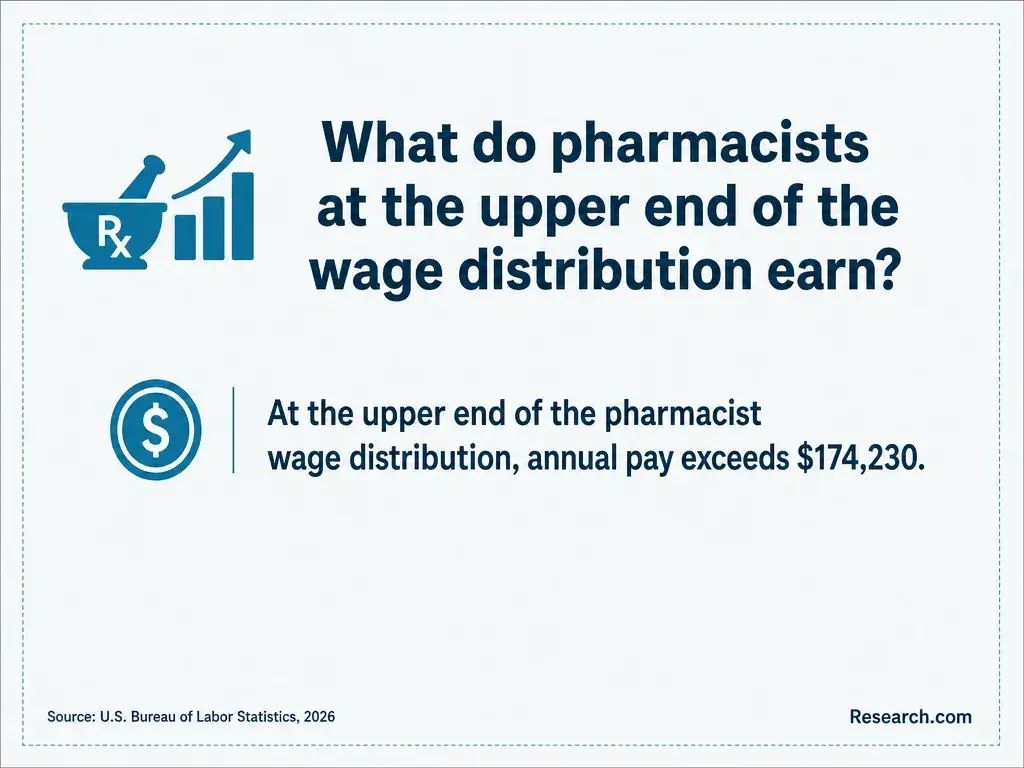
A licensed pharmacist may work in community, hospital, ambulatory care, or other pharmacy settings; opportunities depend on employer requirements, experience, and location rather than online versus hybrid classroom delivery. The Bureau of Labor Statistics reports median annual pay of $140,910 in May 2025 for pharmacists and projects 5% growth from 2025 to 2035. Those occupation-wide figures describe neither an individual graduate's starting salary nor an advantage for either learning format.
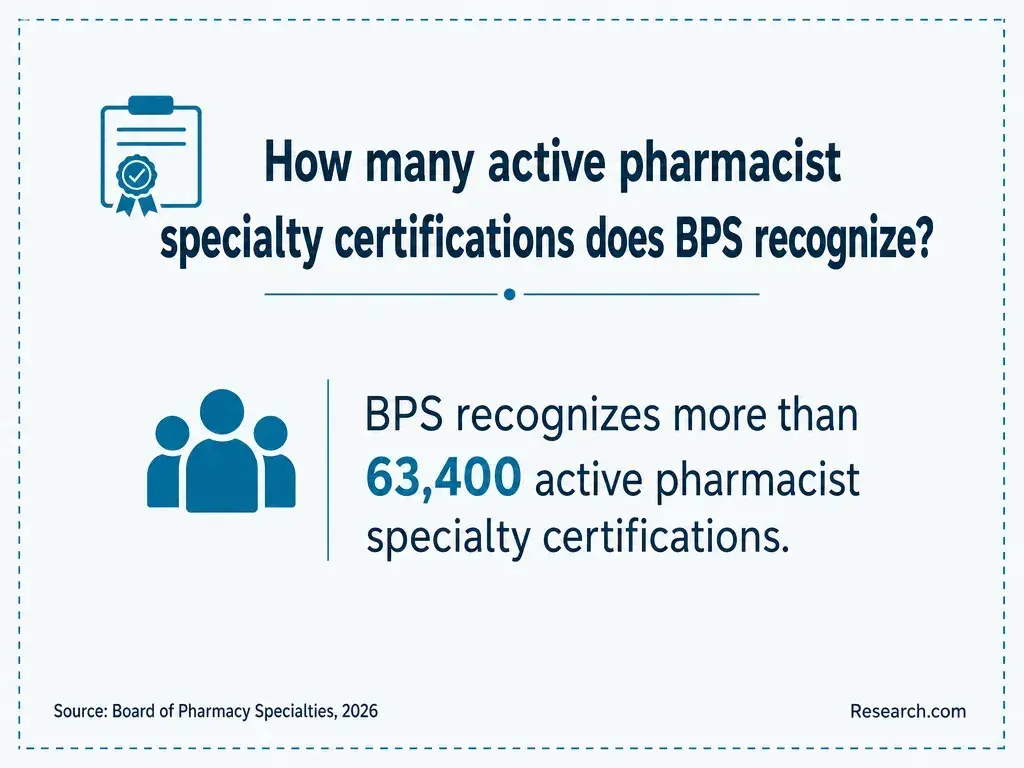
Some roles favor postgraduate training. A residency provides structured practice training; a fellowship generally emphasizes a different specialized career path, such as research or industry. Board certification is a separate specialty credential, not a pharmacist license. None is universally required for pharmacist employment.
If your goal is a pharmacy-adjacent job rather than pharmacist practice, compare shorter pharmacy programs with career potential against the time and expense of a Pharm.D. Be clear about the job each credential qualifies you to pursue: a pharmacy technician is a separate occupation, not a pharmacist with a shorter degree.
How Should You Choose an Online or Hybrid PharmD Program?
Favor an online pathway if it substantially reduces routine campus travel and you can meet its live-session, immersion, and rotation requirements. Favor hybrid if its scheduled in-person practice supports your learning and its campus travel is manageable. Neither is a good fit if required placements or time away from work would make completion unrealistic.
Use these checks to turn a promising format into a decision you can defend before paying a deposit:
- Confirm the exact professional program and its current ACPE status, then check institutional accreditation separately.
- Ask the school to confirm distance-education eligibility for your state and how clinical placements there are approved; check your intended state board's licensure rules independently.
- Obtain the complete attendance and rotation calendar, including live classes, campus visits, and likely travel.
- Get a written review of your prerequisites or prior coursework and an itemized estimate of tuition, fees, travel, and available aid.
- Compare available program-level NAPLEX outcomes with their reporting years and cohort context rather than treating one result as a guarantee.
For career changers, pharmacy admission pathways for nontraditional students may help identify possible starting points. Confirm every outstanding requirement with the school: flexible entry does not waive professional training, clinical obligations, or state licensure rules.
Other Things You Should Know About PharmD
Hiring practices vary. Expect employers to consider licensure, clinical experience, references, and relevant skills; ask a prospective employer directly if its role has particular training preferences.
Only if the school permits it. Cohort schedules, available seats, and course sequencing may restrict changes, so ask about the policy before enrolling.
Diploma wording is institution-specific. Ask the registrar how the credential and any transcript notation appear if that distinction matters to you.
Possibly, if the program approves the sites and you meet each state's applicable intern and placement requirements. Confirm arrangements well before rotations begin.
- Understanding College Costs | studentaid.gov https://studentaid.gov/resources/prepare-for-college/students/choosing-schools/consider-costs
- Cost of Attendance (Budget) | 2025-2026 Federal Student Aid Handbook https://fsapartners.ed.gov/knowledge-center/fsa-handbook/2025-2026/vol3/ch2-cost-attendance-budget
- What Financial Aid Offers Don't Tell You About the Cost of College | U.S. GAO https://www.gao.gov/blog/what-financial-aid-offers-dont-tell-you-about-cost-college
- Advanced Pharmacy Practice Experiences | The University of Iowa https://pharmacy.uiowa.edu/pharmd/curriculum/professional_experience/advanced
- PharmD Program Quality Indicators | buffalo.edu https://pharmacy.buffalo.edu/about-us/pharmd-program-quality-indicators.html
- Distance Doctor of Pharmacy | University of Findlay https://pharmdonline.findlay.edu/programs/online-pharm-d
- Earn an Online Pharm.D. Degree at St. John Fisher University https://onlinepharmd.sjf.edu/
- Professional Program Admissions - NSU's College of Pharmacy https://pharmacy.nova.edu/admissions/professional.html
- PharmD Outcomes Data | University of the Pacific https://www.pacific.edu/pharmacy/outcomes-data
- PharmD FAQs - UNC Eshelman School of Pharmacy https://pharmacy.unc.edu/education/pharmd/pharmd-admissions-faqs/