
PharmD cost of required campus immersions

Co-Founder and Chief Data Scientist
An online Doctor of Pharmacy (Pharm.D.) program can still require trips to campus for labs, skills assessments, and other hands-on work. Those trips may change the cost—and practicality—of a program that initially looks affordable. This guide helps prospective U.S. pharmacy students identify what an immersion budget must cover, distinguish campus visits from clinical rotations, and compare programs on total cost rather than advertised tuition alone. You'll also learn which scheduling, accreditation, and financial aid questions to settle before paying an enrollment deposit.
Key Things You Should Know
- There is no standard Pharm.D. campus immersion price: budget for each required visit's transportation, lodging, meals, local travel, and potential lost wages in addition to tuition and fees.
- Ask for the number, length, location, and timing of required campus visits for every year of the program; budget separately for in-person introductory and advanced pharmacy practice experiences.
- For students borrowing in the 2026-27 aid year, confirm which immersion expenses appear in the school's cost of attendance and which federal loan rules apply to their individual eligibility.
How Much Do Required PharmD Campus Immersions Cost?
There is no single reliable price. A student who can commute to a required campus session faces a different bill from one who needs airfare and a hotel. Programs also differ in visit frequency, length, required supplies, and whether any on-campus expenses are already included in mandatory fees. A tuition quote alone cannot establish the cost of attendance.
For a usable estimate, calculate the cost of each required visit as round-trip travel plus lodging, meals, local transportation, supplies, or separately charged fees, and income lost because of attendance. Add the visit estimates across the full curriculum, then keep clinical rotation costs in a separate category. Check a program's published charges before using a low-cost online pharmacy doctorate comparison: a lower tuition figure may not mean a lower total bill for a distant student.
Ask the school for its current immersion calendar and written fee schedule. If future dates are not final, use a range based on the shortest and longest possible stays rather than treating an uncertain travel estimate as a guaranteed price.
What Expenses Are Included in PharmD Campus Immersion Costs?
"Immersion cost" can mean a school charge, the student's travel bill, or both. The distinction matters because an expense can be required for attendance without appearing on the tuition invoice. This breakdown shows where common charges usually arise; the school must confirm what its own price includes:
| Cost category | What it may cover | Where to check |
| School-billed charges | Tuition, mandatory program or lab fees, and required campus materials | Current tuition and fee schedule |
| Visit expenses | Airfare or mileage, lodging, meals, and transportation near campus | Immersion schedule and the student's travel estimates |
| Participation requirements | Equipment, attire, background checks, or health documentation when required | Student handbook and onboarding instructions |
| Opportunity cost | Unpaid leave, reduced work hours, or dependent-care arrangements | The student's work and household schedule |
Prerequisite undergraduate coursework is another possible expense, but it precedes the professional Pharm.D. curriculum and should not be mistaken for an immersion fee. Likewise, lower-cost pharmacy degree pathways may represent different credentials; compare their costs only after confirming that the credential meets your goal of pursuing pharmacist licensure.
How Many Campus Immersions Do Online PharmD Programs Require?
There is no universal number. A program's delivery plan determines how often students must attend campus, how long they stay, and whether visits cluster around laboratory courses or assessments. "Online" does not establish that classes are asynchronous, that attendance is optional, or that the degree can be finished from home.
Get a term-by-term calendar, not just an annual visit count. Two programs with the same number of trips can impose very different costs if one requires longer stays or travel during expensive periods. When reviewing the top online pharmacy doctorate programs, confirm that each option is a professional Pharm.D. pathway rather than a different pharmacy-related doctorate, and ask whether visit dates can change after enrollment.
Compare total educational costs over the same period, not online tuition against campus tuition alone. An online student may pay for periodic trips while continuing to live at home; a campus-based student may instead face a move, a longer lease, and routine commuting costs. Either route could cost less for a particular student.
Use the same cost categories for both options: tuition and mandatory fees, housing, transportation, required materials, clinical placement expenses, and income lost to the schedule. Then account for program length. Accelerated pharmacy education options may reduce the time spent paying living expenses but can compress coursework and limit paid work; an accelerated label alone does not prove a lower total cost.
A campus option deserves a closer look if its tuition advantage or local housing arrangement outweighs an online program's repeated travel costs. The online option may be more practical if visits are predictable and it lets the student avoid relocating without disrupting required rotations.
Hybrid or online-delivered professional Pharm.D. programs may require campus visits for hands-on instruction and assessments. Campus-based Pharm.D. programs generally deliver that work during regular on-campus coursework rather than labeling it an immersion. In either format, pharmacy practice experiences are a separate, supervised component of professional education.
Introductory pharmacy practice experiences (IPPEs) introduce students to practice settings; advanced pharmacy practice experiences (APPEs) provide more extensive supervised work later in the curriculum. These are not interchangeable with campus labs or virtual cases. A school may coordinate or approve sites, but students should confirm placement geography, preceptor requirements, scheduling, and any travel they must arrange themselves. Do not assume a current job can substitute for a rotation.
Students considering Doctor of Pharmacy pathways after pre-pharmacy study should also distinguish prerequisite undergraduate courses from the professional curriculum. Completing prerequisites does not eliminate the required Pharm.D. immersions or practice experiences unless the program expressly says otherwise.
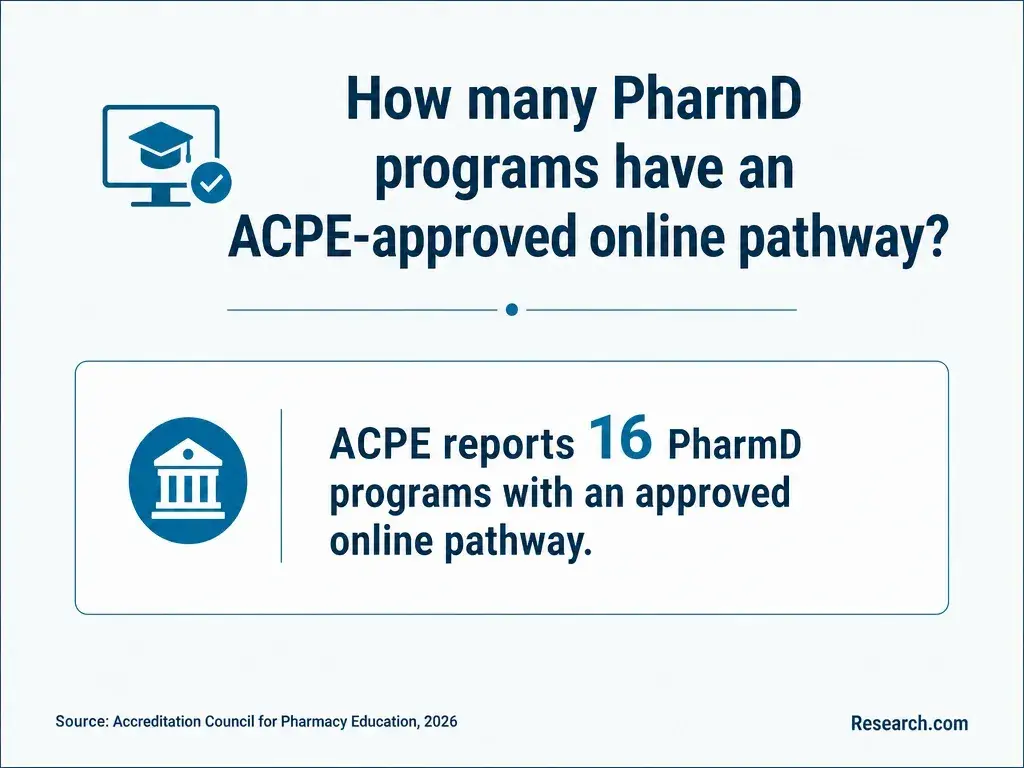
The Accreditation Council for Pharmacy Education (ACPE) accredits professional Pharm.D. programs, including programs that use online instruction. Accreditation concerns the quality and required components of the professional program; it does not set one nationwide campus-visit schedule or make hands-on education optional. A school determines how its approved curriculum delivers and assesses required learning.
Before comparing travel costs, confirm the specific Pharm.D. program's current ACPE status in ACPE's program directory. Check institutional accreditation and authorization to enroll distance-learning students in your state separately; neither is a substitute for ACPE professional-program accreditation. Also ask about any state restrictions on clinical placements. A guide to pharmacy school prerequisites and eligibility can help with the admissions side, but admission eligibility is a different question from accreditation or permission to complete placements in a particular state.
Build a budget for each scheduled trip, accounting for its actual duration and location. Airfare may involve baggage fees; driving may involve fuel, parking, and a vehicle the student can use throughout the visit. Lodging estimates should include any nights needed because of early start times or late finishes. Add meals, transportation between the lodging and campus, and dependent care if applicable.
Also test the schedule against paid work. A short visit can still require extra days away for travel, and a missed shift may cost more than a room. Comparing pharmacy programs with a fast timeline requires particular care: verify the credential offered and the actual Pharm.D. schedule rather than assuming a shorter advertised timeline means fewer required trips.
Keep a contingency for changed dates or travel disruptions, but do not substitute an arbitrary national average for quotes based on your route. Request the school's attendance and make-up policies before buying nonrefundable tickets.
Possibly, but coverage is not automatic. A school's financial aid office sets a cost-of-attendance budget for eligible students that may account for transportation, living expenses, and required educational costs. Whether a particular immersion expense can increase your budget and whether you can borrow enough to cover it depend on your documented costs, other aid, enrollment, borrowing history, and applicable federal loan rules.
Federal borrowing rules changed for many new graduate and professional borrowers beginning July 1, 2026. Students planning for the 2026-27 aid year should ask the financial aid office which rules and any applicable transition provisions govern their eligibility rather than assuming previous Grad PLUS access or loan limits still apply. A Pharm.D. also should not be treated as financially identical to online doctorate programs with shorter timelines; credential type, program length, and individual aid eligibility matter.
Send the aid office the immersion calendar and an itemized travel estimate. Ask what is already in your cost-of-attendance budget, what documentation is needed for an adjustment, and which expenses would still require savings or other funding. An approved budget does not itself guarantee a loan or make borrowing cost-free.
Immersions help students practice and demonstrate skills that cannot be adequately assessed through online lessons alone. Supervised IPPEs and APPEs provide a different kind of in-person training in pharmacy practice settings. Together with academic coursework, these experiences support completion of the professional Pharm.D. program; an immersion is not a stand-alone license requirement that can replace the rest of the degree.
After graduation, pharmacist licensure remains a state-board process. Requirements generally involve an eligible pharmacy education pathway, the North American Pharmacist Licensure Examination (NAPLEX), and any jurisdiction-specific law examination or other conditions. Do not assume every jurisdiction uses the MPJE: requirements and examination choices vary, including use of the UMPJE in some jurisdictions. Students may also need intern registration or other authorization during training, depending on the state and placement. Passing an exam or receiving the degree does not itself issue a license.
For readers exploring pharmacy programs for career changers, the key distinction is whether the pathway leads to an eligible professional Pharm.D. A pharmacy technician, pharmaceutical sciences, or other pharmacy-adjacent credential does not automatically qualify its holder for pharmacist licensure.
How Can Students Compare Online PharmD Programs and Immersion Costs?
Request the same written information from each school before ranking prices. A program with predictable visits and nearby approved rotations may be less disruptive than a lower-tuition option whose travel or placement obligations are uncertain.
Use these questions to turn each school's quote into a comparable full-program estimate:
- What are the required campus visit dates, locations, lengths, attendance rules, and separately billed fees for each term?
- Which IPPE and APPE placements does the school arrange or approve, and could I need to relocate or travel for them?
- What are the full tuition, mandatory fees, required materials, and likely additional costs under my proposed course plan?
- Is the professional Pharm.D. currently ACPE-accredited, and can I enroll and complete approved placements from my state?
- Which immersion expenses are reflected in my 2026-27 cost-of-attendance budget, and what aid rules apply to me?
If previous coursework is part of your plan, investigate transfer-friendly pharmacy education options without assuming credits will apply to the professional curriculum. The receiving school decides how prior study counts. Finally, compare the answers against your available time away from work and your ability to fund travel if dates or placements change. Unanswered placement or attendance questions are a reason to pause before committing, not a small detail to resolve afterward.
Other Things You Should Know About PharmD
Do not assume they are. Education-related tax treatment depends on the expense and your circumstances. Keep receipts and consult current IRS guidance or a qualified tax professional before claiming a deduction or credit.
Usually the student must make their own arrangements for companions and dependent care. Ask the school whether guests may enter campus facilities or attend any events; access to instructional sessions is a separate matter.
The program's attendance policy controls. A missed lab or assessment may require an approved make-up activity, delay course completion, or affect progression. Obtain the written policy and contact the program promptly if a conflict arises.
They may. A school determines which previous credits it accepts and which professional skills or assessments must be completed in its own curriculum. Request an individualized degree plan before relying on a transfer estimate.
- Cost of Attendance (Budget) | 2025-2026 Federal Student Aid Handbook https://fsapartners.ed.gov/knowledge-center/fsa-handbook/2025-2026/vol3/ch2-cost-attendance-budget
- Economic Analysis of Obtaining a PharmD Degree and... - PMC https://pmc.ncbi.nlm.nih.gov/articles/PMC4678742/
- Qualified Ed expenses | Internal Revenue Service https://www.irs.gov/credits-deductions/individuals/qualified-ed-expenses
- PharmD Prerequisites - Doctor of Pharmacy https://pharmacy.wisc.edu/pharmd/prerequisites/
- Travel Reimbursement and Per Diem - Business & Finance https://www.busfin.uillinois.edu/bfpp/section-15-travel/travel-reimbursement-and-per-diem
- Pharmacy | Pre-Health Advising https://prehealth.ucmerced.edu/health-careers/pharmacy
- Tuition and Fees Policies | Washington University in St. Louis https://olinundergradglobal.wustl.edu/tuition-and-fees-policies/
- Distance Doctor of Pharmacy | University of Findlay https://pharmdonline.findlay.edu/programs/online-pharm-d
- Student Tuition and Fees | Standard Practice Guides https://spg.umich.edu/policy/601.39
- International Immersions | Clay and Debbie Jones Center for Leadership and Service https://leadserve.utk.edu/international-immersions/


