Pharmacist Licensure by Examination Versus Score Transfer

Co-Founder and Chief Data Scientist
Passing the North American Pharmacist Licensure Examination (NAPLEX) does not automatically give a pharmacy graduate permission to practice - or settle where they can practice. If you are finishing a Doctor of Pharmacy (Pharm.D.) program or considering jobs in more than one state, choosing your licensing route before the exam can prevent a missed score-transfer window or a second application process.
This guide compares licensure by examination, NAPLEX score transfer, and later license transfer, then shows you what to confirm with each state board before paying fees.
Key Things You Should Know
- Choose licensure by examination for the state where you first plan to practice; add NAPLEX score transfers when you also want to pursue initial licensure in other jurisdictions.
- A NAPLEX score transfer is not a license or a substitute for a receiving board's law exam, internship rules, or application requirements. NABP's request window is generally 89 days after the NAPLEX test date.
- If you already hold a pharmacist license, investigate license transfer, often called reciprocity, instead of assuming an old NAPLEX score can be newly transferred.
What is the difference between pharmacist licensure by examination and score transfer?
Licensure by examination is a state board's route for an applicant seeking a pharmacist license on the basis of required examinations and other qualifications. NAPLEX score transfer is a National Association of Boards of Pharmacy (NABP) service that sends an eligible exam score to another jurisdiction. It lets that jurisdiction consider the score for its own licensing application; it does not issue a license.
This comparison identifies what each route accomplishes. The key distinction is whether you are pursuing initial licenses or already have one.
| Route | Best starting point | What it does not replace |
| Licensure by examination | You are seeking a license in a jurisdiction that will evaluate your exam results. | Board approval, education and internship requirements, and any applicable law assessment. |
| NAPLEX score transfer | You are taking the NAPLEX and may seek initial licensure in additional jurisdictions. | A separate application and the receiving jurisdiction's other requirements. |
| License transfer or reciprocity | You already hold a pharmacist license and want licensure elsewhere. | Receiving-board approval and any additional requirements it imposes. |
The word transfer can obscure the decision: a score transfer sends an exam result, while license transfer uses an existing license as part of a new jurisdiction's application. Likewise, fast online doctoral study is not a substitute for the qualifying pharmacy education and board approval required for either route.
What are the requirements for pharmacist licensure by examination?
A typical U.S.-educated applicant needs a qualifying pharmacy education, any required supervised experience, a passing NAPLEX result, applicable pharmacy-law qualifications, and an approved state-board application. The board - not the school or NABP - determines whether the applicant meets its requirements and issues the license.
Before applying, separate admission to pharmacy school from eligibility to practice. Pharmacy school admission requirements govern entry to a program; a completed professional Pharm.D. and satisfaction of the licensing board's rules govern the later licensing decision. An applicant educated outside the United States may need NABP's Foreign Pharmacy Graduate Examination Committee (FPGEC) certification and other jurisdiction-specific steps rather than following the standard U.S.-graduate route.
Do not schedule a start date as a pharmacist solely because your degree is posted or your exam shows a passing result. Confirm that the board has received all required records and has issued an active license.
How does NAPLEX score transfer work for pharmacist licensure?
NABP allows an eligible NAPLEX candidate to request that a score be sent to additional participating jurisdictions, generally before the exam or within 89 days after the test date. The receiving board then applies its own rules to an application for licensure. Score transfer is most useful when you want to keep multiple initial-licensure options open before you know exactly where you will work.
Because the request window and board applications are separate, plan them separately:
- Identify every jurisdiction where you may seek an initial pharmacist license and check whether it accepts NAPLEX score transfer for your circumstances.
- Review NABP's current score-transfer instructions and submit requests within its applicable window.
- Apply to each receiving board and complete its law assessment, experience documentation, and other requirements.
- Wait for each board to confirm licensure before practicing in its jurisdiction.
Graduates of shortened Doctor of Pharmacy pathways should make this plan just as early as other candidates: an accelerated academic schedule does not extend NABP's score-transfer window. A transferred failing score does not establish examination eligibility, and paying for a transfer does not reserve a license.
For the standard U.S.-educated pathway, boards generally expect a qualifying professional Pharm.D. from a program accredited by the Accreditation Council for Pharmacy Education (ACPE). Pre-pharmacy coursework - whether completed during undergraduate study or through another entry pathway - is preparation for admission, not a substitute for the professional degree. Doctor of Pharmacy pathways after pre-pharmacy study may differ in entry requirements, but graduates still must satisfy licensing rules.
Check the professional program's ACPE status, not just the university's institutional accreditation. Institutional accreditation and a school's authorization to enroll online students address different questions; neither establishes that a graduate qualifies for pharmacist licensure in a particular state. A pharmaceutical sciences, pharmacology, or pharmacy technician credential also does not automatically meet pharmacist-degree requirements. If a program's status or your educational history is unusual, ask the intended licensing board to confirm eligibility before enrolling or applying.
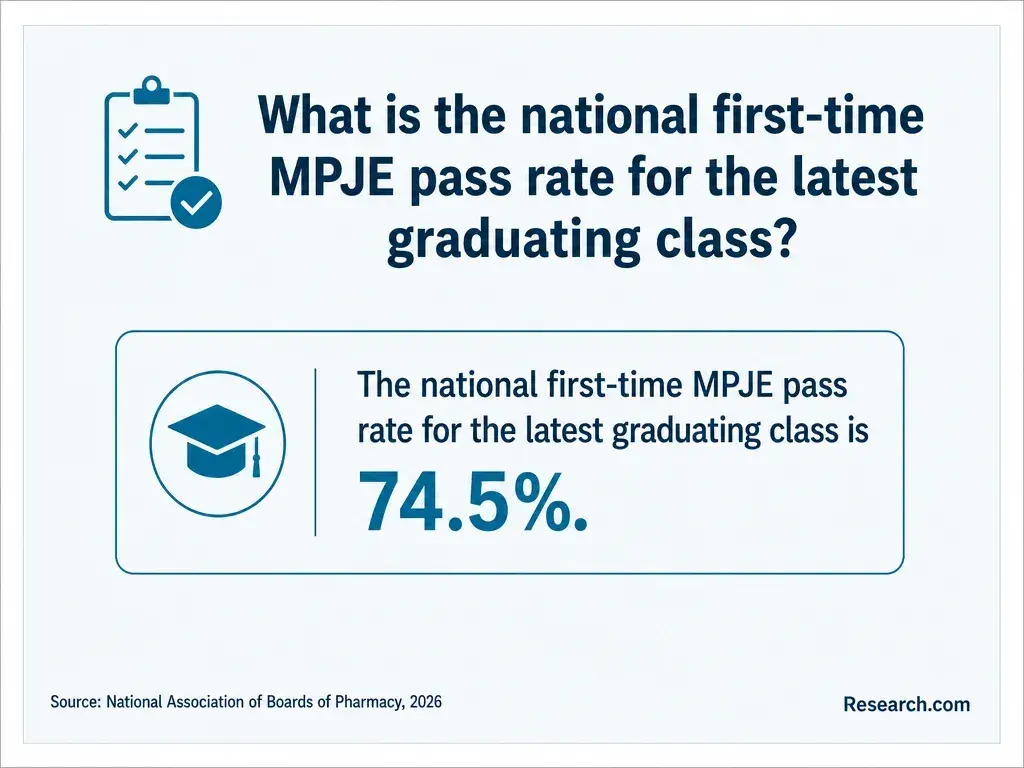
The Multistate Pharmacy Jurisprudence Examination (MPJE) assesses pharmacy-law knowledge for jurisdictions that use it. Some jurisdictions use another assessment or process, and some began transitioning to the Uniform Multistate Pharmacy Jurisprudence Examination (UMPJE) in 2026. Check the receiving board's current instructions rather than assuming every state requires the same exam.
A NAPLEX score transfer does not transfer a passing pharmacy-law result or waive a jurisdiction's law requirement. This matters when comparing several states: each application may call for a different assessment and separate scheduling. Similarly, Doctor of Pharmacy study online does not change which licensing exams a board requires. Passing the applicable exams remains only part of the board's licensing decision.
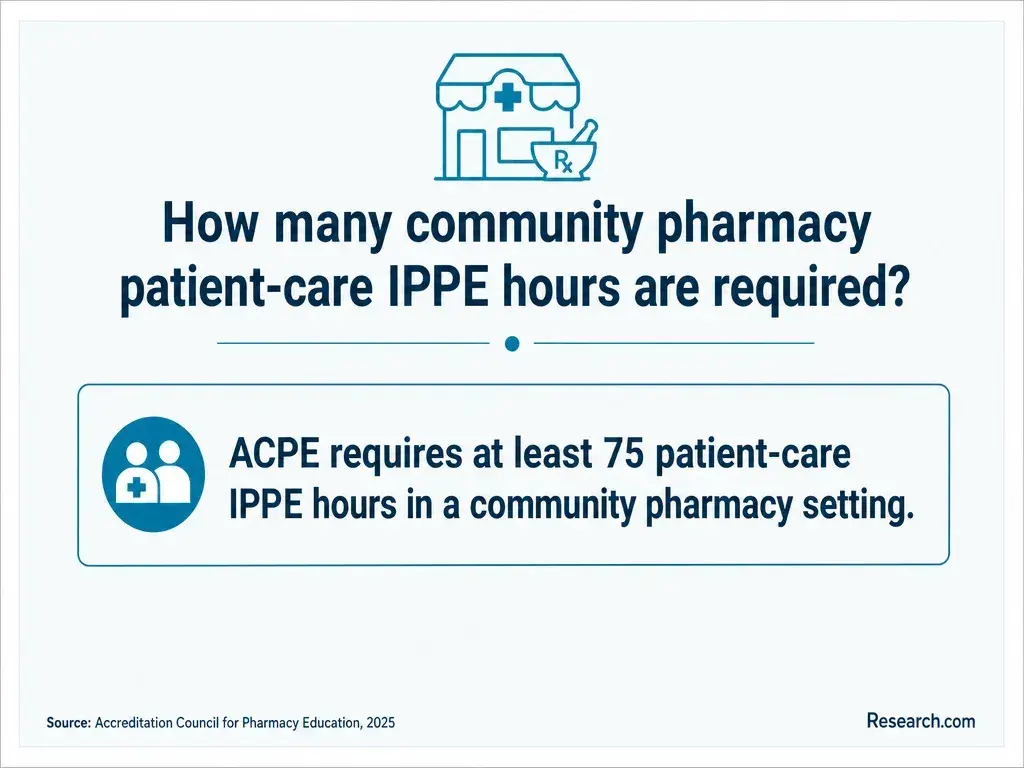
Supervised pharmacy experience can affect when you may apply and whether another board will accept your record. Professional Pharm.D. programs include introductory and advanced pharmacy practice experiences, commonly called IPPEs and APPEs. Boards may count educational experience differently, require specific documentation, or impose additional intern-registration or experience rules. Do not assume that hours accepted by one board automatically satisfy another.
If you are still choosing a program or arranging rotations, ask how the school documents experiences for the jurisdictions you are considering. Even if you can transfer courses into a pharmacy degree, the receiving school and licensing board separately decide how prior coursework and supervised experience apply. Keep intern registrations, preceptor records, and school verification accessible; a missing record can delay an otherwise complete application.
Choose the route that matches your current status, not the route with the most familiar name. Your expected job location and the timing of your NAPLEX attempt determine whether an additional score transfer is worth arranging.
Use these decision rules before committing to applications or fees:
- Seek licensure by examination in the jurisdiction where you intend to begin practicing and verify its full application requirements.
- Request NAPLEX score transfer if you are taking the exam and have a realistic prospect of seeking initial licensure in another jurisdiction within NABP's request window.
- Investigate license transfer if you are already licensed and want to practice in another jurisdiction; ask the receiving board whether you qualify and what else it requires.
- Pause before paying for extra jurisdictions if a possible move is speculative; compare the immediate cost with the risk of losing the score-transfer option.
For students checking pharmacy school application readiness, this is an early planning issue, not an extra admissions requirement. You can identify likely practice states now, then confirm their current licensing rules closer to graduation.
Boards may differ on application sequencing, experience verification, law assessments, background checks, and how they handle applicants licensed elsewhere. A state may also have rules affecting intern registration and clinical placements before graduation. That is why "my school qualifies me" or "another state accepted my hours" is not enough to establish eligibility everywhere.
Start with the board where you expect to work, then check each additional board independently. Distinguish pharmacist licensure from other pharmacy roles: shorter online pharmacy study options may prepare students for different goals, but they do not replace the professional education required to qualify as a pharmacist through the usual U.S.-educated route. If you plan to relocate during school, confirm both rotation-site rules and eventual licensure requirements; approval to study or train in a state is not a pharmacist license.
Budget separately for NABP examination and score-transfer charges and for each board's application, licensing, and any additional assessment fees. Charges can change and may be nonrefundable, so use the current NABP and board fee schedules immediately before payment. When comparing the overall cost of becoming licensed, remember that the online Doctor of Pharmacy price range concerns education; exam, transfer, and state licensing costs come afterward.
The most consequential score-transfer deadline is NABP's generally applicable 89-day period after the NAPLEX test date. State application deadlines and document-validity rules are separate. Missing NABP's window can remove score transfer as an option, even if a receiving board still accepts applications. Before paying, check whether the board will use your score for your intended application route, what supporting records it needs, and when those records must arrive.
How can applicants verify pharmacist licensure requirements with state boards?
Use the current licensing instructions published by each state board of pharmacy, alongside NABP's current examination and transfer policies. If the instructions do not clearly address your degree, internship record, existing license, or intended score-transfer route, obtain clarification from the board before relying on an assumption.
Send each board a short inquiry that identifies your status and asks for a decision-relevant answer:
- State whether you are a U.S. Pharm.D. student or graduate, an internationally educated applicant, or an already licensed pharmacist.
- Ask which application route applies and whether the board will accept a transferred NAPLEX score in your circumstances.
- Ask which law assessment, experience records, and other documents it requires, and whether any must be completed before applying.
- Confirm the current fees, deadlines, and point at which you may legally begin pharmacist practice.
Keep the board's written response with your application records. If you are comparing affordable short pharmacy programs, ask about the exact credential before treating a program as a pharmacist-licensure pathway. The board's eligibility rules - not a program's length or marketing description - control the licensing decision.
Other Things You Should Know About PharmD
Do not practice as a pharmacist until the relevant board has issued the license or expressly authorized the activity. An intern registration, if you have one, provides only the authority allowed under that jurisdiction's intern rules.
Review NABP and board identity-document requirements before submitting applications. Provide any requested name-change documentation promptly so records can be matched without delaying review.
Review NABP's current retake policy and your board's application rules before scheduling another attempt. A school graduation record or pending job offer does not waive the passing-score requirement.
No. A residency is postgraduate training, and specialty board certification is a separate credential. Neither replaces a state-issued pharmacist license; specific training positions may also require licensure by a stated deadline.
- Pharmacist Licensure Guide | Department of State https://www.pa.gov/agencies/dos/resources/professional-licensing-resources/licensure-processing-guides-and-timelines/pharmacist-guide
- Updated Pharmacist Licensure and Endorsement FAQs | nysed.gov https://www.op.nysed.gov/professions/pharmacist/frequently-asked-questions/updated-faqs
- Pharmacist Licensure | iowa.gov https://dial.iowa.gov/licenses/health-professions/pharmacy/pharmacist-licensure
- Pharmacist - Florida Board of Pharmacy https://floridaspharmacy.gov/pharmacist/
- South Carolina Board of Pharmacy | sc.gov https://llr.sc.gov/bop/exam.aspx
- Pharmacist Licensure by Examination or Score Transfer | State of Delaware https://dpr.delaware.gov/boards/pharmacy/newpharmacist/
- Pharmacist License By Score Transfer Instructions | CT.gov https://portal.ct.gov/dcp/drug-control-division/commission-of-pharmacy-licenses/pharmacist-license-by-score-transfer-instructions
- Licensure Process | Human Resources https://www.etsu.edu/pharmacy/current_students/licensure_process.php
- How to Apply for the MPJE and UMPJE | nabp.pharmacy https://nabp.pharmacy/programs/examinations/mpje/how-to-apply/
- Section 12 | Score Transfers https://read.nxtbook.com/nabp/bulletin/naplex_mpje_bulletin/score_transfers.html