How to Write a Pharmacy Residency Letter of Intent

Co-Founder and Chief Data Scientist
A pharmacy residency letter of intent has to do more than restate your CV. It must show a program why its training fits your goals and what you would contribute as a resident. That can be difficult when several programs offer similar rotations and your strongest experiences already appear elsewhere in the application.
This guide is for Pharm.D. students and pharmacists applying to U.S. residencies. You'll learn what to include, how to choose evidence, how to tailor each letter, and what to check before submitting it.
Key Things You Should Know
- Build the letter around three decisions: why you want residency training, why this program fits, and what specific experience shows you are ready to contribute.
- Unless a program specifies otherwise, aim for about one page; the program's instructions take precedence over any general length or formatting advice.
- Assign and review the correct letter for each PhORCAS program designation, and check that program's deadline and any separate Match requirements before submission.
What is a pharmacy residency letter of intent?
A pharmacy residency letter of intent is a program-specific statement explaining your interest in postgraduate pharmacy training, your relevant preparation, and your reasons for applying to that particular program. It gives reviewers the reasoning behind your application; your CV supplies the fuller record of positions, rotations, and accomplishments.
A postgraduate year one (PGY1) residency generally develops broad pharmacist practice skills, while a postgraduate year two (PGY2) residency provides more focused training. A residency differs from a research-oriented fellowship, pharmacist licensure, and optional specialty board certification. It also is not another degree. If you are still using an online pharmacy program comparison to choose a professional degree, establish which pathway leads to a Pharm.D. before planning a pharmacist residency application.
What should a pharmacy residency letter of intent include?
Include a clear reason for seeking the program's level of training, a career direction, evidence from pharmacy practice, and a specific explanation of program fit. An applicant who has not finalized a specialty can still describe the patient populations, responsibilities, or skills they want to explore.
Choose evidence that a reviewer can evaluate: a clinical problem you helped address, your role, what you learned, and how that learning connects to the residency. Follow the individual program's prompt if it requests additional topics. If you are still working through pharmacy program preparation requirements, do not mistake prerequisite coursework for the professional Pharm.D. education and supervised experiences expected of a residency applicant.
How do you structure a pharmacy residency letter of intent?
A useful structure moves from motivation to evidence to program fit. Draft in this order so each paragraph answers a different question rather than repeating your CV:
- Open with the residency you are applying to, your training goal, and a specific reason this program interests you.
- Describe one substantial practice experience, including your contribution and what it taught you about your readiness for residency.
- Connect another relevant skill or experience to a verified feature of the program, such as a rotation, patient population, teaching opportunity, or practice setting.
- Close by linking the training to your next professional step and thanking the reviewers for considering your application.
For example, an applicant could explain how reconciling medications during a transitions-of-care rotation exposed a recurring discharge problem, then connect that experience to a program's documented transitions-of-care work. The point is to explain the connection, not claim an outcome you cannot substantiate. If your route to pharmacy included prior science study, an online Pharm.D. for students with prior science study is background; your letter should emphasize the pharmacy practice experiences that followed.
Use the program's stated word count, page limit, or prompt first. If it gives no limit, about one page is a practical target: enough room for a reasoned argument, but short enough for every sentence to earn its place. A longer letter is justified only when the program asks for more detail or the additional material directly strengthens your case.
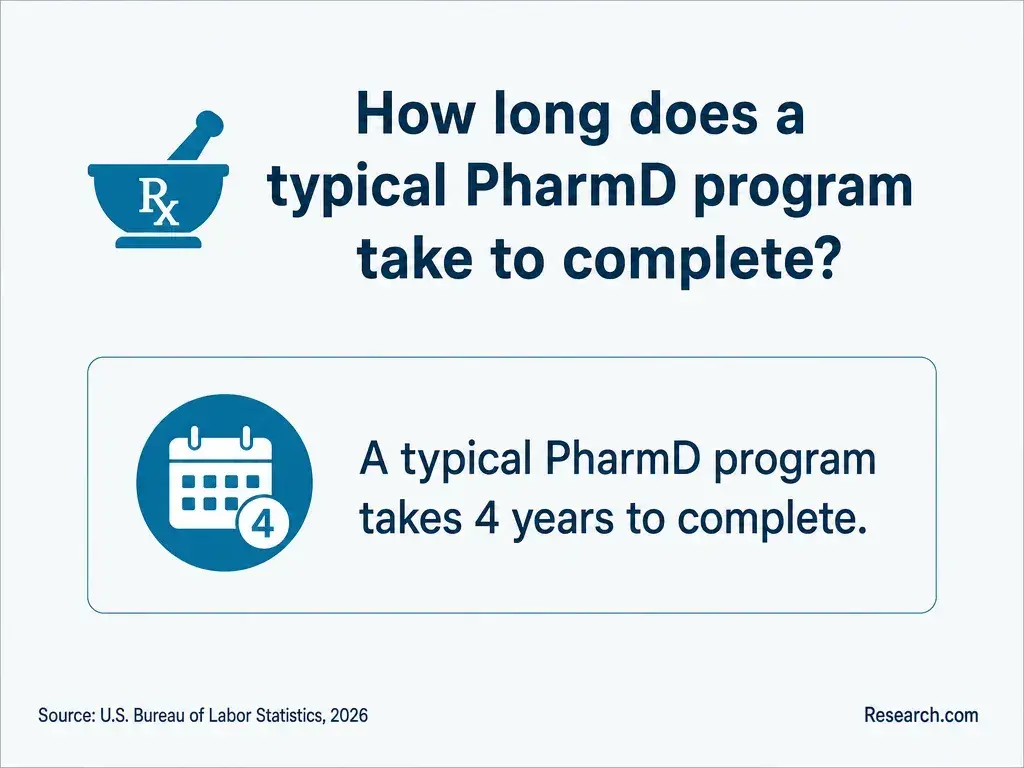
Do not shrink the font or margins to fit another accomplishment. Cut repeated career statements and experiences already clear from your CV before cutting the explanation of program fit. Your pharmacy doctorate program length, whether accelerated or not, does not change a residency program's letter instructions.
Start with the program's current description and application instructions. Identify a feature you genuinely want to pursue, confirm that it is available to applicants at your training level, and explain how your experience prepares you to use it. Name-dropping a rotation without that connection is not tailoring.
Compare programs on training substance rather than assuming admissions difficulty predicts fit. Even if you previously researched pharmacy schools that may be easier to enter, residency selection calls for different questions: Which patient populations will you serve? How much choice do residents have in learning experiences? What are the program's staffing, teaching, research, and licensure expectations? Verify the answers with each program instead of relying on a generic description of its institution.
State the kind of work you hope to do and the capability you need to develop next. Then explain why the residency is a sensible bridge. For a PGY1 application, it is reasonable to name an area of interest without pretending you have settled on a lifelong specialty. For a PGY2 application, show how prior training led to a more focused goal.
Be precise about the pathway. Pharmacist roles require applicable state licensure; a Pharm.D. or residency alone does not issue a license, and residency is not required for every pharmacist job. Someone comparing quickest online pharmacy study routes should not describe a pharmacy technician credential or another short program as a route to pharmacist residency. Write about the credential and role you are actually pursuing.
Select experiences for what they demonstrate, not just how impressive their titles sound. Advanced pharmacy practice experiences (APPEs), employment, research, teaching, and service can all provide evidence when you explain your own actions and limits. A student's contribution should not be described as independent pharmacist practice if it occurred under supervision.
Replace a broad claim such as "I have strong communication skills" with a brief account of the audience, your responsibility, and what changed in your approach. If pharmacy degree credit transfer policies affected your educational path, focus on the clinical skills you subsequently developed rather than treating transferred credits as evidence of practice readiness.
The most damaging mistakes make reviewers question either your attention to the program or the accuracy of your account. Check for these problems before you revise for style:
- Sending a generic letter that names the program but gives no verified reason for applying.
- Repeating CV entries without explaining your contribution, learning, or next training need.
- Claiming independent clinical decisions, results, or competencies that your experience does not support.
- Promising a specialty career that conflicts with the training you say you want.
- Leaving another program's name, rotation, or residency level in a reused draft.
Keep education claims equally accurate. Shorter online doctorate pathways do not, simply by being doctorates, establish eligibility for pharmacist licensure or pharmacy residency. Likewise, do not present a fellowship, residency, or board certification as interchangeable credentials.
Use a readable font, conventional margins, and clear paragraphs. Follow any requested file type, naming convention, addressee, or prompt format. If no contact person is identified, a professional program-level salutation is safer than guessing a director's name.
Proofread in separate passes: first for factual accuracy and program fit, then for clarity and repetition, and finally for names, spelling, and file details. Ask a trusted reviewer whether the letter answers "Why this program?" without relying on your explanation outside the document. The letter is not the place to justify online Doctor of Pharmacy tuition or other past education costs unless a program specifically asks about your circumstances; use the space for evidence relevant to residency training.
How do you submit a pharmacy residency letter through PhORCAS?
PhORCAS is the Pharmacy Online Residency Centralized Application Service used by participating residency programs. Check each program's current listing and instructions because required materials, prompts, and deadlines can differ. PhORCAS submission and registration for the ASHP Match, where applicable, are distinct tasks; completing one should not be assumed to complete the other.
Use this final sequence to prevent a strong letter from reaching the wrong program:
- Confirm the program's eligibility rules, letter prompt, deadline, and any instructions outside PhORCAS.
- Save a final, clearly named version of each tailored letter and assign the intended version to the correct program designation using the current PhORCAS workflow.
- Preview the assigned document and check the program name, residency level, formatting, and any uploaded-file display.
- Complete submission before the program deadline, verify its status in the system, and separately confirm any required Match registration.
Do not confuse pharmacy program preparation requirements with a residency's eligibility and application rules. If a requirement or portal step is unclear, ask the program or consult the current PhORCAS instructions before submitting.
Other Things You Should Know About PharmD
Check the program's policy first. If permitted, use AI for brainstorming or editing, not to invent experiences or replace your own account. Verify every claim and make sure the final letter sounds like you.
Often, yes, but each residency sets eligibility and licensure deadlines. State boards control licensure requirements. Check both the program's policy and the rules of the state where you would train.
Only if it materially affects how reviewers will understand your readiness or the program asks you to address it. Keep the explanation brief, factual, and focused on what you did afterward.
No. You write the letter of intent to explain your goals and fit. A recommendation letter is an evaluation written by someone else under the application's reference process.
- Dear Program Director: Deciphering Letters of Recommendation | nih.gov https://pmc.ncbi.nlm.nih.gov/articles/PMC6008019/
- Suggestions for a Good Career Development Plan | National Institute of Neurological Disorders and Stroke https://www.ninds.nih.gov/funding/training-career-development/choose-award-program-type/career-development-awards/suggestions-good-career-development-plan
- How to write an effective cover letter (with samples) | MIT https://capd.mit.edu/resources/how-to-write-an-effective-cover-letter/
- Letter of intent - Pharmacy Careers - University of Florida https://careers.pharmacy.ufl.edu/documents/letter-of-intent/
- Cover Letter Resources - University Career Center https://careercenter.umich.edu/content/cover-letter-resources
- Pharmacy Dissected Residency Letter of Intent Sample | ucsf.edu https://career.ucsf.edu/document/pharmacy-dissected-residency-letter-of-intent-sample
- Letters - Professional Writing | Data Analytics with Accounting Data https://odp.library.tamu.edu/professionalwriting/chapter/letters/
- How to Write a Cover Letter (With Examples and Tips) | indeed.com https://www.indeed.com/career-advice/resumes-cover-letters/how-to-write-a-cover-letter
- Pharmacy Letter of Intent - One Page or Two? | GradPilot https://gradpilot.com/news/pharmacy-residency-letter-of-intent-length
- Programs | Register https://natmatch.com/ashprmp/programs/register.html