PharmD Clinical Rotations in Hospitals

Co-Founder and Chief Data Scientist
Hospital rotations can be a deciding factor when choosing a Doctor of Pharmacy (Pharm.D.) program, especially if you hope to work in inpatient care. But a school's promise of "clinical experience" does not tell you which rotations you will complete, who arranges them, or whether you may need to travel.
This guide explains the work, required experiences, scheduling, costs, and career implications so you can compare programs and plan for the commitments beyond classroom tuition.
Key Things You Should Know
- Hospital experiences may include both introductory pharmacy practice experiences (IPPEs) and advanced pharmacy practice experiences (APPEs); a hospital visit during an IPPE is not the same as an inpatient clinical APPE.
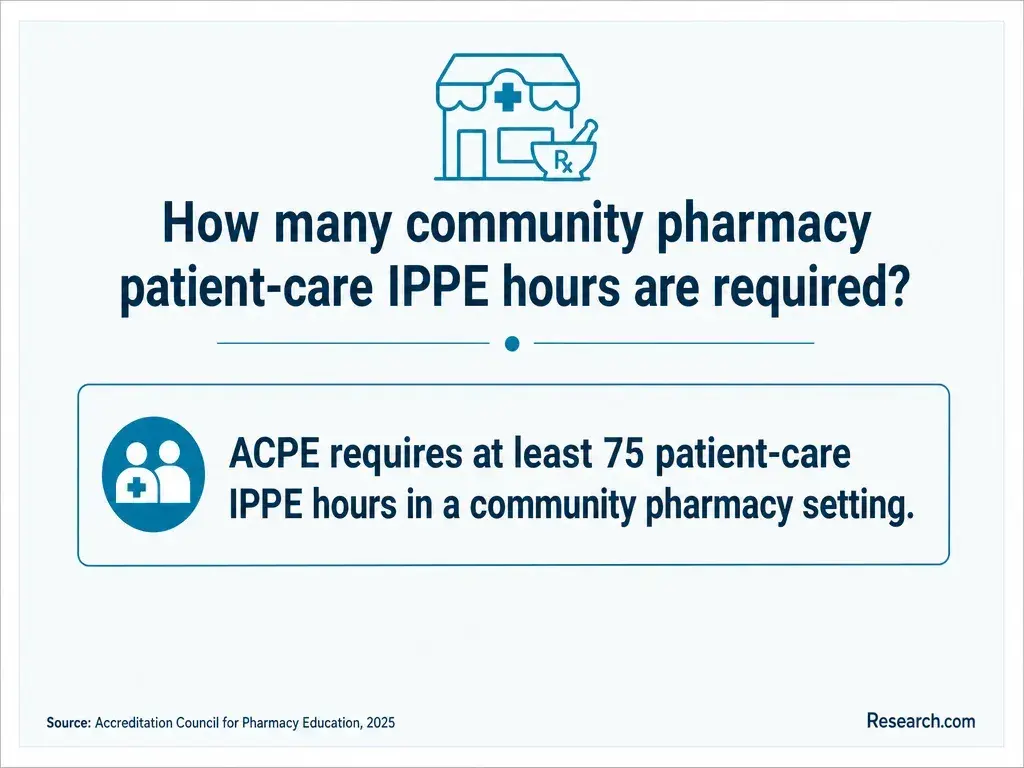
- Accreditation Council for Pharmacy Education (ACPE) standards require at least 300 IPPE hours and 1,440 APPE hours across practice settings - not 1,740 hours exclusively in hospitals.
- Before enrolling, confirm the program's hospital and inpatient rotation sites, placement process, travel expectations, and total costs. Completing rotations or earning a Pharm.D. does not itself grant a pharmacist license.
What are PharmD clinical rotations in hospitals?
Hospital clinical rotations are supervised, in-person parts of the professional Pharm.D. curriculum. Students learn with pharmacist preceptors in settings such as inpatient units, central pharmacies, emergency departments, and specialty services. Their activities depend on the rotation, their preparation, site policy, and state law; they do not practice independently as licensed pharmacists.
"Hospital rotation" is a broad label. A hospital or health-system pharmacy experience may emphasize medication distribution and safety systems, while an inpatient patient-care experience may emphasize assessing drug therapy with a clinical team. Ask schools for the actual rotation titles and objectives rather than assuming every hospital placement provides the same patient-care exposure.
If you are comparing pharmacy programs with shorter completion times, first check the credential. A shorter pharmacy-related program may prepare students for a different role; it does not replace the supervised experiences required in a professional Pharm.D. program.
What do students do during hospital pharmacy rotations?
Tasks progress from observing workflows to making supervised contributions. Depending on the site, a student may review medication histories, assess laboratory results and medication orders, identify potential interactions, discuss recommendations with a preceptor, join patient-care rounds, prepare discharge counseling, or examine a medication-safety event. Hospital operations rotations may focus more on dispensing systems, sterile-product processes, and transitions of care.
The preceptor determines which activities are appropriate and evaluates the student's performance. Access to patient records and participation in care depend on training, privacy rules, site permissions, and applicable state requirements. Students should expect early start times, changing patient assignments, and preparation outside scheduled site hours.
Students entering through pharmacy programs with transfer pathways should ask separately how previous coursework and prior experiential work are evaluated. Acceptance of academic credits does not automatically waive a school's rotation requirements.
How many hospital rotations are required in a PharmD program?
There is no single nationwide number of rotations that every student must complete inside a hospital. ACPE standards set minimum experiential hours and specify core APPE practice experiences, including hospital/health-system pharmacy and inpatient general medicine patient care. A school determines its rotation blocks and approved sites, and additional hospital electives vary by program and availability.
That distinction matters when comparing schools: a program may meet accreditation standards yet offer different elective capacity or specialty exposure from another. Request its current APPE schedule and ask whether the required inpatient and hospital/health-system experiences occur at separate sites, how electives are assigned, and what happens if a preferred site is unavailable.
Doctor of Pharmacy accelerated tracks can change the academic calendar, but a shorter calendar should not be mistaken for fewer required experiential hours. Compare when full-time APPE blocks begin and whether their timing leaves room for work or relocation.
IPPEs build foundational practice skills earlier in the professional curriculum. APPEs occur after students have developed more classroom and introductory practice knowledge and involve more sustained, supervised responsibility. The comparison below helps you interpret a school's use of the term "hospital experience."
| Feature | IPPE | APPE |
| Full name | Introductory pharmacy practice experience | Advanced pharmacy practice experience |
| Typical emphasis | Orientation, observation, foundational tasks, and reflection | Application of clinical and operational skills under preceptor supervision |
| Place in curriculum | Earlier professional study | Later professional study |
| ACPE minimum across all settings | 300 hours | 1,440 hours |
Neither hour total represents hospital-only time. When comparing a Pharm.D. with a general guide to online doctorate program length, use the Pharm.D. program's own IPPE and APPE calendar: these supervised hours are a substantial scheduling commitment regardless of how lectures are delivered.
Students practice connecting pharmacology and therapeutics to a patient's current condition. That can mean evaluating whether a dose fits kidney function, monitoring for adverse effects, interpreting a medication history, or explaining a drug-therapy recommendation clearly to a care team. They also learn how pharmacists document work, use clinical evidence, protect patient information, and respond when a recommendation is not accepted.
The learning goal is sound judgment, not independent authority. A student who can describe a treatment option in class must still learn to check the patient record, recognize uncertainty, and seek preceptor review before acting at a clinical site.
Prior science coursework can be useful, but it is not a substitute for professional training. For students comparing Pharm.D. programs for biology majors, ask how the curriculum develops medication-use and patient-care skills before the first inpatient APPE.
Admission to a Pharm.D. program is only the first step. Before a hospital placement, students generally must progress through required professional coursework and satisfy school, site, and state conditions. The school's experiential education office typically coordinates or approves placements, but students remain responsible for meeting deadlines and site requirements.
Use this sequence to identify requirements that could delay your start date:
- Ask the experiential education office which courses, skills assessments, and academic standing are required before each hospital IPPE or APPE.
- Confirm whether the placement state requires pharmacist intern registration and when an application must be submitted.
- Obtain the site's current requirements for immunizations, health screening, background checks, drug testing, privacy training, and identification.
- Ask who assigns the site, whether students can state preferences, and how travel or a canceled placement is handled.
Requirements vary by school, hospital, and state. If you plan to apply to pharmacy school while finishing prerequisites, distinguish courses permitted to remain in progress during the application from courses that must be complete before enrollment. Neither policy waives later rotation-readiness requirements.
Some Pharm.D. programs deliver portions of instruction online or in a hybrid format, but required patient-care rotations take place in person. Online lectures do not make hospital APPEs remote, self-paced, or automatically available near a student's home. Programs may also require scheduled live classes, hands-on labs, or campus visits.
When reviewing online Doctor of Pharmacy degree options, verify the specific professional program's current ACPE status and its clinical placement policy. ACPE accreditation of the professional program is different from the institution's accreditation and from authorization to enroll distance-learning students in a particular state. Ask whether the school has approved sites where you live, who recruits and approves preceptors, and whether another state's intern-registration rules could affect your placement.
For a working student, the decisive issue is often daytime availability during APPE blocks - not whether lectures are online. Do not assume employment at a hospital can substitute for a required rotation or that a nearby placement is guaranteed.
Hospital rotations occupy part of the program's broader experiential schedule; their exact length depends on the school's block calendar and the experiences assigned. APPEs commonly demand full-time site availability, while IPPE scheduling varies. Ask for the actual calendar, including orientation and possible weekend or evening shifts, before deciding how much paid work you can retain.
Tuition alone will not show the cost of completing a placement. These expenses are worth pricing in the program's current cost-of-attendance information and your own travel plan:
- Required tuition and fees during rotation terms, plus any clinical resources or equipment.
- Screening, immunizations, intern registration, and site onboarding expenses not covered by the school.
- Commuting, parking, temporary housing, or lost earnings if a full-time block requires time away from work.
Costs vary too much by school and assigned site to support a reliable nationwide hospital-rotation price. When comparing affordable Doctor of Pharmacy options, request a current, program-specific budget and ask whether travel-heavy placements can be anticipated. Confirm financial aid with the school for your enrollment and aid year; federal borrowing rules for many new graduate and professional borrowers changed beginning July 1, 2026.
Hospital rotations can help students test their interest in inpatient staff pharmacy, clinical pharmacy, medication safety, informatics, and health-system operations. They also provide work samples and potential professional references. They do not guarantee a hospital job or admission to postgraduate training.
Some hospital pharmacist positions hire new licensed graduates; others prefer or require relevant experience or a postgraduate year one (PGY1) residency. More specialized positions may favor a postgraduate year two (PGY2) residency. A fellowship is a different form of postgraduate training, often oriented toward research or industry, while specialty board certification is a separate credential - not a pharmacist license or an automatic result of residency.
The Bureau of Labor Statistics projects 5% growth for pharmacists, 2025-2035. That occupation-wide projection does not measure openings specifically for inpatient pharmacists or predict your local hiring prospects. If your goal is a pharmacy technician or another pharmacy-adjacent role rather than pharmacist practice, consider whether an affordable route through pharmacy education better matches the role; technician preparation does not qualify someone for pharmacist licensure.
How do hospital pharmacy rotations affect pharmacist licensure and salary?
Hospital rotations contribute to the supervised education in a professional Pharm.D. program, but completing them does not issue a license. A graduate must satisfy the relevant state board's requirements, which generally include degree and examination requirements. The North American Pharmacist Licensure Examination (NAPLEX) is part of that process; jurisprudence examination requirements vary by jurisdiction, including whether the MPJE or UMPJE applies. Check the board where you intend to practice rather than assuming one state's rules apply everywhere.
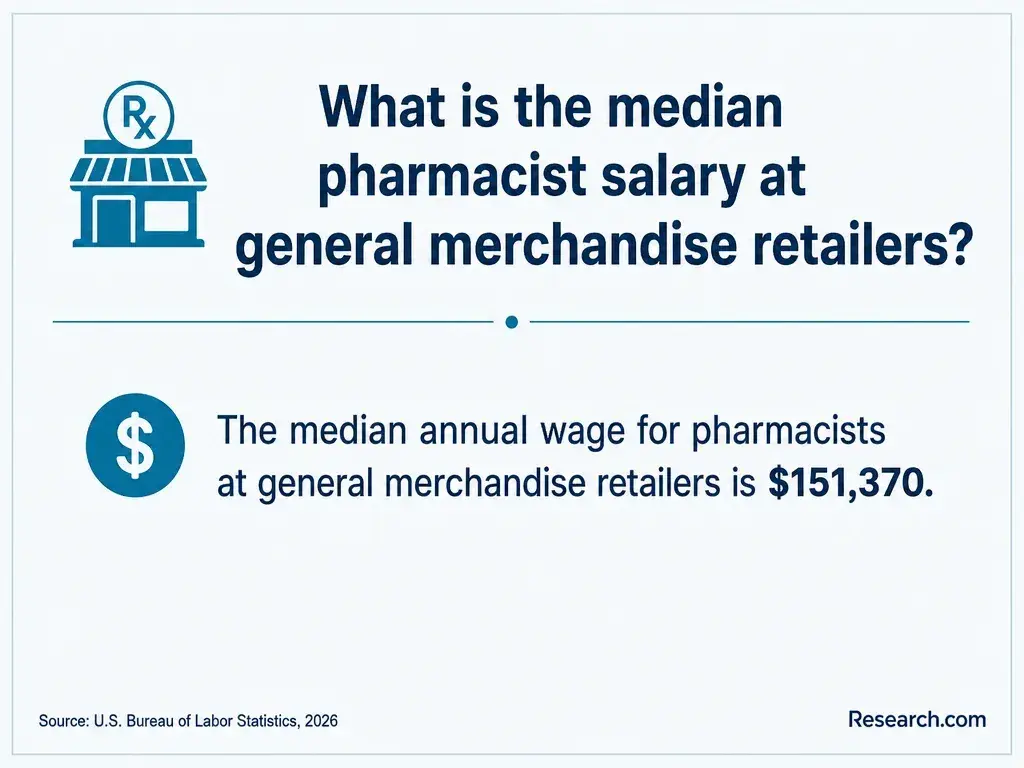
The Bureau of Labor Statistics reports $140,910 in median annual pay for pharmacists in May 2025. This figure covers pharmacists across practice settings, not hospital-rotation alumni or entry-level hospital hires. Rotation quality may help you build relevant skills and references, but salary depends on the position, location, employer, experience, and other qualifications.
Work backward from your intended state and role before committing to a program. Alongside its hospital placement record, review pharmacy school prerequisites and eligibility, confirm the professional program's ACPE status, and check the state board's current licensure rules. An attractive rotation list cannot make up for an education pathway that does not meet your licensing goal.
Other Things You Should Know About PharmD
Yes, if the preceptor knows your work well and agrees to recommend you. Ask early, provide your application materials, and confirm the recommendation process and deadline for each program.
Contact your school's experiential education office immediately. The school must determine an approved replacement or scheduling solution; availability and the effect on graduation timing depend on its policies and sites.
Follow the hospital's privacy rules and your school's instructions. Do not share identifiable patient information or assume that removing a name alone makes a case appropriate to disclose.
That depends on the program's evaluation, remediation, and progression policies. Ask for the written policy, including whether a repeat affects placement timing, tuition, or graduation.
- Essential Elements for Core Required Advanced Pharmacy Practice Experiences - PMC https://pmc.ncbi.nlm.nih.gov/articles/PMC6581360/
- Preparing for Your Internship | Cedars-Sinai Health Sciences University https://www.cedars-sinai.edu/education/professional-training-programs/internship/preparing.html
- Health Requirements - Nursing | usfca.edu https://myusf.usfca.edu/nursing/health-requirements
- What Happens in Pharmacy Clinical Rotations? | Chapman Blogs https://blogs.chapman.edu/pharmacy/2026/04/22/what-happens-in-pharmacy-clinical-rotations/
- PHM 843: Ambulatory patient care (core rotation-240 hours) | buffalo.edu https://pharmacy.buffalo.edu/content/pharmacy/academics/pharmd/experiential-education/advanced-pharmacy-practice-experiences--appe-/jcr:content/par/tabs.content.rotation-types.html
- Practice Rotations | ucsf.edu https://pharmd.ucsf.edu/curriculum/practice-rotations
- Curriculum - UW School of Pharmacy https://sop.washington.edu/pharmd/curriculum/
- Pharmacy Residency Programs - What Is a Residency? | PCOM https://www.pcom.edu/pharmacy/news/pharmacy-residency-programs.html
- Policy 3.2: Clinical Compliance and Onboarding | Current Students https://students.nursing.uw.edu/policies/policy-3-2-clinical-compliance-and-onboarding/
- Accreditation Council for Pharmacy Education: Home https://www.acpe-accredit.org/