How to Build Clinical Communication Skills Before Rotations

Co-Founder and Chief Data Scientist
Before a pharmacy rotation, knowing the medication is only part of the job. Students also need to uncover what a patient actually takes, explain a plan clearly, and tell a preceptor when something is unclear or unsafe.
This guide is for prospective and current Doctor of Pharmacy (Pharm.D.) students who want a realistic way to prepare. It identifies the skills to prioritize, gives you a repeatable practice routine, and shows how to judge whether a program offers enough supervised feedback before patient-facing work begins.
Key Things You Should Know
- Practice complete encounters, not just polished counseling speeches: ask, listen, verify the medication history, explain the next step, and check understanding.
- Use short, repeated simulations with an observer's specific feedback; a useful starting routine is one 10-minute encounter followed by a focused debrief.
- Before choosing a Pharm.D. program, ask when communication skills are assessed, who provides feedback, and how students improve before introductory and advanced rotations.
What are clinical communication skills, and why do they matter before rotations?
Clinical communication is the ability to exchange information accurately and respectfully with patients, caregivers, preceptors, and other healthcare professionals. For a pharmacy student, that includes eliciting a medication history, explaining how to use a medicine, checking comprehension, documenting findings, and escalating a concern without overstating what is known.
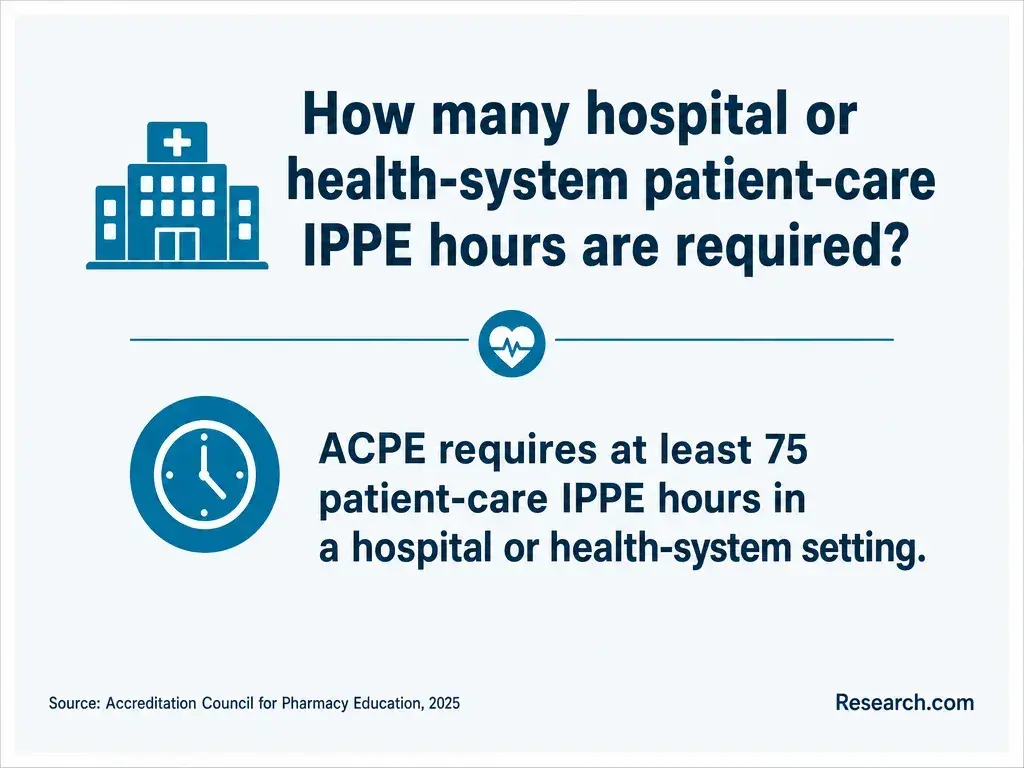
In a Pharm.D. program, introductory pharmacy practice experiences (IPPEs) introduce supervised practice; advanced pharmacy practice experiences (APPEs) involve more sustained clinical work. Communication should be practiced before and throughout both. A student who can recite adverse effects but cannot learn that a patient stopped taking a medicine may miss the information needed for a useful assessment.
Undergraduate science courses build important knowledge but do not necessarily provide patient-interview practice. If you are planning pharmacy education after undergraduate science coursework, look for structured opportunities to turn that knowledge into supervised patient conversations.
How can students practice patient communication skills before clinical rotations?
Start with low-stakes repetition. Ask a classmate or instructor to play a patient using a brief case, and give the observer one skill to watch. This practice sequence makes each session manageable:
- Open the encounter: introduce your role, confirm whom you are speaking with, and explain what you hope to discuss.
- Ask an open question, then listen without immediately filling the silence or switching to a checklist.
- Clarify medicine names, actual use, allergies, symptoms, and the patient's main concern without guessing at missing facts.
- Give a plain-language explanation within your student role, then ask the patient to describe the plan in their own words.
- Close by summarizing what needs to be checked with a preceptor and what happens next.
Repeat the case after feedback, then change one detail - for example, a patient who is worried about cost or has misunderstood the directions. If you are considering pharmacy programs with faster completion options, ask where this repeated practice fits in the schedule; a compressed calendar does not remove the need to demonstrate the skill.
Which communication skills should students master before seeing patients?
"Master" should mean demonstrating a reliable starting approach under supervision, not practicing independently. Prioritize listening without interruption, asking open and focused follow-up questions, using plain language, checking understanding, maintaining privacy, and acknowledging uncertainty. Students should also be able to give a concise, accurate report to a preceptor.
Two habits prevent common mistakes. First, distinguish the prescribed regimen from what the patient says they actually take. Second, replace "Do you understand?" with teach-back: ask the patient to explain how they will use the medicine, without making the exchange feel like a test. If they struggle, rephrase your explanation and check again.
Students entering with prior coursework may have different scientific preparation but similar gaps in patient-facing experience. When exploring pharmacy degree programs for transfer students, ask how the school assesses clinical communication rather than assuming accepted credits establish readiness for encounters.
Role-play lets classmates rehearse an encounter; a standardized patient is a person trained to portray a case consistently for teaching or assessment. Both provide a safer place to make mistakes than an unsupervised patient encounter. Their main value is the chance to observe what a student does, not just what the student knows.
Make the case specific: a patient reports dizziness, has two medication lists, and is unsure which one is current. Give the observer a short rubric covering the opening, open questions, medication verification, response to concern, teach-back, and escalation to the preceptor. Afterward, ask the person playing the patient what felt clear or confusing; an observer may notice different things.
If previous coursework could affect your admission pathway, compare pharmacy admissions for students with prior credits separately from simulation quality. Admission or credit acceptance does not tell you how often students receive realistic practice and individual feedback.
Use a consistent framework without sounding scripted. Begin with the patient's reason for the conversation, then explore current prescription medicines, over-the-counter products, supplements, allergies and reactions, how medicines are actually taken, and any practical barriers. Ask follow-up questions when an answer is vague; do not silently convert "sometimes" into a precise schedule.
For practice, have a partner introduce one discrepancy between a written medication list and the patient's account. Your task is to identify the discrepancy, clarify it without blame, and summarize what still needs verification. A strong closing might be: "You told me you take this differently from the label. I'll check the record and discuss it with my preceptor before we suggest any change."
As you compare pharmacy degree entry options, keep admission requirements distinct from clinical readiness. Ask whether interview and history-taking skills are taught and assessed before the program expects students to use them at an experiential site.
Feedback works best when it identifies an observable action and gives you another chance to try it. "Be more empathetic" is difficult to apply; "After the patient mentioned missing doses, you moved to the next question without asking why" identifies a moment you can revisit.
After each simulation, record one effective behavior, one change, and the next case in which you will test that change. Ask a preceptor, faculty member, peer, or standardized patient to comment on a specific skill rather than requesting an overall impression. Compare successive attempts: did you ask a clearer follow-up, and did the patient's response give you better information?
Program resources can affect the amount of coached practice available, but higher tuition alone is not proof of better feedback. If you are trying to reduce the cost of pharmacy school, ask lower- and higher-cost programs the same questions about simulation access, observer time, remediation, and any additional travel or equipment costs.
Do not infer a patient's language preference, health beliefs, literacy, or ability to pay from appearance or background. Ask what matters to the patient, which language they prefer for healthcare discussions, and what may make the plan difficult to follow. Use plain language without being patronizing, and invite questions without suggesting there is a "wrong" answer.
When language assistance is needed, follow the site's procedures for a qualified interpreter rather than assuming a family member should interpret. Speak to the patient, pause for interpretation, and use teach-back to check the explanation. Follow site policy for privacy and documentation; students should not improvise an interpretation arrangement or share patient details in a practice tool.
Access to varied supervised cases matters here. An online pharmacy degree cost comparison should therefore look beyond tuition and duration: ask whether interpreted-patient simulations, accessible practice materials, and in-person experiential sites are included or create additional costs.
Interprofessional communication means sharing relevant information with other members of the healthcare team while understanding each person's role. Practice a brief handoff with a classmate playing a nurse, prescriber, or preceptor. State the patient concern, the facts you verified, what remains uncertain, and the decision or assistance you are requesting.
A structure such as SBAR - situation, background, assessment, recommendation - can keep a report concise. As a student, label an assessment as preliminary and seek supervision before recommending a clinical change. Practice listening to the response, confirming the agreed next step, and documenting or relaying it according to site rules. Confidence should never substitute for verification.
When weighing doctoral degree timeline options, distinguish a shorter academic calendar from time available for supervised team-based practice. Ask how the program prepares students to communicate with other professionals before APPEs.
An online or hybrid Pharm.D. program may use live video role-play, recorded counseling exercises, virtual patient cases, or remotely observed simulations. Those methods can support repeated practice, but online coursework does not mean every activity is asynchronous or that hands-on training and rotations can be completed remotely. Check the current program's schedule and assessment policies rather than relying on its delivery label.
The comparison below separates what each practice format can offer from its limits. A strong program may combine formats rather than rely on only one.
| Practice format | Potential strength | Limitation to check |
| Live online simulation | Allows observed conversations and immediate feedback | Scheduled attendance and limited physical-exam context |
| Recorded encounter | Allows review of wording, pacing, and missed questions | May not test responses to an unexpected patient concern |
| In-person simulation or rotation | Includes workplace interactions and site procedures | May require travel, fixed hours, and site clearance |
Be particularly cautious when considering fast online pharmacy program choices: a short online pharmacy-related credential should not be assumed to be a professional Pharm.D. or a substitute for its supervised experiential requirements.
How can students evaluate a health professions program's communication training?
Look for evidence of a practice-and-feedback cycle, not simply a course title such as "professional communication." For a Pharm.D., ask the program for its current curriculum and experiential education information. Accreditation Council for Pharmacy Education (ACPE) accreditation applies to the professional pharmacy program; it is distinct from institutional accreditation and, for distance learners, state authorization. None of these alone describes the quality or convenience of an individual student's simulation schedule.
Use these questions when comparing programs. The answers should reveal both preparation and the commitments you will need to accommodate:
- Before IPPEs and APPEs, which patient interviews, counseling encounters, and team handoffs must students demonstrate?
- How many chances do students have to practice again after receiving individual feedback, and what happens if they do not meet the assessment standard?
- Which activities are live online, recorded, or on campus, and what equipment, travel, or scheduled attendance do they require?
- Who coordinates or approves experiential placements, and what responsibilities remain with the student?
When you review online pharmacy doctorate programs, request written details rather than assuming that "online" means remote rotations or a self-paced schedule. Choose the program whose supervised practice, feedback, placement arrangements, and total commitments you can realistically complete - not merely the one with the most appealing delivery description. Completing a Pharm.D. is also separate from meeting a state board's requirements for pharmacist licensure.
Other Things You Should Know About PharmD
Only if the site permits it and the required patient consent and privacy procedures are followed. For independent practice, use a fictional case and a willing partner instead of recording a real patient.
There is no universal communication certificate required for Pharm.D. rotations. Your school and placement site set their own readiness and clearance requirements, so check their current instructions.
Tell the course instructor early and ask for specific feedback and additional practice opportunities. If you may need an accommodation, contact the school's accessibility office through its established process.
Work within your student role, supervision, and site policies. If a patient needs a clinical decision you are not authorized to make, gather the relevant facts and involve your preceptor rather than guessing.
- How to give and receive feedback effectively - PMC - NIH https://pmc.ncbi.nlm.nih.gov/articles/PMC5709796/
- Integrating Literacy, Culture, and Language to Improve Health Care Quality for Diverse Populations - PMC https://pmc.ncbi.nlm.nih.gov/articles/PMC5091931/
- Communication Strategies | Health Literacy https://www.cdc.gov/health-literacy/php/research-summaries/communication-strategies.html
- Cultural Competence in Health Care: Is it important for people with chronic conditions? - Health Policy Institute https://hpi.georgetown.edu/cultural/
- Feedback for Learning | columbia.edu https://ctl.columbia.edu/resources-and-technology/resources/feedback-for-learning/