How long does it take to become a pharmacist after college?

Co-Founder and Chief Data Scientist
If you have finished college, your remaining path to pharmacist licensure depends less on your major than on whether you have completed a pharmacy school's prerequisites. Most students then spend four years earning a Doctor of Pharmacy (Pharm.D.), although some programs run year-round and finish sooner. Graduation is not the final step: a state license requires examinations and any other applicable board requirements. This guide helps you estimate your timeline, identify what could delay it, and decide whether a traditional or accelerated program is worth the time and cost.
Key Things You Should Know
- After a bachelor's degree, plan on about four years for a traditional Pharm.D. program, or roughly three calendar years in some accelerated programs, if you already meet admission prerequisites.
- A bachelor's degree is not required by every pharmacy school; missing prerequisite courses can add time before either type of Pharm.D. program begins.
- A Pharm.D. does not itself grant a pharmacist license. State approval, required examinations, and any applicable intern-hour requirements add a variable period after graduation.
How long does it take to become a pharmacist after college?
For a college graduate who has completed every required prerequisite, the usual estimate is about four years of Pharm.D. education, followed by licensure processing. A year-round accelerated program may reduce the degree portion to about three calendar years. Neither estimate includes time needed to finish missing prerequisites, retake an examination, or meet a state-specific requirement.
The table separates the stages so you can estimate time from your own starting point rather than assuming that a bachelor's degree automatically makes you ready to enroll.
| Stage | Typical timing | What can change it |
| Missing prerequisites | None if already completed; otherwise, an additional term or more | Course sequencing, labs, grades, and the school's acceptance policies |
| Professional Pharm.D. curriculum | Generally four academic years; about three calendar years in some accelerated programs | Program calendar, required rotations, and progression rules |
| Licensure after graduation | Additional time that varies by applicant and jurisdiction | Board approval, examinations, intern hours, and application processing |
An accelerated calendar compresses breaks; it does not remove the professional coursework or supervised practice experiences. Compare accelerated pharmacy education options against four-year programs on workload, rotation scheduling, total cost, and the date you could realistically become licensed - not just graduation date.
Do you need a bachelor's degree to enter a Pharm.D. program?
No. Some Pharm.D. programs admit students who complete specified undergraduate prerequisite credits without earning a bachelor's degree; others offer pathways for degree holders or have different entry rules. The pre-pharmacy prerequisites are undergraduate courses used to qualify for admission, not the professional Pharm.D. curriculum itself.
A biology or chemistry degree may cover several science prerequisites, but it does not establish that you meet a particular school's requirements. For a realistic timeline, compare your transcript with each school's current course and laboratory rules, minimum grades, and policies on older or transferred credits. A guide to pharmacy school after biology or chemistry can help frame that comparison; the receiving school makes the final credit decision.
If you have not yet earned a bachelor's degree, ask whether completing one would broaden your program choices enough to justify the additional time and expense. It is not a universal prerequisite for becoming a pharmacist.
What education is required to become a licensed pharmacist?
For the standard U.S.-educated pathway, you need to complete a Doctor of Pharmacy program accredited by the Accreditation Council for Pharmacy Education (ACPE), then satisfy the licensing requirements of the state or jurisdiction where you intend to practice. ACPE accredits professional pharmacy programs; it does not license graduates. Institutional accreditation and a school's authorization to offer distance education are separate questions.
A pharmaceutical sciences, pharmacology, or pharmacy technician credential is not a substitute for the professional Pharm.D. when pursuing the standard U.S.-educated pharmacist route. Internationally educated pharmacists follow a different process that can include foreign graduate certification before state licensure eligibility.
Delivery format does not change the licensing distinction. Online Pharm.D. pathways for future pharmacists may offer remote instruction, but required hands-on activities and clinical rotations still require in-person participation. Before enrolling, confirm the program's ACPE status, state authorization for your location, placement arrangements, and eligibility requirements with the pharmacy board where you plan to seek licensure.
The sequence starts before professional school and ends before licensure. Use these steps to find the point at which your own timeline may lengthen.
- Match your undergraduate transcript to each target program's prerequisites, including labs, grades, and any course-age rules; request a school evaluation where available.
- Apply through the process each school specifies, which may include PharmCAS, a supplemental application, recommendations, and an interview.
- Complete the Pharm.D. curriculum, including classroom and skills-based learning and introductory pharmacy practice experiences (IPPEs).
- Complete advanced pharmacy practice experiences (APPEs), the supervised rotations generally concentrated later in the program, and meet graduation requirements.
Previous college coursework may satisfy entry prerequisites without shortening the professional degree. If you are comparing pharmacy programs for students with prior coursework, ask the receiving school separately whether it accepts a course as a prerequisite and whether it permits transfer into its Pharm.D. curriculum. Do not budget for a shorter program until you have its written credit evaluation.
A traditional professional curriculum commonly runs four academic years. Some accelerated programs cover their required curriculum over about three calendar years by using summers or shorter breaks. The calendar matters: a three-year program can demand more continuous availability even if it gets you to graduation sooner.
Shorter undergraduate pharmacy-related credentials do not necessarily lead to pharmacist licensure. When reviewing short-duration pharmacy programs, check the actual credential awarded; do not assume a program that can be completed in under two years is a qualifying Pharm.D.
Ask each Pharm.D. program for its course calendar and rotation schedule. An online or hybrid label does not tell you whether classes meet live, whether campus visits are required, or whether clinical placements will require travel or time away from work.
Pharm.D. students build on prerequisite science through subjects such as pharmacology, medicinal chemistry, pharmacotherapy, medication safety, pharmacy law, and patient assessment. Skills instruction and supervised experiences develop abilities such as evaluating medication regimens, communicating with patients and clinicians, and applying evidence to treatment decisions. Exact course titles and sequencing vary by school.
Those requirements explain why the professional degree cannot be judged by the speed of an unrelated doctorate. Listings of accelerated online doctoral education may include credentials with different purposes; a research doctorate or other online doctoral degree is not interchangeable with the Pharm.D. needed for the standard U.S.-educated pharmacist pathway.
When comparing curricula, look beyond course names to the timing of labs, IPPEs, and APPEs. A program's published rotation settings and placement policies will tell you more about scheduling than an "online" designation alone.
Requirements differ by program but commonly include specified prerequisite courses, transcripts, academic standards, recommendations, and an interview. A published minimum grade or GPA is an eligibility threshold, not an admission guarantee. Some schools use the Pharmacy College Application Service (PharmCAS); others set their own application procedures or additional requirements.
Use a school's current admissions page and PharmCAS directory entry, when applicable, to distinguish required coursework from recommended preparation. The Pharmacy College Admission Test (PCAT) was retired in January 2024, so it should not be treated as a current exam to schedule. Broad comparisons of pharmacy school admission requirements can help you build a shortlist, but confirm each school's present deadlines and rules before applying.
Ask specifically whether prerequisites may still be in progress when you apply and when they must be finished. That answer may determine whether you can start the Pharm.D. next year or need another application cycle.
After completing an eligible Pharm.D. program, graduates seek authorization from their licensing jurisdiction and typically take the North American Pharmacist Licensure Examination (NAPLEX). Jurisdictions also set their own law-exam and practical-experience rules. Depending on the jurisdiction, a law requirement may involve the Multistate Pharmacy Jurisprudence Examination (MPJE), the Uniform Multistate Pharmacy Jurisprudence Examination (UMPJE), another assessment, or a different process; do not assume the MPJE applies everywhere.
Supervised experience during school may count toward a board's requirements, but intern registration, additional hours, documentation, and timing vary. Passing an examination does not itself issue a license. Check the current state board instructions before scheduling exams or accepting a job that requires active licensure.
Work backward from the date you hope to start practicing. If you are still finishing entry courses, information on pharmacy schools and prerequisite completion may help you identify programs to investigate, but confirm any conditional admission terms directly with the school; starting late extends the entire path to exam eligibility.
There is no reliable single price for pharmacy school: tuition and mandatory fees vary by institution, residency status, and enrollment schedule. Your decision should use an individual program's current cost of attendance, not advertised tuition alone. Include prerequisite courses, books and technology, required checks and immunizations, rotations, travel or temporary housing, and licensure costs.
An accelerated program may reduce time before you can seek pharmacist employment, but its year-round schedule can limit paid work and concentrate expenses. When reviewing online pharmacy degree affordability, compare the full cost of an eligible Pharm.D. pathway - including required in-person components - rather than assuming remote classes eliminate travel costs.
Schools may offer institutional scholarships, and eligible students may have access to federal aid. Federal borrowing rules changed for many new graduate and professional borrowers beginning July 1, 2026, so do not rely on an older description of loan limits or assume unrestricted Grad PLUS access. Ask each financial aid office for an aid-year-specific estimate based on your enrollment and borrowing history, then compare likely debt with the amount you can reasonably repay.
What careers, salaries, and job outlook can pharmacists expect?
Licensed pharmacists work in settings such as community pharmacies, hospitals, ambulatory care, and specialty pharmacy. Duties and hiring expectations differ: some roles value postgraduate residency training, while many pharmacist positions do not require it. A residency is supervised postgraduate practice; a fellowship generally emphasizes a particular professional or research focus. Board certification is a separate specialty credential, not a pharmacist license.
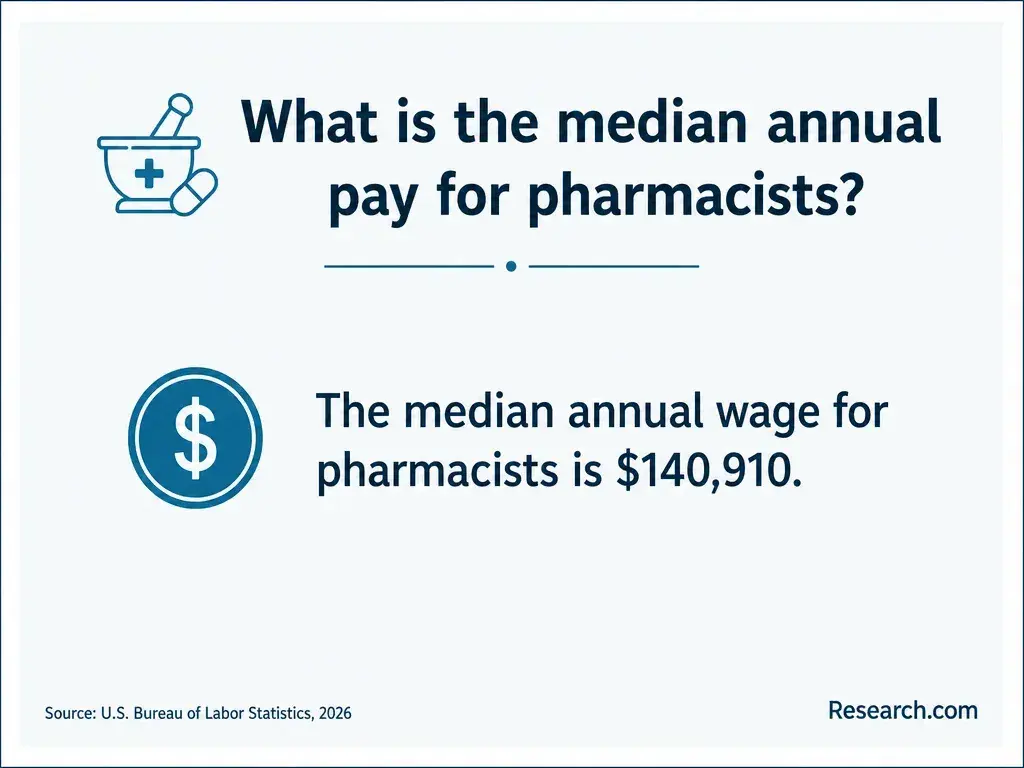
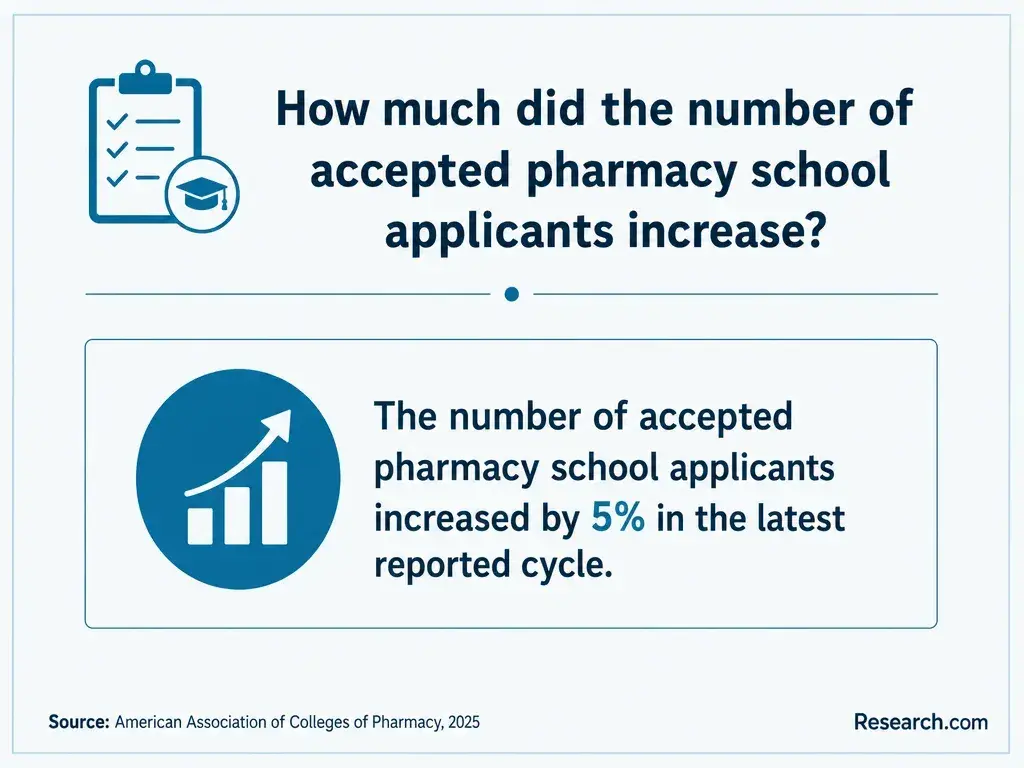
The U.S. Bureau of Labor Statistics reports median annual pay for pharmacists of $140,910 in May 2025 and projects 5% job growth, 2025-2035, with about 12,500 openings per year. Those occupation-wide figures are context for evaluating the investment, not a prediction of your starting pay, specialty, or local job prospects.
If your goal is to become a pharmacist, compare accredited Pharm.D. programs by total cost, completion time, clinical scheduling, and licensure preparation. If you primarily want to work in a pharmacy sooner, examine low-cost and shorter pharmacy degree programs with care: a pharmacy technician pathway may be more appropriate for that goal, but it leads to a different occupation and does not qualify you to practice as a pharmacist.
Other Things You Should Know About PharmD
It depends on the program and your job's flexibility. Scheduled classes, labs, and full-time clinical rotations can make an unrestricted full-time work schedule difficult, including in hybrid programs. Request a term-by-term schedule before committing.
No. Residency is not a universal requirement for pharmacist licensure. It can be valuable or preferred for some clinical positions, so compare the positions you want with their actual hiring requirements.
Not automatically. Each jurisdiction determines its licensing requirements. Pharmacists seeking another license should check that board's current license-transfer or examination process before making a move.
Use current, school-specific results as one indicator, not a guarantee of your outcome. Consider the reporting period and cohort size alongside accreditation status, student support, cost, and the program's clinical training arrangements.
- Promoting Internship Excellence: Key Strategies Employed by Pharmacy Schools for Successful Development - PMC https://pmc.ncbi.nlm.nih.gov/articles/PMC10710273/
- What is the Fastest Way to Become a Pharmacist? | University of Findlay https://pharmdonline.findlay.edu/blog/fastest-way-become-pharmacist
- Requirements for Participation in Advanced Pharmacy Practice Experiences | PharmD Degree Program https://pharmd.ucsf.edu/policies/appe-participation
- How to Become a Pharmacist | School of Pharmacy https://pharmacy.llu.edu/about-us/school-news/how-become-pharmacist
- How to Become a Pharmacist: A Step-by-Step Guide | MCPHS https://www.mcphs.edu/admission-and-aid/blog/how-to-become-a-pharmacist
- Prerequisite Coursework | School of Pharmacy https://www.pharmacy.pitt.edu/academics/doctor-pharmacy/apply-pharmd-program/prerequisite-coursework
- Doctor of Pharmacy, PharmD | University of the Pacific https://www.pacific.edu/pharmacy/academics/doctor-pharmacy
- FAQ | OSU College of Pharmacy - Oregon State University https://pharmacy.oregonstate.edu/programs-admissions/pharm-d/faq
- How Long Is Pharmacy School? Timeline and Degree Requirements | PCOM https://www.pcom.edu/pharmacy/news/how-long-is-pharmacy-school.html
- Prerequisites - College of Pharmacy - University of Minnesota https://www.pharmacy.umn.edu/doctor-pharmacy/admissions/how-apply/prerequisites