Clinical Pharmacist Salary and Job Outlook

Co-Founder and Chief Data Scientist
Clinical pharmacy can be a rewarding career, but the salary alone may not justify years of education and possible residency training for every student. If you are considering a Doctor of Pharmacy (Pharm.D.) degree, you need to know what clinical pharmacists earn, where jobs may be available, and which credentials employers expect.
This guide separates national pharmacist data from clinical-specific career realities and helps you weigh training time, cost, and job fit before committing.
Key Things You Should Know
- The U.S. median annual pay for pharmacists was $140,910 in May 2025; this covers pharmacists broadly, not clinical pharmacists as a separate occupation.
- Pharmacist employment is projected to grow 5% from 2025 to 2035, with about 12,500 openings per year across the occupation, according to the Bureau of Labor Statistics.
- A clinical pharmacist needs a Pharm.D. and state pharmacist licensure. Residency training is commonly preferred for competitive clinical positions but is not a universal legal requirement.
What does a clinical pharmacist do?
A clinical pharmacist helps patients and care teams use medications safely and effectively. Depending on the setting, the work can include reviewing treatment plans, adjusting medication recommendations with prescribers, monitoring laboratory results and side effects, counseling patients, and helping prevent medication errors. Clinical pharmacists work in settings such as hospitals, outpatient clinics, and health systems; their authority to change or prescribe therapy depends on state law and workplace agreements.
The role involves more direct responsibility for medication decisions than a pharmacy technician position. If your goal is to enter pharmacy-related work quickly rather than practice as a licensed pharmacist, compare that goal with online pharmacy programs under two years. A shorter credential does not substitute for a Pharm.D. or qualify its holder for pharmacist licensure.
How much does a clinical pharmacist earn?
The Bureau of Labor Statistics (BLS) reports median annual pay of $140,910 in May 2025 for pharmacists. BLS does not publish a separate national median for the narrower title "clinical pharmacist," so that figure is a benchmark, not a prediction of a clinical job offer. Pay can differ by employer, location, experience, schedule, and responsibilities.
Evaluate earnings against the full cost of entering the profession, including prerequisite study, Pharm.D. tuition and fees, living expenses, and any lower-paid time spent in residency. A comparison of online pharmacy degree affordability can help start that calculation, but check each school's current total costs and clinical-placement travel requirements before borrowing. Salary alone cannot establish whether the investment will pay off for you.
What is the job outlook for clinical pharmacists?
BLS projects 5% growth in pharmacist employment from 2025 to 2035. Its estimate of about 12,500 openings per year includes openings across pharmacist roles, not clinical vacancies alone. These national figures support a generally positive outlook but cannot tell you how many hospital or ambulatory care jobs will be available in a particular city.
Clinical openings depend on local health systems, service needs, and employer hiring standards. Some positions favor applicants with residency training or specialty experience, making entry more competitive than the occupation-wide projection suggests. Before choosing a school based on expected earnings, compare pharmacy program tuition and length with the training requirements in current clinical job postings where you hope to work.
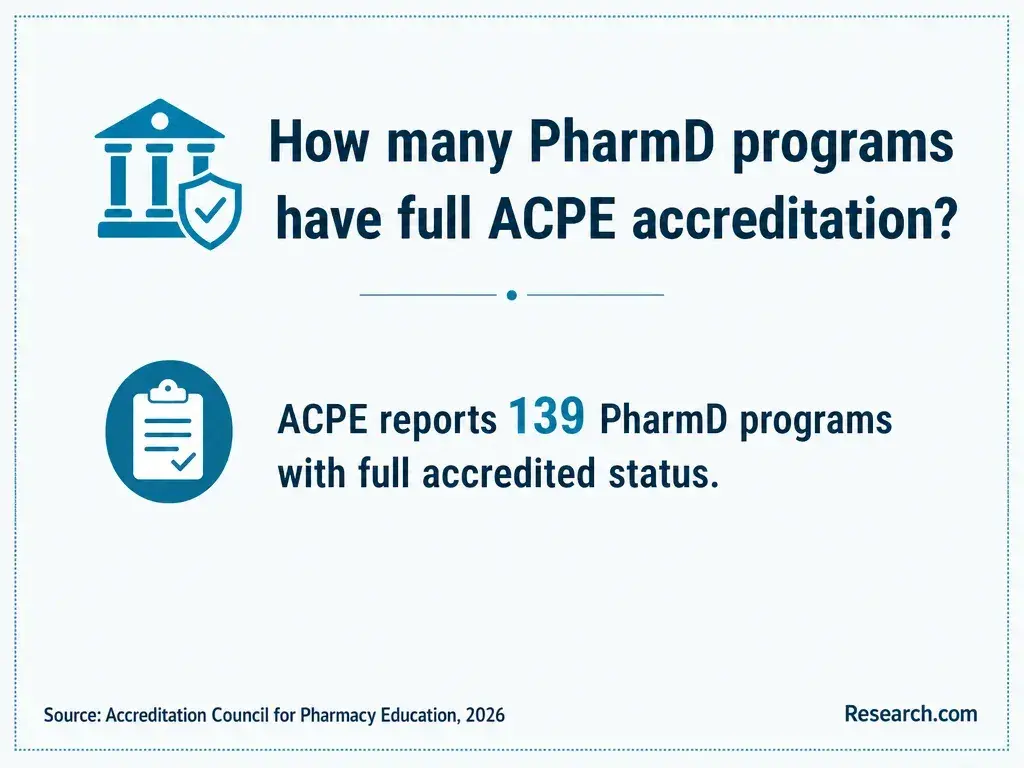
For the usual U.S.-educated route, the required professional degree is a Pharm.D. from a program accredited by the Accreditation Council for Pharmacy Education (ACPE), followed by state licensure. Pre-pharmacy coursework prepares students to apply; it is not the professional degree. Schools vary in their prerequisites, and a completed bachelor's degree is not required by every Pharm.D. program. A pharmaceutical sciences or pharmacy technician credential does not replace the Pharm.D. for this route.
Applicants with a science background can compare Pharm.D. programs for biology majors, then ask each school to evaluate their courses against its current prerequisites. Prior science study may meet some admission requirements, but the school decides which credits count; it does not ordinarily eliminate the professional curriculum.
Clinical pharmacists need an active pharmacist license in each jurisdiction where their work requires one. For U.S.-educated applicants, the process generally involves graduating from an eligible Pharm.D. program, meeting the state board's practical-training and application rules, passing the North American Pharmacist Licensure Examination (NAPLEX), and satisfying any jurisdiction-specific law-exam requirement. A state may use the MPJE, the UMPJE, another assessment, or different requirements; check that board's current instructions. Passing an exam or earning the degree does not itself issue a license.
Before enrolling, confirm that your intended program supports licensure eligibility in the state where you plan to practice. Meeting pharmacy school prerequisite expectations is an admissions matter, not a substitute for later licensing requirements. Internationally educated pharmacists should check the separate eligibility pathway specified by the relevant board.
The time depends on how many prerequisites you have completed, the Pharm.D. format, and whether your target job expects postgraduate training. The stages below distinguish what is needed for pharmacist eligibility from training that may strengthen a clinical application.
| Stage | Typical time | Role in the pathway |
| Pre-pharmacy prerequisites | Varies by school and prior credit | Establishes eligibility to apply; not the professional degree |
| Professional Pharm.D. | Often four years; some programs offer accelerated schedules | Provides professional coursework and supervised practice experiences |
| Licensure process | Varies by jurisdiction and application timing | Establishes legal authority to practice after all board requirements are met |
| Residency, if pursued | Typically one year for PGY1; an additional year for PGY2 | Builds focused clinical experience; not a license |
If speed matters, examine faster Doctor of Pharmacy routes alongside their course load and rotation schedules. A shorter academic calendar does not remove prerequisite, experiential, or licensing requirements, and it may leave less flexibility for paid work.
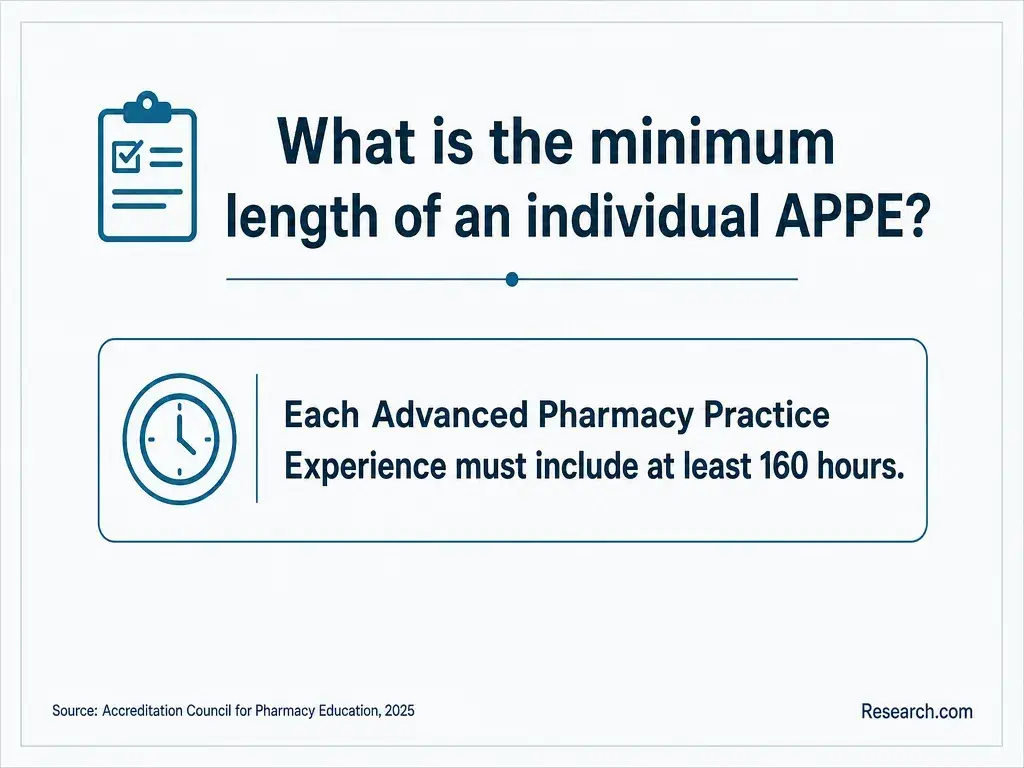
Pharm.D. education combines biomedical and pharmaceutical sciences with pharmacotherapy, patient assessment, medication safety, communication, and drug-information skills. Students apply that learning through introductory pharmacy practice experiences (IPPEs) and advanced pharmacy practice experiences (APPEs). Clinical rotations provide supervised exposure to patient care, but the available settings and placement arrangements vary by school.
When comparing curricula, look for the clinical experiences relevant to your intended setting and ask who secures rotation sites, whether travel may be required, and what students must arrange themselves. If you have prior college coursework, review pharmacy degree transfer credit policies with the receiving school. Acceptance of prerequisite credit does not mean that credit will replace a professional Pharm.D. course or rotation.
Some Pharm.D. programs offer online or hybrid instruction, but aspiring pharmacists still need supervised, in-person practice experiences and may need campus visits for labs or assessments. "Online" does not necessarily mean self-paced, fully remote, or compatible with full-time employment.
Use online Pharm.D. program options as a starting point, then verify the current delivery schedule directly with each school. Check its ACPE professional-program accreditation, your state's distance-education authorization rules, where rotations can occur, and whether the program meets educational requirements for licensure in your intended state. These are separate checks; one does not establish the others.
Residency is not required for every pharmacist license or every job with "clinical" in its title. However, many employers prefer or require postgraduate residency experience for positions involving specialized patient care. A postgraduate year one (PGY1) residency develops broad practice skills; a postgraduate year two (PGY2) residency provides additional focus in a practice area. Requirements belong to the individual job, so review actual postings before deciding whether residency is essential to your goal.
A residency is supervised professional training, not another Pharm.D. or an automatically flexible doctoral course of study. That distinction matters if you are comparing pharmacy training with doctoral programs with flexible timelines. A fellowship may suit some research or industry goals instead, while specialty board certification is a separate credential with its own eligibility rules. Neither residency nor certification replaces state licensure.
How can students choose an accredited pharmacy program?
Start with the ACPE's current professional-program accreditation record, then compare programs on total cost, prerequisites, clinical placements, licensure preparation, and schedules - not reputation or advertised tuition alone. Institutional accreditation and permission to enroll online students in your state are separate from ACPE accreditation. Published NAPLEX outcomes may be useful context, but a school's past results cannot guarantee your exam performance or employment.
Before applying or paying a deposit, confirm these points directly with each program:
- Ask for a written review of your remaining prerequisites, accepted transfer credit, and expected start date.
- Request a current cost estimate that includes required fees and likely campus or rotation travel.
- Ask who arranges IPPE and APPE placements and what happens if a nearby site is unavailable.
- Check the schedule against your work commitments and the licensing rules in your intended practice state.
If you are finishing coursework, compare pharmacy programs for applicants still completing requirements, but confirm the school's deadline for completing every prerequisite before enrollment. Do not mistake permission to apply with courses in progress for permission to begin the professional program without them.
Other Things You Should Know About PharmD
Some medication-management and telehealth roles allow remote work, but availability depends on the employer, duties, patient location, and applicable licensing rules. Do not assume a remote position can be performed from any state.
Authority varies by state and practice arrangement. Some pharmacists can initiate or adjust therapy under specific laws, protocols, or collaborative practice agreements; the job title alone does not grant prescribing authority.
Yes, depending on the position. Relevant patient-care experience, mentoring, and demonstrated clinical skills may help, while some employers require residency or specialty experience. Compare postings before paying for additional training.
No. A specialty credential may strengthen an application for certain roles, but employers set compensation independently. Check whether positions you want prefer the credential and whether its eligibility and maintenance requirements are worthwhile for your goals.
- Update on Pharmacist Workforce Data and Thoughts... - PMC https://pmc.ncbi.nlm.nih.gov/articles/PMC7596609/
- Minimum qualifications for clinical pharmacy practice faculty | nih.gov https://pubmed.ncbi.nlm.nih.gov/24877188/
- Pharmacy Residency Programs - What Is a Residency? | PCOM https://www.pcom.edu/pharmacy/news/pharmacy-residency-programs.html
- 20 Types of Pharmacists [+ Required Skills & Salary] | Marshall University https://www.marshall.edu/blog/types-of-pharmacists/
- Rewards, recognition, and advancement for clinical pharmacists | wiley.com https://accpjournals.onlinelibrary.wiley.com/doi/10.1002/jac5.1775
- Pharmacist - Explore Healthcare Careers | Mayo Clinic College of Medicine and Science https://college.mayo.edu/academics/explore-health-care-careers/careers-a-z/pharmacist/
- How to Become a Pharmacist: A Step-by-Step Guide | MCPHS https://www.mcphs.edu/admission-and-aid/blog/how-to-become-a-pharmacist
- Clinical Pharmacist Salary Range for Your Job Posting | accp.com https://careers.accp.com/career-resources/employer-4/clinical-pharmacist-salary-range-for-job-posting-153
- BCPS - Board Certified Pharmacotherapy Specialist https://careers.ashp.org/career-resources/on-the-job-3/bcps-board-certified-pharmacotherapy-specialist-a-practical-guide-for-health-system-pharmacy-professionals-119