Geriatric Pharmacist Career Path and Patient Needs

Co-Founder and Chief Data Scientist
Geriatric pharmacy may appeal to you if you want to help older adults use complex medication regimens safely - but the path requires more than an interest in aging. You need to decide whether a pharmacist's clinical responsibilities justify the time and cost of a Doctor of Pharmacy (Pharm.D.), and whether specialty training fits your goals. This guide connects older patients' needs with the education, licensure, workplace choices, and financial trade-offs you should examine before committing.
Key Things You Should Know
- To practice as a geriatric pharmacist, you generally need a Pharm.D. and a state pharmacist license; a residency or geriatric board certification may strengthen your qualifications but is not universally required.
- Older adults often need help identifying medication interactions, adverse effects, unnecessary treatment, and regimens that are difficult to follow. The work requires collaboration with patients, caregivers, and other clinicians.
- The Bureau of Labor Statistics reports median annual pay of $140,910 in May 2025 for pharmacists overall - not geriatric pharmacists specifically - and projects 5% growth from 2025-2035.
What does a geriatric pharmacist do for older adult patients?
A geriatric pharmacist is a licensed pharmacist who applies medication expertise to the needs of older adults. Responsibilities may include reviewing prescription and nonprescription medicines, identifying potential adverse effects or interactions, recommending changes to a prescriber, counseling patients, and helping a care team manage transitions between settings. The pharmacist's authority to adjust or prescribe treatment depends on state law and the practice arrangement.
Much of the work is detective work: a patient's current medication list may differ from the discharge paperwork, pharmacy records, or what the patient actually takes at home. A useful review considers treatment goals, kidney function, symptoms, affordability, and whether the person can manage the regimen - not simply the number of medicines listed.
If you want to support older adults but do not want the Pharm.D. route, consider the scope of a pharmacy technician role before applying to school. Some online pharmacy programs under two years relate to pharmacy-adjacent education, not a substitute for pharmacist training or licensure. Technicians can contribute to medication-use workflows but do not independently perform a pharmacist's clinical assessment.
What education is required to become a geriatric pharmacist?
For a U.S.-educated applicant, the usual route is prerequisite undergraduate coursework followed by a professional Pharm.D. program accredited by the Accreditation Council for Pharmacy Education (ACPE). Pre-pharmacy courses build the science and general-education foundation; they are not the Pharm.D. curriculum. Schools differ on whether applicants need a bachelor's degree or can enter after completing specified prerequisites.
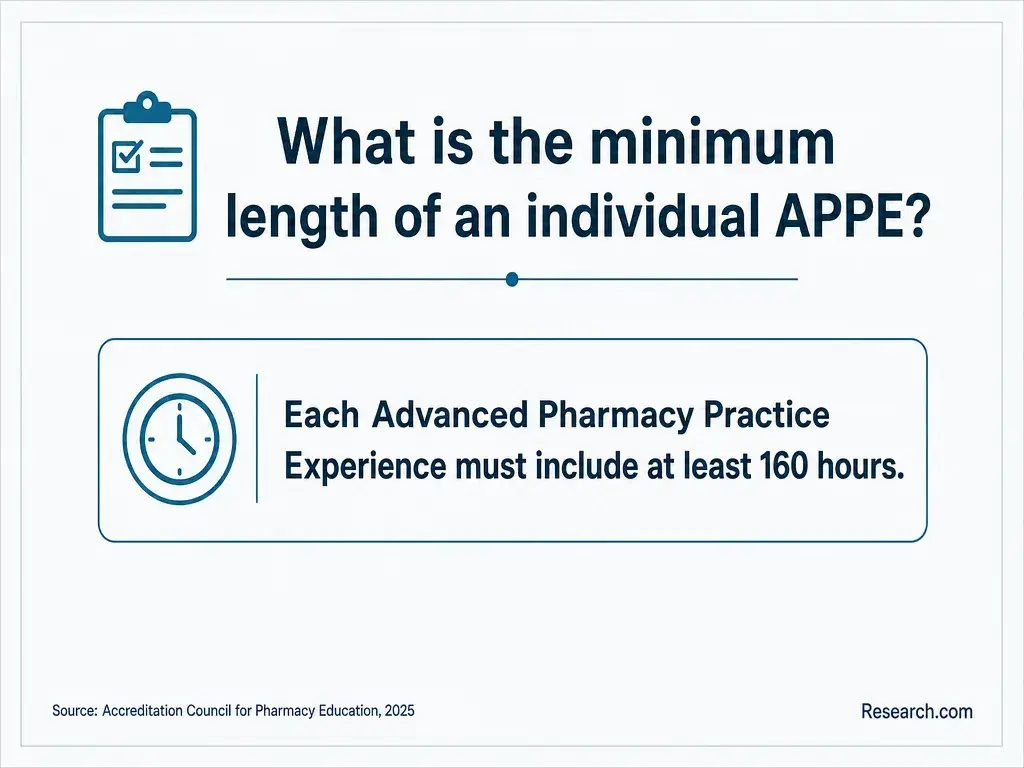
The Pharm.D. combines classroom and laboratory learning with supervised introductory pharmacy practice experiences (IPPEs) and advanced pharmacy practice experiences (APPEs). After graduation, you must satisfy the licensing requirements of the jurisdiction where you intend to practice. Internationally educated pharmacists follow a different eligibility process and should check the applicable board and National Association of Boards of Pharmacy (NABP) requirements.
A biology or chemistry degree can provide useful preparation, but it does not replace a Pharm.D. or establish that every prerequisite has been met. If that is your starting point, use a guide to pharmacy school for biology and chemistry graduates to frame your comparison, then request a course-by-course evaluation from each school.
What licenses and certifications do geriatric pharmacists need?
Licensure is required; geriatric specialty certification generally is not. A Pharm.D. graduate must apply through the relevant state board of pharmacy and meet its requirements, typically including the North American Pharmacist Licensure Examination (NAPLEX) and any applicable law examination or other jurisdiction-specific conditions. Do not assume every jurisdiction uses the same law exam: some use the Multistate Pharmacy Jurisprudence Examination (MPJE), some have moved to the Uniform MPJE (UMPJE), and requirements can differ. Passing an exam alone does not issue a license.
After licensure, the Board of Pharmacy Specialties' Board Certified Geriatric Pharmacist (BCGP) credential is one possible way to demonstrate advanced knowledge. Its eligibility rules include practice or training criteria; check the current BPS candidate handbook before planning an application. A postgraduate year one (PGY1) residency offers broad clinical training, while a PGY2 residency develops a defined area of practice. A fellowship is generally research- or industry-oriented training, not another name for a residency. None of these credentials replaces state licensure, and employers may hire licensed pharmacists into older-adult care without them.
If you change schools before graduation, academic credit and licensing eligibility are separate questions. Review pharmacy transfer credit requirements with the receiving program; its decision about prior coursework does not determine what a state board will require for licensure.
Older adults may experience changes in drug handling, multiple conditions, and treatment from several clinicians. A geriatric pharmacist looks for medication-related problems in that context. For example, a new symptom may be an adverse effect rather than a new disease, while a complicated schedule may explain why a treatment is not working as intended.
The most valuable interventions are patient-specific. A pharmacist may reconcile medicines after a hospital stay, assess whether a drug remains appropriate for a patient's goals, suggest a safer regimen to the prescriber, or teach a patient and caregiver how to use it. Tools such as the American Geriatrics Society Beers Criteria can flag medicines that warrant closer review, but they are not automatic stop lists; clinical circumstances still matter.
If this patient-facing problem-solving is what draws you to the profession, test that interest through supervised exposure before investing in a degree. Applicants still finishing prerequisite courses can explore pharmacy degree options without every prerequisite completed, but must confirm each school's conditions for completing outstanding courses before matriculation.
Most aspiring geriatric pharmacists first learn through a general Pharm.D. curriculum rather than a separate entry-level geriatric pharmacy degree. Relevant study includes pharmacotherapy, age-related changes in medication response, patient assessment, drug information, medication safety, communication, and care across practice settings. Schools may also offer geriatrics electives, older-adult patient cases, or relevant clinical rotations; availability and placement are program-specific.
Rotations are especially useful for judging career fit. Ask whether students can request experiences in long-term care, ambulatory care, or another setting serving older adults, how sites are assigned, and whether travel is possible. A listed elective is not the same as guaranteed hands-on experience.
When comparing credentials by time commitment, remember that lists of online doctorate lengths may include degrees that do not qualify graduates for pharmacist licensure. Compare professional Pharm.D. curricula and experiential requirements, not just the word "doctorate" or the advertised completion time.
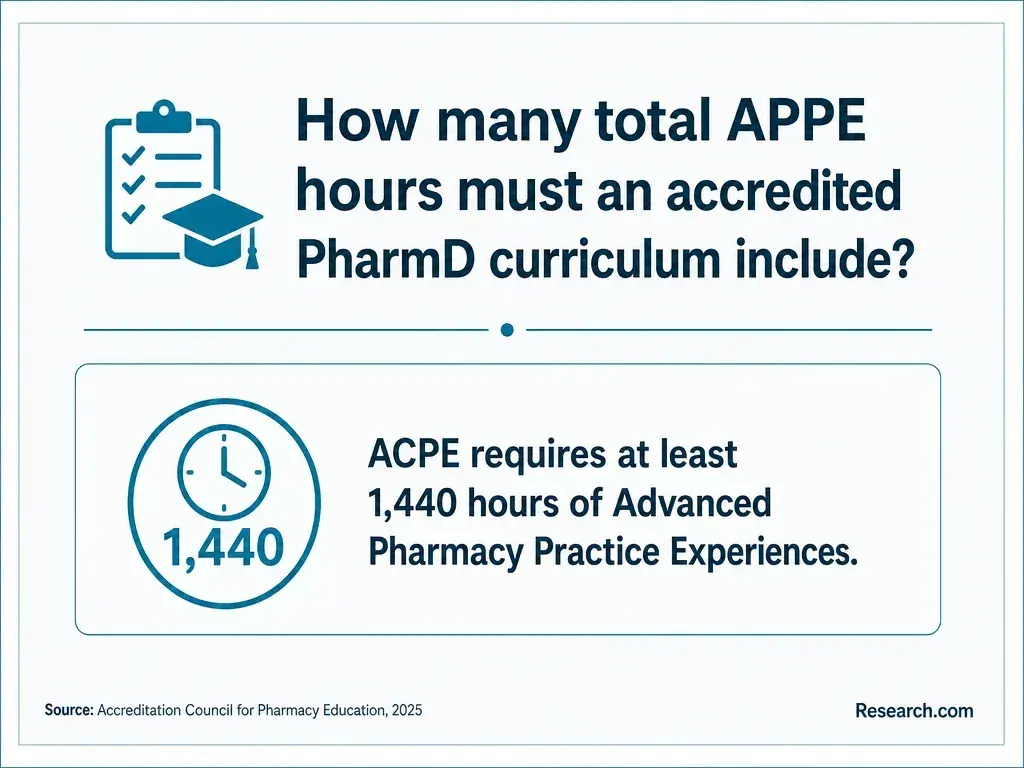
A hybrid Pharm.D. pathway can suit a student who needs some remote coursework, but "online" does not mean entirely remote, asynchronous, or compatible with unrestricted full-time work. Professional programs still require supervised in-person experiences, and some require campus visits, scheduled live instruction, or hands-on assessments.
Use compare online Doctor of Pharmacy programs as a starting point, then verify each program's current ACPE status, state authorization to enroll you, campus attendance, and experiential placement policies directly. ACPE professional-program accreditation, institutional accreditation, and permission to enroll distance-learning students in your state are distinct matters.
Before enrolling, ask who finds or approves IPPE and APPE sites, whether placements can be near home, and what happens if a local site is unavailable. Intern registration, background checks, immunizations, travel, and time away from work may also affect feasibility. State authorization to take online classes does not by itself approve a clinical placement or establish licensure eligibility.
Admissions requirements vary by school. Applicants commonly need specified prerequisite courses, transcripts, recommendations, and sometimes an interview; schools set their own rules for labs, minimum grades, grade-point averages, course age, and whether prerequisites can remain in progress when applying. A bachelor's degree is not universally required. The Pharmacy College Admission Test (PCAT) was retired in January 2024 and should not be treated as a current exam to schedule.
Check the school's current admissions page alongside its PharmCAS directory entry, if it uses PharmCAS. Confirm application and supplemental deadlines, then ask the school to review any community-college, online-lab, repeated, international, or previously earned coursework that matters to you. Admission to one school, or acceptance of credit by another institution, does not establish how a different Pharm.D. program will evaluate it.
Resources on pharmacy school prerequisite expectations can help generate questions, but a published minimum is an eligibility threshold, not a promise of admission. For a geriatrics-focused applicant, also compare opportunities for older-adult clinical experience after confirming that you can meet the entry requirements.
The timeline depends on the prerequisites you already have and the Pharm.D. program's structure. Professional study commonly takes several years after prerequisites; an accelerated route may shorten the academic calendar but increase its intensity. Licensure follows graduation, while a residency or BCGP certification is an additional choice rather than a universal entry requirement.
Advertised tuition captures only part of the financial commitment. The categories below show what to include when comparing programs and why a lower tuition quote may not produce a lower total cost.
| Cost category | Why it matters |
| Tuition and mandatory fees | Rates may differ by residency status, term, credit load, and program format. |
| Prerequisites and learning materials | Unfinished courses, required resources, equipment, and technology add costs. |
| Experiential education | Rotations or campus visits may require travel, housing, or reduced work hours. |
| Licensure and optional training | Applications, exams, and later specialty training have separate costs. |
Ask each school for its current full cost-of-attendance estimate and a schedule of required in-person activities. Guides to online pharmacy school cost options can help you identify programs to investigate, but compare the same cost categories for each. Federal borrowing rules changed for many new graduate and professional borrowers beginning July 1, 2026; have the financial aid office explain your eligibility and current limits rather than assuming older Grad PLUS arrangements apply.
Geriatric medication expertise is useful in long-term care, hospitals, ambulatory clinics, community pharmacies, home-based services, and health systems. Job titles vary: a consultant pharmacist may review medication use for a care facility, while a clinical pharmacist may work with a team managing chronic conditions. Setting and employer determine how much direct patient contact, chart review, dispensing, or collaboration a role involves.
To assess fit, compare actual job descriptions rather than assuming every position labeled "geriatric" offers the same clinical authority. Check the required license, experience, residency preferences, schedule, travel, and opportunities to work directly with patients and caregivers. If your main goal is to support medication access rather than make pharmacist-level clinical assessments, an affordable route through pharmacy education may be worth comparing with the longer Pharm.D. path - provided you understand the different scope of work.
What salary and job outlook can geriatric pharmacists expect?
The Bureau of Labor Statistics reports median annual pay of $140,910 in May 2025 for pharmacists and projects 5% job growth from 2025-2035, with about 12,500 openings per year. These figures cover pharmacists across specialties and settings; they do not establish a geriatric pharmacist's expected salary or the number of geriatrics-specific openings.
Pay and opportunities can vary with employer, location, experience, and responsibilities. A residency can help an applicant compete for some clinical positions, but it also adds time before entering a full pharmacist role. Likewise, accelerated Pharm.D. programs may reduce time in school for an eligible student without necessarily reducing total costs or making clinical placements easier to schedule.
Before committing, compare local postings for the older-adult care roles you want with your projected educational cost and timeline. Look separately at required qualifications and preferred training: that distinction can show whether direct employment, residency, or later certification is the sensible next step.
Other Things You Should Know About PharmD
Possibly. Ask a hospital, clinic, long-term care organization, or pharmacy whether it permits observers. Patient privacy rules and site policies may limit what you can see.
The patient's preferences and applicable privacy rules govern caregiver involvement. Ask the care team how the patient can authorize participation and which medication records to bring.
No. Coverage depends on the service, the patient's plan, and how care is delivered. Confirm potential charges with the provider and insurer before scheduling.
Not automatically. Other countries set their own education, examination, and registration requirements; check the regulator where you intend to work.
- The dangers of polypharmacy and the case for deprescribing in older adults | National Institute on Aging https://www.nia.nih.gov/news/dangers-polypharmacy-and-case-deprescribing-older-adults
- Strategies to Reduce Polypharmacy in Older Adults - NCBI - NIH https://www.ncbi.nlm.nih.gov/books/NBK574550/
- Medication - Older people in hospital | health.vic.gov.au https://www.health.vic.gov.au/older-people-in-hospital/medication-0
- Foreign Pharmacy - FPGEC Certification Includes https://nabp.pharmacy/programs/foreign-pharmacy/
- Certification: Board Certified Geriatric Pharmacist (BCGP) | onetonline.org https://www.onetonline.org/link/certinfo/11800-C
- Pharmacists and Older Adults - Geriatrics | Merck Manual Professional Edition https://www.merckmanuals.com/en-ca/professional/geriatrics/providing-care-to-older-adults/pharmacists-and-older-adults
- Training For Geriatric Pharmacists | American Geriatrics Society https://www.americangeriatrics.org/geriatrics-profession/training-requirements/training-geriatric-pharmacists
- Pharmacist License Requirements by State | Harbor Compliance https://www.harborcompliance.com/pharmacist-license
- Geriatric Pharmacy | bpsweb.org https://bpsweb.org/geriatric-pharmacy/
- What is a Senior Care Pharmacist? https://www.ascp.com/page/whatisacp