Managed care pharmacist career path after a PharmD

Co-Founder and Chief Data Scientist
A managed care career can appeal to Pharm.D. students who want to improve medication use across a health plan or patient population rather than dispense prescriptions in a traditional setting. The choice affects which rotations, jobs, and postgraduate training are worth pursuing. This guide explains what managed care pharmacists do, which qualifications employers may expect, and when a residency is worth its time and opportunity cost. You can use it to plan a credible entry route without assuming that every managed care job requires the same credentials.
Key Things You Should Know
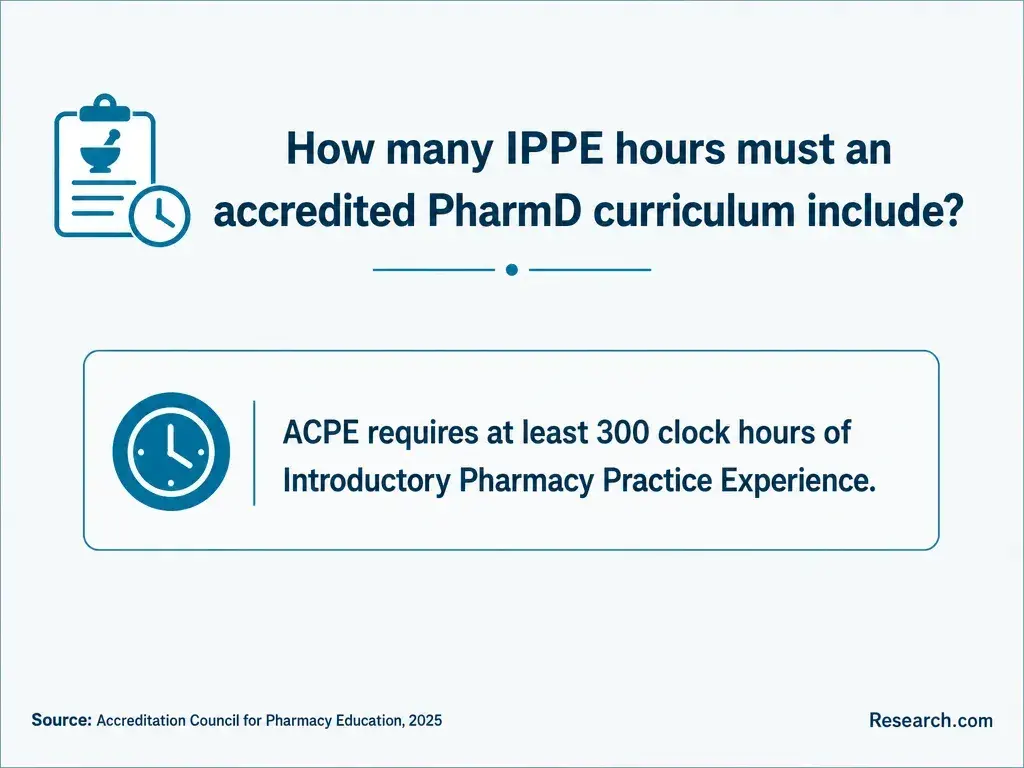
- A typical route is an accredited Pharm.D., state pharmacist licensure, relevant rotations or work experience, and then a managed care job; a residency is valuable for some positions but is not universally required.
- Managed care pharmacists work on medication coverage, utilization, safety, and outcomes. The Bureau of Labor Statistics reports $140,910 in May 2025 as the median annual pay for pharmacists overall, not specifically managed care pharmacists.
- Compare a direct-entry job with a residency by checking actual job qualifications, residency learning experiences and stipend, and the earnings you would forgo during training.
What does a managed care pharmacist do after earning a PharmD?
Managed care pharmacists help organizations make evidence-based decisions about medication access, cost, safety, and appropriate use. Employers can include health plans, pharmacy benefit managers (PBMs), integrated health systems, and specialty pharmacy organizations. The work may involve reviewing coverage requests, assessing clinical evidence for a formulary - a list of covered medications - developing medication-use policies, or evaluating outcomes across a population.
The role is not exclusively desk-based or exclusively clinical. A pharmacist handling prior authorization may review an individual request against coverage criteria; a formulary pharmacist may assess clinical evidence and budget impact for a committee. Both need sound pharmacotherapy judgment and the ability to explain decisions clearly. If you are still choosing a professional degree, compare online Doctor of Pharmacy programs on experiential training as well as classroom format; online instruction does not eliminate in-person practice experiences.
How do you become a managed care pharmacist with a PharmD?
The most direct path is to complete a Pharm.D. program accredited by the Accreditation Council for Pharmacy Education (ACPE), meet the licensing requirements of the state where you will practice, and build experience relevant to managed care. Pre-pharmacy coursework is preparation for admission, not the professional degree. For applicants still at that stage, review Pharm.D. admission after pre-pharmacy coursework before planning a career timeline.
Turn that route into evidence an employer can evaluate:
- Seek introductory and advanced pharmacy practice experiences involving ambulatory care, specialty pharmacy, drug information, population health, or a health plan when your school offers them.
- Build skills in literature evaluation, therapeutic guidelines, coverage criteria, data interpretation, and writing concise clinical recommendations.
- After meeting state licensure requirements, compare direct-entry postings with managed care residencies; apply according to each employer's or program's stated qualifications.
Not every student can obtain a managed care rotation. A medication-use evaluation, quality-improvement project, or relevant internship can also demonstrate interest, although an employer decides how much weight to give it.
Is a managed care pharmacy residency required after a PharmD?
No universal rule requires a residency for managed care pharmacist jobs. Employers set their own minimum qualifications and preferences. An ASHP-accredited postgraduate year one (PGY1) managed care pharmacy residency offers structured, supervised training; some competitive clinical, formulary, or leadership-track positions may prefer residency training or equivalent experience. Other positions accept licensed pharmacists with relevant work experience.
A residency generally adds a year of training and pays a stipend rather than the salary of a typical pharmacist job. That trade-off may make sense if its projects, preceptors, and graduate placements align with the work you want. It may be less compelling if you already have a suitable job offer with strong training and advancement opportunities. Check each residency's accreditation, application instructions, and participation in PhORCAS and the ASHP Match rather than assuming all programs use identical processes. Shorter pharmacy doctorate pathways change the route to the degree; they do not replace postgraduate residency training.
Pharmacist positions generally call for a Pharm.D. and an active pharmacist license in the jurisdiction relevant to the work. ACPE accredits professional pharmacy programs; it does not license graduates. State boards determine licensure eligibility, examination requirements, and practice rules. The NAPLEX is a licensure examination, while jurisprudence requirements vary by jurisdiction and may involve the MPJE, UMPJE, or another process. Passing an exam alone does not issue a license.
If you are applying to pharmacy school, verify each school's prerequisites and whether previous courses will count; the receiving school makes that decision. Guidance on how to transfer coursework toward pharmacy prerequisites can help you frame the questions, but prerequisite credit should not be confused with transfer into the professional Pharm.D. curriculum. A pharmacy technician or pharmaceutical sciences credential does not substitute for pharmacist education and licensure.
Optional credentials can help a pharmacist document expertise, but none replaces state licensure. Board of Pharmacy Specialties credentials may be relevant when a job emphasizes direct patient care or broad pharmacotherapy; for example, the Board Certified Ambulatory Care Pharmacist (BCACP) or Board Certified Pharmacotherapy Specialist (BCPS) may fit particular duties. Eligibility depends on the certifying body's current practice-experience or training rules, and maintaining a credential brings continuing requirements.
Managed care education certificates and employer training can be useful for learning formulary processes or coverage policy, but a course-completion certificate is not a BPS board certification. Choose training by matching its assessed skills to job postings, not by collecting credentials. Likewise, pharmacy programs with flexible entry requirements address admission options; they do not waive professional licensing or certification eligibility rules.
Managed care residencies and focused learning experiences typically connect clinical evidence to decisions affecting many patients. Depending on the program, residents may learn formulary management, medication-use policy, utilization management, quality measurement, specialty pharmacy, and how to present recommendations to decision-makers. They may also work with claims or outcomes data and learn to distinguish a promising result from evidence strong enough to change policy.
Read a program's actual learning experiences before applying. A residency centered on coverage operations may suit a different goal than one emphasizing population health research or direct patient care. Short online pharmacy degree timelines describe educational routes, not a substitute for the supervised responsibilities of a residency or the experience an employer requires.
The cost depends chiefly on your starting point. A prospective Pharm.D. student must budget for the professional degree and living expenses; a licensed pharmacist considering a residency must weigh a year of stipend-supported training against potential full-time earnings. There is no single managed care training price.
The comparison below separates those commitments so you can request comparable figures rather than relying on an advertised tuition amount.
| Route | Time commitment | Main financial consideration |
| Pharm.D. followed by direct employment | Professional degree, licensure process, then employer training | Tuition, fees, rotations, licensing costs, and job-search time |
| Pharm.D. followed by a PGY1 managed care residency | Professional degree and licensure process, plus a year of postgraduate training | Residency stipend versus potential pharmacist earnings, plus possible relocation |
| Licensed pharmacist entering from another setting | Varies with the role and experience gap | Possible short-term pay or seniority trade-off while gaining relevant experience |
For school decisions, compare pharmacy degree costs and duration using required fees, rotation travel, and living costs - not tuition alone. Federal borrowing rules changed for many new graduate and professional borrowers beginning July 1, 2026, so confirm your own aid eligibility and current limits with the school's financial aid office before committing.
Job titles differ across employers. The responsibilities below are a better guide to fit than the title alone.
| Role | Typical focus | Background to highlight |
| Prior authorization or clinical review pharmacist | Coverage requests and clinical criteria | Therapeutics, documentation, and clear communication |
| Formulary or drug policy pharmacist | Evidence reviews and medication-use recommendations | Literature evaluation and committee presentations |
| Quality or population health pharmacist | Medication-related measures and improvement projects | Data interpretation and project work |
| Specialty pharmacy or utilization management pharmacist | Complex therapies, access, and appropriate use | Specialty therapeutics and coordination across teams |
Experience can open paths toward program management or clinical leadership, but advancement depends on performance and organizational needs. An additional academic doctorate is not ordinarily a prerequisite for these pharmacist roles; online doctorate completion periods should not be mistaken for the time needed to gain managed care practice experience.
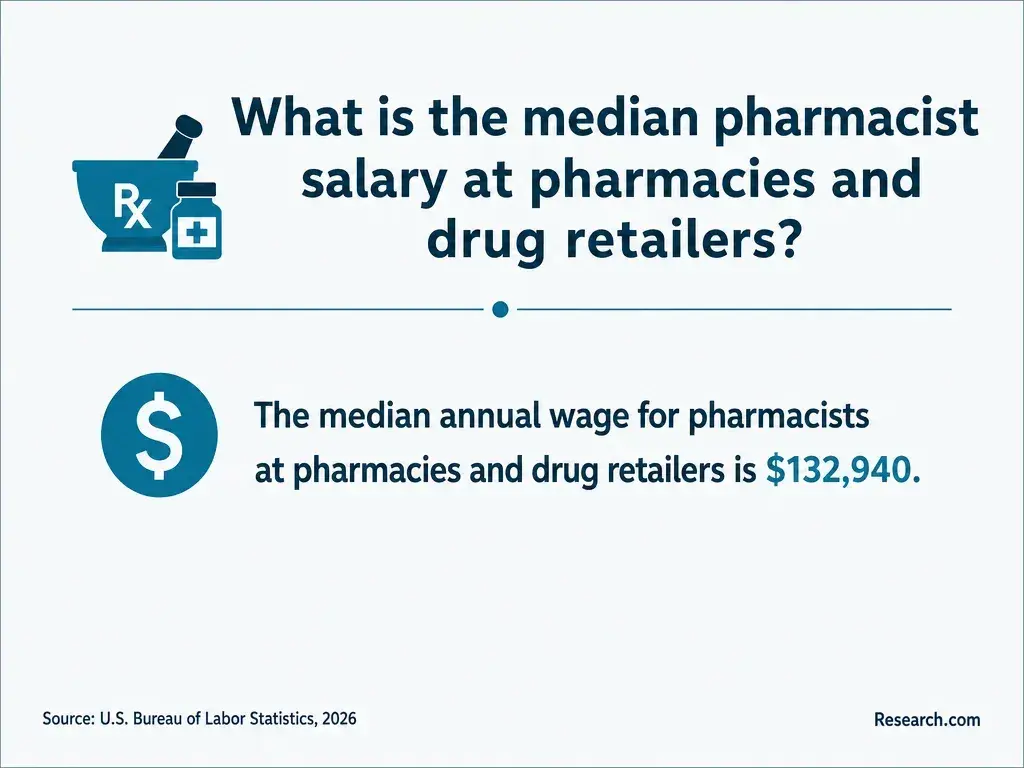
The Bureau of Labor Statistics reports median annual pay of $140,910 in May 2025 for pharmacists overall. That is useful context, but it is not a managed care-specific wage: the occupation includes pharmacists in multiple settings and at different career stages. BLS projects 5% growth, 2025-2035, with about 12,500 openings per year for pharmacists overall - not a forecast of managed care vacancies.
For a personal comparison, look at the posted pay range, location, benefits, schedule, and advancement terms of actual offers. A residency applicant should compare the stipend and training value with a realistic direct-employment option, not assume the general pharmacist median is an available starting salary. If you are still budgeting for the degree, review online pharmacy school cost options alongside each program's full required expenses.
How do you choose a reputable PharmD or pharmacy residency program?
For a Pharm.D., confirm the program's current ACPE accreditation status, admissions requirements, total cost, and the availability and placement process for relevant introductory and advanced practice experiences. Compare published licensure-exam outcomes with care: they provide context, not a guarantee of your result. If a program has online instruction, verify in-person labs, rotations, travel requirements, and any applicable state authorization separately from accreditation and eventual licensure eligibility. Start with each school's published rules on pharmacy school prerequisites and eligibility.
For a residency, confirm current accreditation status and examine its rotation schedule, project responsibilities, preceptors, stipend, benefits, and graduate destinations. Before accepting either route, ask whether its actual experiences support your target job. A warning sign is a promise of licensure, employment, or board certification based solely on completing the program; each has separate requirements and decision-makers.
Other Things You Should Know About PharmD
Some positions allow remote or hybrid work, while others require on-site collaboration or travel. Check the job's location rules and any state licensure requirements that apply to the work.
It can, especially experience in medication counseling, resolving coverage problems, and documenting clinical decisions. Show how that work relates to the specific managed care position rather than assuming the connection is obvious.
No. Managed care organizations make coverage and medication-use decisions for the populations they serve. A manufacturer has different products, responsibilities, and potential conflicts of interest, even when a job uses similar clinical or evidence-review skills.
Yes, if the goal is to understand local opportunities. Informational conversations and internship postings can reveal which skills employers value, but students must remain within their supervised training role and cannot practice as licensed pharmacists before licensure.
- The Role of Pharmacy Benefit Managers and Skyrocketing Cost of Medications - PMC https://pmc.ncbi.nlm.nih.gov/articles/PMC11482839/
- PGY1 Managed Care - OU College of Pharmacy https://pharmacy.ouhsc.edu/academics-programs/residency-and-fellowship-programs/pgy1-programs/pgy1-managed-care
- Managed Care Pharmacy Graduate Certificate | ufl.edu https://onlinepop.pharmacy.ufl.edu/programs/specialty-tracks-2/managed-care-pharmacy-systems/graduate-certificate-curriculum-mcps/
- A primer on managed care pharmacy | jmcp.org https://www.jmcp.org/doi/10.18553/jmcp.2023.29.12.1371
- Residency Program | Navitus https://navitus.com/our-company/careers/residency-program/
- Pharmacy Residency at Humana https://careers.humana.com/us/en/pharmacy-residency-program
- What Do Managed Care Pharmacists Do? | AMCP.org https://www.amcp.org/about/managed-care-pharmacy/what-do-managed-care-pharmacists-do
- Centene PGY-1 Managed Care Pharmacy Residency Programs https://jobs.centene.com/us/en/career-areas/pharmacy-residency-programs/
- Managed Care/Payer | pharmacist.com https://www.pharmacist.com/Career/Career-Pathways/Career-Option-Profiles/Managed-Care-Payer
- What are pharmacy benefit managers (PBMs) and why we need reform? | American Medical Association https://www.ama-assn.org/health-care-advocacy/access-care/what-are-pharmacy-benefit-managers-pbms-and-why-we-need-reform