
Online PharmD synchronous versus asynchronous coursework

Co-Founder and Chief Data Scientist
An online Doctor of Pharmacy (Pharm.D.) program may offer recorded lessons, live classes, or both—but that distinction can determine whether its schedule works for you. It also does not tell you when you must attend labs or complete in-person clinical rotations. This guide is for prospective students comparing online Pharm.D. formats. It explains the scheduling trade-offs, the requirements neither format removes, and the questions to ask before paying a deposit.
Key Things You Should Know
- Synchronous coursework requires attendance at set times; asynchronous coursework lets you access instruction on your own schedule but usually still has deadlines.
- Neither format eliminates required hands-on training. Confirm campus visits and introductory and advanced pharmacy practice experience schedules before assuming you can keep full-time work hours.
- For a U.S. pharmacist pathway, verify the Pharm.D. program's ACPE status and your intended state's requirements; finishing the degree alone does not grant a license.
What Is the Difference Between Synchronous and Asynchronous Online PharmD Coursework?
Synchronous coursework brings students and instructors together at scheduled times, often for discussion, case work, or assessment. Asynchronous coursework makes materials available for students to access at different times, typically within weekly deadlines. "Online" describes where instruction is delivered, not whether attendance is flexible. As you compare online pharmacy school programs, look for the actual timetable rather than relying on the delivery label.
This comparison shows what each format may change—and what it does not change—about a student's week:
| Decision factor | Synchronous coursework | Asynchronous coursework |
| Class attendance | Required at published meeting times | Usually completed within a deadline window |
| Interaction | Immediate discussion and feedback during class | Discussion and feedback may occur later |
| Work-schedule fit | Requires predictable availability | Offers more control over study hours, not necessarily fewer hours |
| Clinical training | In-person site schedules still apply | In-person site schedules still apply |
Choose live sessions if a fixed routine and immediate discussion help you learn, provided you can protect those hours. Favor asynchronous instruction if your work hours vary and you can manage deadlines independently. Many programs mix the two, so ask which specific courses and activities require live attendance.
Can an Online PharmD Program Prepare Students for Pharmacist Licensure?
Yes, an appropriately accredited online or hybrid Pharm.D. program can provide the professional education used in a U.S. pharmacist licensure pathway. Online lectures are only one part of that education: students must also complete required practical and supervised experiential training. Licensure eligibility ultimately depends on the state board's rules, and graduation does not itself confer a license.
Check the credential carefully when reading claims about doctoral degree timeline options. A doctorate in pharmaceutical sciences, for example, is not interchangeable with a professional Pharm.D. for U.S. pharmacist licensure. If you plan to practice in a particular state, ask the school how its pathway meets that state's educational and experiential requirements, then confirm the answer with the board.
How Does Online PharmD Coursework Compare With Campus-Based Pharmacy Education?
The principal difference is where and when much of the instruction occurs, not whether students must demonstrate pharmacy knowledge and patient-care skills. Campus-based students generally travel to class regularly; online students may replace some of that commute with remote study while still traveling for labs, assessments, or rotations. An online pharmacy degree cost comparison should therefore include travel and time away from work, not just tuition.
Online delivery may suit someone who lives far from a school or needs fewer routine campus trips. Campus delivery may be easier for someone who wants frequent face-to-face practice and access to on-site resources. Neither choice removes the need to arrange time for in-person clinical work. Ask how students practice counseling, compounding, and other hands-on skills, and which activities require attendance in person.
Verify the professional Pharm.D. program's current status with the Accreditation Council for Pharmacy Education (ACPE). ACPE accredits pharmacy education programs, not individual pharmacists. Also check the institution's recognized institutional accreditation and whether it is authorized to enroll a distance-learning student in your state. These are separate questions; authorization to enroll you does not automatically approve a clinical placement or establish pharmacist licensure eligibility.
Apply the same checks to any list of affordable Doctor of Pharmacy options. Before paying a deposit, confirm the exact professional program and accreditation status, your state's enrollment eligibility, and where required in-person training can occur. A vague claim that a university is "accredited" does not answer all three questions.
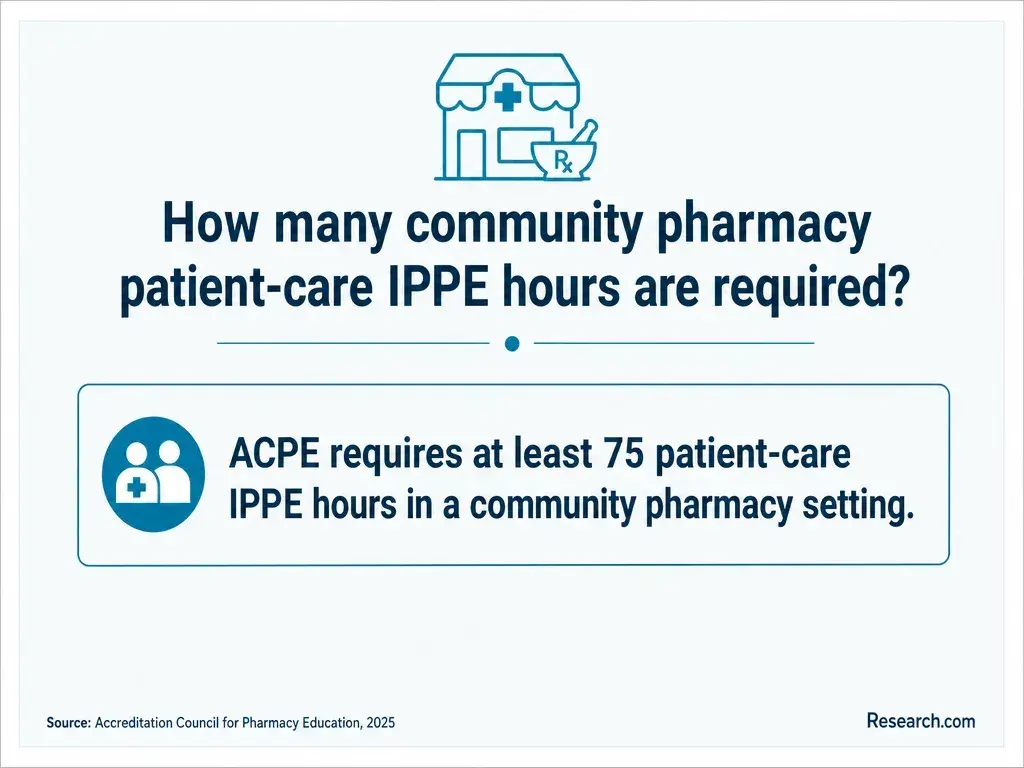
The professional Pharm.D. curriculum typically develops knowledge in pharmacology, therapeutics, medication safety, law, and patient communication. This is distinct from undergraduate pre-pharmacy prerequisites used to qualify for admission. Coursework is paired with introductory pharmacy practice experiences (IPPEs) and more advanced pharmacy practice experiences (APPEs), which involve supervised work in practice settings. Their sequencing and placement policies vary by school.
Asking about pharmacy school prior learning credits is worthwhile, but acceptance of prerequisite coursework does not mean prior employment or other courses will replace professional instruction or rotations. Ask who secures and approves sites, whether placements near home are possible, and what happens if a local site is unavailable. Students may also need intern registration, health documentation, background checks, travel, or temporary schedule changes; current employment is not automatically an approved rotation.
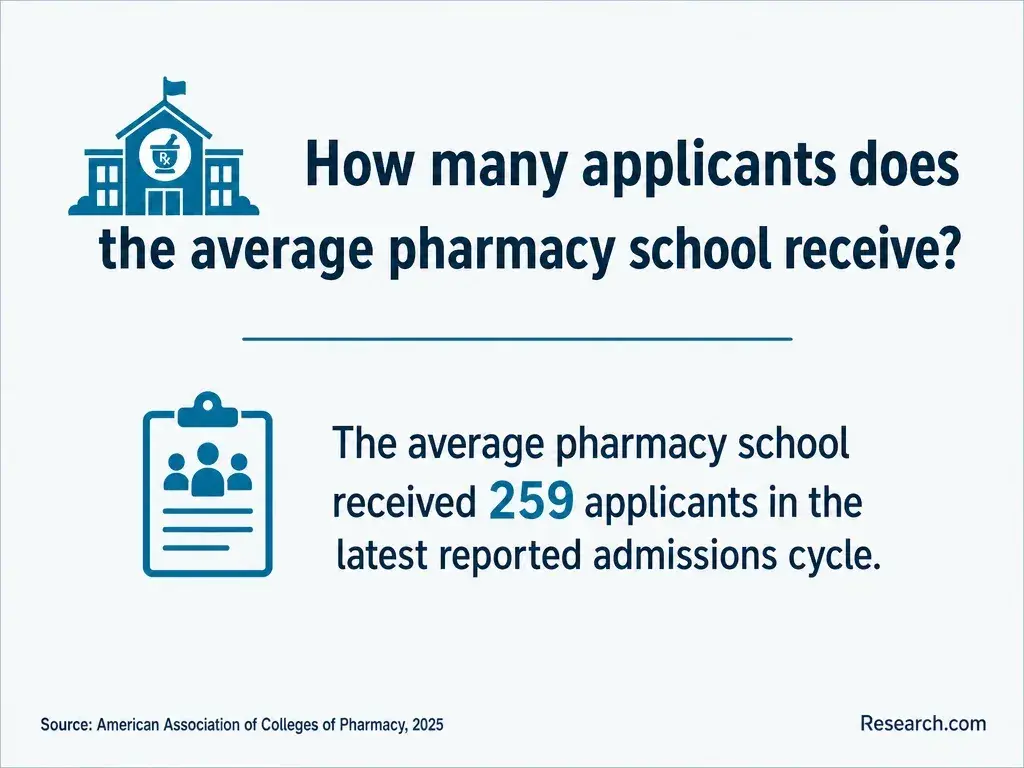
Requirements vary by school and may include specified undergraduate science and general-education prerequisites, grades, transcripts, recommendations, and an interview. A completed bachelor's degree is not universally required. Applicants planning a transition from pre-pharmacy to a Pharm.D. should compare each school's exact courses, lab rules, and policy for prerequisites still in progress.
Check the current school listing and admissions page for whether to apply through PharmCAS, whether a supplemental application is needed, and which deadlines apply. The Pharmacy College Admission Test (PCAT) was retired in January 2024; do not plan around taking it. An admissions minimum establishes eligibility for consideration, not a promise of admission. If you have prior credits, obtain a school-specific evaluation rather than assuming they will transfer.
Time to completion depends on prerequisites already earned, the professional program's sequence, and its rotation calendar. A program described among shorter pharmacy doctorate pathways may have a more intensive schedule rather than fewer clinical obligations. Compare calendars from entry through the final APPE, including required campus visits, before estimating when you could graduate.
Schools price programs differently, so a per-credit rate alone cannot establish the total cost. The categories below help you compare offers on the same basis without treating an advertised tuition figure as your full educational budget:
| Cost category | What to include in your comparison |
| School charges | Tuition across required terms and mandatory fees |
| Learning requirements | Books, clinical references, technology, supplies, and testing costs |
| In-person requirements | Campus travel and lodging; rotation travel or temporary housing |
| Other expenses | Prerequisites, health checks, background checks, and licensure-related fees |
Request a current program cost sheet and an individual financial-aid estimate. Federal borrowing rules changed for many new graduate and professional borrowers beginning July 1, 2026; eligibility, limits, and any transition provisions depend on the borrower and program. Confirm your position with the school's aid office rather than assuming past Grad PLUS access or loan limits still apply.
A U.S.-educated graduate generally applies to the intended state board, meets its experiential and other eligibility rules, and passes the North American Pharmacist Licensure Examination (NAPLEX). Jurisprudence testing varies: a jurisdiction may use the MPJE, the newer UMPJE, another assessment, or different requirements. The board—not the school or an exam result alone—issues the pharmacist license.
Flexible pharmacy admission pathways for nontraditional students do not waive a board's licensing standards. Before enrolling, check your intended board's current rules for education, intern registration and hours, examinations, and application steps. Internationally educated pharmacists may face a different pathway and should not assume these U.S.-graduate steps cover their situation.
After meeting licensure requirements, graduates may pursue pharmacist roles in community pharmacies, hospitals, ambulatory care, or other practice settings. Employers and roles differ in their expectations for experience and postgraduate training. The U.S. Bureau of Labor Statistics reports median annual pay for pharmacists of $140,910 in May 2025, with 5% projected job growth, 2025-2035, and about 12,500 openings per year projected. Those occupation-wide figures are not a salary or job-placement forecast for graduates of a particular online program.
If your goal is pharmacist practice, distinguish a qualifying Pharm.D. from credentials highlighted in guides to online pharmacy degree duration; a shorter pharmacy-related course may lead to a different role. Pharmacy technician work, for example, is a separate occupation and does not ordinarily require a Pharm.D. Some pharmacists later pursue a residency, fellowship, or specialty board certification, but those are distinct from state licensure and are not universally required for pharmacist jobs.
How Can Students Choose a Reputable Online PharmD Program?
Start with programs whose published format you can realistically follow through rotations—not just through online lectures. Lists comparing pharmacy schools and entry standards can help you identify possibilities, but admission accessibility is not evidence of scheduling fit, clinical placement support, or licensure preparation.
Before committing, put these questions to each school and seek written, program-specific answers. They expose the commitments most likely to disrupt work, finances, or graduation plans:
- Which classes, assessments, labs, and campus visits require attendance at fixed times, and how far ahead are dates published?
- Who arranges IPPE and APPE sites, what geographic limits apply, and what happens if a placement near me is unavailable?
- What are the program's current ACPE status, my state's enrollment and placement permissions, and its published NAPLEX outcomes?
- What is my expected total cost through graduation, including required travel, and what aid am I personally eligible to receive?
Favor synchronous coursework when its structure improves your learning and you can reliably attend. Favor more asynchronous coursework when control over study hours matters more—but reject either option if its in-person calendar, placement arrangements, or full cost cannot work for you. Treat promises of a "fully remote" pharmacist pathway or automatic local rotations as reasons to request clarification before enrolling.
Other Things You Should Know About PharmD
Usually not. You may choose when to view materials, but assignments, assessments, and progression through the program generally follow a set schedule. Check the syllabus or sample weekly calendar.
Only if the instructor and program permit it. A recording may help you review material without satisfying a required attendance or participation rule.
Published meeting times may fall outside your usual workday. Ask which time zone the school uses and whether live activities can shift during daylight saving time or clinical terms.
Ask for the current device, internet, webcam, software, and exam-proctoring requirements. Confirm whether required tools work where you live and whether you must arrange a suitable private testing space.
- Synchronous vs. Asynchronous Learning: Differences, Benefits & How to Choose the Right Format | University of Cincinnati https://www.online.uc.edu/blog/difference-between-synchronous-and-asynchronous-learning.html
- Can You Really Earn a Pharm.D. Online? Here's What to Expect - Lake Erie College of Osteopathic Medicine https://lecom.edu/can-you-really-earn-a-pharm-d-online-heres-what-to-expect/
- PharmD Remote Pathway | CU School of Pharmacy https://pharmacy.cuanschutz.edu/degreesandprograms/pharmd/remote-pharmd
- PharmD Online Frequently Asked Questions - Pharmacy | Extended & Distance Education https://www.su.edu/pharmacy/programs/pharmd-traditional-program/pharmd-online-frequently-asked-questions/
- What's the Difference Between Asynchronous and Synchronous Learning? | Ohio State Online https://online.osu.edu/content-hub/blogs/whats-the-difference-between-asynchronous-and-synchronous-learning/
- What Does Asynchronous Mean? A Simple Guide to Online Learning Formats - Professional Development at Charlotte https://professional.charlotte.edu/what-does-asynchronous-mean-a-simple-guide-to-online-learning-formats/
- FAQ - Fisher Pharm.D. Online | SJF-PHA https://onlinepharmd.sjf.edu/admissions/faq/
- International Services Program | Accreditation Council for Pharmacy Education https://www.acpe-accredit.org/program/international-services-program/


