
Pharmacy Education Options for International Pharmacy Graduates

Co-Founder and Chief Data Scientist
A pharmacy degree earned outside the United States does not automatically qualify its holder for a U.S. pharmacist license. For international pharmacy graduates, the consequential decision is whether to pursue foreign-graduate certification, enter a U.S. Doctor of Pharmacy (Pharm.D.) program, or choose education for a different career goal. Each route has different eligibility rules, costs, and time commitments. This guide explains where the routes lead, what schools and licensing boards may require, and what to verify before paying for an application or enrolling.
Key Things You Should Know
- Start with the state where you hope to practice: its board of pharmacy determines whether your foreign education, Foreign Pharmacy Graduate Examination Committee (FPGEC) certification, or a U.S. Pharm.D. meets its licensing rules.
- FPGEC certification is generally the foreign-graduate route; an Accreditation Council for Pharmacy Education (ACPE)-accredited U.S. Pharm.D. is a separate education route. Neither credential alone is a pharmacist license.
- The U.S. median annual pay for pharmacists was $140,910 in May 2025, according to the Bureau of Labor Statistics. That occupational median is not a forecast of an individual graduate's earnings or a reason to overlook education costs.
What pharmacy education options are available to international pharmacy graduates in the United States?
The options depend on both your prior education and your intended job. A U.S. Pharm.D. is the professional degree route; pre-pharmacy courses are undergraduate preparation for it, not the professional degree itself. FPGEC certification evaluates eligibility through a separate foreign-graduate process rather than awarding a U.S. degree. Other graduate degrees can support research or industry careers but do not, by themselves, qualify someone for pharmacist licensure.
This comparison shows what each option is designed to accomplish. It can narrow your search before you compare pharmacy doctorate options.
| Option | Most relevant goal | Important limitation |
| FPGEC certification pathway | Seek pharmacist licensure using a qualifying foreign pharmacy education | Certification is not a degree or license; the state may impose further requirements. |
| ACPE-accredited U.S. Pharm.D. | Complete U.S. professional pharmacy education and pursue licensure as a U.S. program graduate | Admission, clinical training, graduation, and state licensing requirements still apply. |
| Prerequisite or bridge coursework | Address admission gaps or prepare for U.S. coursework | Course completion does not guarantee Pharm.D. admission or transfer into its professional curriculum. |
| Pharmaceutical sciences or related graduate degree | Pursue research, development, or other nonlicensed work | It does not substitute for a pharmacist-qualifying route. |
Do international pharmacy graduates need FPGEC certification to practice pharmacy in the United States?
International graduates seeking a U.S. pharmacist license through their foreign degree generally need FPGEC certification from the National Association of Boards of Pharmacy (NABP), subject to the licensing board's rules. The process includes a review of foreign education credentials, the Foreign Pharmacy Graduate Equivalency Examination (FPGEE), and NABP's specified English-language testing. Eligibility depends on the degree and its circumstances; a foreign pharmacy qualification is not automatically accepted.
FPGEC certification is a gateway to later licensing steps, not permission to practice. A graduate who instead completes an ACPE-accredited U.S. Pharm.D. may qualify under a state's U.S.-graduate route, but should confirm that with the intended board before assuming FPGEC is unnecessary. Short courses marketed as the quickest online pharmacy study routes cannot replace either route merely because they cover pharmacy topics.
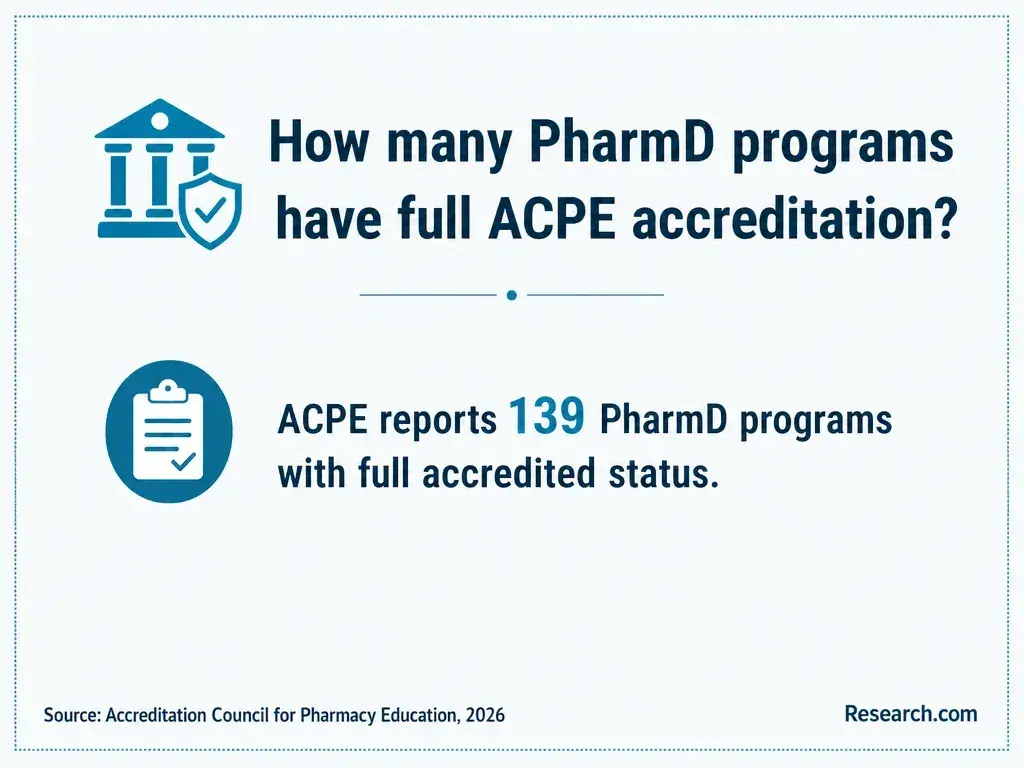
Should international pharmacy graduates pursue a U.S. PharmD or FPGEC certification?
Favor FPGEC if your degree meets NABP's eligibility rules, your intended state accepts the resulting pathway, and you can meet its testing and supervised-practice requirements without undertaking another professional degree. This may avoid Pharm.D. tuition, although examination preparation, internship requirements, and time away from work still matter.
Consider a U.S. Pharm.D. if you are ineligible for FPGEC, want structured U.S. clinical education, or find that a suitable school and target state provide a clearer route for your circumstances. It is a much larger academic and financial commitment. An accelerated online pharmacy program should not be assumed to accept foreign professional credits, eliminate clinical rotations, or shorten your path until the school confirms those points in writing.
Before choosing, compare your eligibility for both routes, the state's intern and examination rules, realistic completion time, and total out-of-pocket cost. Neither route guarantees admission, a license, or a job.
Requirements are school-specific. A school may request evaluated foreign transcripts, specified undergraduate science and general-education prerequisites, English-language proficiency, recommendations, an interview, and proof that required courses will be complete before enrollment. Some schools require a bachelor's degree; others admit applicants who meet their prerequisite-credit rules without one. Admission to the professional Pharm.D. curriculum is distinct from taking pre-pharmacy courses.
Ask how the school evaluates your foreign coursework: acceptance as a prerequisite is different from receiving credit within the professional curriculum. Also confirm course and lab equivalencies, minimum grades, coursework-age rules, and whether remaining prerequisites may be in progress when you apply. For pharmacy school application readiness, check the current school directory and admissions page rather than treating a general eligibility statement as an offer. Schools using PharmCAS may also require school-specific materials; not every school uses PharmCAS. The Pharmacy College Admission Test (PCAT) was retired in 2024 and is not a current routine admissions exam.
Online or hybrid instruction may reduce routine commuting, but a professional Pharm.D. still involves scheduled assessments, hands-on learning, and in-person clinical experiences. "Online" does not necessarily mean asynchronous, fully remote, or compatible with full-time employment. A campus-based program puts more instruction on site but may still require travel for clinical placements.
For an international graduate, the practical difference is where required activities can occur. Ask about live classes, campus immersions, laboratory sessions, approved rotation locations, and who arranges placements. A school's permission to enroll a distance-learning student in a state is separate from approval for a clinical placement there and from eligibility for that state's pharmacist license. Comparisons of online doctoral study duration are less useful than a Pharm.D. program's actual course and rotation calendar.
Professional Pharm.D. study commonly integrates biomedical and pharmaceutical sciences with pharmacotherapy, medication safety, law, patient communication, and applied decision-making. These professional courses follow or incorporate required pre-professional preparation; prior study abroad does not automatically waive them.
Students also complete introductory pharmacy practice experiences (IPPEs) and more intensive advanced pharmacy practice experiences (APPEs) under program and preceptor oversight. Settings can include community and health-system pharmacy, with other opportunities varying by school. The program determines placement policies, while students may need intern registration, health documentation, background checks, travel, or schedule changes. When planning a transition from pre-pharmacy to a Pharm.D., compare these clinical commitments - not just classroom courses - and do not assume prior employment can replace a rotation.
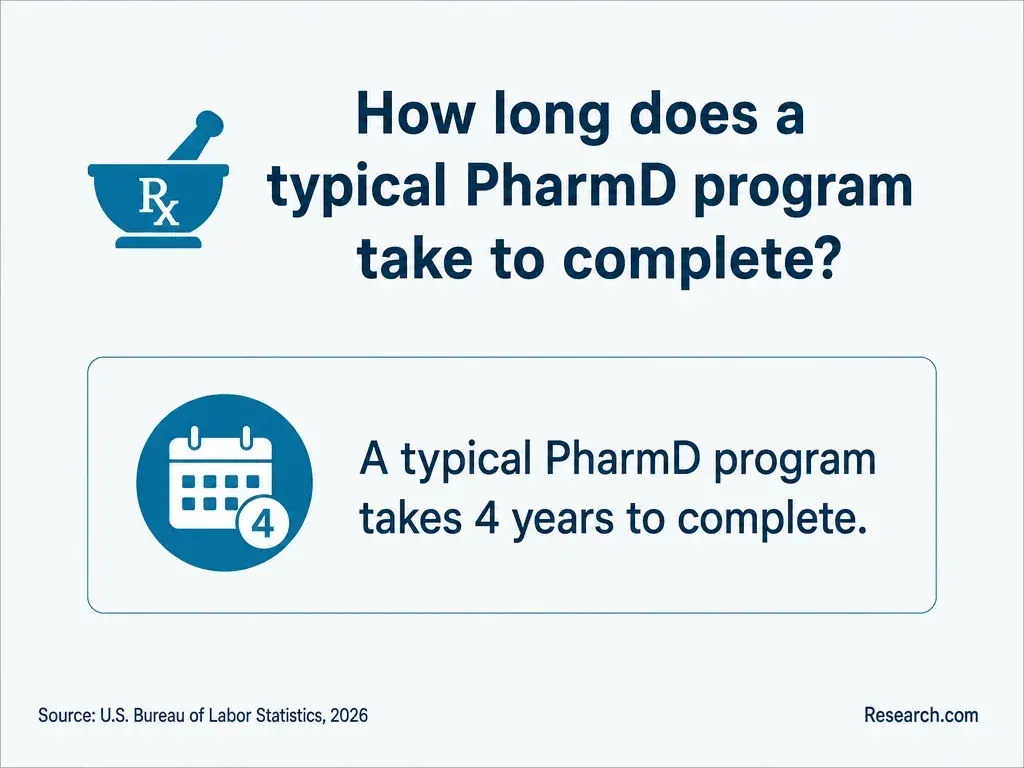
A traditional professional Pharm.D. curriculum commonly takes four academic years after prerequisites, but an applicant's actual timeline depends on accepted coursework, program design, and required rotations. The FPGEC route has no equivalent fixed academic schedule: document review, testing, and state-supervised practice can affect how long licensure takes.
Compare a school's published tuition for your admission year with mandatory fees and the costs of unmet prerequisites, books and technology, health and background requirements, campus visits, rotation travel or housing, and later licensing applications and exams. Affordable Doctor of Pharmacy options are only affordable for you if their full costs and required travel fit your budget.
Financial aid eligibility depends on the student, program, and aid year. Federal borrowing rules changed for many new graduate and professional borrowers beginning July 1, 2026; do not budget around older loan limits or assume unrestricted Grad PLUS access. Request a current, individualized aid explanation before committing.
Pharmacist licensure is issued by a state or other U.S. licensing jurisdiction - not by a school, ACPE, or NABP. Applicants commonly must establish educational eligibility, satisfy applicable internship or supervised-practice rules, pass the North American Pharmacist Licensure Examination (NAPLEX), and meet the jurisdiction's law-exam or other legal-knowledge requirements. A foreign-degree applicant may need FPGEC certification before proceeding; a U.S. Pharm.D. graduate follows the board's rules for graduates of accredited programs.
Do not assume every jurisdiction uses the Multistate Pharmacy Jurisprudence Examination (MPJE): requirements differ, and some jurisdictions began transitioning to the Uniform Multistate Pharmacy Jurisprudence Examination (UMPJE) in 2026. Confirm the current exam and application sequence with your intended board. When comparing pharmacy programs balancing cost and time, include the period after graduation needed to satisfy licensing requirements. Passing an exam alone does not issue a license.
After obtaining the required license, an international graduate may seek pharmacist roles in community, hospital, ambulatory, or specialty pharmacy, depending on employer requirements and experience. The Bureau of Labor Statistics reports median annual pay of $140,910 in May 2025 for U.S. pharmacists and projects 5% growth from 2025-2035, with about 12,500 openings per year. Those occupation-wide figures do not predict a new licensee's salary, location, or prospects.
Licensed pharmacists may enter employment directly. A postgraduate year one (PGY1) residency develops broad practice skills; a PGY2 residency usually adds focused training. Fellowships often emphasize research or industry work, while Board of Pharmacy Specialties certification is a separate credential with its own eligibility rules. None replaces state licensure, and none is universally required for pharmacist work.
If your goal is nonlicensed pharmaceutical research or a pharmacy technician job, a Pharm.D. may be unnecessary. Technicians are a separate occupation: their U.S. median annual pay was $45,750 in May 2025, with 6% projected growth from 2025-2035 and about 44,700 openings per year, according to the Bureau of Labor Statistics. If the pharmacist role is your goal, review pharmacy school prerequisite expectations before using pharmacist pay to judge whether another degree is financially sensible.
How can international pharmacy graduates choose an accredited U.S. program?
First confirm that the specific professional Pharm.D. program has the appropriate ACPE accreditation status. Institutional accreditation and authorization to offer distance education answer different questions; neither substitutes for ACPE professional-program accreditation or a licensing board's eligibility decision. Published NAPLEX outcomes can add context, but they do not establish how an individual international applicant will perform.
Use the following checks to turn a shortlist into a decision. Request written answers where a mistaken assumption could cost you a term of study or a clinical placement.
- Ask your intended licensing board whether the proposed degree and pathway satisfy its current education rules.
- Ask each school to evaluate your foreign transcripts and state separately which prerequisites and professional courses, if any, it will accept; pharmacy programs with transfer pathways may apply prior credit differently.
- Verify ACPE program status, application requirements, completion time, required campus attendance, and the school's clinical-placement process.
- Compare individualized total costs and current aid eligibility, then account for internship, exam, and application steps after graduation.
A red flag is any claim that foreign credits will transfer, rotations can be completed near home, or graduation will lead to licensure without confirmation from the institution and relevant board. Choose the route whose eligibility and requirements you can verify - not simply the one advertising the shortest timeline.
Other Things You Should Know About PharmD
No. Admission and immigration permission are separate. Ask the school whether it can support the student-status documentation you need, and check the applicable immigration requirements before making travel plans.
Only if the program specifically offers and approves such a placement. An overseas rotation should not be assumed to satisfy a particular state's internship or licensing rules.
Yes. It may be relevant to nonlicensed research, industry, or administrative positions, depending on the employer and role. It does not authorize activities reserved for licensed pharmacists.
Ask the school or credential-review organization what documentation connects the names before submitting records. Consistent, verifiable identity information can prevent avoidable processing delays.
- IER's Frequently Asked Questions (FAQs) | justice.gov https://www.justice.gov/crt/iers-frequently-asked-questions-faqs
- International student graduates' labour market early outcomes: Results from the National Graduates Survey https://www150.statcan.gc.ca/n1/pub/75-006-x/2025001/article/00002-eng.htm
- U.S. Graduate Pharmacy References | EducationUSA https://educationusa.state.gov/your-5-steps-us-study/research-your-options/graduate/graduate-student/what-graduate-programs-a-4
- Working in the United States | uscis.gov https://www.uscis.gov/working-in-the-united-states
- Foreign Pharmacy Graduates | texas.gov https://www.pharmacy.texas.gov/applicants/foreign-pharm-grad.asp
- Overseas Practitioner Registration | pharmacyboard.gov.au https://www.pharmacyboard.gov.au/Registration/Overseas
- International Educational Attainment - COE https://nces.ed.gov/programs/coe/indicator/cac/intl-ed-attainment
- Doctor of Pharmacy | St. John's University https://www.stjohns.edu/academics/programs/doctor-pharmacy
- Program Fulfills Need for International Graduates Seeking a PharmD Degree | MCPHS https://www.mcphs.edu/admission-and-aid/blog/non-traditional-doctor-of-pharmacy-program-fulfills-need-for-international-graduates
- Costs in international study: International Student Mobility | oecd.org https://www.oecd.org/en/publications/international-student-mobility_2f807049-en/full-report/costs-in-international-study_86736c66.html


