
Employer Tuition Assistance for Pharmacy School

Co-Founder and Chief Data Scientist
An employer's education benefit could reduce the cost of a Doctor of Pharmacy (Pharm.D.) degree - but the advertised benefit may not cover professional tuition, clinical rotations, or the years when you cannot work your usual schedule. This guide is for pharmacy technicians, other employees, and prospective students weighing a job offer against pharmacy school costs. It explains which benefits to seek, what to confirm in writing, and how to compare the amount an employer will actually pay with the obligations you will take on.
Key Things You Should Know
- Employer assistance can cover some Pharm.D. costs, but eligibility, annual caps, approved schools, and repayment obligations depend on the employer's written policy.
- Compare the benefit against total school costs and lost work hours - not tuition alone. Reimbursement also requires you to pay eligible charges before the employer pays you back.
- A covered degree must still meet your licensing goals: verify the Pharm.D. program's ACPE status and your state board's requirements before committing.
What is employer tuition assistance for pharmacy school?
Employer tuition assistance is a workplace benefit that pays an approved education expense directly or reimburses an employee after payment. A pharmacy student might use it for undergraduate pre-pharmacy prerequisites, the professional Pharm.D. curriculum, or both - but coverage of one stage does not establish coverage of the other.
A qualifying Pharm.D. is the professional degree route for U.S.-educated prospective pharmacists; a pharmacy technician program or pharmaceutical sciences degree is not a substitute. Employees moving from another field should compare Pharm.D. programs for students with a pre-pharmacy background while asking which prerequisite and professional courses their employer will approve.
Tuition assistance is different from a scholarship offered by a school and from a hiring bonus. Its value depends on the employer's policy, the employee's eligibility, and whether the student can keep working throughout the program.
Which employers help pay for pharmacy school?
Community pharmacy chains, health systems, grocery pharmacies, and other organizations employing pharmacy technicians or interns may offer education benefits. Some cover approved courses generally; others have pharmacy-specific arrangements. No employer category guarantees Pharm.D. coverage. Policies can differ by location, employee classification, and hire date.
The distinction below helps identify where to ask for a policy, rather than treating an employer's recruitment language as an offer.
| Employer setting | Benefit to investigate | Potential limitation |
| Retail or grocery pharmacy | General education assistance or a pharmacy-student program | Hours worked or approved-school restrictions |
| Hospital or health system | Employee tuition reimbursement or an institutional partnership | Professional degrees or full-time clinical rotations may be excluded |
| Other employer | Broad degree-assistance policy | Approval may depend on the degree's connection to the current job |
Ask human resources for the current plan document and the pharmacy-specific approval process. If a broad benefit covers multiple degrees, compare online doctorate lengths only after establishing that the credential serves your goal: a shorter doctorate is not an alternative to a qualifying Pharm.D. for pharmacist licensure.
How much pharmacy school tuition can employers cover?
There is no standard employer payment for pharmacy school. A plan may set an annual cap, cover a share of approved tuition, pay only for specified courses, or provide a separate benefit under a school partnership. Even a generous annual limit may cover substantially less than the program's full cost if it cannot be used for fees or expenses during clinical rotations.
Request the benefit amount per benefit year and determine whether unused funds carry over. Then compare eligible payments with each school's tuition and required fees in the same academic year. Affordable Doctor of Pharmacy options can provide a starting list, but confirm current prices with each school before calculating what you would owe.
For a realistic estimate, subtract only assistance you have been approved to receive - not a maximum listed on a benefits page. Check whether the employer reduces its payment when another source covers the same charge.
Common conditions include a waiting period, minimum work hours, satisfactory job performance, advance course approval, an eligible institution or degree, and a minimum course grade. Some policies require the employee to remain employed for a period after payment or repay benefits after an early departure. The exact terms - not an informal manager's assurance - control the decision.
Employer approval and school admission are separate decisions. Check the school's pharmacy degree eligibility requirements against your completed prerequisites, then ask the employer whether approved courses remain covered after you enter the professional program or reduce your work hours.
Pay particular attention to advanced pharmacy practice experiences (APPEs), which are supervised clinical rotations. An attendance rule built around full-time employment may make assistance unavailable precisely when required rotations reduce your ability to work.
Under reimbursement, you usually pay the school first and submit documentation after completing an approved course. With direct payment, the employer pays the school under its arrangement, although you may still owe ineligible charges. The cash-flow difference can determine whether a benefit is usable without additional borrowing.
This comparison shows the financial obligation to clarify before choosing between offers.
| Payment method | When employer funds typically arrive | Main student risk |
| Reimbursement | After the student pays and meets policy conditions | Upfront tuition, deadlines, and possible denial after a course |
| Direct payment | Through an approved arrangement with the school | Charges outside the agreement and possible repayment obligations |
Confirm whether employer payment applies to prerequisite courses taken elsewhere. A school - not an employer - decides whether prior coursework satisfies admissions requirements or transfers into its curriculum; review pharmacy degree credit transfer policies before paying for a course on the assumption it will count.
Potentially. The employer must approve the specific institution, credential, and courses, while the student must meet the program's attendance requirements. An online or hybrid Pharm.D. can still include scheduled classes, campus visits, hands-on activities, and in-person introductory and advanced pharmacy practice experiences (IPPEs and APPEs).
When comparing online pharmacy education options, obtain each program's current calendar and placement policies. Ask whether the school coordinates rotation sites, whether a placement near your home is possible, and whether you may work during rotations. Do not assume employment in a pharmacy replaces a required experience.
Also ask whether an employer benefit covers tuition during terms with fewer classroom courses but substantial clinical commitments. The flexibility of online instruction does not necessarily translate into a full-time work schedule.
Verify the professional Pharm.D. program's current status with the Accreditation Council for Pharmacy Education (ACPE). ACPE program accreditation is distinct from an institution's accreditation and from authorization to enroll an online student in a particular state. Confirm each separately where applicable, including permission for required clinical placements.
Check the state board of pharmacy where you expect to seek licensure for intern registration, supervised experience, examinations, and application requirements. A Pharm.D. degree does not itself grant a license. The North American Pharmacist Licensure Examination (NAPLEX) is part of the licensing process; jurisprudence examination requirements vary by jurisdiction and may involve the MPJE, UMPJE, or another state process.
If you still need admission prerequisites, check whether a school permits them to be unfinished at application or requires completion before enrollment. Pharmacy schools and prerequisite completion are a separate question from accreditation or eventual licensure eligibility.
Depending on the plan, students may still pay mandatory fees, books and clinical-reference resources, technology, supplies, background checks, immunizations, and transportation or temporary housing for campus activities and rotations. Prerequisites and eventual licensing expenses may also fall outside the benefit.
Time is a cost, too. Compare the program calendar with your expected earnings during study, especially during APPEs. An article about online pharmacy program length may describe other pharmacy credentials; verify the actual professional Pharm.D. curriculum rather than assuming a short online credential leads to pharmacist licensure.
If you expect to borrow for the remaining balance, ask the school's financial aid office for an estimate based on your aid year and student classification. Federal borrowing rules changed for many new graduate and professional borrowers beginning July 1, 2026; do not assume earlier Grad PLUS availability or borrowing limits apply to you.
Compare a specific employer policy paired with a specific school, not two advertised benefit amounts in isolation. This short sequence produces a usable decision before you accept a job or deposit.
- Obtain the employer's current written policy and ask for approval of your exact Pharm.D. program, prerequisites, and expected attendance status.
- Get the school's current tuition, required fees, academic calendar, campus requirements, and IPPE/APPE placement policies.
- Map approved employer payments to each school term; identify upfront charges, annual caps, excluded expenses, and any repayment obligation.
- Confirm ACPE program status, applicable state authorization, and the licensing rules for your intended state.
- Compare the remaining cost and time away from work with a lower-cost school, a different employer, or a different start date.
If a shorter timetable would reduce lost earnings, examine accelerated Pharm.D. degree options. Faster completion does not establish that the employer will pay more: an annual benefit cap may leave fewer opportunities to use the benefit.
What pharmacist careers, salaries, and job outlook follow pharmacy school?
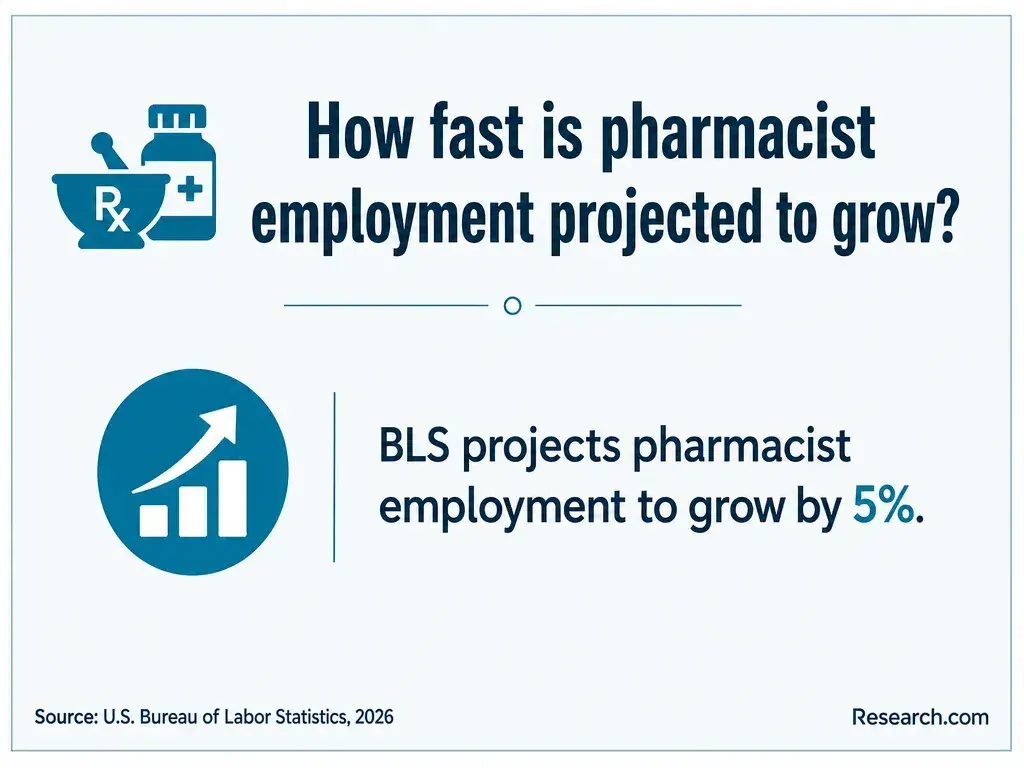
Licensed pharmacists work in settings such as community pharmacies, hospitals, and other patient-care organizations. The U.S. Bureau of Labor Statistics reports median annual pay of $140,910 in May 2025 for pharmacists and projects 5% growth, 2025-2035, with about 12,500 openings per year. These occupation-wide figures help frame potential earnings; they do not predict an individual graduate's salary or show that employer-funded school will pay for itself.
Some graduates pursue postgraduate residency or fellowship training for particular roles; those pathways are distinct from state licensure and optional specialty board certification. Neither is universally required to work as a pharmacist. If the employer benefit is small relative to your remaining cost, compare lower-cost online pharmacy degree programs carefully: confirm that any alternative awards a qualifying Pharm.D. if pharmacist practice is your goal.
Other Things You Should Know About PharmD
Yes, if you want to be considered for federal student aid. Report information as required and tell the school's financial aid office about employer assistance so it can determine how the benefit affects your aid package.
Often, but check both sets of terms. A school or employer may reduce its payment when another award covers the same expense, so obtain an updated aid estimate before relying on both amounts.
Qualifying assistance under an employer educational assistance program is generally excluded from an employee's income up to $5,250 in 2026. Amounts above that limit may be taxable unless another exclusion applies. Ask payroll how the particular benefit will be reported.
No. Tuition assistance is an employer benefit governed by its plan. Public Service Loan Forgiveness concerns qualifying federal loan payments and employment under a separate federal program; working for an employer that pays tuition does not establish forgiveness eligibility.
- Frequently asked questions about educational assistance programs | Internal Revenue Service https://www.irs.gov/newsroom/frequently-asked-questions-about-educational-assistance-programs
- Employer Tuition Reimbursement: How It Works and How to Pay for College | Winston-Salem State University https://ramsonline.wssu.edu/blog/employer-education-benefits/
- Pharmacy Educational Assistance Program | walgreens.com https://jobs.walgreens.com/en/pharmacy-education-assistance
- Educational Assistance Programs | pharmacyforme.org https://pharmacyforme.org/financial-resources/education-assistance-programs
- Putting pharmacy education within reach | cvshealth.com https://www.cvshealth.com/news/pharmacy/putting-pharmacy-education-within-reach.html


