How to Build a PharmD Program Comparison Scorecard

Co-Founder and Chief Data Scientist
A Pharm.D. offer can look attractive until you account for rotation travel, borrowing needs, or a licensing requirement in the state where you plan to work. If you are comparing U.S. pharmacy schools, a scorecard helps you separate requirements you cannot compromise on from preferences you can weigh against cost. This guide gives you a usable comparison template, explains where to verify each field, and shows how to turn the results into a defensible choice rather than relying on rankings or advertised tuition alone.
Key Things You Should Know
- Screen out programs that do not meet your verified accreditation and intended-state licensure needs before assigning preference scores; an online format does not remove in-person training requirements.
- Compare estimated total educational cost and rotation logistics alongside tuition, admission requirements, and published outcomes. Missing or noncomparable figures should remain marked "unknown," not scored as favorable.
- Use salary as context, not a projected return: the Bureau of Labor Statistics reports pharmacist median annual pay of $140,910 in May 2025 and 5% projected job growth, 2025-2035; neither figure predicts your first job or earnings.
How do you compare PharmD programs using a scorecard?
Use two stages: an eligibility screen followed by a scored comparison. A program that cannot satisfy a nonnegotiable requirement should not win because its tuition or schedule scores well. Start with the same fields for every school you are considering; the blank cells below are meant to be filled from current school, accreditor, and licensing-board information.
| Comparison field | Program A | Program B | Evidence or question to resolve |
| ACPE professional-program status and intended-state licensure pathway | _____ | _____ | ACPE listing; state board requirements |
| State authorization and feasible clinical placements, if studying remotely | _____ | _____ | School disclosures; placement office |
| Prerequisites and admission conditions | _____ | _____ | Current admissions rules |
| Estimated total educational cost and financing gap | _____ | _____ | Tuition, required expenses, aid offer |
| IPPE and APPE placement, travel, and scheduling | _____ | _____ | Experiential education policies |
| Curriculum and delivery fit | _____ | _____ | Catalog and required meeting schedule |
| Published NAPLEX outcomes and reporting period | _____ | _____ | NABP reports; school context |
| Career support relevant to your goal | _____ | _____ | Documented services and outcomes |
After the eligibility screen, score each remaining field on a consistent scale and assign greater weight to the factors that would actually change your decision. These steps keep an appealing but poorly documented program from winning by default.
- Mark each eligibility field "confirmed," "not confirmed," or "does not meet requirement." Resolve unknowns before paying a deposit.
- For the other fields, define what a low and high score mean before scoring either school; record the source and date beside every entry.
- Weight your priorities, calculate each program's weighted score using the same method, and test whether changing one uncertain score reverses the result.
- Choose the higher-scoring program only if its cost, travel, and unresolved risks remain acceptable in real life.
Use compare pharmacy doctorate options to build a shortlist, then verify each candidate against the same scorecard rather than treating a list position as a quality measure.
Which PharmD accreditation standards should your scorecard include?
Record the program's current Accreditation Council for Pharmacy Education (ACPE) professional-program status and any conditions or upcoming reviews shown in ACPE's official records. Distinguish an accredited program from one in an earlier accreditation stage, and ask the school how its status applies to your expected graduation date. Do not substitute a university's institutional accreditation for ACPE professional-program accreditation.
Keep separate scorecard fields for institutional accreditation, authorization to enroll you in your state through distance education, and permission to complete clinical placements where you intend to train. These answer different questions. None independently establishes eligibility for a pharmacist license; your intended state board determines its requirements.
Accreditation also does not mean a receiving school must accept previous coursework. If you might change schools, investigate pharmacy program credit acceptance and obtain a written, course-specific evaluation where possible.
What PharmD program requirements affect pharmacist licensure eligibility?
A U.S. Pharm.D. is the professional degree used for the pharmacist pathway, but degree completion does not issue a license. Compare the program's accreditation status and supervised practice preparation against the rules of the state where you plan to seek initial licensure. The state board, not the school's marketing page, is the authority on intern registration, required practical experience, examinations, application procedures, and any additional conditions.
The North American Pharmacist Licensure Examination (NAPLEX) assesses pharmacy practice knowledge. Jurisprudence requirements vary by jurisdiction: check whether your intended board currently uses the Multistate Pharmacy Jurisprudence Examination (MPJE), the Uniform Multistate Pharmacy Jurisprudence Examination (UMPJE), another assessment, or no separate jurisprudence exam. Passing an exam alone does not confer a license.
A quicker academic credential is not necessarily a shorter route to pharmacist practice. In particular, options marketed around finish an online pharmacy degree sooner may describe credentials other than an entry-to-practice Pharm.D. Confirm the exact degree before placing one on a pharmacist-licensure scorecard.
Compare the professional curriculum, not just course titles. Look for how each school teaches therapeutics, medication safety, patient assessment, communication, calculations, and the application of evidence in practice. Undergraduate pre-pharmacy science courses prepare applicants for this work; they are not a substitute for the professional Pharm.D. curriculum.
Experiential education is especially important to score. Introductory pharmacy practice experiences (IPPEs) introduce supervised practice during the program; advanced pharmacy practice experiences (APPEs) provide more intensive rotations later in the curriculum. For each school, record when they occur, available settings, who secures and approves sites, how assignments are made, and what happens if your preferred location is unavailable. Ask about intern registration, immunizations, background checks, transportation, and time away from paid work.
Applicants with prior biology, chemistry, or pre-pharmacy study can use online Pharm.D. for students with prior science study as a starting point. Their scorecards should still distinguish accepted prerequisite courses from credit awarded within the professional curriculum.
Compare the schedule you must actually keep, not the delivery label. An online or hybrid program may have live classes, scheduled assessments, campus visits or hands-on labs, and in-person IPPEs and APPEs. A campus-based program may make regular lab access easier but require a move or commute. Neither format guarantees a nearby rotation.
In the scorecard, record required days on campus, live-session times, rotation geography, placement responsibilities, travel costs, and whether the school can enroll you and arrange training in your state. Ask for the published schedule and placement policy before assuming you can maintain full-time work throughout the degree.
Other short doctoral degree completion options may look more flexible, but their timelines do not establish what an entry-to-practice Pharm.D. can omit. Judge the actual professional curriculum and clinical requirements.
Enter each school's required prerequisite courses and labs, minimum grades, GPA rules, coursework-age limits, and whether a bachelor's degree is required. Some schools admit students after specified undergraduate prerequisites without a completed bachelor's degree. A stated minimum is an eligibility threshold, not a prediction of admission.
Compare application routes and deadlines separately. Check the current PharmCAS directory and each school's instructions for whether PharmCAS is required, plus any supplemental application, interview, references, transcripts, deposit, or conditions for courses still in progress. The Pharmacy College Admission Test (PCAT) was retired in January 2024; do not treat it as a current test you need to schedule.
If your record includes community-college courses, online labs, international study, or unfinished prerequisites, request a written policy-based evaluation rather than assuming acceptance. Resources on pharmacy programs for students with varied academic backgrounds can help identify questions to ask, but the admitting school decides which work satisfies its rules.
Measure time from your own starting point through graduation, including missing prerequisites, the professional curriculum, and any fixed rotation sequence. A shorter advertised program may save calendar time for a qualified applicant yet create a heavier schedule or limit paid work. Compare accelerated Pharm.D. programs using your actual prerequisite status and the school's required attendance and rotation calendar.
For cost, use the school's current tuition and fee schedule to estimate all required terms, then add books or clinical resources, equipment, background checks, immunizations, campus travel, rotation housing, and living expenses. Keep advertised tuition distinct from the resulting estimated total, and label expenses you cannot yet price. A lower tuition figure is not automatically the lower-cost option if travel or an extra prerequisite term changes the comparison.
Ask each financial aid office for an individual borrowing estimate and identify any uncovered balance before committing. Federal student-loan rules changed for many new graduate and professional borrowers beginning July 1, 2026, so do not assume an older borrowing limit or automatic Grad PLUS availability applies to your entry cohort.
Choose outcomes that match the work you want to pursue: community practice, hospital practice, ambulatory care, specialty pharmacy, or another pharmacist setting. Ask schools for clearly dated placement information and the proportion of students represented. Review published school-level NAPLEX results with their reporting period and cohort size; an exam pass rate is useful context, not a guarantee of licensure or employment.
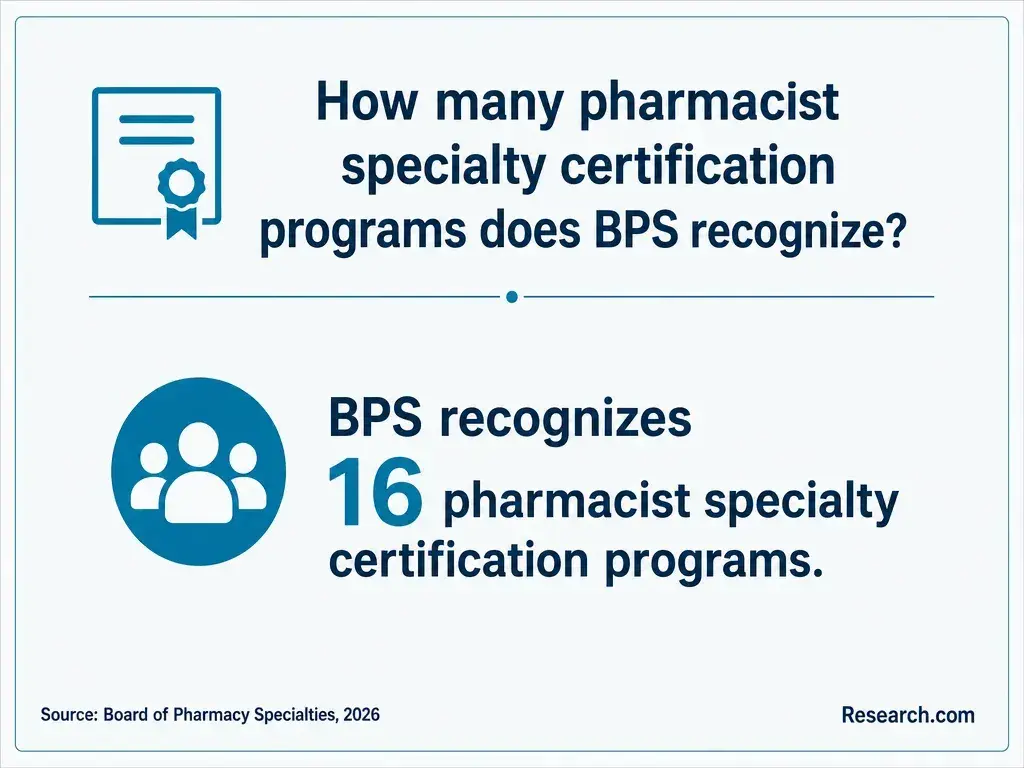
If postgraduate training matters to your goal, distinguish a postgraduate year one (PGY1) residency, a more specialized postgraduate year two (PGY2) residency, and a fellowship focused on a particular area of practice or research. Board of Pharmacy Specialties certification is a separate credential with its own eligibility rules. These are not universal requirements for pharmacist jobs, and none replaces state licensure.
Before paying for a professional doctorate to pursue a pharmacy-adjacent role, compare its hiring requirements with pharmacy degree programs with shorter timelines. A less extensive credential may fit some goals, but a pharmacy technician or pharmaceutical sciences credential does not automatically qualify someone for pharmacist licensure.
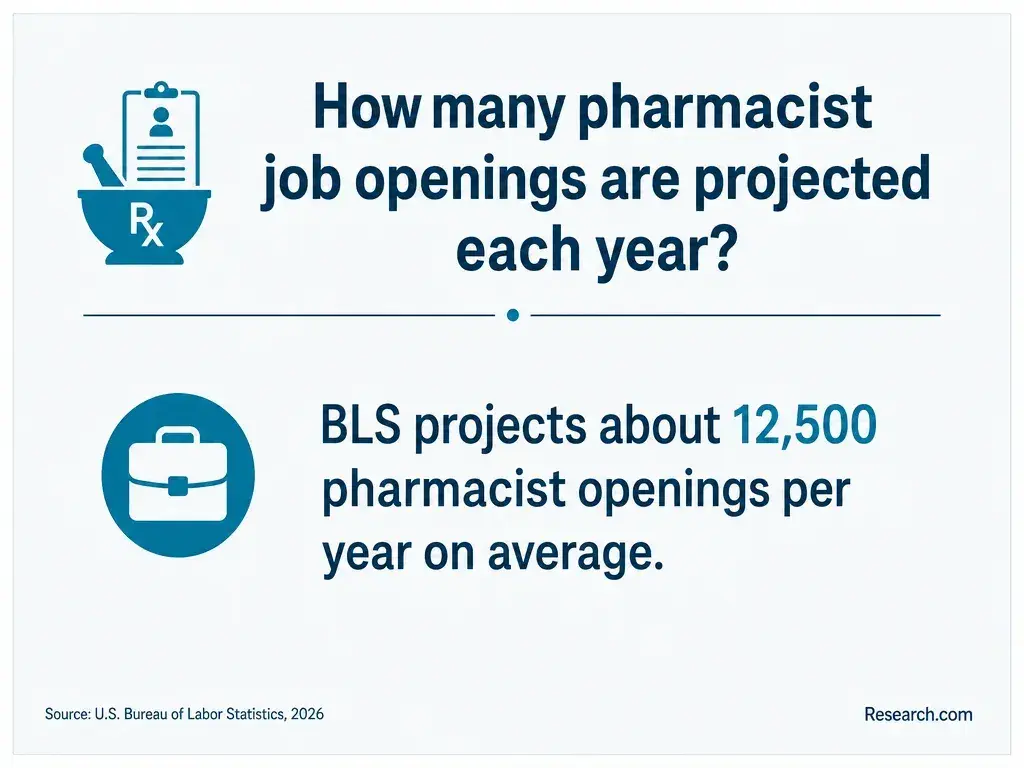
Use national labor data to test expectations, not to forecast a personal return on tuition. The Bureau of Labor Statistics projects about 12,500 pharmacist openings per year over 2025-2035. Openings span different settings and experience levels; they do not indicate how many positions will be available to new graduates in your preferred city or specialty.
For a financial comparison, examine each program's estimated borrowing need against plausible entry-level opportunities in the location and setting where you expect to work. Ask career services for recent, clearly defined outcomes, and avoid treating a national median wage as a starting salary. When reviewing lower-cost online Pharm.D. pathways, account for required travel and any time away from work before deciding which option poses less financial risk.
What makes a PharmD program reputable and worth choosing?
A worthwhile choice clears the accreditation and licensure screen, fits your finances and attendance constraints, and provides documented clinical training and outcomes relevant to your plans. Prefer specific answers about rotation assignments, student support, graduation barriers, and published examination results over broad claims about prestige or career success.
Treat unanswered material questions as risks, not neutral scores. If a school cannot explain required in-person attendance, give a usable cost estimate, or direct you to its current accreditation and outcome records, pause before submitting a nonrefundable deposit. Admission selectivity alone is not a quality measure: information about how competitive is pharmacy school admission is relevant to your application strategy, not proof of how well a program will serve you.
Make the final decision from your completed scorecard and written answers to unresolved questions. If two programs remain close, favor the one whose cost and clinical-placement uncertainties you can manage without depending on an unpromised exception.
Other Things You Should Know About PharmD
Include every program you would seriously attend if admitted. A shorter, well-researched shortlist is more useful than scoring schools you would decline regardless of the result.
Ask the relevant office for the figure, its reporting period, and what it includes. Until you receive an answer, mark the field "unknown" rather than estimating it from another school.
Change them if your circumstances genuinely change, such as a new aid offer or relocation constraint. Apply the revised priorities to every remaining option so the comparison stays consistent.
Check each school's acceptance deadline, deposit terms, and refund policy before paying. An offer does not necessarily reserve your seat beyond its stated deadline.
- Cost of Attendance (Budget) | 2025-2026 Federal Student Aid Handbook https://fsapartners.ed.gov/knowledge-center/fsa-handbook/2025-2026/vol3/ch2-cost-attendance-budget
- Systematic Review of Predictors of Success for the North American Pharmacist Licensure Examination - PMC https://pmc.ncbi.nlm.nih.gov/articles/PMC8715967/
- Pharm D Practice Experience Curriculum | Presbyterian College https://www.presby.edu/graduate-programs/pharmacy/pharmd/practice-experience/
- Admissions Frequently Asked Questions and Tips | ucsf.edu https://pharmd.ucsf.edu/admissions/faq-tips
- PharmD Student Outcomes | Pacific University https://www.pacificu.edu/pharmacy-pharmd/pharmd-student-outcomes
- Experiential Education | Washington State University https://pharmacy.wsu.edu/pharmd/experiential-services/
- Recent Class Stats - Texas A&M College of Pharmacy https://pharmacy.tamu.edu/pharmd/recent-class-stats.html
- PharmD FAQs - UNC Eshelman School of Pharmacy https://pharmacy.unc.edu/education/pharmd/pharmd-admissions-faqs/
- Pharmacy Practice Experiences | Doctor of Pharmacy https://pharmacy.wisc.edu/pharmd/pharmacy-practice/
- PharmD Resources and Tools | Accreditation Council for Pharmacy Education https://www.acpe-accredit.org/tools-and-forms/pharmd-resources-and-tools/