Online PharmD tuition per credit: how to estimate the full cost

Co-Founder and Chief Data Scientist
A per-credit tuition quote can make an online Doctor of Pharmacy (Pharm.D.) program look less expensive than it will be. The number of billable credits, required campus visits, and in-person clinical rotations can change the total substantially. If you are comparing programs or deciding whether pharmacy school fits your budget, this guide shows you how to build a full-cost estimate, identify expenses a tuition quote leaves out, and check whether the program meets your path to pharmacist licensure.
Key Things You Should Know
- Calculate tuition using the program's billable professional Pharm.D. credits, not its prerequisite credits or an assumed four-year total; then add fees and required in-person costs.
- For a student starting in 2026-27, request an aid estimate under the rules that apply to that student: federal borrowing rules changed for many new graduate and professional borrowers beginning July 1, 2026.
- "Online" does not mean fully remote. Confirm Accreditation Council for Pharmacy Education (ACPE) status, campus attendance, clinical placement costs, and eligibility in the state where you intend to enroll and seek licensure.
How much does an online PharmD cost per credit?
There is no single online Pharm.D. price per credit. Schools may charge by professional credit, semester, term, or year; they may also bill summer courses differently. A published online rate might exclude mandatory program fees or apply only to certain students. Ask for the current 2026-27 tuition schedule and a term-by-term list of charges for your intended entry cohort.
When reviewing affordable pharmacy doctoral education, check whether each quoted price covers the same unit. A lower per-credit rate is not necessarily a lower-cost program if it requires more billable credits, additional terms, or expensive in-person attendance.
First distinction: undergraduate pre-pharmacy prerequisites are not the professional Pharm.D. curriculum. If you still need prerequisite courses, price them separately at the institution where you will take them. Do not multiply a Pharm.D. tuition rate by a combined prerequisite-and-professional credit total.
How do you calculate the total cost of an online PharmD?
Start with the school's published curriculum and billing schedule. For a credit-priced program, estimated tuition equals the applicable rate for each term multiplied by the billable professional credits in that term, summed across all terms. Add mandatory fees and other costs you expect to pay; subtract only grants or scholarships the school has actually confirmed for you. If rates can rise, treat today's calculation as a baseline rather than a guaranteed final price.
Use the following comparison fields for each school. Enter amounts from its written cost information and your own travel and living estimates; keep tuition, educational expenses, and borrowing separate so you can see what drives the difference.
| Cost field | Program A | Program B |
| Billable professional credits or term charges | _____ | _____ |
| Tuition by term, including summer terms | _____ | _____ |
| Mandatory school and program fees | _____ | _____ |
| Books, technology, supplies, and required checks | _____ | _____ |
| Campus visits and clinical rotation travel or housing | _____ | _____ |
| Prerequisites still needed | _____ | _____ |
| Confirmed grants, scholarships, or employer assistance | _____ | _____ |
| Estimated out-of-pocket cost and amount to finance | _____ | _____ |
Before treating a prior course as a saving, obtain a written evaluation. The receiving school decides whether pharmacy school prior learning credits satisfy prerequisites or reduce professional coursework; those are different decisions. If you expect to borrow, request an individualized financial aid estimate and consider interest and loan fees separately from the school's billed price.
Are online PharmD programs accredited for pharmacist licensure?
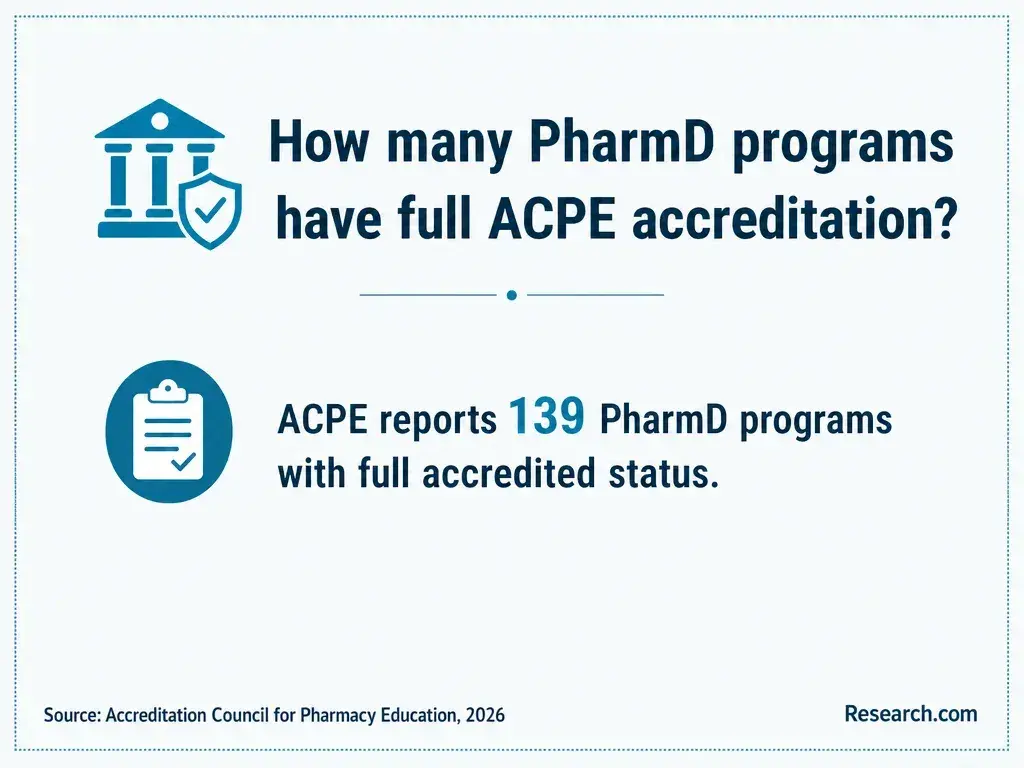
An online or hybrid Pharm.D. may be offered by an ACPE-accredited professional program, but delivery format alone establishes nothing about accreditation. Check the specific professional program and its current status in ACPE's program directory, then ask the school whether the online pathway is part of that program. Institutional accreditation is a separate matter. State authorization to enroll distance-learning students is separate again, as is permission to complete clinical placements in a particular state.
Use lists of online pharmacy education options to identify possibilities, not as proof of current licensure eligibility. Before paying a deposit, obtain written confirmation that the school can enroll you where you live, arrange or approve your required experiences, and explain how its graduates meet the educational requirements in your intended licensing jurisdiction. The state board of pharmacy determines licensure requirements; an accredited degree does not itself issue a license.
The most easily underestimated expenses are those tied to being physically present. Ask for the number and length of campus immersions, the likely locations and schedules of clinical experiences, and whether the school pays any placement-related costs. A rotation near home should not be assumed until the school confirms how sites are assigned and approved.
Build a separate budget for required fees; textbooks and drug-information resources; a suitable computer and internet connection; lab or compounding supplies; background checks, immunizations, and possible intern registration; travel and housing for campus visits and rotations; and later licensure applications and exams. Include living costs and income you may give up during full-time clinical work. If a shorter credential would meet a different career goal, compare it with affordable short pharmacy programs - but do not mistake a technician or pharmaceutical sciences program for a pharmacist-licensure pathway.
Financial aid eligibility depends on the student, program, and aid year. Ask the financial aid office for a 2026-27 estimate that reflects the federal rules applying to your start date and classification. Do not assume an older graduate-loan limit or automatic access to Grad PLUS applies to a new borrower after the July 1, 2026, rule changes.
Compare complete programs, not tuition labels. Online instruction might reduce commuting or relocation costs, but campus visits and distant clinical rotations can offset those savings. A campus program with a higher advertised tuition could cost less for a student who can live at home and complete local rotations; the reverse may be true for someone who would otherwise relocate.
Apply the same worksheet to both formats and compare required credits, fees, years enrolled, aid, travel, and time away from paid work. Also compare verified clinical placement support and required attendance rather than assuming online courses are self-paced. Pharm.D. programs with an accelerated format may change the number of years of living expenses, but a compressed schedule can make continued employment harder. The least expensive option on paper is not necessarily the least costly option for your circumstances.
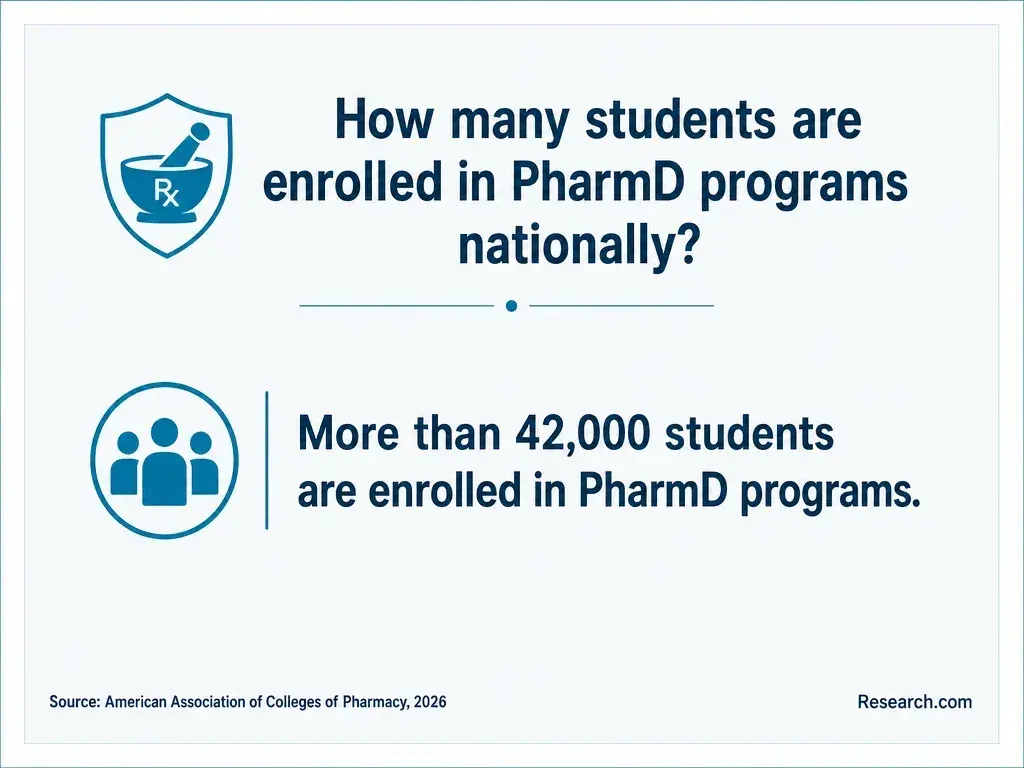
The professional curriculum generally combines pharmaceutical sciences, pharmacotherapy, medication safety, patient communication, and supervised practice. Introductory pharmacy practice experiences (IPPEs) introduce practice settings; advanced pharmacy practice experiences (APPEs) are later, more intensive rotations. Online lectures do not replace hands-on requirements, which may include campus labs, assessments, and in-person patient-care experiences.
Read each school's curriculum map before pricing it. For applicants exploring pharmacy degree options for science majors, prior science coursework may satisfy an admission prerequisite without shortening the professional sequence. Ask who finds and approves rotation sites, whether you can propose one, and what happens if a local site is unavailable. Placements can also require a background check, immunizations, intern registration, and a schedule that conflicts with work.
Requirements vary by school. Compare each program's prerequisite courses and labs, minimum grades, coursework-age rules, application materials, interviews, and policy on courses still in progress. Some pathways require specified undergraduate coursework rather than a completed bachelor's degree. Admission to an online pathway may also depend on where you live and whether clinical placements are feasible there.
Check the school's current admissions page and, if it participates, its PharmCAS listing; not every school uses PharmCAS. The Pharmacy College Admission Test (PCAT) was retired in 2024, so it is not a current exam to schedule. Pharmacy programs for nontraditional applicants can be a starting point for exploring routes, but only a school's current policy can tell you how it will evaluate older, online, community-college, or repeated coursework. A published minimum does not guarantee admission.
Completion time depends on the program's course sequence, any prerequisites you still need, and the timing of clinical experiences. "Online" does not mean you can take unlimited credits at your own pace: cohort courses, scheduled classes, campus sessions, and rotation blocks may fix your timeline. Request a term-by-term plan for your intended start date, including summers and the earliest realistic graduation date.
When comparing doctoral programs with accelerated timelines, verify that the credential is a professional Pharm.D. if pharmacist licensure is your goal. A shorter general doctorate is not a substitute. Compare total billed terms and the ability to work during them - not just the advertised time to graduation - and allow for licensure steps after the degree.
After meeting state licensing requirements, Pharm.D. graduates may seek pharmacist roles in community, hospital, ambulatory, or other settings; hiring requirements and duties vary. The Bureau of Labor Statistics reports median annual pay for pharmacists of $140,910 in May 2025 and projects 5% growth, 2025-2035. These occupation-wide figures are not a starting-salary estimate, a return-on-tuition calculation, or a promise of a job in a particular specialty or location.
Residency or fellowship training can matter for certain positions, but it is not a universal requirement for pharmacist employment. Board certification is a separate credential, not a pharmacist license. If your intended work does not require pharmacist licensure, investigate pharmacy programs with alternative entry pathways before committing to Pharm.D. costs; confirm what each credential actually qualifies you to do.
What licensing exams and requirements follow an online PharmD?
Pharm.D. graduation is an educational milestone, not permission to practice independently. States set their own pharmacist licensing requirements, which generally include an approved education pathway, the North American Pharmacist Licensure Examination (NAPLEX), and other state-required steps. Jurisprudence testing varies: check your board's current rules rather than assuming it uses the Multistate Pharmacy Jurisprudence Examination (MPJE), because some jurisdictions began transitioning to the Uniform Multistate Pharmacy Jurisprudence Examination (UMPJE) in 2026. Applications, checks, and fees should be included in your postgraduation budget.
If you are researching how quickly can an online pharmacy degree be completed, check the credential named on the page: a short pharmacy-related degree is not necessarily a professional Pharm.D. Ask your intended state board about licensure eligibility and verify exam and application requirements with the National Association of Boards of Pharmacy and the board before relying on any school's timeline.
Other Things You Should Know About PharmD
Policies differ. Read the offer and ask when a deposit becomes nonrefundable and whether it is credited toward your first tuition bill before accepting a place.
Possibly, depending on your eligibility and the program's approval. Ask the school's veterans benefits office to verify your specific pathway and charges before counting benefits in your budget.
Only if the school's written policy says so. Check which charges are covered, how long the guarantee lasts, and whether fees or summer tuition can still change.
Ask the school's financial aid office about a documented cost-of-attendance adjustment. Approval and available funding are not automatic, and an adjustment does not reduce the school's tuition charge.
- Cost of Attendance (Budget) | 2025-2026 Federal Student Aid Handbook https://fsapartners.ed.gov/knowledge-center/fsa-handbook/2025-2026/vol3/ch2-cost-attendance-budget
- Tuition and Fees | Florida State College at Jacksonville https://www.fscj.edu/student-financial-services/tuition-and-fees
- Earn an Online Pharm.D. Degree at St. John Fisher University https://onlinepharmd.sjf.edu/
- Financial Aid and Scholarship - School of Pharmacy https://www.pharmacy.pitt.edu/academics/doctor-pharmacy/apply-pharmd-program/financial-aid-and-scholarship
- Fee Definitions | Cleveland State Community College https://www.clevelandstatecc.edu/paying-for-college/fee-definitions/
- Tuition and Fee Definitions - Student Business Services https://www.sbs.txst.edu/sbs-policies/tuition-and-fee-definitions.html
- Mandatory Fee Descriptions - Tuition Rates and Fees https://www.tuition.pitt.edu/mandatory-fee-descriptions
- PharmD Remote Pathway | CU School of Pharmacy https://pharmacy.cuanschutz.edu/degreesandprograms/pharmd/remote-pharmd